Dillinger Barbara, Ahmadi-Erber Sarah, Soukup Klara, Halfmann Angela, Schrom Silke, Vanhove Bernard, Steinberger Peter, Geyeregger Rene, Ladisch Stephan, Dohnal Alexander Michael
Tumor Immunology, Children's Cancer Research Institute (CCRI), St. Anna Kinderkrebsforschung e.V., Vienna, Austria.
Centre de Recherche en Transplantation et Immunologie UMR 1064, INSERM, Université de Nantes, Nantes, France.
Front Immunol. 2017 Sep 20;8:1152. doi: 10.3389/fimmu.2017.01152. eCollection 2017.
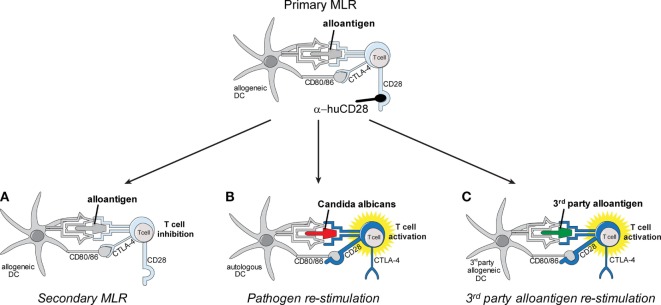
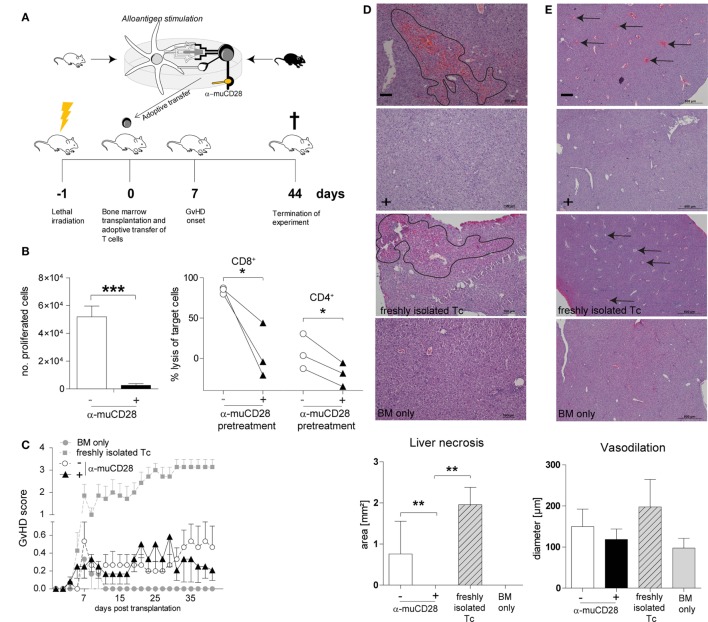
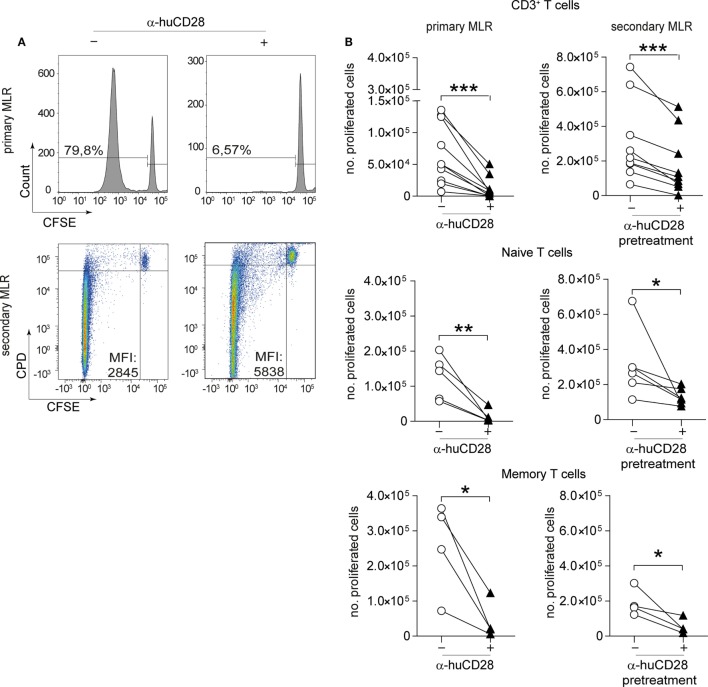
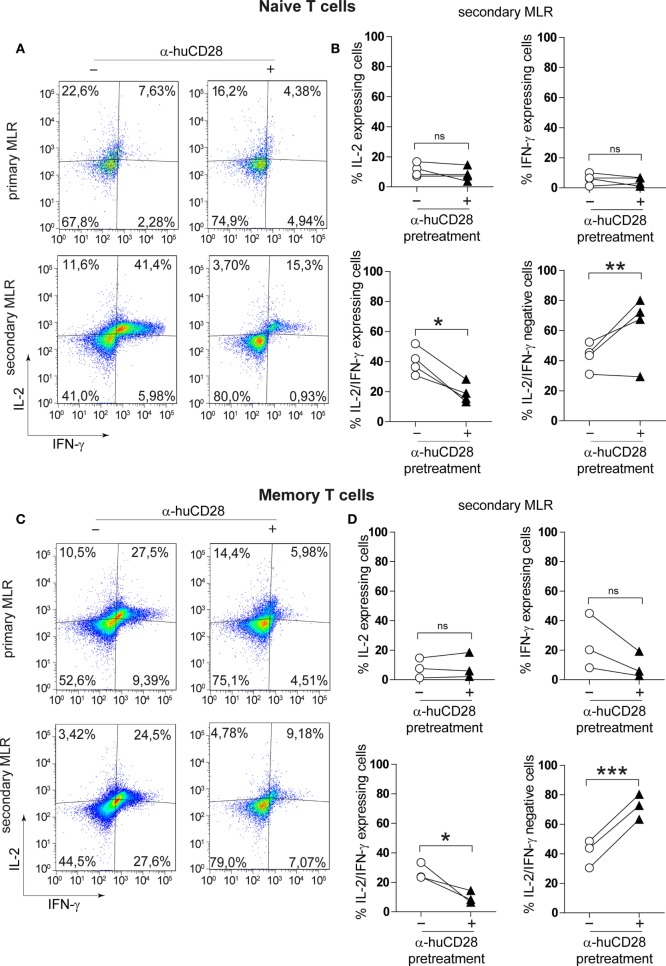
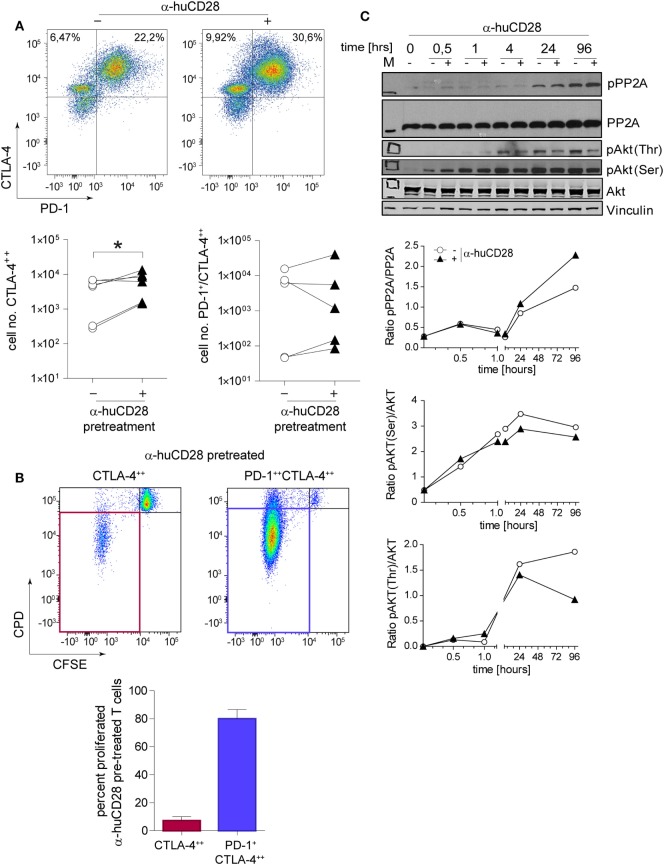
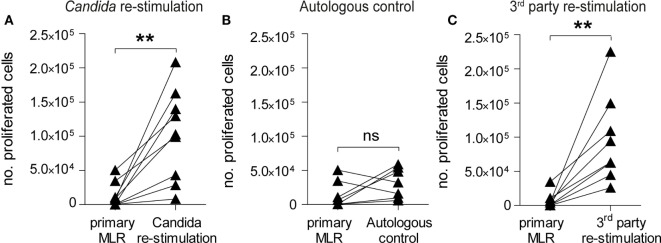
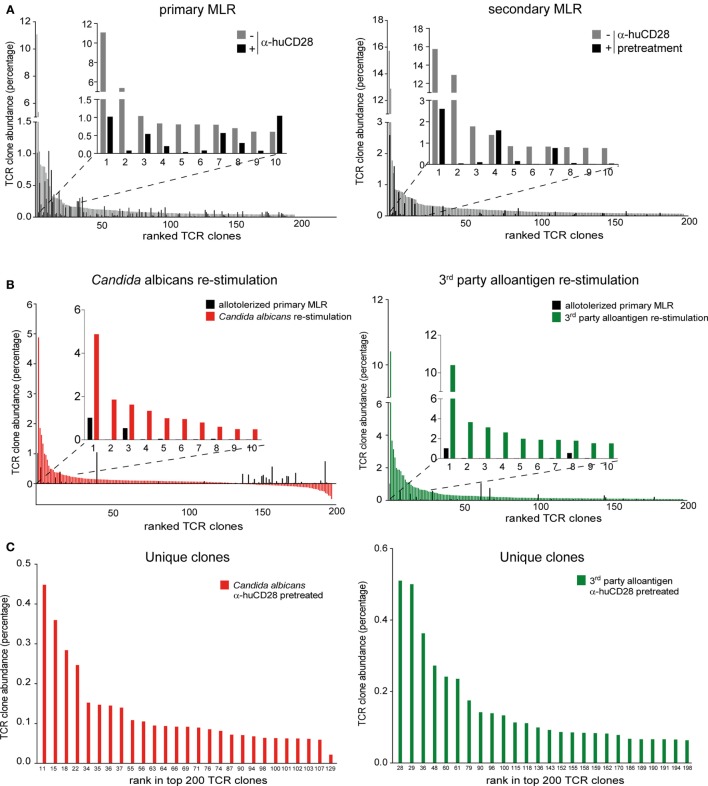
Donor T-cells contribute to reconstitution of protective immunity after allogeneic hematopoietic stem cell transplantation (HSCT) but must acquire specific tolerance against recipient alloantigens to avoid life-threatening graft-versus-host disease (GvHD). Systemic immunosuppressive drugs may abrogate severe GvHD, but this also impedes memory responses to invading pathogens. Here, we tested whether blockade of CD28 co-stimulation can enable selective T-cell tolerization to alloantigens by facilitating CD80/86-cytotoxic T-lymphocyte-associated protein 4 (CTLA-4) signaling. Treatment of human allogeneic dendritic cell/T-cell co-cultures with a human CD28 blocking antibody fragment (α-huCD28) significantly abrogated subsequent allospecific immune responses, seen by decreased T-cell proliferation and of type 1 cytokine (IFN-γ and IL-2) expression. Allo-tolerization persisted after discontinuation of CD28 blockade and secondary alloantigen stimulation, as confirmed by enhanced CTLA-4 and PD-1 immune checkpoint signaling. However, T-cells retained reactivity to pathogens, supported by clonotyping of neo-primed and cross-reactive T-cells specific for or third-party antigens using deep sequencing analysis. In an MHC-mismatched murine model, we tolerized C57BL/6 T-cells by exposure to a murine single chain Fv specific for CD28 (α-muCD28). Infusion of these cells, after α-muCD28 washout, into bone marrow-transplanted BALB/c mice caused allo-tolerance and did not induce GvHD-associated hepatic pathology. We conclude that selective CD28 blockade can allow the generation of stably allo-tolerized T-cells that in turn do not induce graft-versus-host reactions while maintaining pathogen reactivity. Hence, CD28 co-stimulation blockade of donor T-cells may be a useful therapeutic approach to support the immune system after HSCT.
供体T细胞有助于异基因造血干细胞移植(HSCT)后保护性免疫的重建,但必须获得针对受体同种异体抗原的特异性耐受性,以避免危及生命的移植物抗宿主病(GvHD)。全身性免疫抑制药物可能会消除严重的GvHD,但这也会阻碍对入侵病原体的记忆反应。在这里,我们测试了阻断CD28共刺激是否可以通过促进CD80/86-细胞毒性T淋巴细胞相关蛋白4(CTLA-4)信号传导,实现对同种异体抗原的选择性T细胞耐受。用人CD28阻断抗体片段(α-huCD28)处理人同种异体树突状细胞/T细胞共培养物,显著消除了随后的同种异体特异性免疫反应,表现为T细胞增殖减少和1型细胞因子(IFN-γ和IL-2)表达降低。在CD28阻断和二次同种异体抗原刺激停止后,同种异体耐受持续存在,增强的CTLA-4和PD-1免疫检查点信号证实了这一点。然而,通过深度测序分析对针对自身或第三方抗原的新启动和交叉反应性T细胞进行克隆分型,支持T细胞对病原体保持反应性。在MHC不匹配的小鼠模型中,我们通过暴露于针对CD28的小鼠单链Fv(α-muCD28)使C57BL/6 T细胞耐受。在α-muCD28洗脱后,将这些细胞注入骨髓移植的BALB/c小鼠中,导致同种异体耐受,并且没有诱导与GvHD相关的肝脏病理变化。我们得出结论,选择性CD28阻断可以产生稳定的同种异体耐受T细胞,这些T细胞反过来不会诱导移植物抗宿主反应,同时保持对病原体的反应性。因此,供体T细胞的CD28共刺激阻断可能是HSCT后支持免疫系统的一种有用治疗方法。