Institute for Biomedical Imaging and Life Sciences (IBILI), Faculty of Medicine, University of Coimbra, Coimbra 3000-548, Portugal.
CNC.IBILI, University of Coimbra, Coimbra, Portugal.
Cell Death Dis. 2017 Oct 5;8(10):e3065. doi: 10.1038/cddis.2017.451.
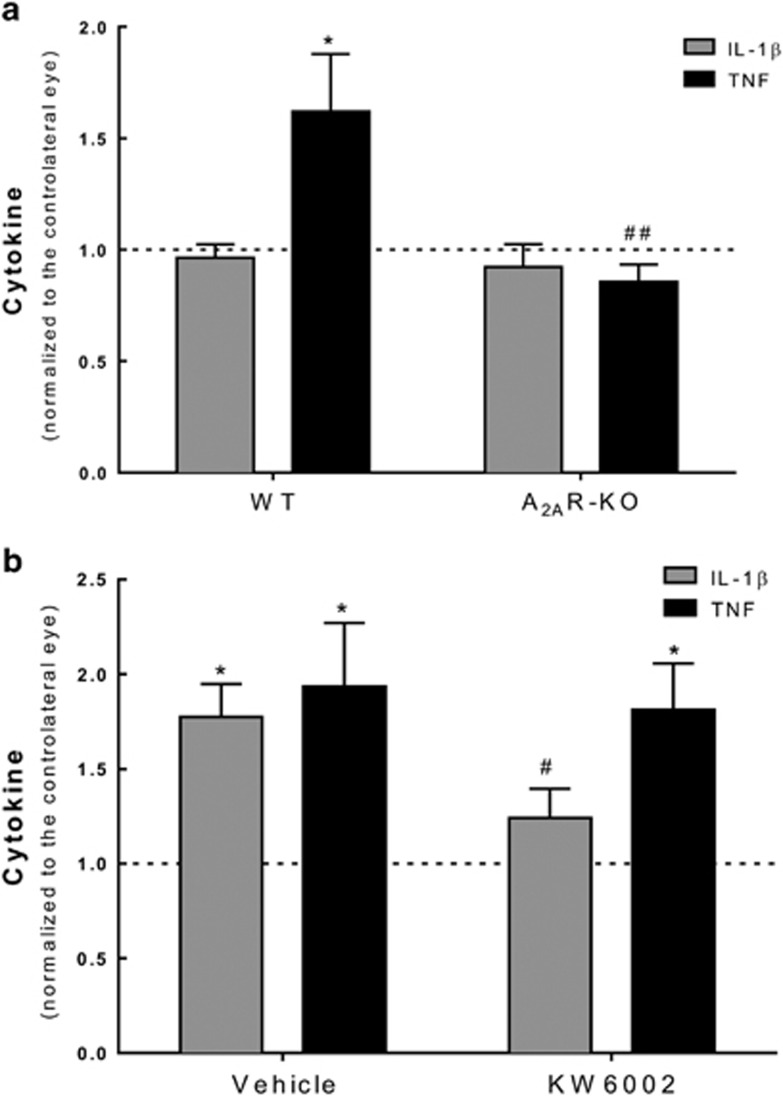
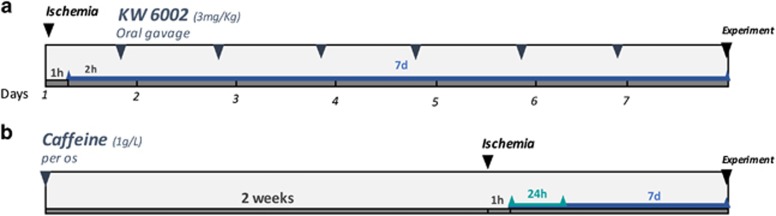
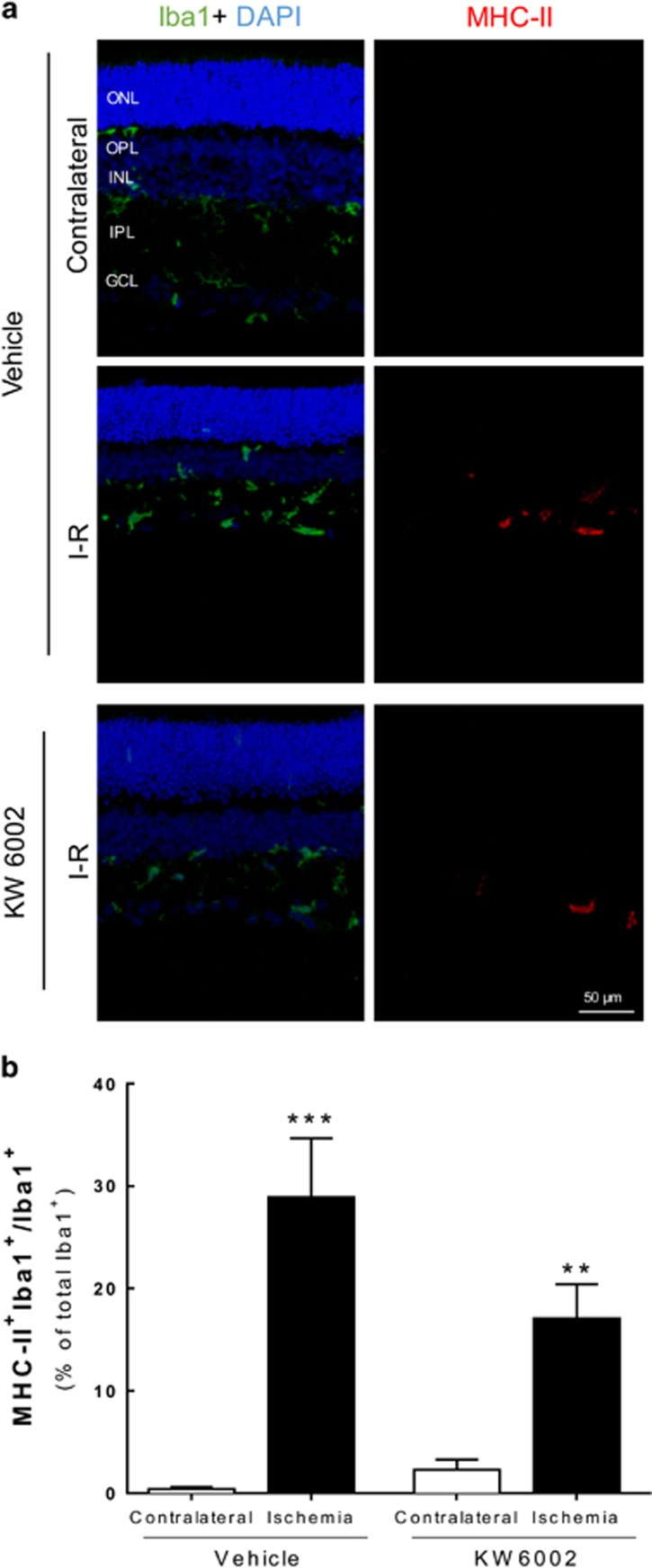
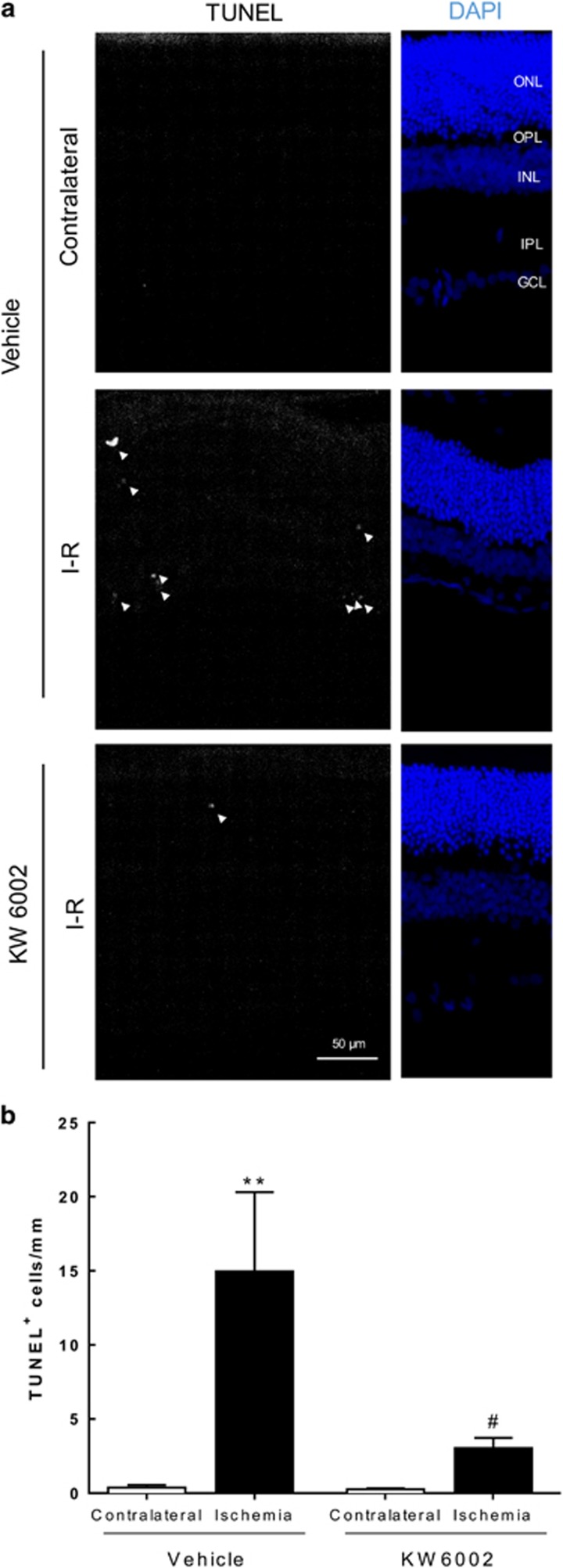
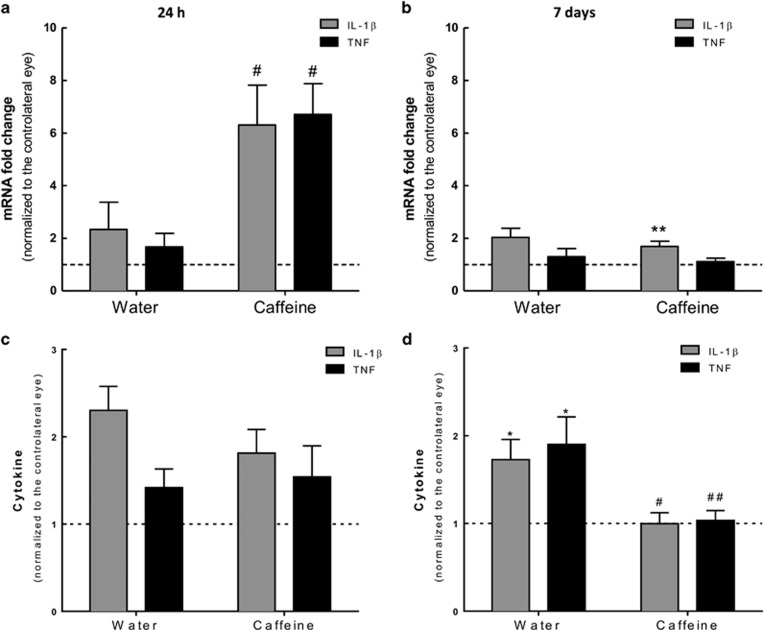
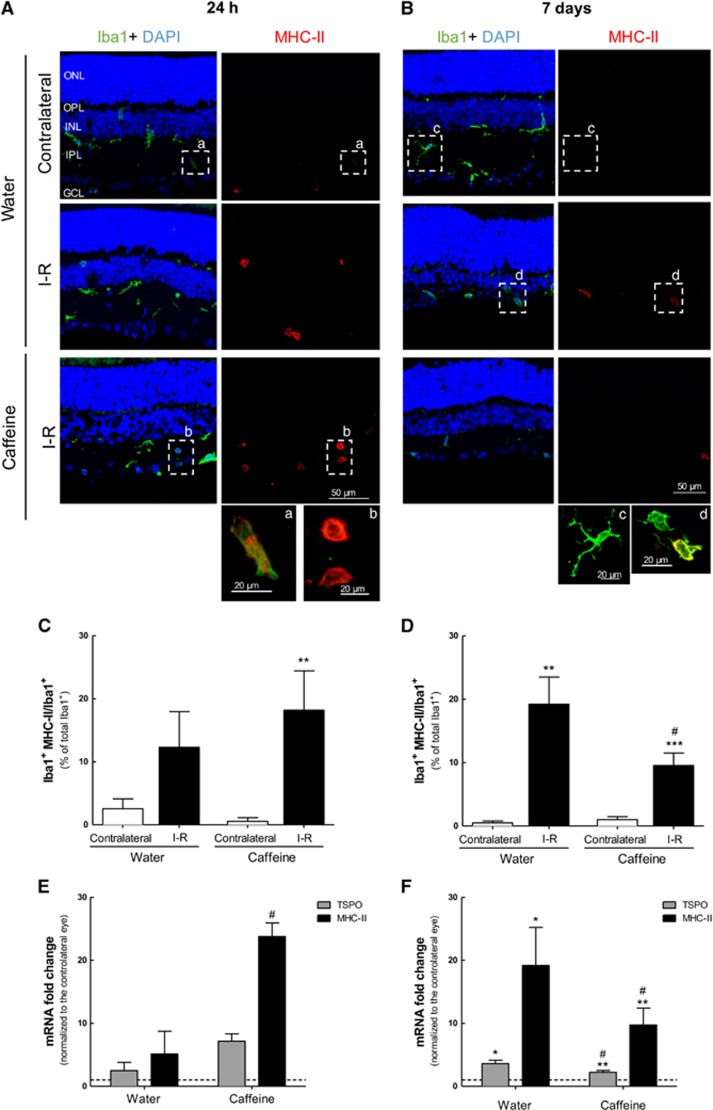
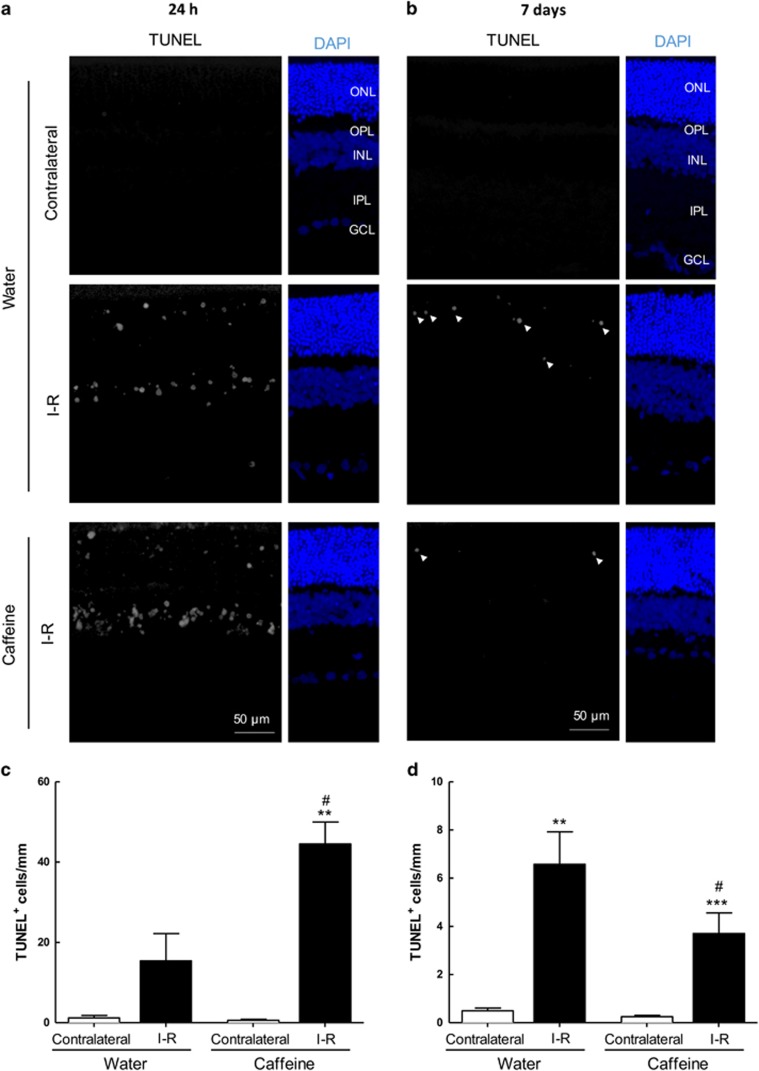
Transient retinal ischemia is a major complication of retinal degenerative diseases and contributes to visual impairment and blindness. Evidences indicate that microglia-mediated neuroinflammation has a key role in the neurodegenerative process, prompting the hypothesis that the control of microglia reactivity may afford neuroprotection to the retina against the damage induced by ischemia-reperfusion (I-R). The available therapeutic strategies for retinal degenerative diseases have limited potential, but the blockade of adenosine A receptor (AR) emerges as candidate strategy. Therefore, we evaluated the therapeutic potential of a selective AR antagonist (KW6002) against the damage elicited by I-R. The administration of KW6002 after I-R injury reduced microglia reactivity and inflammatory response and afforded protection to the retina. Moreover, we tested the ability of caffeine, an adenosine receptor antagonist, in mediating protection to the retina in the I-R injury model. We demonstrated that caffeine administration dually regulated microglia reactivity and cell death in the transient retinal ischemic model, depending on the reperfusion time. At 24 h of reperfusion, caffeine increased microglial reactivity, inflammatory response and cell death elicited by I-R. However, at 7 days of reperfusion, caffeine administration decreased microglia reactivity and reduced the levels of proinflammatory cytokines and cell death. Together, these results provide a novel evidence for the use of adenosine AR antagonists as potential therapy for retinal ischemic diseases and demonstrate the effect of caffeine on the regulation of microglia-mediated neuroinflammation in the transient ischemic model.
短暂性视网膜缺血是视网膜退行性疾病的主要并发症,导致视力损害和失明。有证据表明,小胶质细胞介导的神经炎症在神经退行性过程中起着关键作用,这促使人们假设控制小胶质细胞反应性可能为视网膜提供对缺血再灌注(I-R)损伤的神经保护。现有的视网膜退行性疾病治疗策略潜力有限,但腺苷 A 受体(AR)的阻断可能成为候选策略。因此,我们评估了选择性 AR 拮抗剂(KW6002)对 I-R 损伤的治疗潜力。I-R 损伤后给予 KW6002 可减少小胶质细胞反应性和炎症反应,并为视网膜提供保护。此外,我们测试了咖啡因(一种腺苷受体拮抗剂)在 I-R 损伤模型中对视网膜的保护作用。我们证明,咖啡因给药可根据再灌注时间双重调节短暂性视网膜缺血模型中小胶质细胞的反应性和细胞死亡。在再灌注 24 小时时,咖啡因增加了 I-R 引起的小胶质细胞反应性、炎症反应和细胞死亡。然而,在再灌注 7 天时,咖啡因给药减少了小胶质细胞反应性,并降低了促炎细胞因子的水平和细胞死亡。总之,这些结果为使用腺苷 AR 拮抗剂作为治疗视网膜缺血性疾病的潜在疗法提供了新的证据,并证明了咖啡因对短暂性缺血模型中小胶质细胞介导的神经炎症的调节作用。