Yalamudi Kavyach
Department of General Medicine, Newlife Hospitals, Khammam, Telangana State, India.
J Midlife Health. 2017 Jul-Sep;8(3):103-109. doi: 10.4103/jmh.JMH_67_15.
Obesity, physical inactivity, and altered estrogen levels play an important role in contributing to disease risk profile and autonomic dysfunction in healthy postmenopausal women. This study was conducted to test the correlation between autonomic dysfunction and dyslipidemia in healthy postmenopausal women.
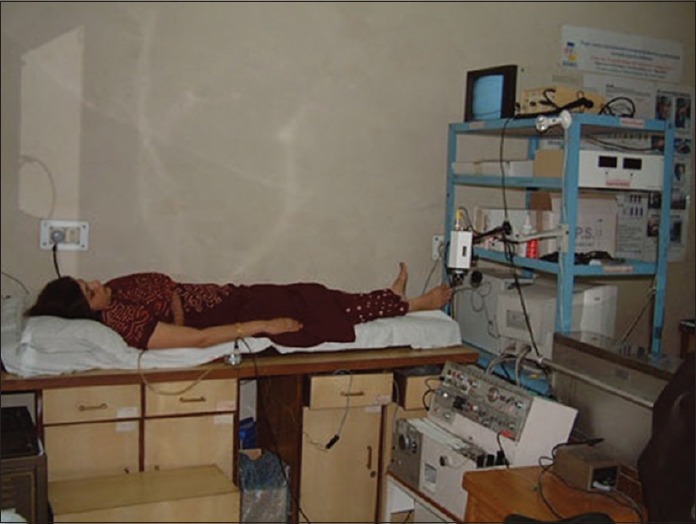
This study was carried out on sixty healthy postmenopausal women before the age of 65 years, without any gross systemic disease. The following five autonomic functional tests were performed on the study group: heart rate response to deep breathing, heart rate response to Valsalva maneuver, heart rate response to standing up from supine position, blood pressure response to sustained hand grip, and blood pressure response to standing up from supine position. Fasting lipid profile of the study group was tested.
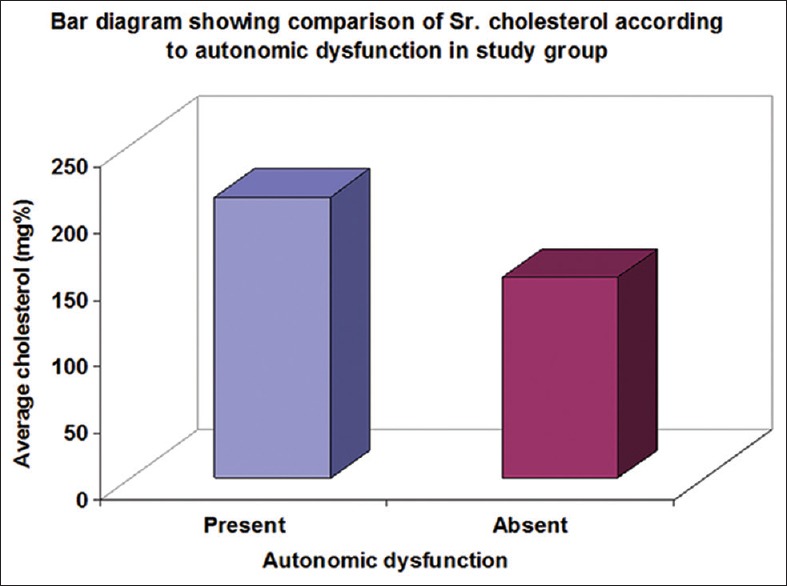
In the present study, autonomic dysfunction was found in 67% of healthy postmenopausal women. Among the sixty female healthy postmenopausal women included in the study, 68% were found to have dyslipidemia. In our study, there is a statistically significant correlation between autonomic dysfunction and dyslipidemia in healthy postmenopausal women. In these healthy postmenopausal women with increased serum cholesterol, serum low-density lipoprotein, and serum triglycerides, there was autonomic dysfunction which is statistically significant. There is no statistical significance on comparing serum high-density lipoprotein cholesterol with autonomic dysfunction in healthy postmenopausal women.
肥胖、缺乏体育锻炼以及雌激素水平改变在导致健康绝经后女性的疾病风险状况和自主神经功能障碍方面起着重要作用。本研究旨在测试健康绝经后女性自主神经功能障碍与血脂异常之间的相关性。
本研究针对65岁以下、无任何严重全身性疾病的60名健康绝经后女性进行。对研究组进行了以下五项自主神经功能测试:深呼吸时的心率反应、瓦尔萨尔瓦动作时的心率反应、从仰卧位起身时的心率反应、持续握力时的血压反应以及从仰卧位起身时的血压反应。对研究组进行了空腹血脂检测。
在本研究中,67%的健康绝经后女性存在自主神经功能障碍。在纳入研究的60名健康绝经后女性中,68%被发现患有血脂异常。在我们的研究中,健康绝经后女性的自主神经功能障碍与血脂异常之间存在统计学上的显著相关性。在这些血清胆固醇、血清低密度脂蛋白和血清甘油三酯升高的健康绝经后女性中,存在具有统计学意义的自主神经功能障碍。在健康绝经后女性中,比较血清高密度脂蛋白胆固醇与自主神经功能障碍无统计学意义。