Möller Marika C, Nordin Love Engström, Bartfai Aniko, Julin Per, Li Tie-Qiang
University Department of Rehabilitation Medicine, Danderyd Hospital, Stockholm, Sweden.
Division of Rehabilitation Medicine, Department of Clinical Sciences, Karolinska Institutet, Stockholm, Sweden.
Front Neurol. 2017 Sep 21;8:496. doi: 10.3389/fneur.2017.00496. eCollection 2017.
Fatigue is the most frequently reported persistent symptom following a mild traumatic brain injury (mTBI), but the explanations for the persisting fatigue symptoms in mTBI remain controversial. In this study, we investigated the change of cerebral blood flow during the performance of a psychomotor vigilance task (PVT) by using pseudo-continuous arterial spin labeling (PCASL) MRI technique to better understand the relationship between fatigability and brain activity in mTBI.
Ten patients (mean age: 37.5 ± 11.2 years) with persistent complaints of fatigue after mTBI and 10 healthy controls (mean age 36.9 ± 11.0 years) were studied. Both groups completed a 20-min long PVT inside a clinical MRI scanner during simultaneous measurements of reaction time and regional cerebral blood flow (rCBF) with PCASL technique. Cognitive fatigability and neural activity during PVT were analyzed by dividing the performance and rCBF data into quintiles in addition to the assessment of self-rated fatigue before and after the PVT.
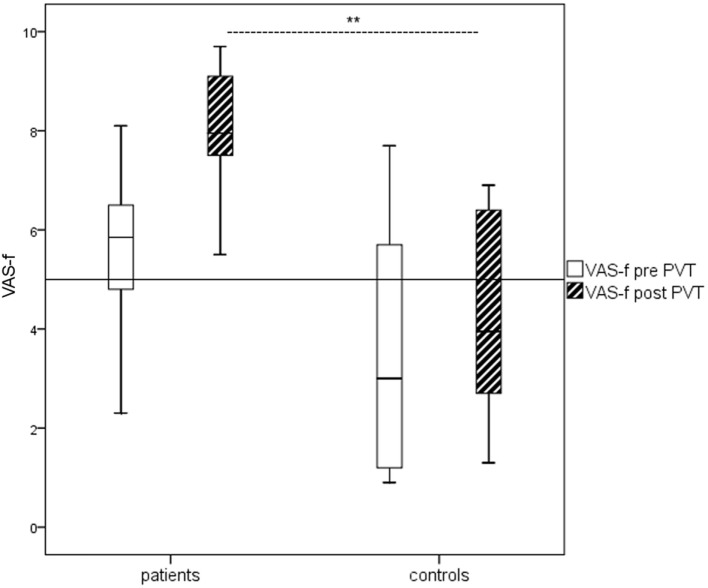
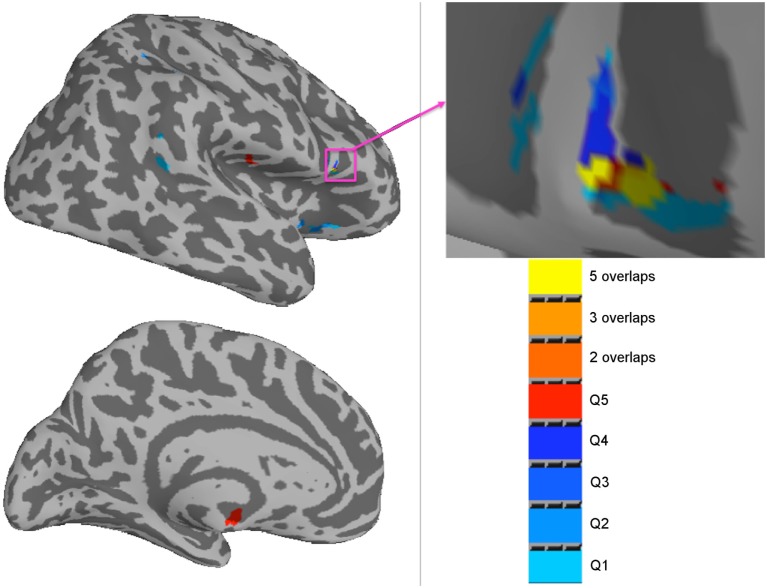
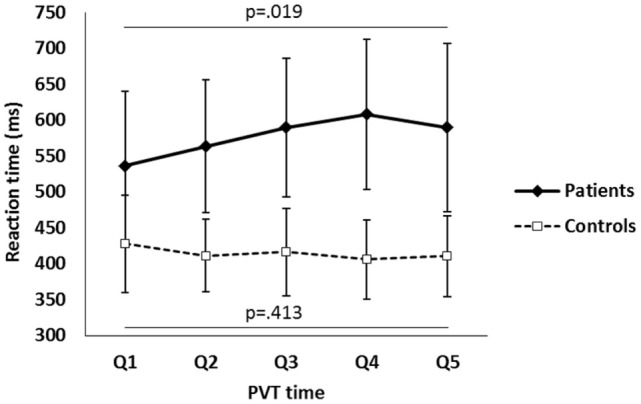
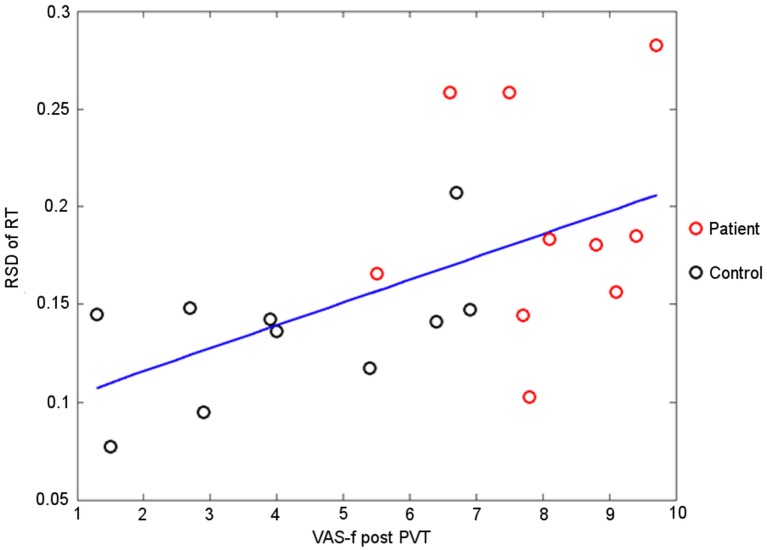
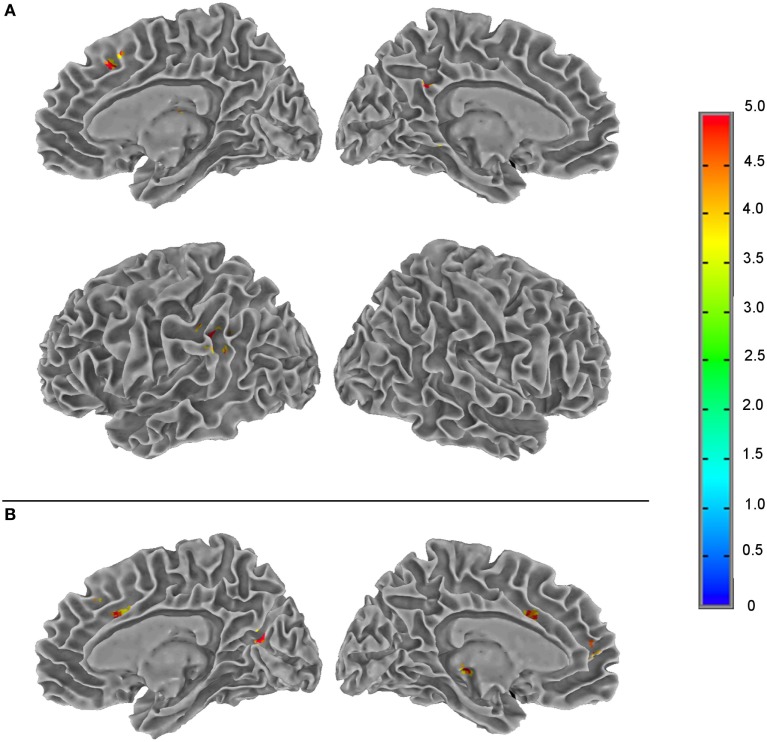
The patients showed significant fatigability during the PVT while the controls had a stable performance. The variability in performance was also significantly higher among the patients, indicating monitoring difficulty. A three-way ANOVA, modeling of the rCBF data demonstrated that there was a significant interaction effect between the subject group and performance time during PVT in a mainly frontal/thalamic network, indicating that the pattern of rCBF change for the mTBI patients differed significantly from that of healthy controls. In the mTBI patients, fatigability at the end of the PVT was related to increased rCBF in the right middle frontal gyrus, while self-rated fatigue was related to increased rCBF in left medial frontal and anterior cingulate gyri and decreases of rCBF in a frontal/thalamic network during this period.
This study demonstrates that PCASL is a useful technique to investigate neural correlates of fatigability and fatigue in mTBI patients. Patients suffering from fatigue after mTBI used different brain networks compared to healthy controls during a vigilance task and in mTBI, there was a distinction between rCBF changes related to fatigability vs. perceived fatigue. Whether networks for fatigability and self-rated fatigue are different, needs to be investigated in future studies.
疲劳是轻度创伤性脑损伤(mTBI)后最常报告的持续症状,但mTBI中持续疲劳症状的原因仍存在争议。在本研究中,我们使用伪连续动脉自旋标记(PCASL)MRI技术研究了执行精神运动警觉任务(PVT)期间脑血流量的变化,以更好地理解mTBI中疲劳易感性与脑活动之间的关系。
研究了10例mTBI后持续抱怨疲劳的患者(平均年龄:37.5±11.2岁)和10名健康对照者(平均年龄36.9±11.0岁)。两组均在临床MRI扫描仪内完成了一项20分钟的PVT,同时用PCASL技术测量反应时间和局部脑血流量(rCBF)。除了评估PVT前后的自我评定疲劳外,通过将表现和rCBF数据分为五分位数来分析PVT期间的认知疲劳易感性和神经活动。
患者在PVT期间表现出明显的疲劳易感性,而对照组表现稳定。患者的表现变异性也显著更高,表明监测困难。对rCBF数据进行建模的三因素方差分析表明,在主要为额叶/丘脑网络的PVT期间,受试者组与表现时间之间存在显著的交互作用,表明mTBI患者的rCBF变化模式与健康对照者有显著差异。在mTBI患者中,PVT结束时的疲劳易感性与右侧额中回rCBF增加有关,而自我评定疲劳与左侧额内侧回和前扣带回rCBF增加以及在此期间额叶/丘脑网络rCBF减少有关。
本研究表明,PCASL是一种研究mTBI患者疲劳易感性和疲劳神经相关性的有用技术。与健康对照者相比,mTBI后疲劳的患者在警觉任务期间使用了不同的脑网络,并且在mTBI中,与疲劳易感性相关的rCBF变化与感知疲劳相关的rCBF变化有所不同。疲劳易感性和自我评定疲劳的网络是否不同,需要在未来的研究中进行调查。