JDRF/Wellcome Trust Diabetes and Inflammation Laboratory, Wellcome Trust Centre for Human Genetics, University of Oxford, NIHR Oxford Biomedical Research Centre, Nuffield Department of Medicine, Roosevelt Drive, Oxford, OX3 7BN, UK.
JDRF/Wellcome Trust Diabetes and Inflammation Laboratory, Cambridge Institute for Medical Research, University of Cambridge, Cambridge, UK.
Diabetologia. 2018 Jan;61(1):147-157. doi: 10.1007/s00125-017-4440-y. Epub 2017 Oct 5.
AIMS/HYPOTHESIS: The genetic risk of type 1 diabetes has been extensively studied. However, the genetic determinants of age at diagnosis (AAD) of type 1 diabetes remain relatively unexplained. Identification of AAD genes and pathways could provide insight into the earliest events in the disease process.
Using ImmunoChip data from 15,696 cases, we aimed to identify regions in the genome associated with AAD.
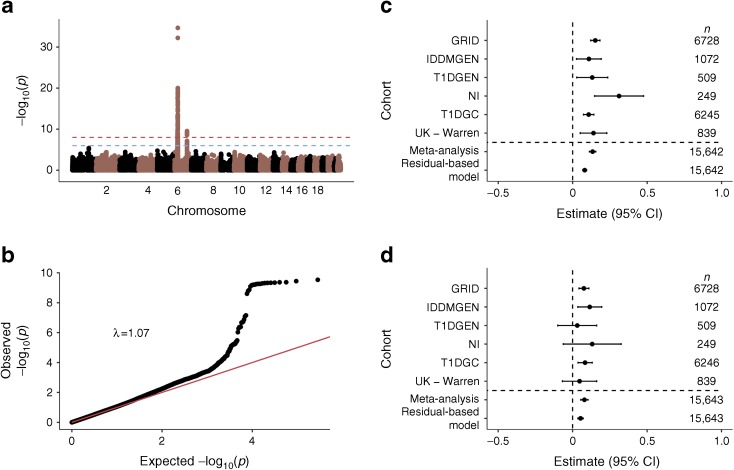
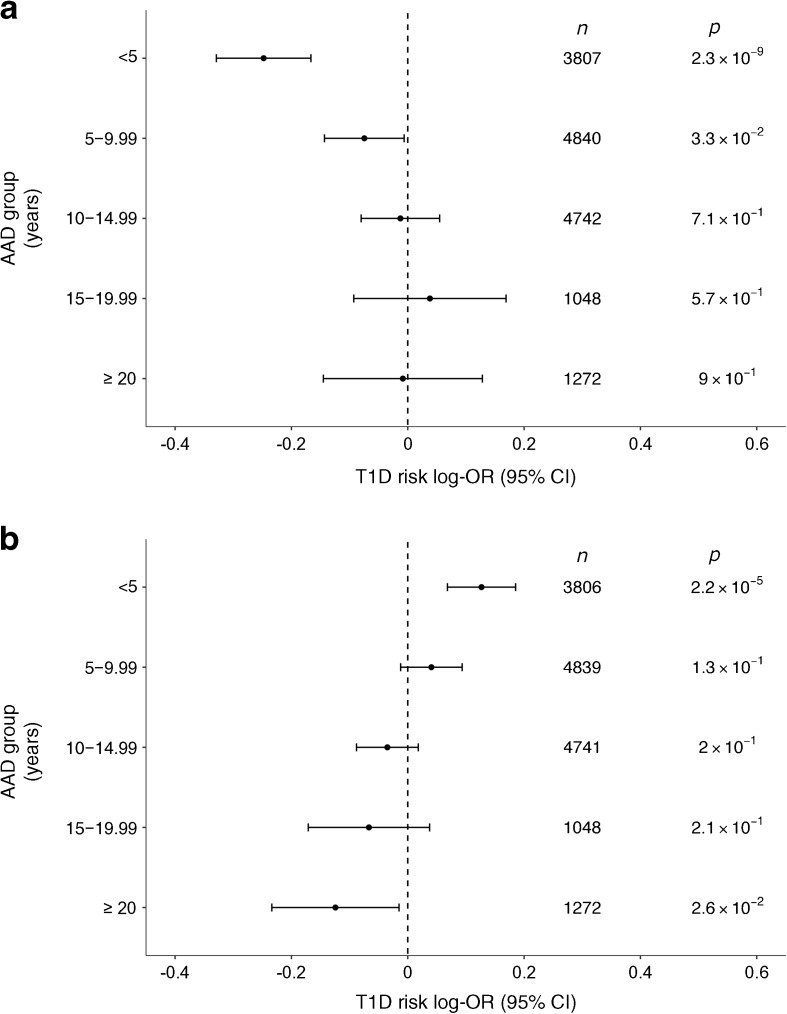
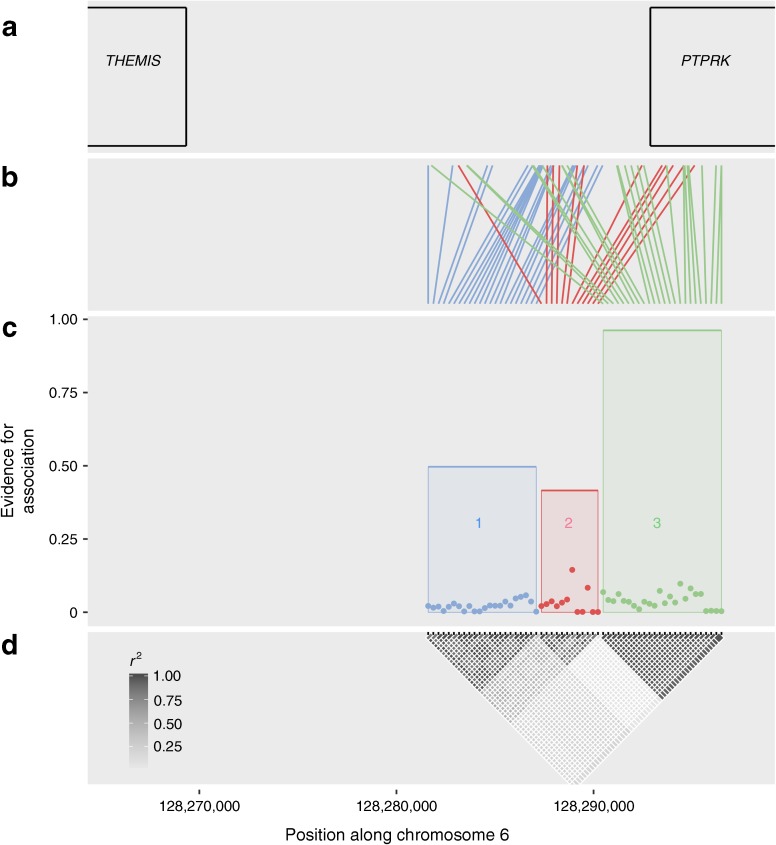
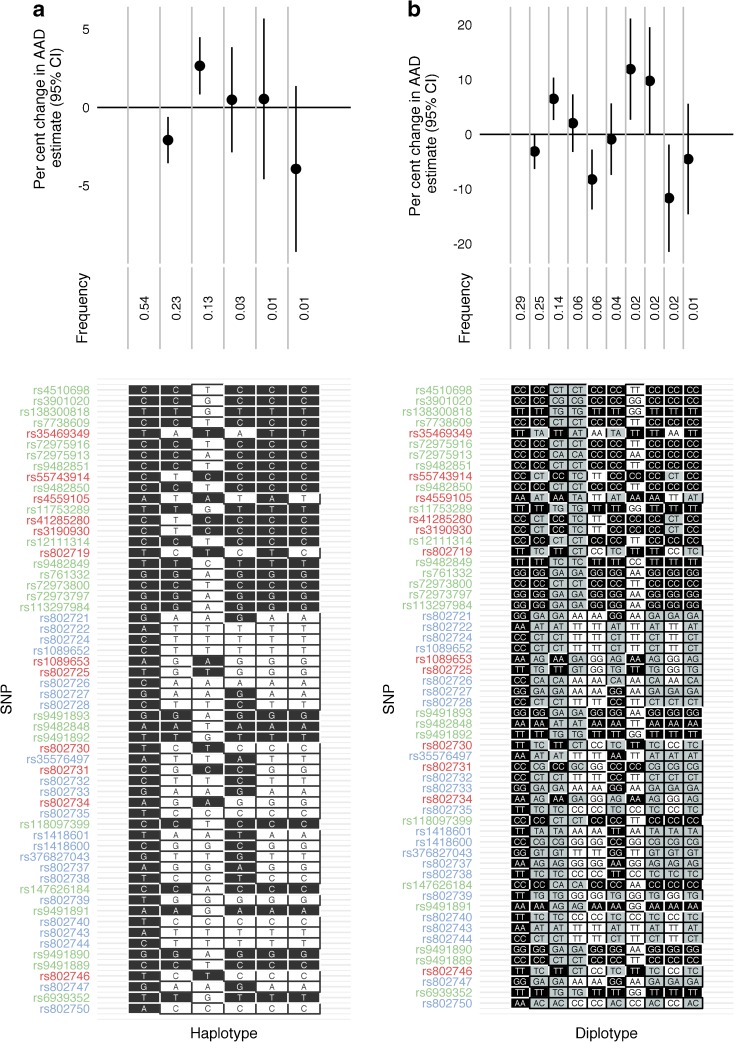
Two regions were convincingly associated with AAD (p < 5 × 10): the MHC on 6p21, and 6q22.33. Fine-mapping of 6q22.33 identified two AAD-associated haplotypes in the region nearest to the genes encoding protein tyrosine phosphatase receptor kappa (PTPRK) and thymocyte-expressed molecule involved in selection (THEMIS). We examined the susceptibility to type 1 diabetes at these SNPs by performing a meta-analysis including 19,510 control participants. Although these SNPs were not associated with type 1 diabetes overall (p > 0.001), the SNP most associated with AAD, rs72975913, was associated with susceptibility to type 1 diabetes in those individuals diagnosed at less than 5 years old (p = 2.3 × 10).
CONCLUSION/INTERPRETATION: PTPRK and its neighbour THEMIS are required for early development of the thymus, which we can assume influences the initiation of autoimmunity. Non-HLA genes may only be detectable as risk factors for the disease in individuals diagnosed under the age 5 years because, after that period of immune development, their role in disease susceptibility has become redundant.
目的/假设:1 型糖尿病的遗传风险已得到广泛研究。然而,1 型糖尿病的诊断年龄(AAD)的遗传决定因素仍相对未知。鉴定 AAD 基因和途径可以深入了解疾病过程中的最早事件。
我们使用来自 15696 例病例的 ImmunoChip 数据,旨在确定与 AAD 相关的基因组区域。
两个区域与 AAD 有明显关联(p<5×10):6p21 上的 MHC 和 6q22.33。对 6q22.33 的精细映射确定了该区域最接近编码蛋白酪氨酸磷酸酶受体 kappa(PTPRK)和参与选择的胸腺细胞表达分子(THEMIS)的基因的两个 AAD 相关单倍型。我们通过对包括 19510 名对照参与者的荟萃分析来检查这些 SNP 对 1 型糖尿病的易感性。尽管这些 SNP 总体上与 1 型糖尿病无关(p>0.001),但与 AAD 最相关的 SNP,rs72975913,与 5 岁以下诊断为 1 型糖尿病的个体的易感性相关(p=2.3×10)。
结论/解释:PTPRK 和其邻居 THEMIS 是胸腺早期发育所必需的,我们可以假设这会影响自身免疫的启动。非 HLA 基因可能仅在 5 岁以下诊断的个体中作为疾病的危险因素被检测到,因为在这段免疫发育期之后,它们在疾病易感性中的作用已经变得多余。