Department of Molecular and Human Genetics, Institute of Science, Banaras Hindu University, Varanasi, India.
Department of Obstetrics & Gynaecology, Institute of Medical Sciences, Banaras Hindu University, Varanasi, India.
Sci Rep. 2017 Oct 9;7(1):12876. doi: 10.1038/s41598-017-13232-3.
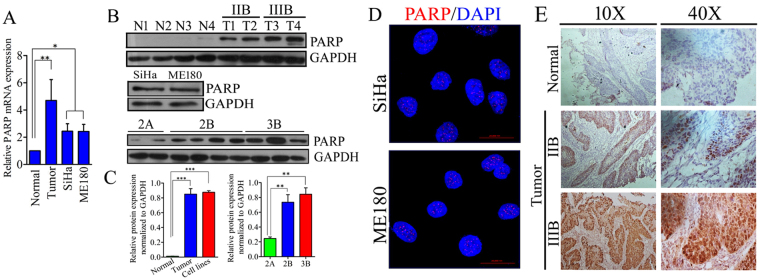
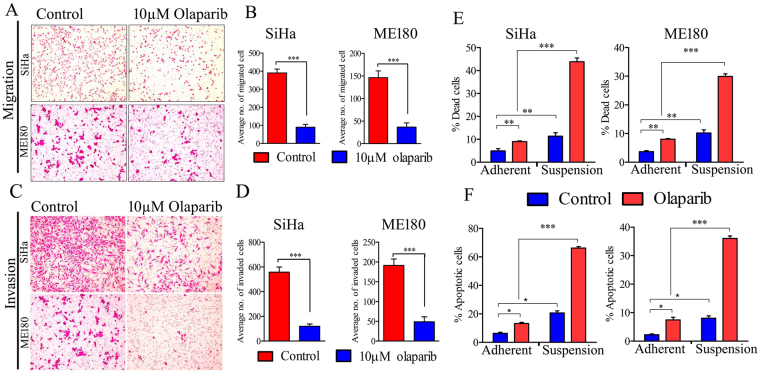
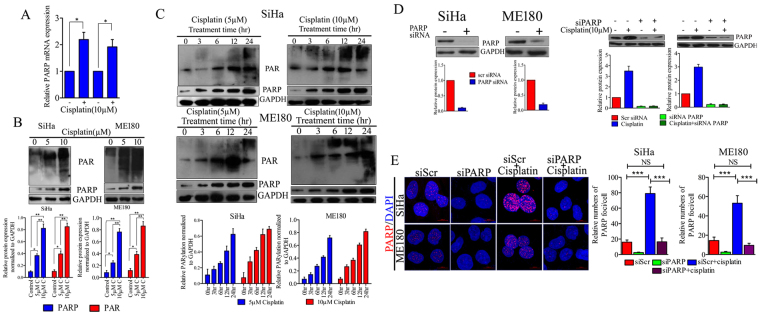
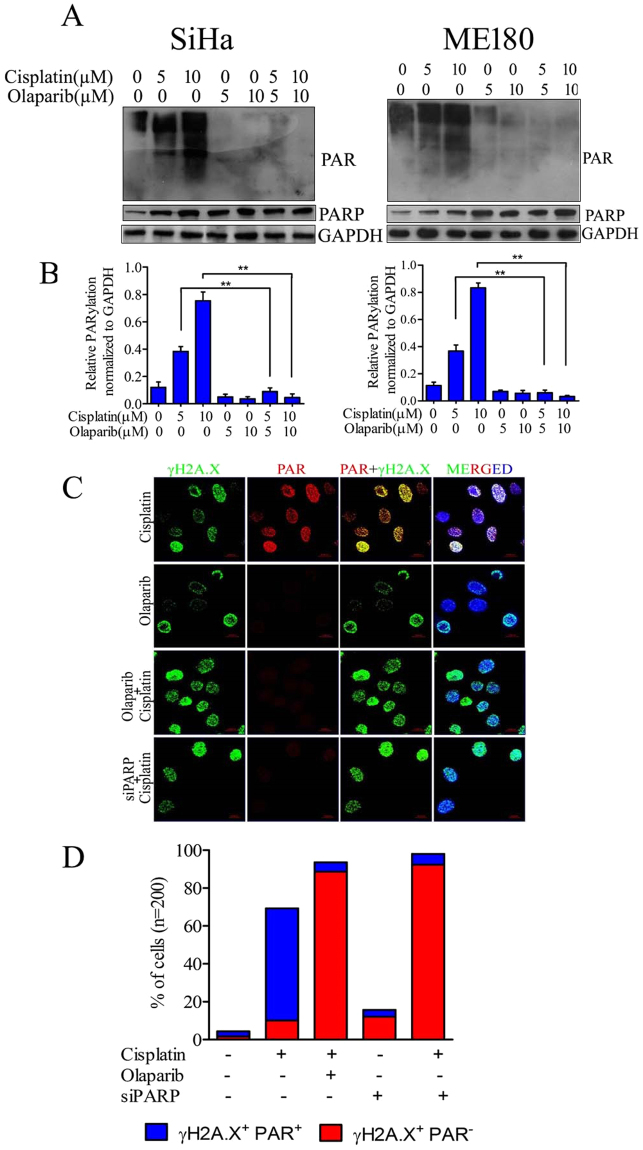
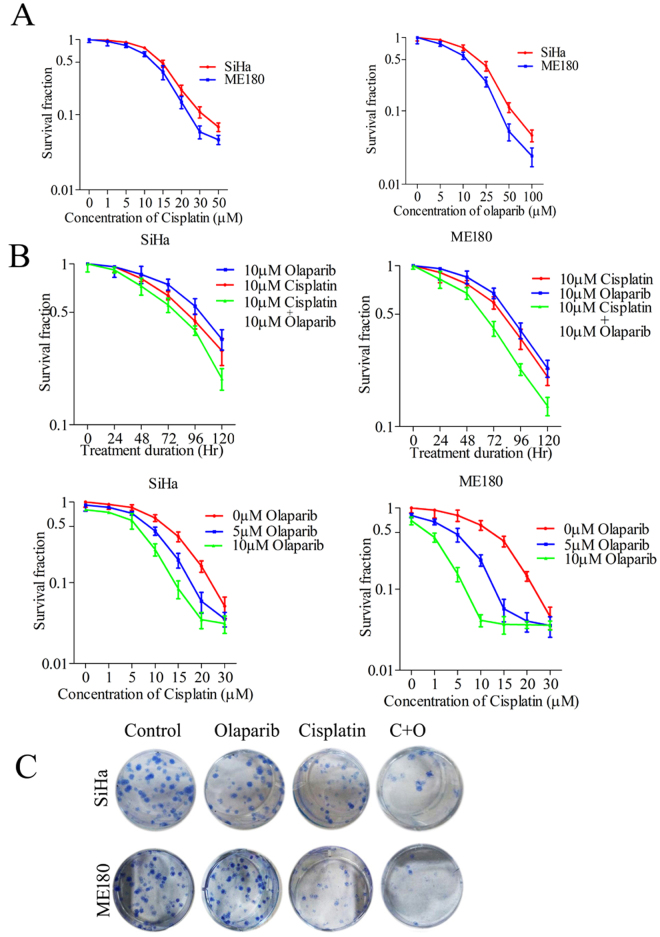
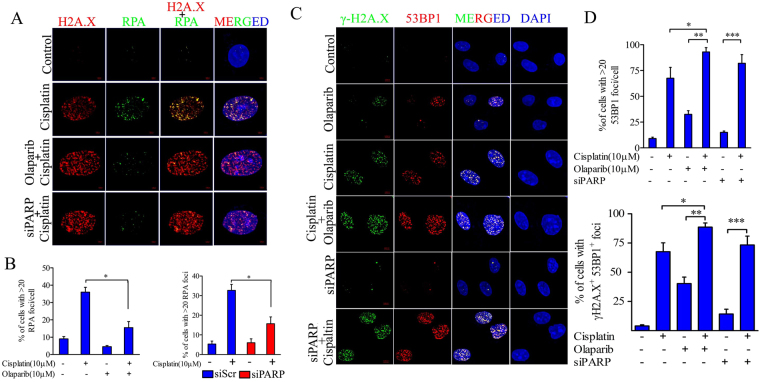
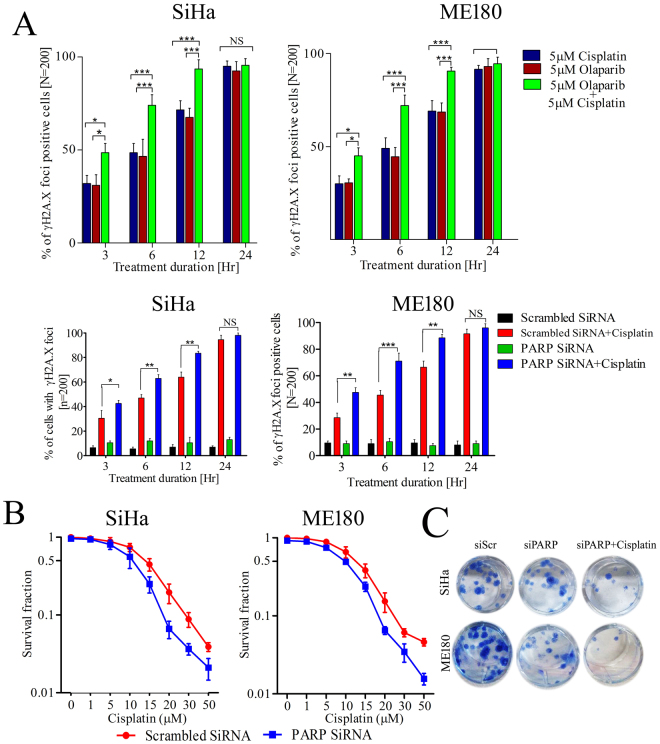
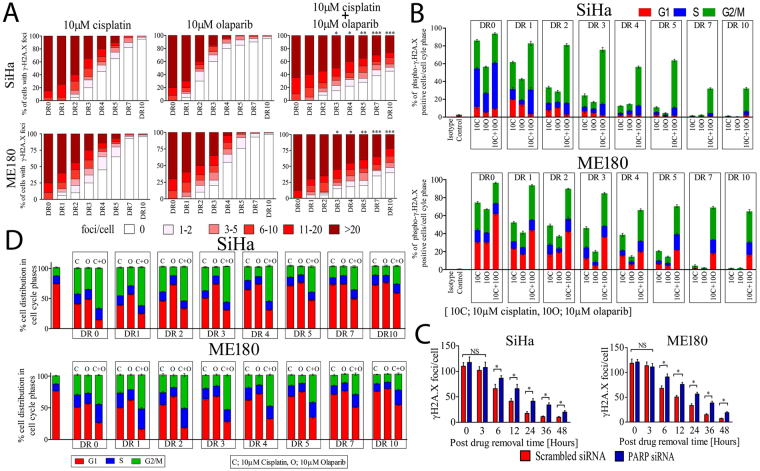
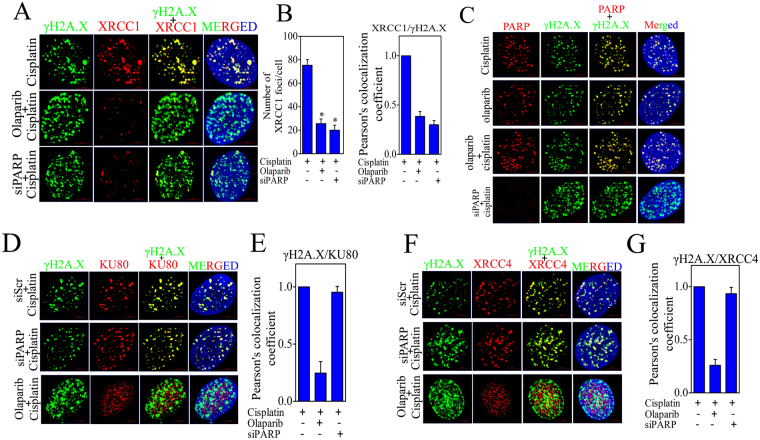
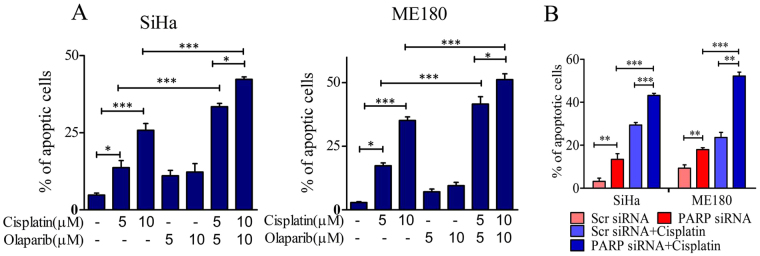
PARP1 trapping at DNA lesion by pharmacological inhibitors has been exploited in several cancers exhibiting defects in DNA repair mechanisms. PARP1 hyperactivation is involved in therapeutic resistance in multiple cancers. The role of PARP1 in cervical cancer (CC) resistance and implication of PARP inhibitor is yet to be elucidated. Our data demonstrates significantly higher expression of PARP1 in primary cervical tumors and CC cell lines SiHa and ME180. Upon cisplatin treatment CC cells display significant overexpression of PARP1 and its hyperactivation. PARP inhibitor olaparib shows significant anti-proliferative effect on CC cells and drive loss of clonogenic survival and enhanced cell death in combination with cisplatin. PARP inhibited cells show delay in resolution of γH2A.X foci and prolonged late S and G2-M phase arrest resulting in apoptosis. Further, PARP inhibition disrupts the localization of base excision repair (BER) effector XRCC1 and non-homologous end joining (NHEJ) proteins Ku80 and XRCC4. Due to disrupted relocation of repair factors, cisplatin induced stalled replication forks collapse and convert into double strand breaks (DSBs). Interestingly, PARP inhibition also shows anti-migratory and anti-invasive properties in CC cells, increases anchorage independent cell death and induces anoikis. Collectively, our data demonstrates therapeutic potential of PARP inhibitor in cervical cancer.
PARP1 在 DNA 损伤处的捕获被药理学抑制剂用于几种存在 DNA 修复机制缺陷的癌症中。PARP1 的过度激活与多种癌症的治疗耐药性有关。PARP1 在宫颈癌 (CC) 耐药中的作用及其 PARP 抑制剂的影响尚待阐明。我们的数据表明,PARP1 在原发性宫颈肿瘤和 CC 细胞系 SiHa 和 ME180 中的表达明显更高。顺铂处理后,CC 细胞显示出 PARP1 的显著过表达及其过度激活。PARP 抑制剂奥拉帕利对 CC 细胞具有显著的抗增殖作用,并与顺铂联合促进克隆存活丧失和增强细胞死亡。PARP 抑制细胞显示 γH2A.X 焦点的分辨率延迟,并延长晚期 S 和 G2-M 期阻滞,导致细胞凋亡。此外,PARP 抑制破坏碱基切除修复 (BER) 效应因子 XRCC1 和非同源末端连接 (NHEJ) 蛋白 Ku80 和 XRCC4 的定位。由于修复因子的重新定位被破坏,顺铂诱导的停滞复制叉崩溃并转化为双链断裂 (DSB)。有趣的是,PARP 抑制也显示出 CC 细胞的抗迁移和抗侵袭特性,增加无锚定细胞死亡并诱导细胞凋亡。总之,我们的数据表明 PARP 抑制剂在宫颈癌中有治疗潜力。