de Jong Rob C M, Ewing Mark M, de Vries Margreet R, Karper Jacco C, Bastiaansen Antonius J N M, Peters Hendrika A B, Baghana Fabiana, van den Elsen Peter J, Gongora Céline, Jukema J Wouter, Quax Paul H A
Department of Surgery, Leiden University Medical Center (LUMC), Leiden, The Netherlands.
Einthoven Laboratory for Experimental Vascular Medicine, Leiden University Medical Center (LUMC), Leiden, The Netherlands.
PLoS One. 2017 Oct 10;12(10):e0185820. doi: 10.1371/journal.pone.0185820. eCollection 2017.
Genetic P300/CBP-associated factor (PCAF) variation affects restenosis-risk in patients. PCAF has lysine acetyltransferase activity and promotes nuclear factor kappa-beta (NFκB)-mediated inflammation, which drives post-interventional intimal hyperplasia development. We studied the contributing role of PCAF in post-interventional intimal hyperplasia.
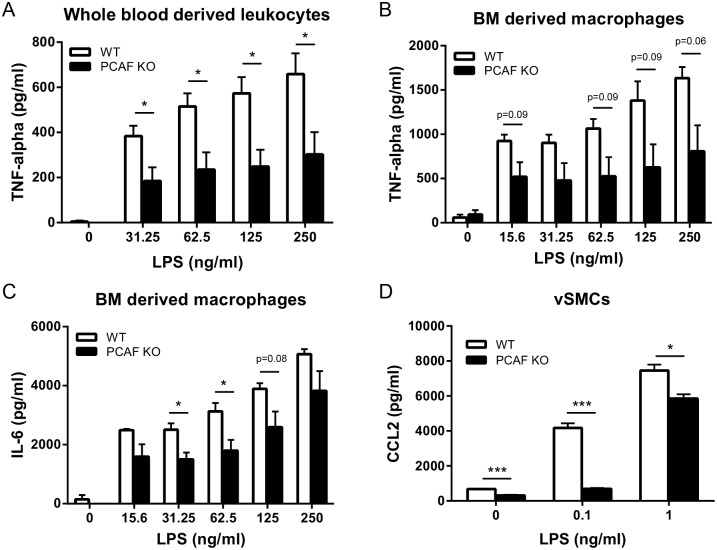
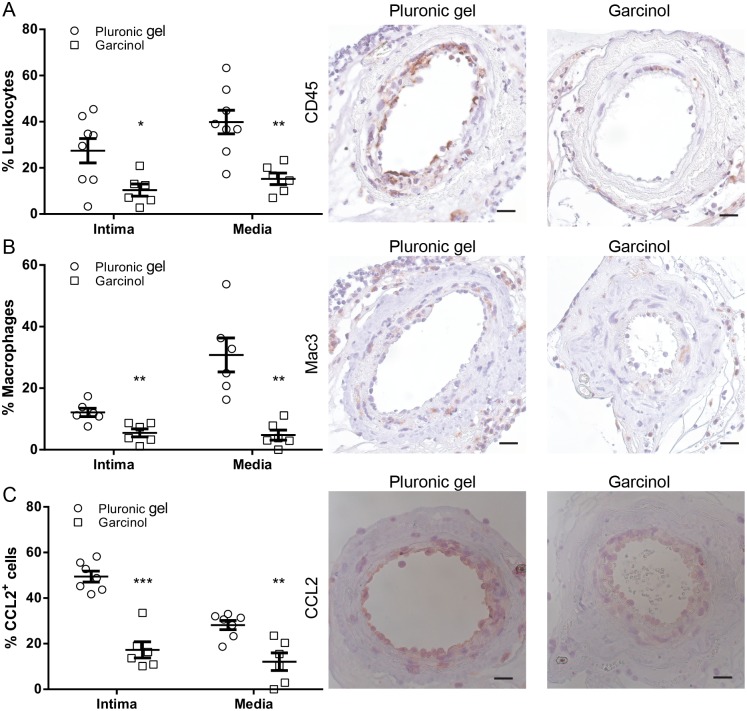
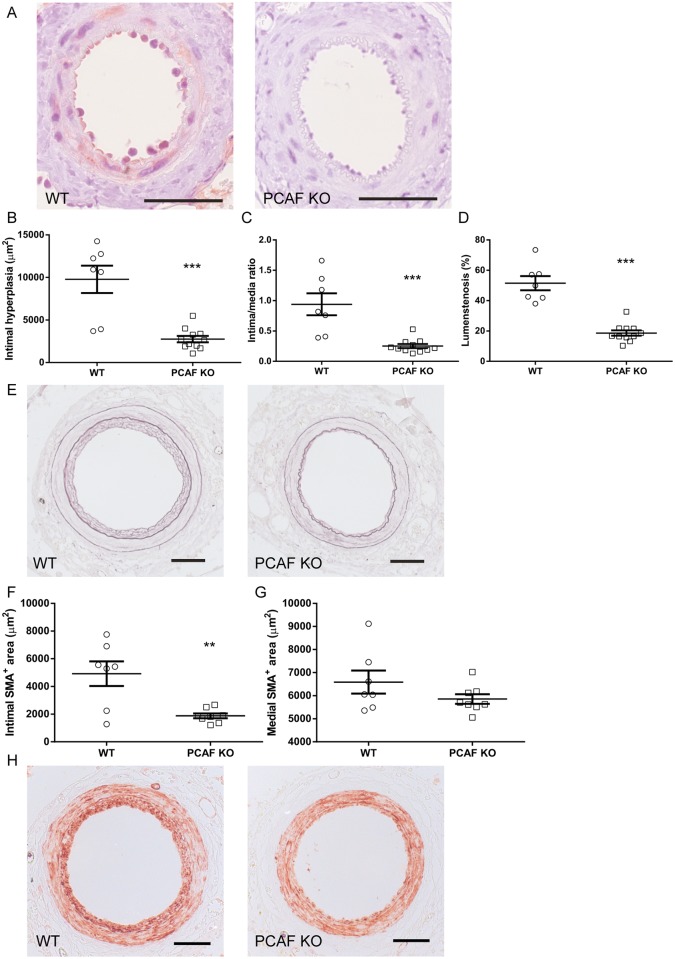
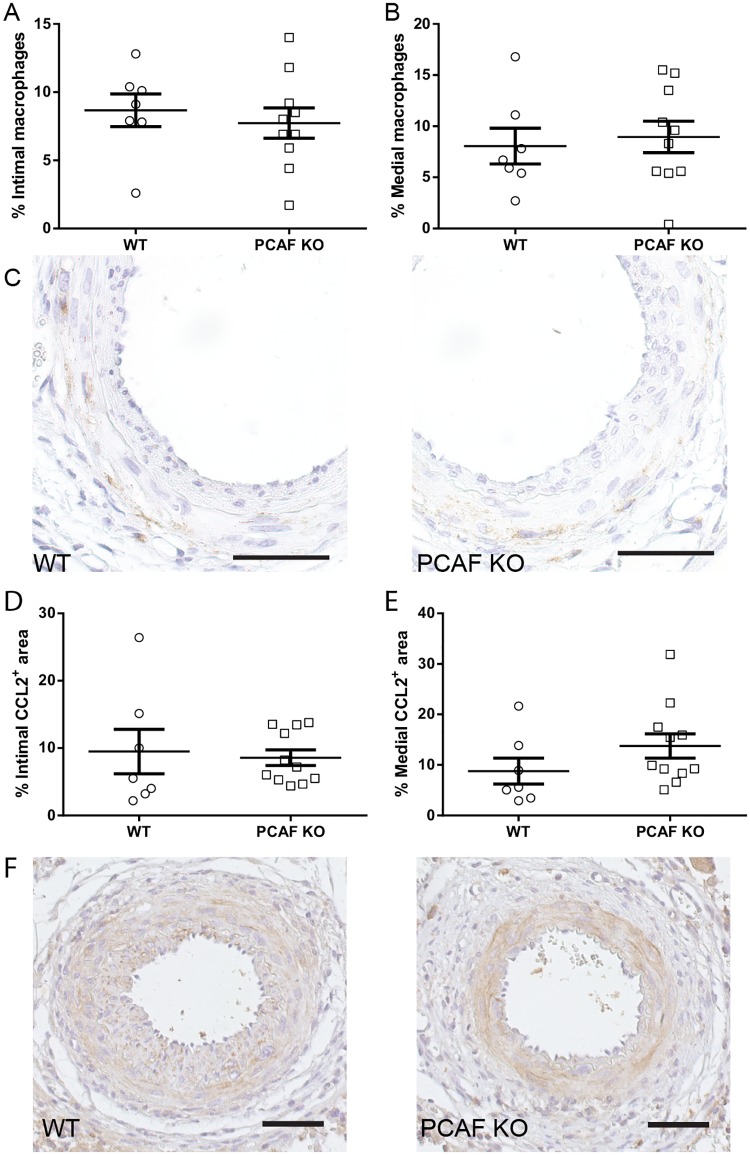
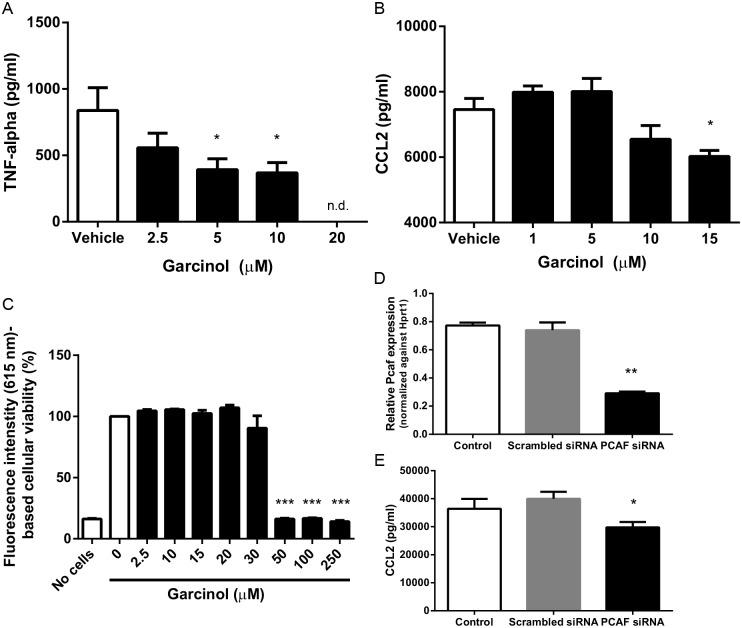
PCAF contribution to inflammation and intimal hyperplasia was assessed in leukocytes, macrophages and vascular smooth muscle cells (vSMCs) in vitro and in a mouse model for intimal hyperplasia, in which a cuff is placed around the femoral artery. PCAF deficiency downregulate CCL2, IL-6 and TNF-alpha expression, as demonstrated on cultured vSMCs, leukocytes and macrophages. PCAF KO mice showed a 71.8% reduction of vSMC-rich intimal hyperplasia, a 73.4% reduction of intima/media ratio and a 63.7% reduction of luminal stenosis after femoral artery cuff placement compared to wild type (WT) mice. The association of PCAF and vascular inflammation was further investigated using the potent natural PCAF inhibitor garcinol. Garcinol treatment reduced CCL2 and TNF-alpha expression, as demonstrated on cultured vSMCs and leukocytes. To assess the effect of garcinol treatment on vascular inflammation we used hypercholesterolemic ApoE*3-Leiden mice. After cuff placement, garcinol treatment resulted in reduced arterial leukocyte and macrophage adherence and infiltration after three days compared to untreated animals.
These results identify a vital role for the lysine acetyltransferase PCAF in the regulation of local inflammation after arterial injury and likely the subsequent vSMC proliferation, responsible for intimal hyperplasia.
基因P300/CBP相关因子(PCAF)变异会影响患者的再狭窄风险。PCAF具有赖氨酸乙酰转移酶活性,并促进核因子κB(NFκB)介导的炎症,这种炎症会推动介入治疗后内膜增生的发展。我们研究了PCAF在介入治疗后内膜增生中的作用。
在体外的白细胞、巨噬细胞和血管平滑肌细胞(vSMC)以及内膜增生小鼠模型(在股动脉周围放置套管)中评估了PCAF对炎症和内膜增生的作用。PCAF缺乏会下调培养的vSMC、白细胞和巨噬细胞中CCL2、IL-6和TNF-α的表达。与野生型(WT)小鼠相比,PCAF基因敲除(KO)小鼠在股动脉放置套管后,富含vSMC的内膜增生减少了71.8%,内膜/中膜比值降低了73.4%,管腔狭窄减少了63.7%。使用有效的天然PCAF抑制剂藤黄酚进一步研究了PCAF与血管炎症的关联。藤黄酚处理降低了培养的vSMC和白细胞中CCL2和TNF-α的表达。为了评估藤黄酚处理对血管炎症的影响,我们使用了高胆固醇血症的ApoE*3-Leiden小鼠。放置套管后,与未处理的动物相比,藤黄酚处理在三天后导致动脉白细胞和巨噬细胞的黏附和浸润减少。
这些结果表明赖氨酸乙酰转移酶PCAF在动脉损伤后局部炎症的调节中起着至关重要的作用,并且可能在随后导致内膜增生的vSMC增殖中也起作用。