Lin Fei, Xu Ying, Chang Yaowen, Liu Chao, Jia Xu, Ling Baodong
Sichuan Province College Key Laboratory of Structure-Specific Small Molecule Drugs, School of Pharmacy, Chengdu Medical College, Chengdu, Sichuan, China.
Non-coding RNA and Drug Discovery Key Laboratory of Sichuan Province, Chengdu Medical College, Chengdu, Sichuan, China.
Front Microbiol. 2017 Sep 26;8:1836. doi: 10.3389/fmicb.2017.01836. eCollection 2017.
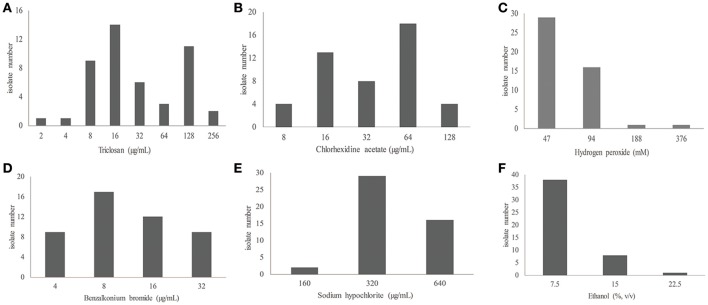
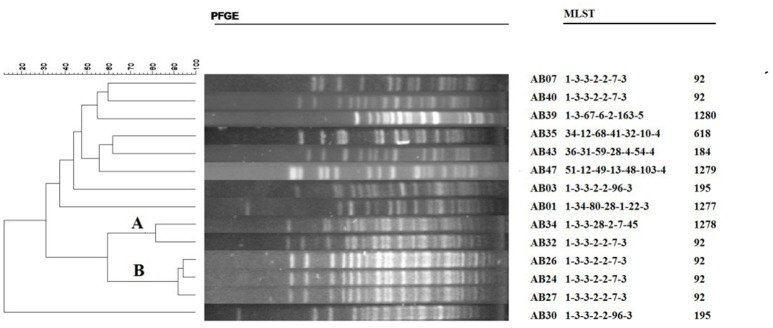
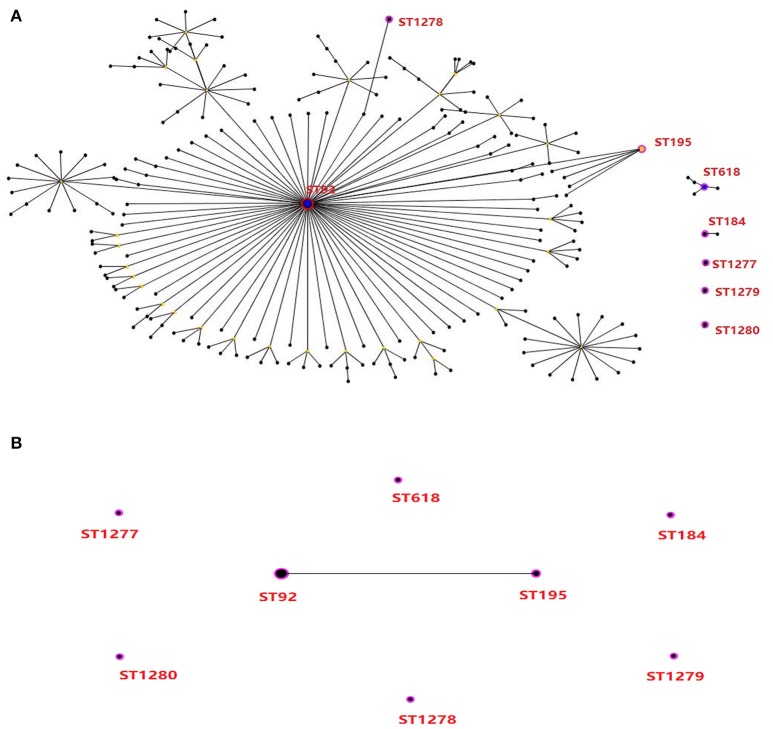
Active efflux is regarded as a common mechanism for antibiotic and biocide resistance. However, the role of many drug efflux pumps in biocide resistance in remains unknown. Using biocide-resistant clinical isolates, we investigated the incidence of 11 known/putative antimicrobial resistance efflux pump genes (Δ, and ) and triclosan target gene through PCR and DNA sequencing. Reverse transcriptase quantitative PCR was conducted to assess the correlation between the efflux pump gene expression and the reduced susceptibility to triclosan or chlorhexidine. The isolates displayed high levels of reduced susceptibility to triclosan, chlorhexidine, benzalkonium, hydrogen peroxide, and ethanol. Most tested isolates were resistant to multiple antibiotics. Efflux resistance genes were widely distributed and generally expressed in . Although no clear relation was established between efflux pump gene expression and antibiotic resistance or reduced biocide susceptibility, triclosan non-susceptible isolates displayed relatively increased expression of and whereas chlorhexidine non-susceptible isolates had increased and gene expression. Increased expression of and was also demonstrated in multiple antibiotic resistant isolates. Exposure of isolates to subinhibitory concentrations of triclosan or chlorhexidine induced gene expression of and f, and , respectively. A point mutation in FabI, Gly95Ser, was observed in only one triclosan-resistant isolate. Multiple sequence types with the major clone complex, CC92, were identified in high level triclosan-resistant isolates. Overall, this study showed the high prevalence of antibiotic and biocide resistance as well as the complexity of intertwined resistance mechanisms in clinical isolates of , which highlights the importance of antimicrobial stewardship and resistance surveillance in clinics.
主动外排被认为是抗生素和杀菌剂耐药性的常见机制。然而,许多药物外排泵在杀菌剂耐药性中的作用仍不清楚。我们使用对杀菌剂耐药的临床分离株,通过聚合酶链反应(PCR)和DNA测序研究了11种已知/推定的抗微生物耐药性外排泵基因(Δ、 和 )以及三氯生靶基因 的发生率。进行逆转录定量PCR以评估外排泵基因表达与对三氯生或洗必泰敏感性降低之间的相关性。这些分离株对三氯生、洗必泰、苯扎氯铵、过氧化氢和乙醇表现出高度的敏感性降低。大多数测试分离株对多种抗生素耐药。外排耐药基因广泛分布且通常在 中表达。虽然在外排泵基因表达与抗生素耐药性或杀菌剂敏感性降低之间未建立明确的关系,但对三氯生不敏感的分离株显示 和 的表达相对增加,而对洗必泰不敏感的分离株 和 基因表达增加。在多重耐药分离株中也证实了 和 的表达增加。将分离株暴露于亚抑菌浓度的三氯生或洗必泰分别诱导了 和 、 和 的基因表达。仅在一株对三氯生耐药的分离株中观察到FabI中的一个点突变,Gly95Ser。在高耐三氯生分离株中鉴定出具有主要克隆复合体CC92的多种序列类型。总体而言,本研究表明在 的临床分离株中抗生素和杀菌剂耐药性的高流行率以及相互交织的耐药机制的复杂性,这突出了临床中抗菌药物管理和耐药性监测的重要性。