Genc C G, Klümpen H J, van Oijen M G H, van Eijck C H J, Nieveen van Dijkum E J M
Department of Surgery, Academic Medical Center, Meibergdreef 9, PO Box 22660, 1105 AZ, Amsterdam, The Netherlands.
Department of Medical Oncology, Academic Medical Center, Amsterdam, The Netherlands.
World J Surg. 2018 Feb;42(2):490-497. doi: 10.1007/s00268-017-4278-y.
Large population-based studies give insight into the prognosis and treatment outcomes of patients with pancreatic neuroendocrine tumors (pNETs). Therefore, we provide an overview of the treatment and related survival of pNET in the Netherlands.
Patients diagnosed with pNET between 2008 and 2013 from the Netherlands Cancer Registry were included. Patient, tumors and treatment characteristics were reported. Survival analyses with log-rank testing were performed to compare survival.
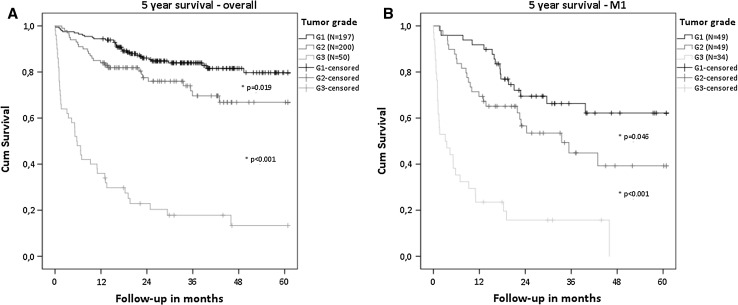
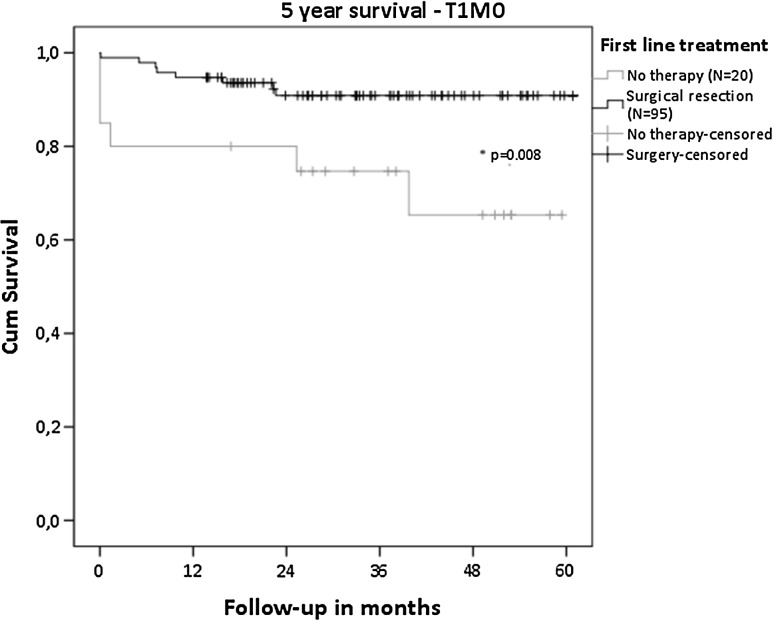
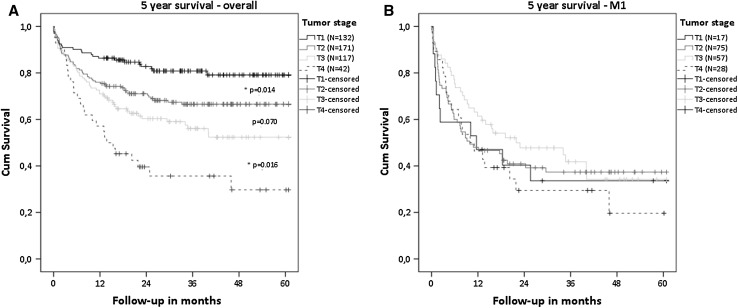
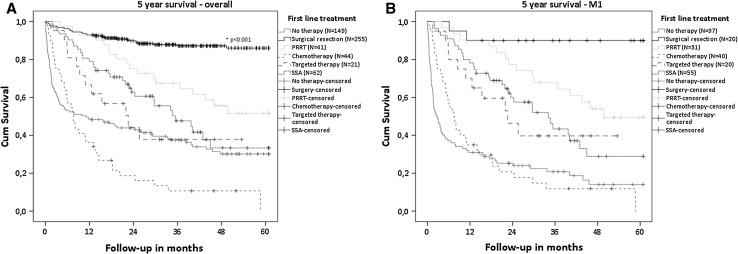
In total, 611 patients were included. Median follow-up was 25.7 months, and all-cause mortality was 42%. Higher tumor grade and TNM stage were significantly associated with worse survival in both the overall and metastasized population. The effect of distant metastases on survival was more significant in lower tumor stages (T1-3 p < 0.05, T4 p = 0.074). Resection of the primary tumor was performed in 255 (42%) patients. Patients who underwent surgery had the highest 5-year survival (86%) compared to PRRT (33%), chemotherapy (21%), targeted therapy and somatostatin analogs (24%) (all p < 0.001). Patients with T1M0 tumors (n = 115) showed favorable survival after surgical resection (N = 95) compared to no therapy (N = 20, p = 0.008). Resection also improved survival significantly in patients with metastases compared to other treatments (all p > 0.05). Without surgery, PRRT showed the best survival curves in patients with distant metastases. Grade 3 tumors and surgical resection were independently associated with survival (HR 7.23 and 0.12, respectively).
Surgical resection shows favorable outcome for all pNET tumors, including indolent tumors and tumors with distant metastases. Prospective trials should be initiated to confirm these results.
基于大规模人群的研究有助于深入了解胰腺神经内分泌肿瘤(pNETs)患者的预后和治疗结果。因此,我们概述了荷兰pNET的治疗及相关生存情况。
纳入2008年至2013年期间在荷兰癌症登记处诊断为pNET的患者。报告患者、肿瘤和治疗特征。采用对数秩检验进行生存分析以比较生存率。
共纳入611例患者。中位随访时间为25.7个月,全因死亡率为42%。在总体人群和转移人群中,较高的肿瘤分级和TNM分期均与较差的生存率显著相关。远处转移对生存的影响在较低肿瘤分期中更为显著(T1 - 3期p < 0.05,T4期p = 0.074)。255例(42%)患者进行了原发肿瘤切除。与肽受体放射性核素治疗(PRRT,33%)、化疗(21%)、靶向治疗和生长抑素类似物治疗(24%)相比,接受手术的患者5年生存率最高(86%)(所有p < 0.001)。与未接受治疗(n = 20)相比,T1M0肿瘤患者(n = 115)手术切除后显示出良好的生存率(n = 95,p = 0.008)。与其他治疗相比,切除也显著提高了转移患者的生存率(所有p > 0.05)。不进行手术时,PRRT在远处转移患者中显示出最佳的生存曲线。3级肿瘤和手术切除与生存独立相关(风险比分别为7.23和0.12)。
手术切除对所有pNET肿瘤均显示出良好的结果,包括惰性肿瘤和有远处转移的肿瘤。应开展前瞻性试验以证实这些结果。