Park Kichul, Cho Art E
Department of Bioinformatics, Korea University, Sejong, Republic of Korea.
J Ginseng Res. 2017 Oct;41(4):534-539. doi: 10.1016/j.jgr.2016.10.005. Epub 2016 Nov 10.
Ginsenosides are the main ingredients of ginseng, which, in traditional Eastern medicine, has been claimed to have therapeutic values for many diseases. In order to verify the effects of ginseng that have been empirically observed, we utilized the reverse docking method to screen for target proteins that are linked to specific diseases.
We constructed a target protein database including 1,078 proteins associated with various kinds of diseases, based on the Potential Drug Target Database, with an added list of kinase proteins. We screened 26 kinds of ginsenosides of this target protein database using docking.
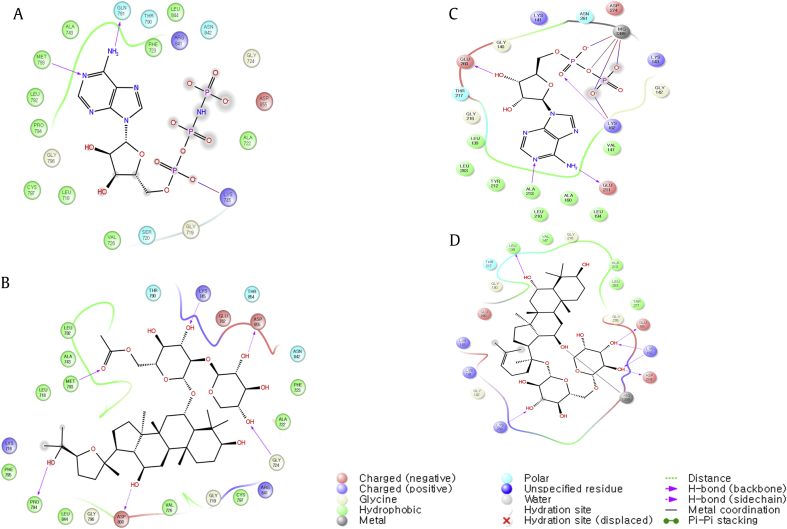
We found four potential target proteins for ginsenosides, based on docking scores. Implications of these "hit" targets are discussed. From this screening, we also found four targets linked to possible side effects and toxicities, based on docking scores.
Our method and results can be helpful for finding new targets and developing new drugs from natural products.
人参皂苷是人参的主要成分,在传统东方医学中,人参被认为对多种疾病具有治疗价值。为了验证已通过经验观察到的人参的作用,我们利用反向对接方法筛选与特定疾病相关的靶蛋白。
基于潜在药物靶点数据库,并添加激酶蛋白列表,我们构建了一个包含1078种与各种疾病相关蛋白的靶蛋白数据库。我们使用对接方法在该靶蛋白数据库中筛选了26种人参皂苷。
基于对接分数,我们发现了人参皂苷的四种潜在靶蛋白。讨论了这些“命中”靶点的意义。通过这次筛选,我们还基于对接分数发现了四个与可能的副作用和毒性相关的靶点。
我们的方法和结果有助于从天然产物中寻找新靶点并开发新药。