Niu Lijuan, Yu Jian, Liao Weibiao, Yu Jihua, Zhang Meiling, Dawuda Mohammed M
College of Horticulture, Gansu Agricultural University, Lanzhou, China.
College of Science, Gansu Agricultural University, Lanzhou, China.
Front Plant Sci. 2017 Sep 27;8:1684. doi: 10.3389/fpls.2017.01684. eCollection 2017.
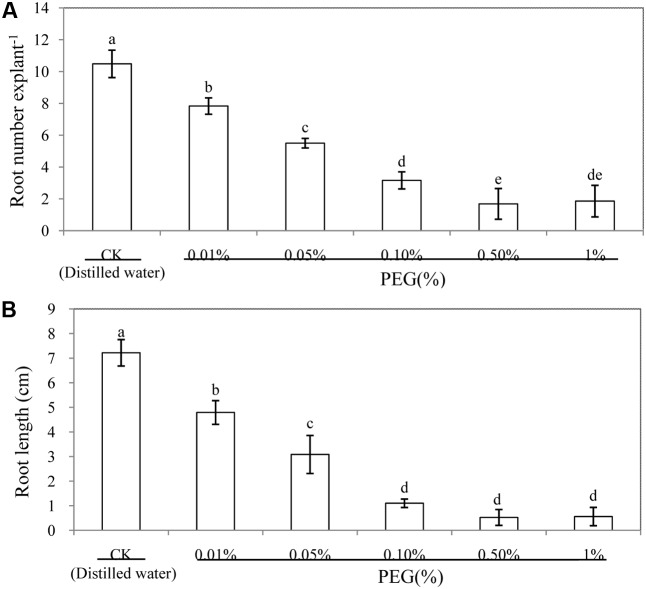
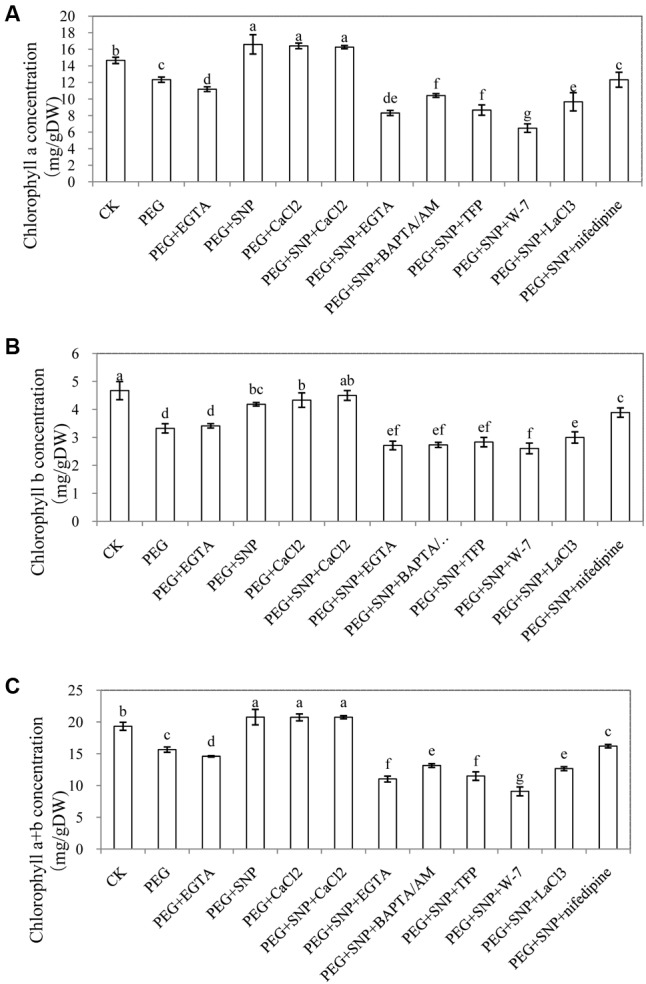
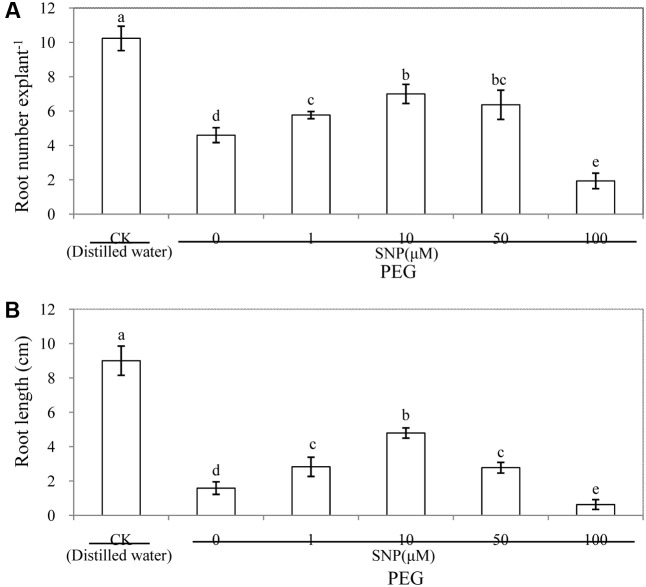
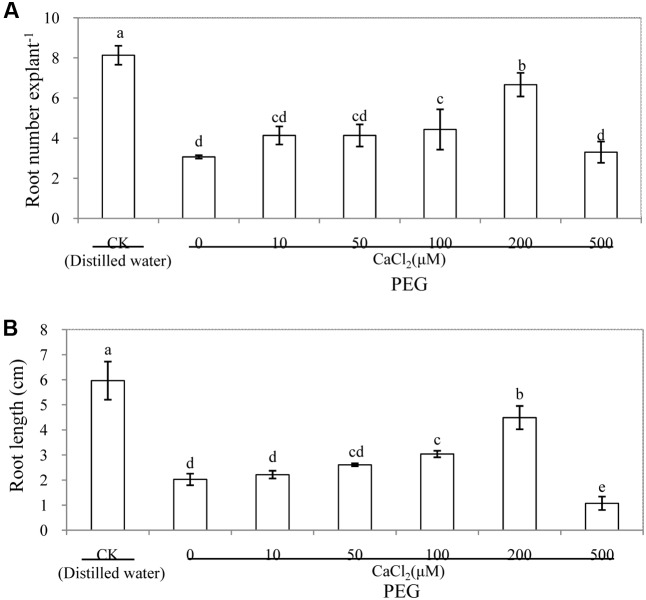
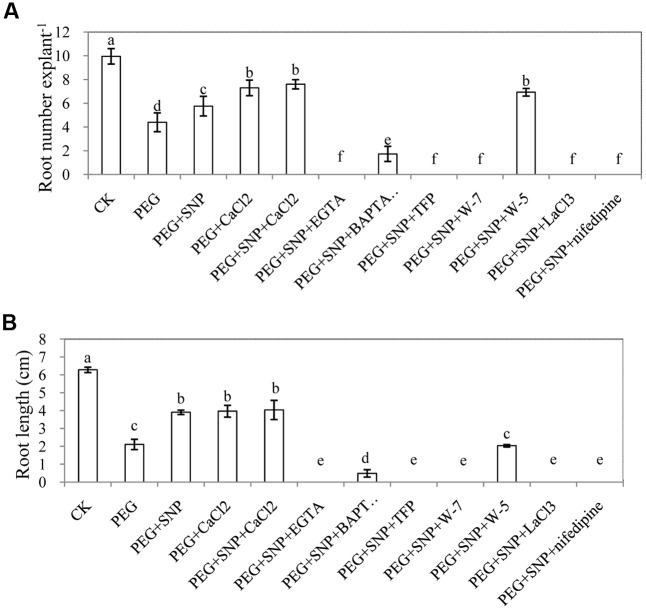
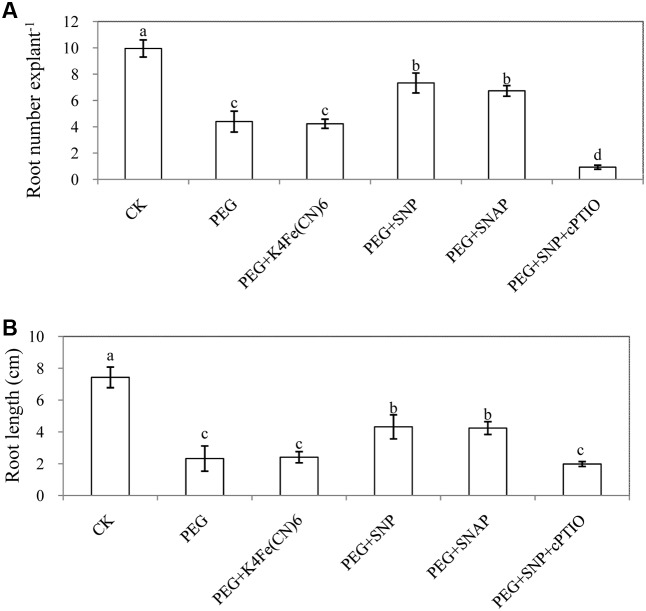
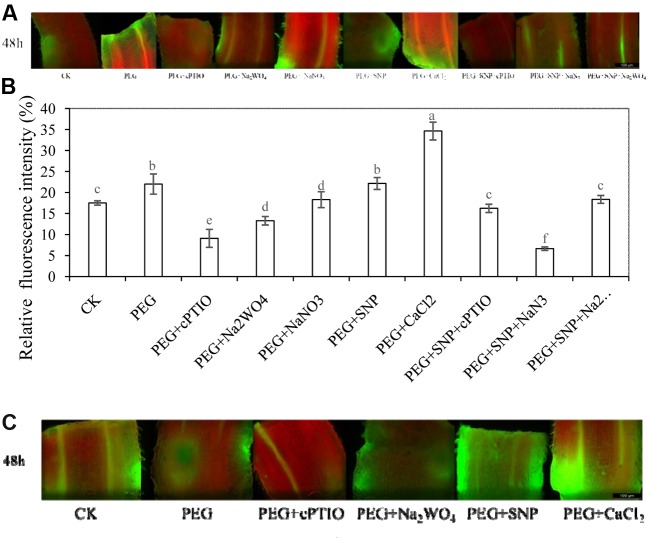
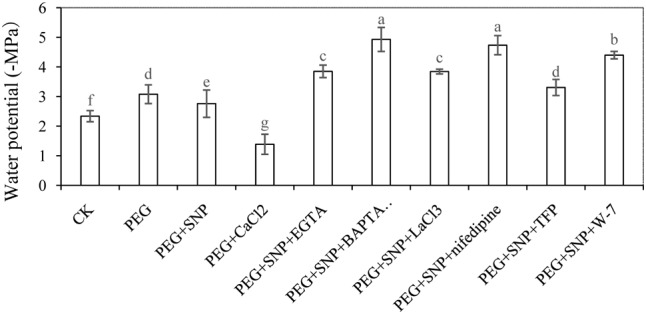
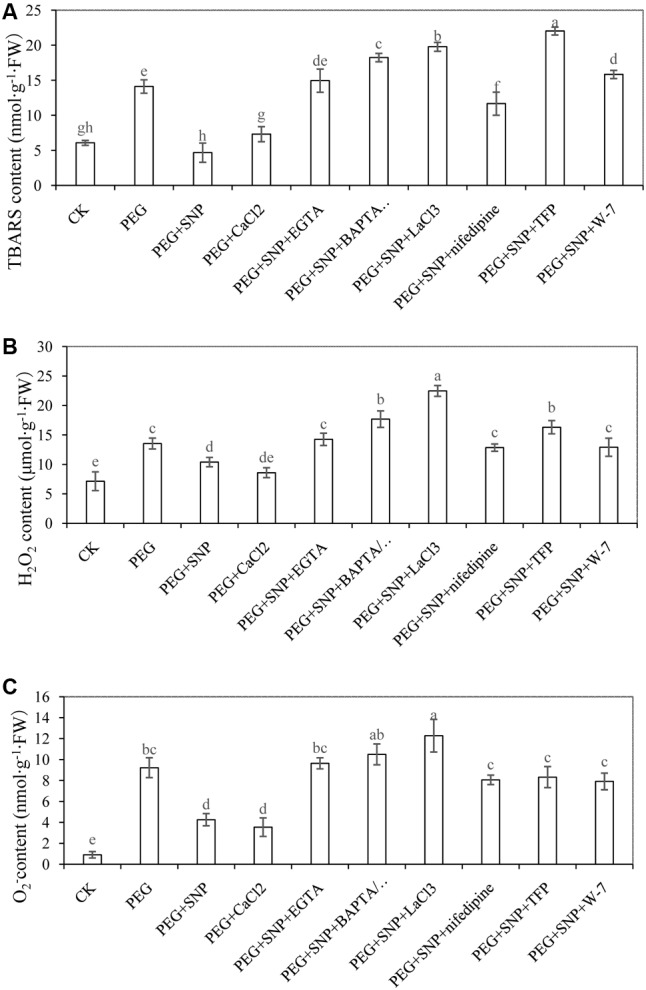
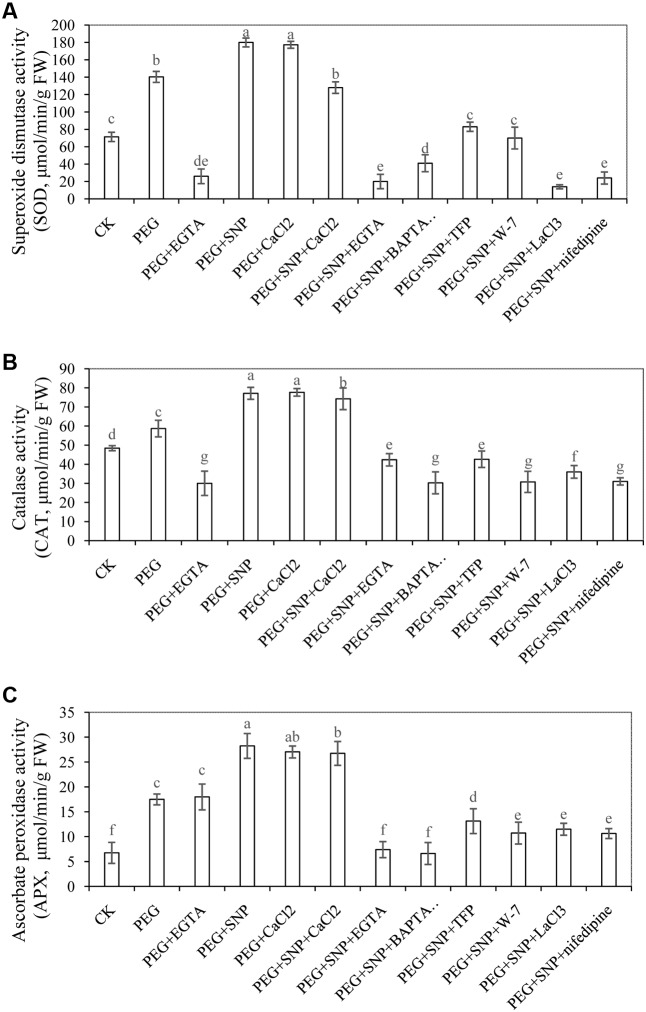
Osmotic stress is a major form of abiotic stress that adversely affects growth and development of plants and subsequently reduces yield and quality of crops. In this study, the effect of nitric oxide (NO) and calcium (Ca) on the process of adventitious rooting in cucumber ( L.) under simulated osmotic stress was investigated. The results revealed that the effect of exogenous NO and Ca in promoting the development of adventitious roots in cucumber seedlings under simulated osmotic stress was dose-dependent, with a maximal biological response at 10 μM NO donor nitroprusside (SNP) or 200 μM Ca. The application of Ca chelators or channel inhibitors and calmodulin (CaM) antagonists significantly reversed NO-induced adventitious rooting, implying that endogenous Ca/CaM might be involved in NO-induced adventitious rooting under osmotic stress. Moreover, intracellular Ca amount was also increased by NO in cucumber hypocotyls during the development of adventitious roots under osmotic stress. This increase of endogenous Ca was inhibited by NO specific scavenger 2-(4-carboxyphenyl) -4,4,5,5-tetramethylimidazoline-1-oxyl-3-oxide potassium salt (cPTIO), nitrate reductase inhibitors tungstate (NaWO) and sodium azide (NaN) This gives an indication that Ca might be a downstream signaling molecule in the adventitious root development by NO under osmotic condition. The results also show that NO or Ca play a positive role in improving plant water status and photosynthetic system by increasing chlorophyll content and photochemical activity in leaves. Furthermore, NO and Ca treatment might alleviate the negative effects of osmotic stress by decreasing membrane damage and reactive oxygen species (ROS) production by enhancing the activities of superoxide dismutase (SOD), catalase (CAT) and ascorbate peroxidase (APX). Therefore, Ca/CaM may act as a downstream signaling molecule in NO-induced development of adventitious root under simulated osmotic stress through improving the photosynthetic performance of leaves and activating antioxidative system in plants.
渗透胁迫是一种主要的非生物胁迫形式,对植物的生长发育产生不利影响,进而降低作物的产量和品质。本研究探讨了一氧化氮(NO)和钙(Ca)对模拟渗透胁迫下黄瓜不定根发生过程的影响。结果表明,外源NO和Ca对模拟渗透胁迫下黄瓜幼苗不定根发育的促进作用具有剂量依赖性,在10 μM NO供体硝普钠(SNP)或200 μM Ca时生物响应最大。Ca螯合剂或通道抑制剂以及钙调蛋白(CaM)拮抗剂的应用显著逆转了NO诱导的不定根形成,这意味着内源Ca/CaM可能参与渗透胁迫下NO诱导的不定根形成。此外,在渗透胁迫下不定根发育过程中,NO也使黄瓜下胚轴细胞内Ca含量增加。这种内源Ca的增加被NO特异性清除剂2-(4-羧基苯基)-4,4,5,5-四甲基咪唑啉-1-氧基-3-氧化物钾盐(cPTIO)、硝酸还原酶抑制剂钨酸盐(NaWO)和叠氮化钠(NaN)抑制。这表明在渗透条件下,Ca可能是NO诱导不定根发育的下游信号分子。结果还表明,NO或Ca通过增加叶片叶绿素含量和光化学活性,在改善植物水分状况和光合系统方面发挥积极作用。此外,NO和Ca处理可能通过增强超氧化物歧化酶(SOD)、过氧化氢酶(CAT)和抗坏血酸过氧化物酶(APX)的活性,减少膜损伤和活性氧(ROS)产生,从而减轻渗透胁迫的负面影响。因此,Ca/CaM可能通过改善叶片光合性能和激活植物抗氧化系统,在模拟渗透胁迫下NO诱导的不定根发育中作为下游信号分子发挥作用。