Caccuri Francesca, Giordano Francesca, Barone Ines, Mazzuca Pietro, Giagulli Cinzia, Andò Sebastiano, Caruso Arnaldo, Marsico Stefania
Section of Microbiology, Department of Molecular and Translational Medicine, University of Brescia , Brescia, Italy.
Department of Pharmacy, Health and Nutritional Sciences, University of Calabria, Arcavacata di Rende, Italy.
Infect Agent Cancer. 2017 Sep 25;12:49. doi: 10.1186/s13027-017-0160-7. eCollection 2017.
The introduction of cART has changed the morbidity and mortality patterns affecting HIV-infected (HIV) individuals. The risk of breast cancer in HIV patients has now approached the general population risk. However, breast cancer has a more aggressive clinical course and poorer outcome in HIV patients than in general population, without correlation with the CD4 or virus particles count. These findings suggest a likely influence of HIV-1 proteins on breast cancer aggressiveness and progression. The HIV-1 matrix protein (p17) is expressed in different tissues and organs of successfully cART-treated patients and promotes migration of different cells. Variants of p17 (vp17s), characterized by mutations and amino acid insertions, differently from the prototype p17 (refp17), also promote B-cell proliferation and transformation.
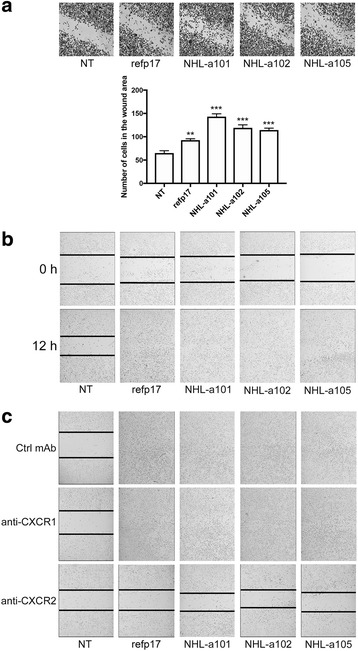
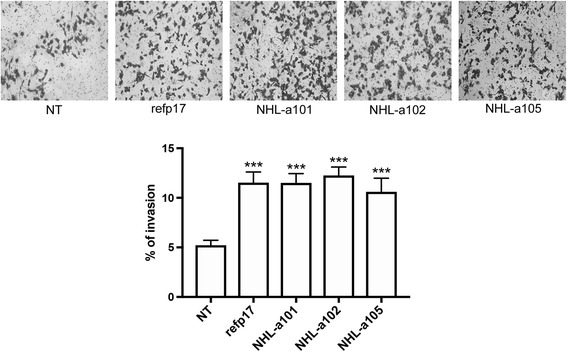
Wound-healing assay, matrigel-based invasion assay, and anchorage-independent proliferation assay were employed to compare the biological activity exerted by refp17 and three different vp17s on the triple-negative human breast cancer cell line MDA-MB 231. Intracellular signaling was investigated by western blot analysis.
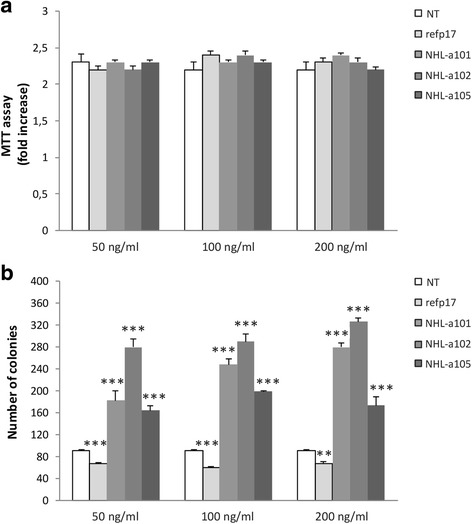
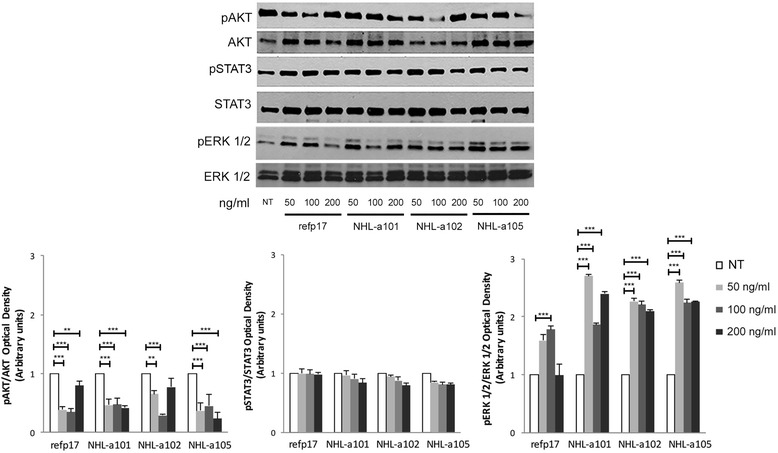
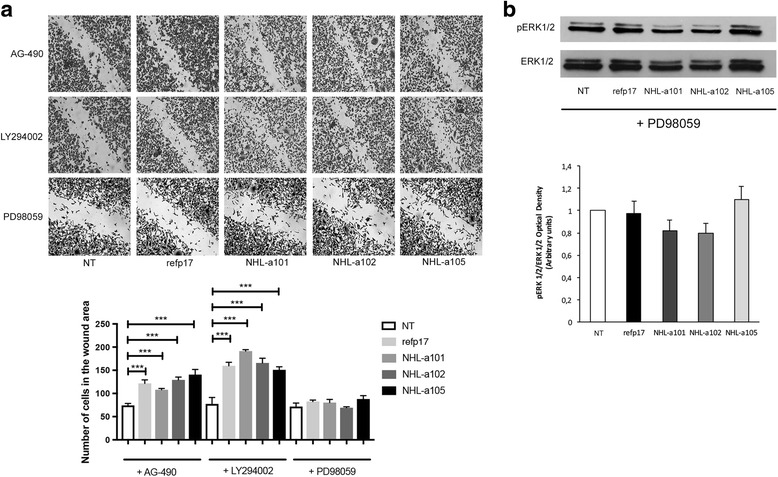
Motility and invasiveness increased in cells treated with both refp17 and vp17s compared to untreated cells. The effects of the viral proteins were mediated by binding to the chemokine receptor CXCR2 and activation of the ERK1/2 signaling pathway. However, vp17s promoted MDA-MB 231 cell growth and proliferation in contrast to refp17-treated or not treated cells.
In the context of the emerging role of the microenvironment in promoting and supporting cancer cell growth and metastatic spreading, here we provide the first evidence that exogenous p17 may play a crucial role in sustaining breast cancer cell migration and invasiveness, whereas some p17 variants may also be involved in cancer cell growth and proliferation.
抗逆转录病毒联合疗法(cART)的引入改变了影响人类免疫缺陷病毒(HIV)感染者的发病率和死亡率模式。HIV患者患乳腺癌的风险现已接近普通人群的风险。然而,与普通人群相比,乳腺癌在HIV患者中具有更具侵袭性的临床病程和更差的预后,且与CD4或病毒颗粒计数无关。这些发现表明HIV-1蛋白可能对乳腺癌的侵袭性和进展有影响。HIV-1基质蛋白(p17)在成功接受cART治疗的患者的不同组织和器官中表达,并促进不同细胞的迁移。p17变体(vp17s)具有突变和氨基酸插入的特征,与原型p17(refp17)不同,也能促进B细胞增殖和转化。
采用伤口愈合试验、基于基质胶的侵袭试验和非锚定依赖性增殖试验,比较refp17和三种不同的vp17s对三阴性人乳腺癌细胞系MDA-MB 231的生物学活性。通过蛋白质印迹分析研究细胞内信号传导。
与未处理的细胞相比,用refp17和vp17s处理的细胞的运动性和侵袭性增加。病毒蛋白的作用是通过与趋化因子受体CXCR2结合并激活ERK1/2信号通路介导的。然而,与refp17处理或未处理的细胞相比,vp17s促进了MDA-MB 231细胞的生长和增殖。
在微环境在促进和支持癌细胞生长及转移扩散中日益重要的背景下,我们首次证明外源性p17可能在维持乳腺癌细胞迁移和侵袭中起关键作用,而一些p17变体可能也参与癌细胞的生长和增殖。