Anesten F, Santos C, Gidestrand E, Schéle E, Pálsdóttir V, Swedung-Wettervik T, Meister B, Patrycja Skibicka K, Jansson J-O
Department of Physiology, Institute of Neuroscience and Physiology, the Sahlgrenska Academy at the University of Gothenburg, Gothenburg, Sweden.
Department of Neuroscience, Karolinska Institutet, Stockholm, Sweden.
J Neuroendocrinol. 2017 Dec;29(12). doi: 10.1111/jne.12546.
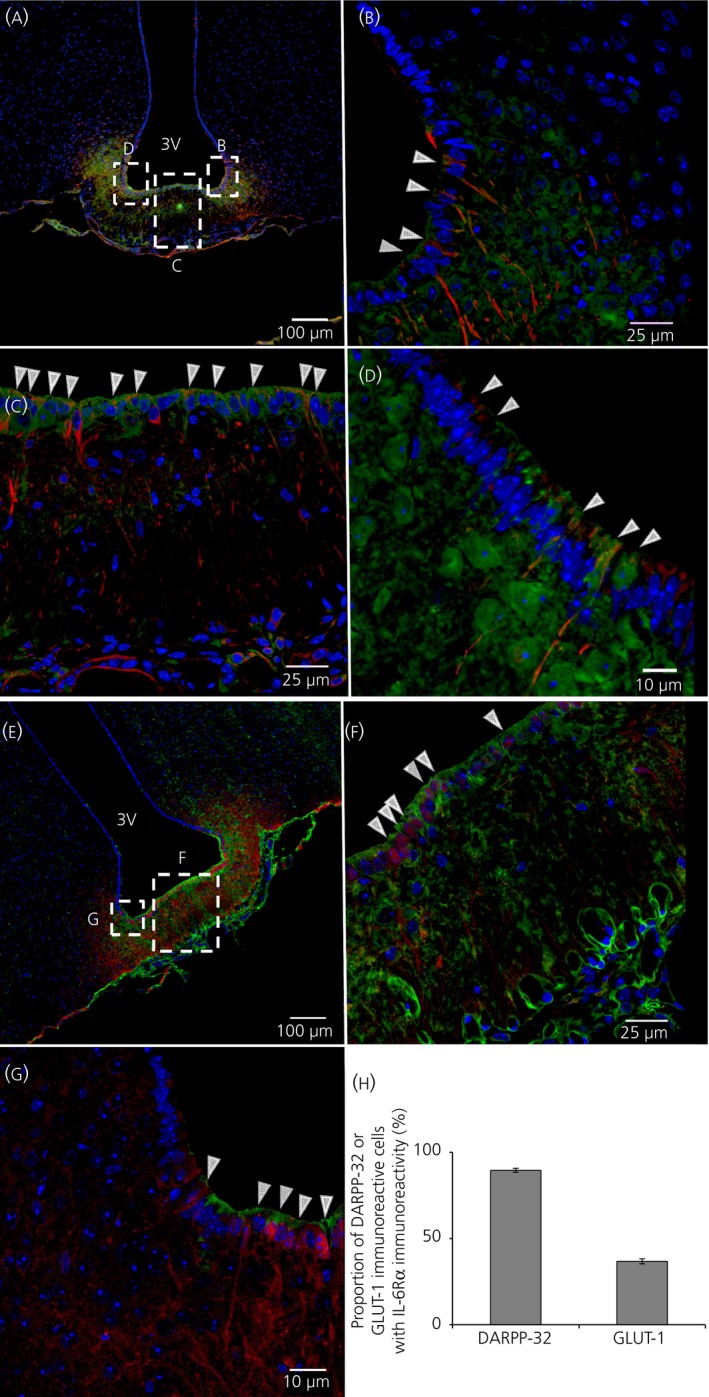
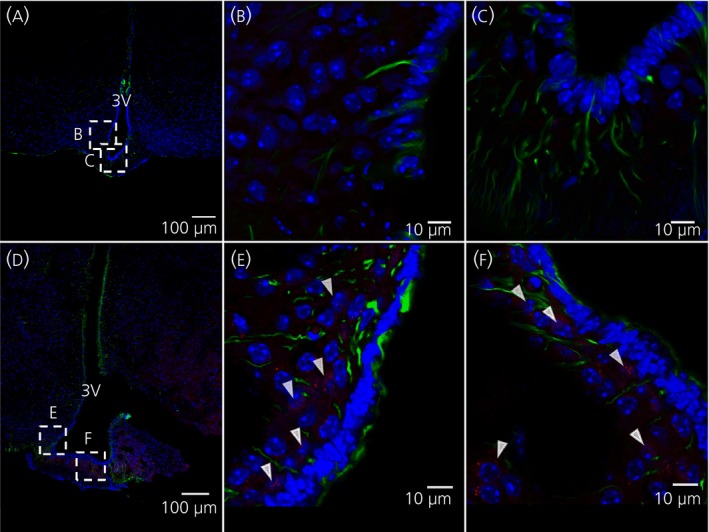
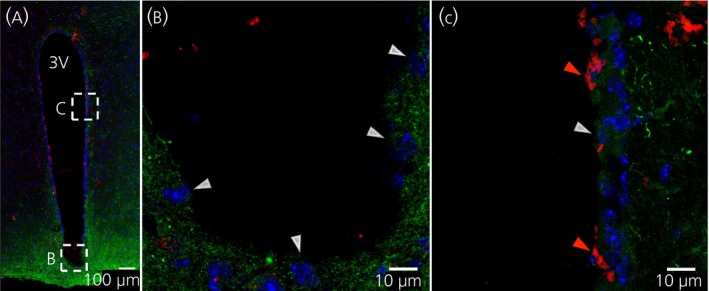
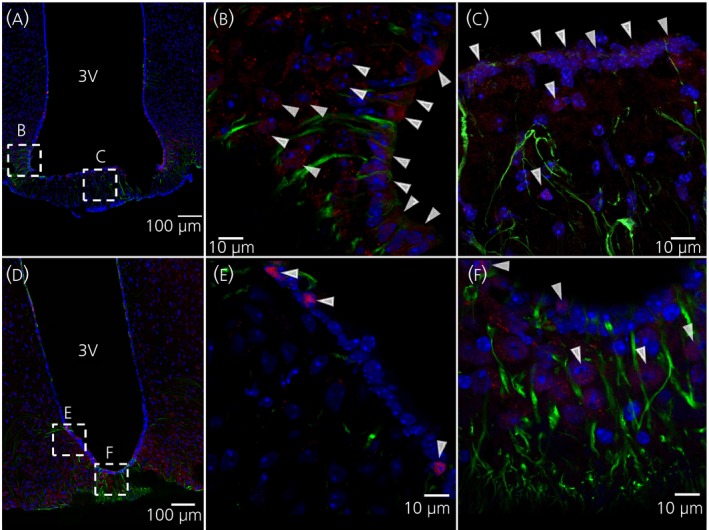
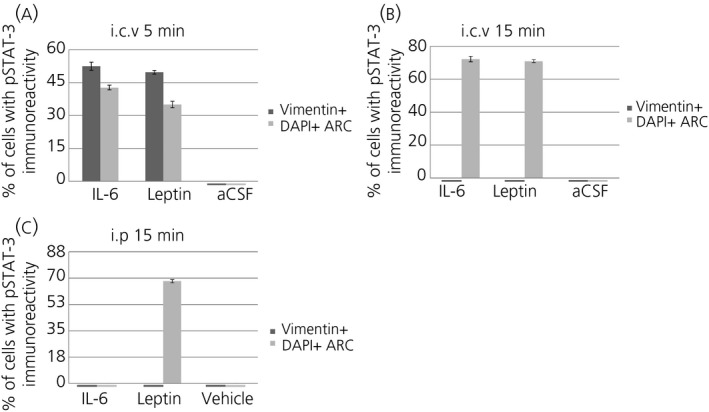
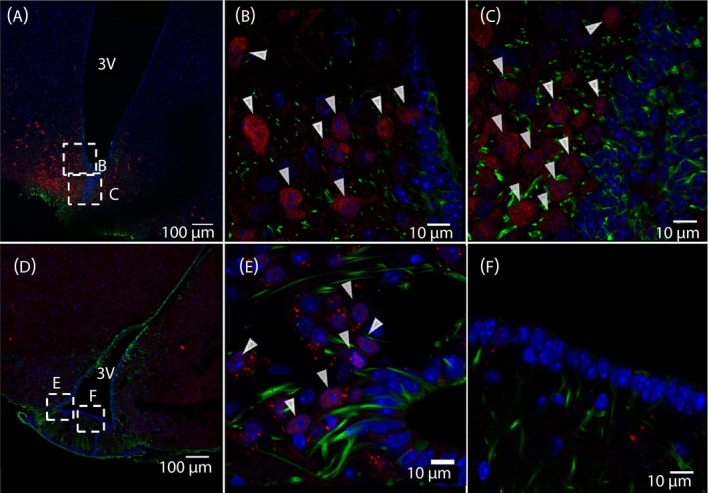
Interleukin (IL)-6 / mice develop mature onset obesity, whereas i.c.v. injection of IL-6 decreases obesity in rodents. Moreover, levels of IL-6 in cerebrospinal fluid (CSF) were reported to be inversely correlated with obesity in humans. Tanycytes lining the base of the third ventricle (3V) in the hypothalamus have recently been reported to be of importance for metabolism. In the present study, we investigated whether tanycytes could respond to IL-6 in the CSF. With immunohistochemistry using a well characterised antibody directed against the ligand binding receptor for IL-6, IL-6 receptor α (IL-6Rα), it was found that tanycytes, identified by the two markers, vimentin and dopamine- and cAMP-regulated phosphoprotein of 32 kDa, contained IL-6Rα. There were fewer IL-6Rα on another type of ventricle-lining cells, ependymal cells, as identified by the marker glucose transporter-1. To demonstrate that the immunoreactive IL-6Rα were responsive to IL-6, we injected IL-6 i.c.v. This treatment increased immunoreactive phosphorylated signal transducer and activator of transcription-3 (pSTAT3) in tanycytes after 5 minutes and in cells in the medial part of the arcuate nucleus after 5 and 15 minutes. Intracerebroventricular injection of leptin exerted similar effects. As expected, i.p. injection of leptin also induced pSTAT3 staining in the hypothalamus, whereas i.p. IL-6 injection had little effect on this parameter. Intracerebroventricular or i.p. injection of vehicle only had no effect on pSTAT3-immunoreactivity. In summary, there are functional IL-6Rα on tanycytes at the bottom of the 3V, in agreement with the possibility that ventricular administration of IL-6 decreases obesity in mice via an effect on this cell type.
白细胞介素(IL)-6基因敲除小鼠会出现成年期肥胖,而脑室内注射IL-6可减轻啮齿动物的肥胖。此外,据报道,人类脑脊液(CSF)中IL-6的水平与肥胖呈负相关。最近有报道称,下丘脑第三脑室(3V)底部的伸展细胞对新陈代谢很重要。在本研究中,我们调查了伸展细胞是否能对脑脊液中的IL-6作出反应。使用一种针对IL-6配体结合受体IL-6受体α(IL-6Rα)的特征明确的抗体进行免疫组织化学分析,发现由波形蛋白和32 kDa多巴胺和cAMP调节磷蛋白这两种标记物鉴定的伸展细胞含有IL-6Rα。通过葡萄糖转运蛋白-1标记物鉴定的另一种脑室衬里细胞——室管膜细胞上的IL-6Rα较少。为了证明免疫反应性IL-6Rα对IL-6有反应,我们进行了脑室内注射IL-6。这种处理在5分钟后增加了伸展细胞中免疫反应性磷酸化信号转导和转录激活因子3(pSTAT3),在5分钟和15分钟后增加了弓状核内侧部分细胞中的pSTAT3。脑室内注射瘦素也有类似效果。正如预期的那样,腹腔注射瘦素也能在下丘脑中诱导pSTAT3染色,而腹腔注射IL-6对该参数影响不大。脑室内或腹腔注射溶剂对照对pSTAT3免疫反应性没有影响。总之,在3V底部的伸展细胞上存在功能性IL-6Rα,这与脑室注射IL-6通过对这种细胞类型的作用减轻小鼠肥胖的可能性一致。