Iwata Tetsuo, Niimura Yoshihito, Kobayashi Chizuru, Shirakawa Daichi, Suzuki Hikoyu, Enomoto Takayuki, Touhara Kazushige, Yoshihara Yoshihiro, Hirota Junji
Center for Biological Resources and Informatics, Tokyo Institute of Technology, Yokohama, 226-8501, Japan.
Department of Applied Biological Chemistry, Graduate School of Agricultural and Life Sciences, The University of Tokyo, Tokyo, 113-8657, Japan.
Nat Commun. 2017 Oct 12;8(1):885. doi: 10.1038/s41467-017-00870-4.
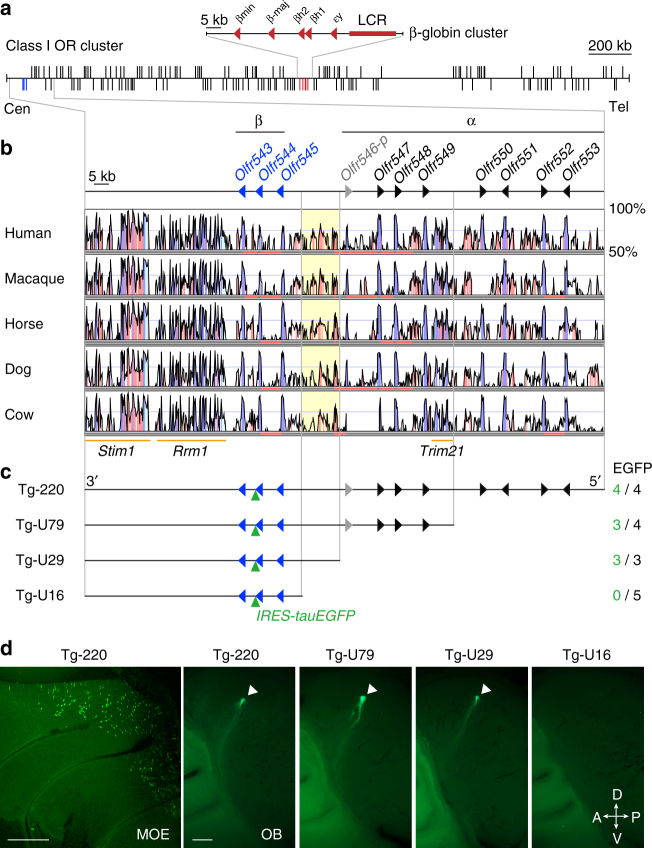
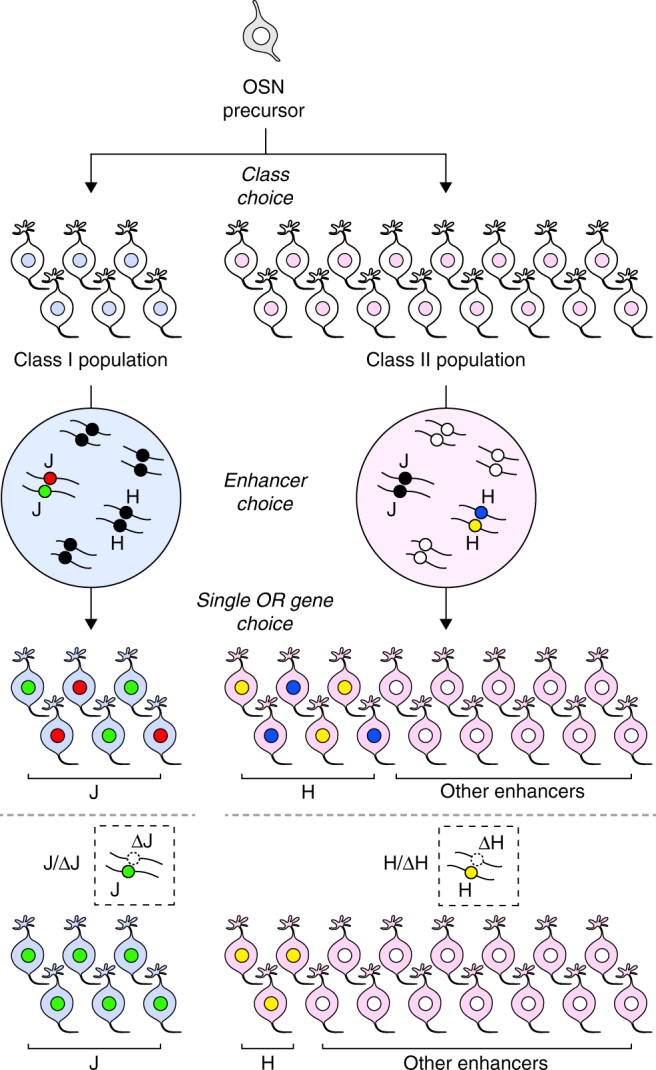
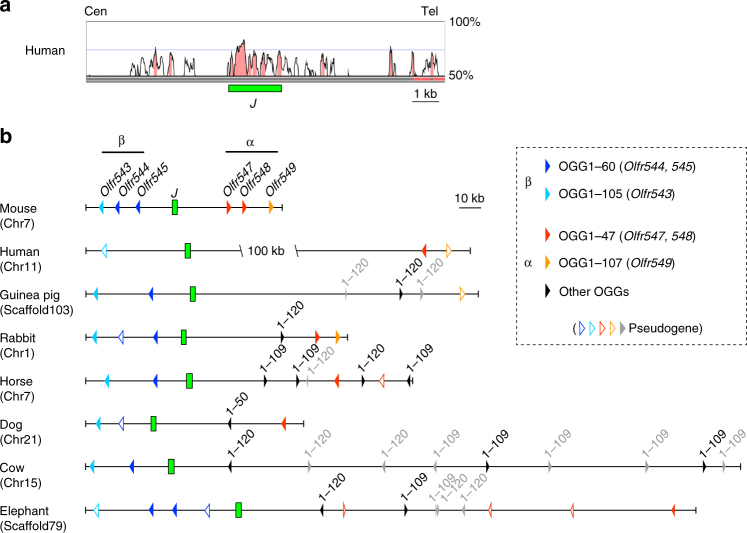
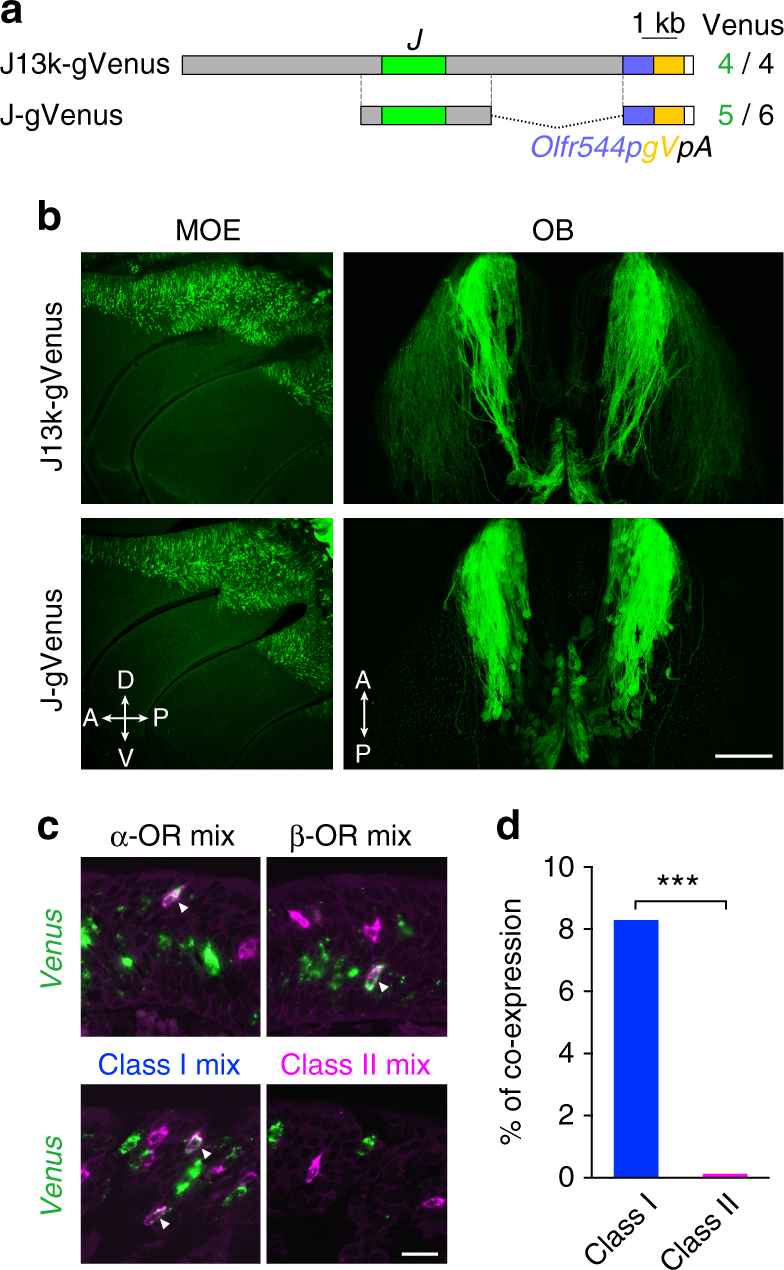
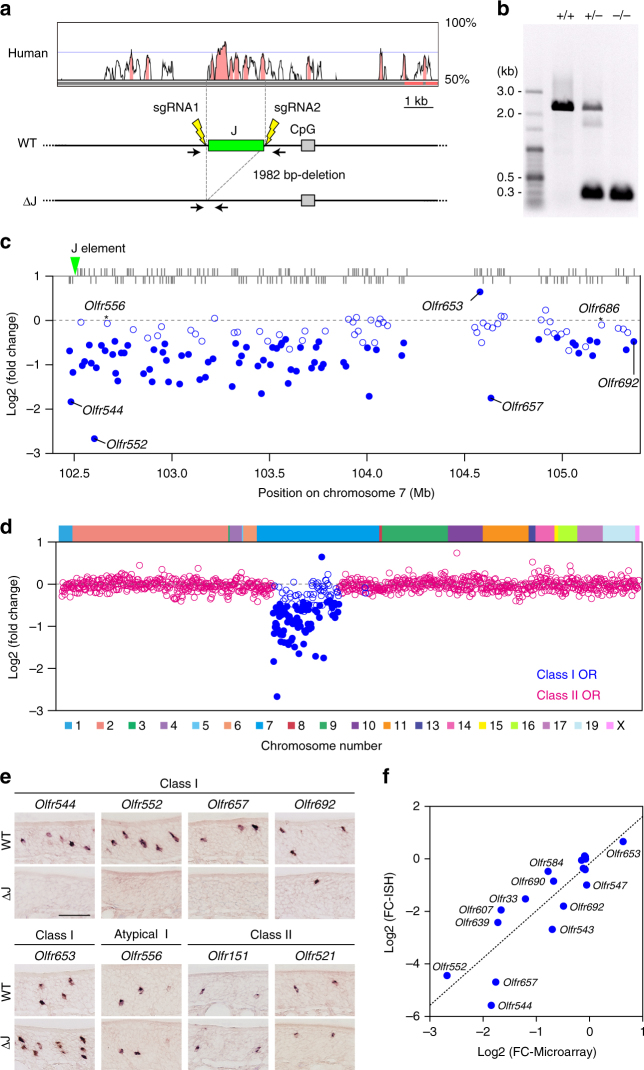
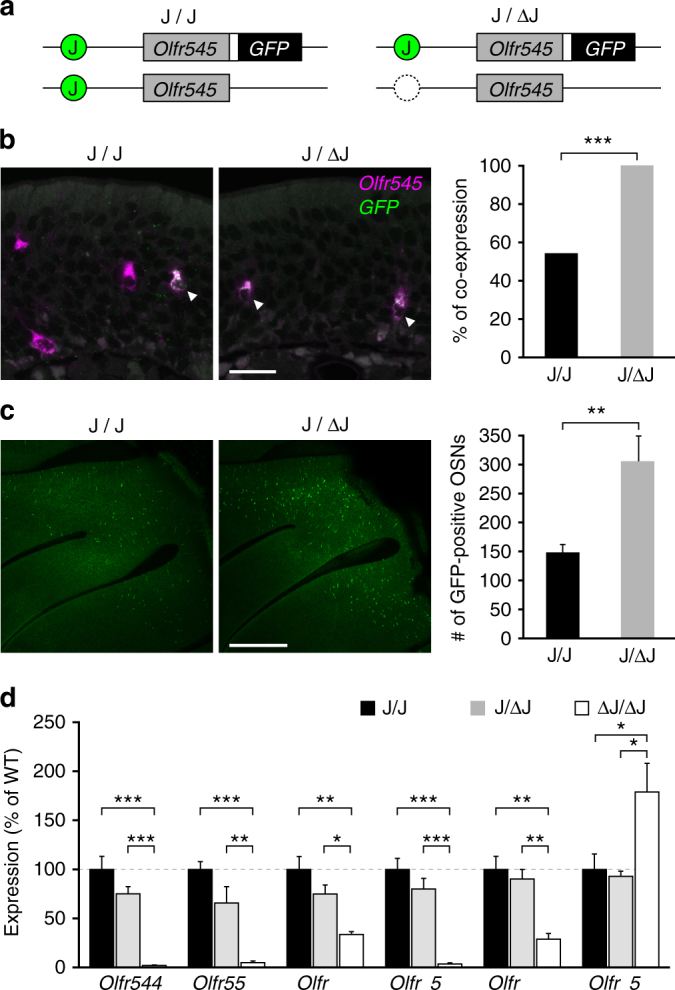
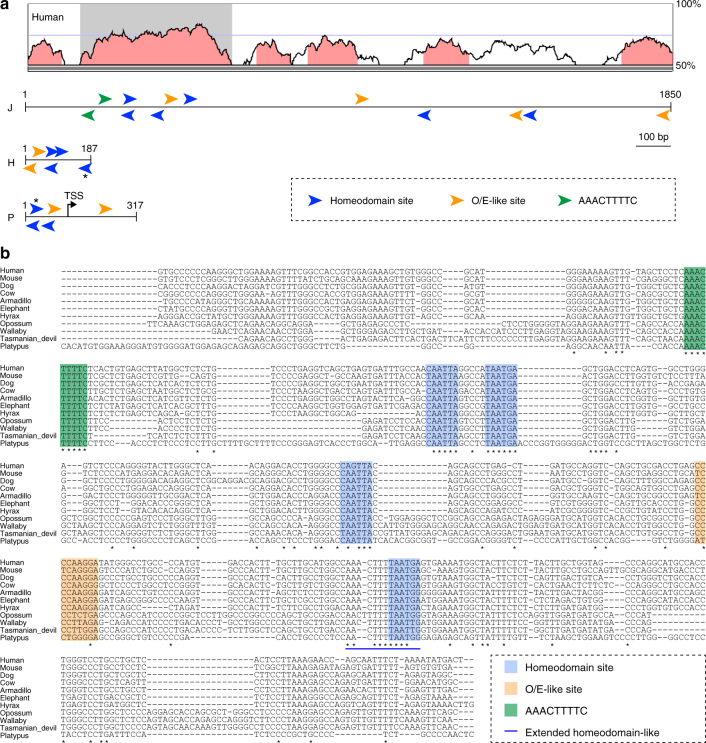
Individual olfactory sensory neurons express a single odorant receptor gene from either class I genes residing in a single cluster on a single chromosome or class II genes spread over multiple clusters on multiple chromosomes. Here, we identify an enhancer element for mouse class I genes, the J element, that is conserved through mammalian species from the platypus to humans. The J element regulates most class I genes expression by exerting an effect over ~ 3 megabases within the whole cluster. Deletion of the trans J element increases the expression frequencies of class I genes from the intact J allele, indicating that the allelic exclusion of class I genes depends on the activity of the J element. Our data reveal a long-range cis-regulatory element that governs the singular class I gene expression and has been phylogenetically preserved to retain a single cluster organization of class I genes in mammals."Each olfactory sensory neuron expresses a single odorant receptor gene from either class I or class II genes. Here, the authors identify an enhancer for mouse class I genes, that is highly conserved, and regulates most class I genes expression by acting over ~ 3 megabases within the whole cluster."
单个嗅觉感觉神经元从位于单条染色体上单个簇中的I类基因或分布在多条染色体上多个簇中的II类基因中表达单个气味受体基因。在这里,我们鉴定出小鼠I类基因的一个增强子元件,即J元件,它在从鸭嘴兽到人类的哺乳动物物种中是保守的。J元件通过在整个簇内约3兆碱基上发挥作用来调节大多数I类基因的表达。反式J元件的缺失增加了来自完整J等位基因的I类基因的表达频率,表明I类基因的等位基因排斥取决于J元件的活性。我们的数据揭示了一个长程顺式调控元件,它控制着单个I类基因的表达,并且在系统发育上得以保留,以在哺乳动物中维持I类基因的单个簇组织。“每个嗅觉感觉神经元从I类或II类基因中表达单个气味受体基因。在这里,作者鉴定出一种高度保守的小鼠I类基因增强子,它通过在整个簇内约3兆碱基上发挥作用来调节大多数I类基因的表达。”