Nicholas Brian D, Francis Shimon, Wagner Elizabeth L, Zhang Sibo, Shin Jung-Bum
Department of Neuroscience, University of Virginia, Charlottesville, VA, United States.
Front Cell Neurosci. 2017 Sep 27;11:303. doi: 10.3389/fncel.2017.00303. eCollection 2017.
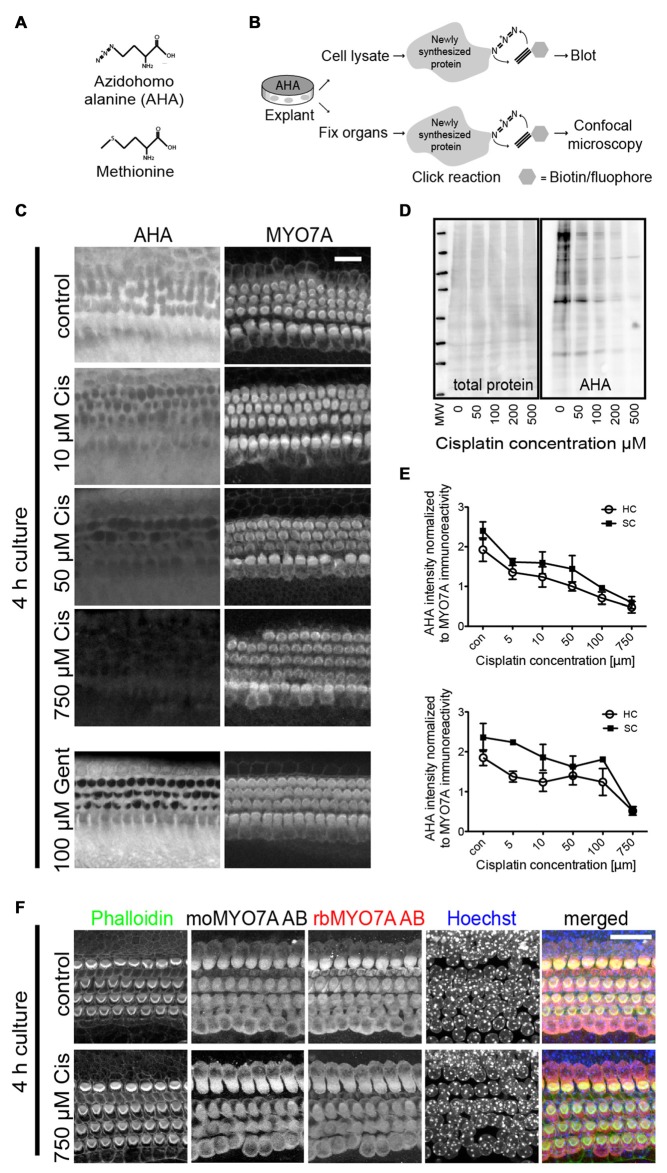
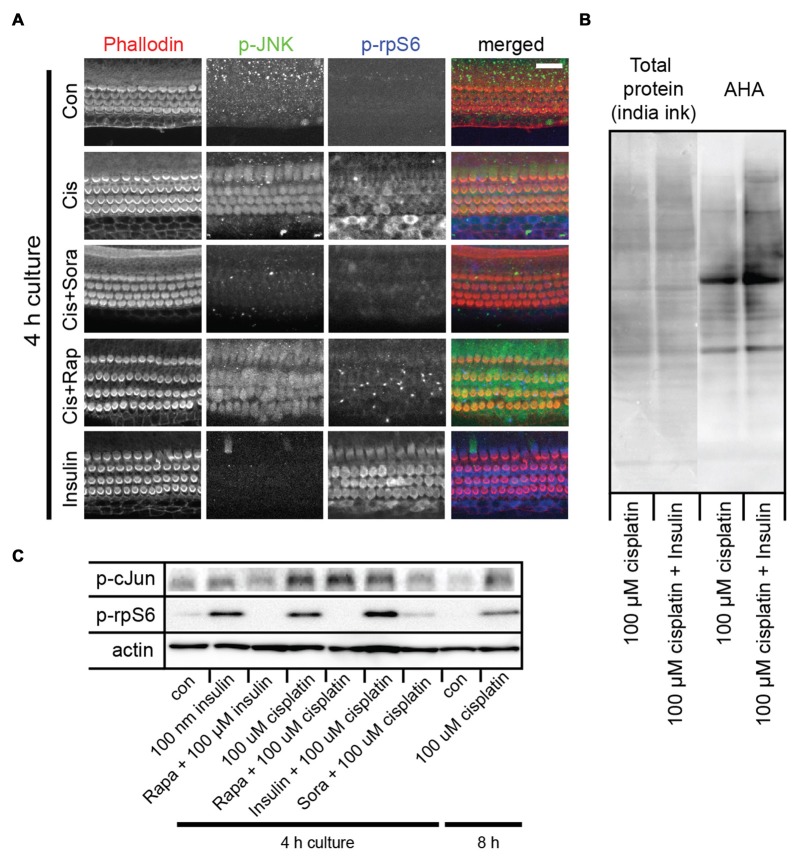
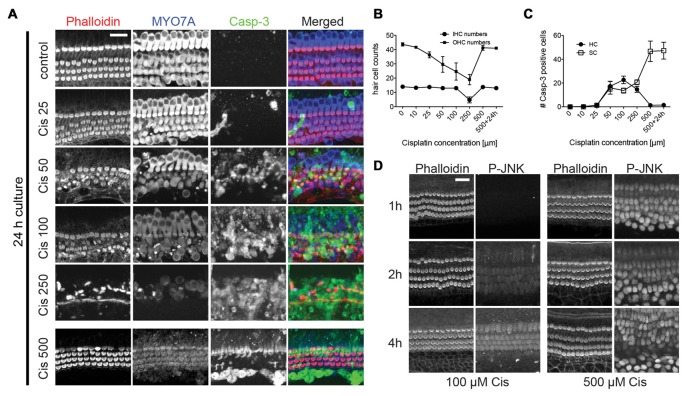
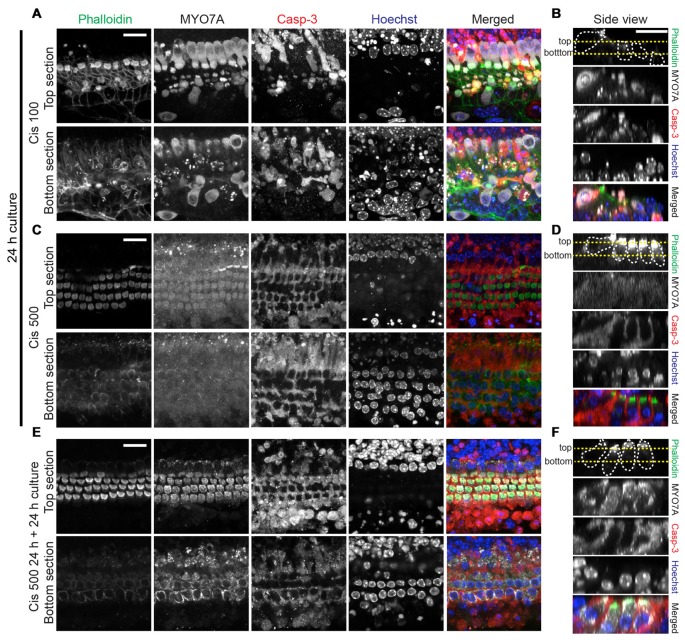
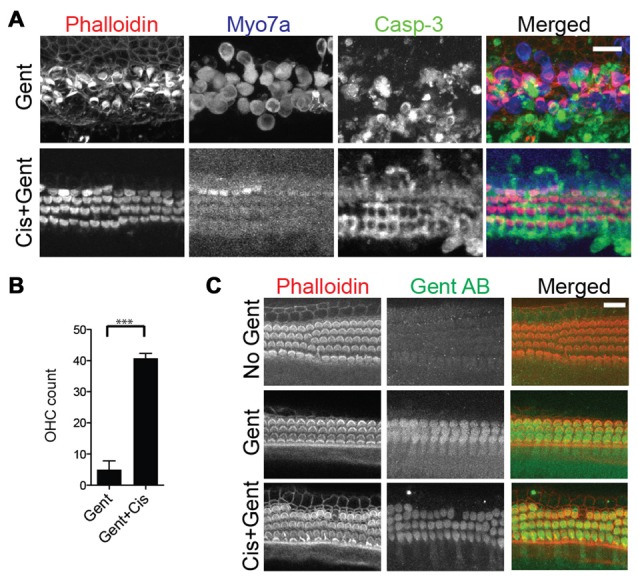
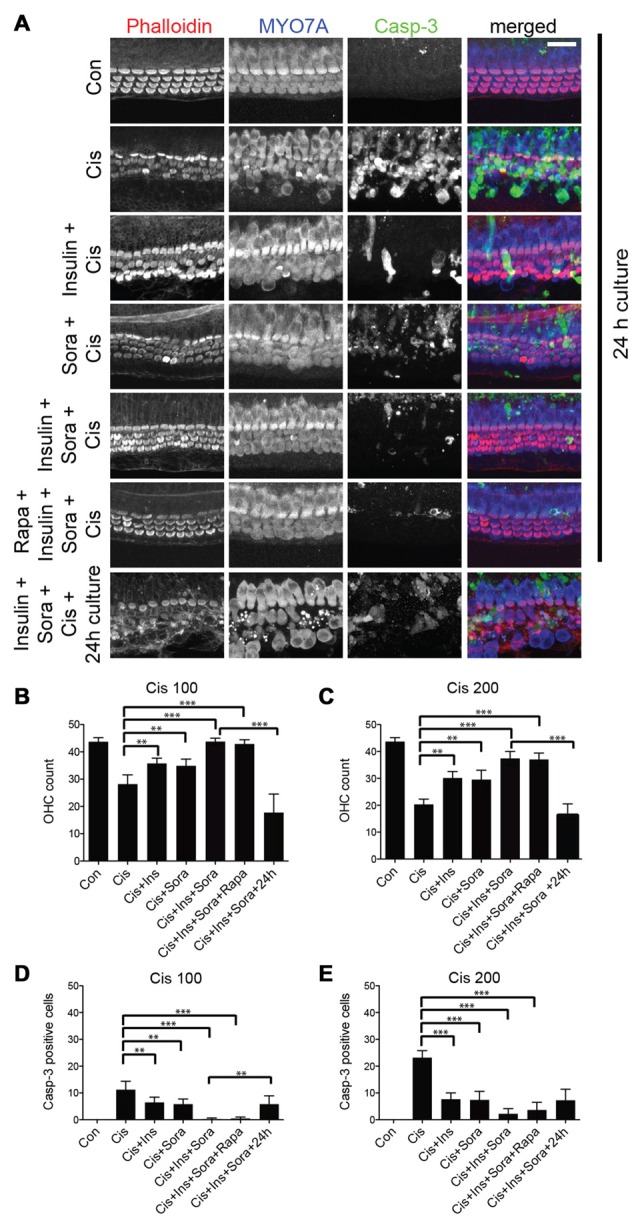
Cisplatin has been regarded as an effective and versatile chemotherapeutic agent for nearly 40 years. Though the associated dose-dependent ototoxicity is known, the cellular mechanisms by which cochleovestibular hair cell death occur are not well understood. We have previously shown that aminoglycoside ototoxicity is mediated in part by cytosolic protein synthesis inhibition. Despite a lack of molecular similarity, aminoglycosides were shown to elicit similar stress pathways to cisplatin. We therefore reasoned that there may be some role of protein synthesis inhibition in cisplatin ototoxicity. Employing a modification of the bioorthogonal noncanonical amino acid tagging (BONCAT) method, we evaluated the effects of cisplatin on cellular protein synthesis. We show that cisplatin inhibits cellular protein synthesis in organ of Corti explant cultures. Similar to what was found after gentamicin exposure, cisplatin activates both the c-Jun N-terminal kinase (JNK) and mammalian target of rapamycin (mTOR) pathways. In contrast to aminoglycosides, cisplatin also inhibits protein synthesis in all cochlear cell types. We further demonstrate that the multikinase inhibitor sorafenib completely prevents JNK activation, while providing only moderate hair cell protection. Simultaneous stimulation of cellular protein synthesis by insulin, however, significantly improved hair cell survival in culture. The presented data provides evidence for a potential role of protein synthesis inhibition in cisplatin-mediated ototoxicity.
近40年来,顺铂一直被视为一种有效且用途广泛的化疗药物。尽管已知其存在剂量依赖性耳毒性,但耳蜗前庭毛细胞死亡发生的细胞机制尚不清楚。我们之前已经表明,氨基糖苷类药物的耳毒性部分是由胞质蛋白合成抑制介导的。尽管氨基糖苷类药物与顺铂缺乏分子相似性,但已证明它们会引发与顺铂相似的应激途径。因此,我们推测蛋白合成抑制可能在顺铂耳毒性中发挥一定作用。我们采用了生物正交非天然氨基酸标记(BONCAT)方法的一种改进形式,评估了顺铂对细胞蛋白合成的影响。我们发现顺铂抑制了柯蒂氏器外植体培养物中的细胞蛋白合成。与庆大霉素暴露后发现的情况类似,顺铂激活了c-Jun氨基末端激酶(JNK)和雷帕霉素哺乳动物靶蛋白(mTOR)途径。与氨基糖苷类药物不同,顺铂还抑制所有耳蜗细胞类型中的蛋白合成。我们进一步证明,多激酶抑制剂索拉非尼完全阻止了JNK的激活,同时仅提供了适度的毛细胞保护作用。然而,胰岛素同时刺激细胞蛋白合成,显著提高了培养物中毛细胞的存活率。所呈现的数据为蛋白合成抑制在顺铂介导的耳毒性中可能发挥的作用提供了证据。