Radboud Center for Mitochondrial Medicine (RCMM) at the Department of Pediatrics, Radboud university medical center, Geert Grooteplein Zuid 10, PO BOX 9101, 6500, HB, Nijmegen, The Netherlands.
Khondrion BV, Philips van Leydenlaan 15 (427), 6525, EX, Nijmegen, The Netherlands.
Orphanet J Rare Dis. 2017 Oct 16;12(1):163. doi: 10.1186/s13023-017-0715-0.
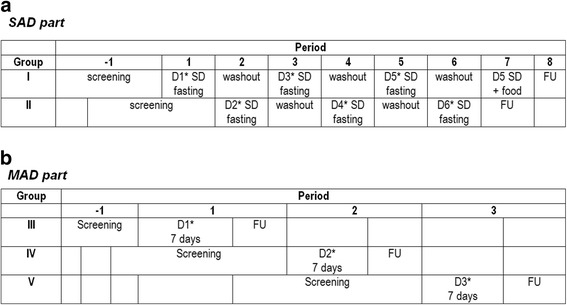
Mitochondrial disorders are a clinically, biochemically and genetically heterogeneous group of multi-system diseases, with an unmet medical need for treatment. KH176 is an orally bio-available small molecule under development for the treatment of mitochondrial(-related) diseases. The compound is a member of a new class of drugs, acting as a potent intracellular redox-modulating agent essential for the control of oxidative and redox pathologies. The aim of this randomized, placebo controlled, double-blinded phase 1 study was to test safety, tolerability and pharmacokinetics of single and multiple doses of KH176 in healthy male volunteers. Putative effects on redox related biomarkers were explored.
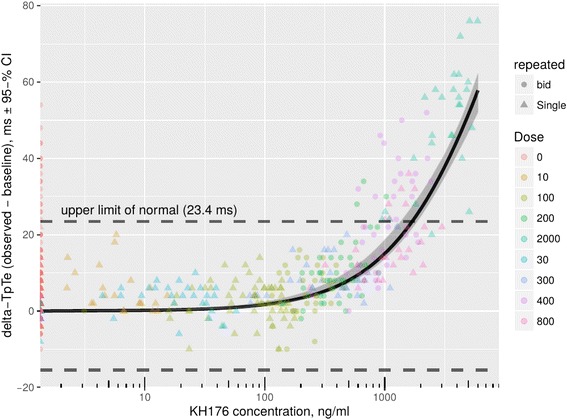
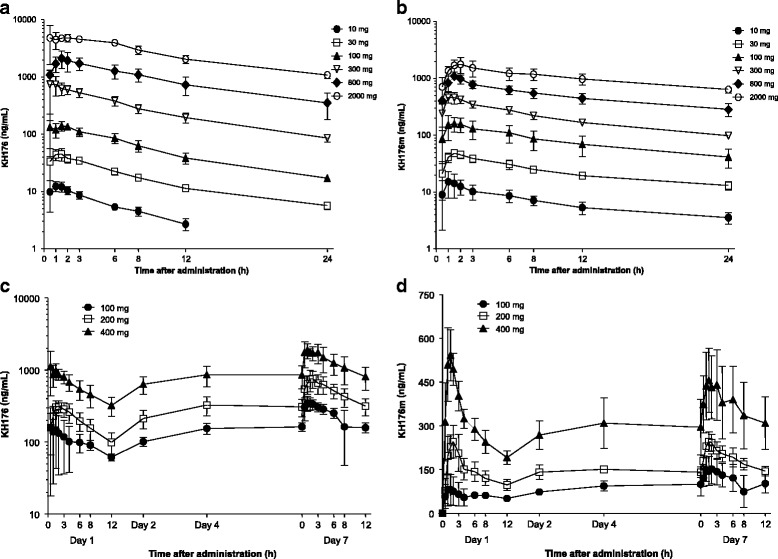
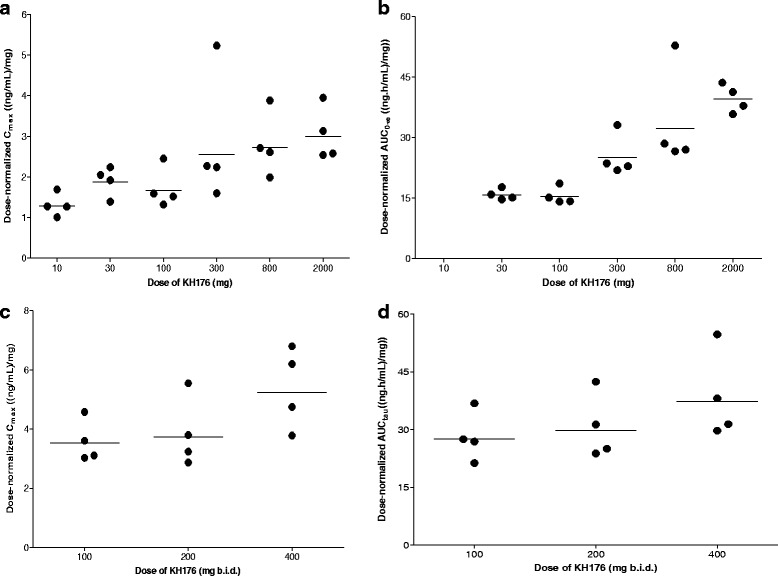
KH176 was well tolerated up to and including a single dose of 800 mg and multiple doses of 400 mg b.i.d. for 7 Days. However, when the QT interval was corrected for heart rate, administration of single doses of 800 and 2000 mg and at a multiple dose of 400 mg KH176 had marked effects. Post-hoc analysis of the ECGs showed clear changes in cardiac electrophysiology at single doses of 800 and 2000 mg and multiple doses of 400 mg b.i.d.. At lower doses, detailed ECG analysis showed no changes in electrophysiology compared to placebo. Exposure-response modelling of the cardiac intervals revealed an exposure range of KH176 without effects on cardiac conduction and provided a threshold of 1000 ng/mL above which changes in intervals could occur. After single- and multiple-dose administration, the pharmacokinetics of KH176 was more than dose proportional. KH176 accumulated to a small extent and food only slightly affected the pharmacokinetics of KH176, which was considered clinically irrelevant. Renal excretion of unchanged KH176 and its metabolite represents a minor pathway in the elimination of KH176. As expected in healthy volunteers no effects on redox biomarkers were observed.
The study deemed that KH176 is well tolerated up to single doses of 800 mg and multiple doses of 400 mg b.i.d. and has a pharmacokinetic profile supportive for a twice daily dosing. Only at high doses, KH176 causes clinically relevant changes in cardiac electrophysiology, including prolonged QTc interval and changes in T wave morphology. A Phase 2 clinical trial (100 mg b.i.d., orally) has been conducted recently of which the final results are expected Q1 2018.
NCT02544217 . Registered. ISRCTN43372293 . Retrospectively registered.
线粒体疾病是一组临床表现、生化和遗传异质性的多系统疾病,其治疗存在未满足的医学需求。KH176 是一种正在开发的用于治疗线粒体(相关)疾病的口服生物可利用的小分子药物。该化合物是一类新的药物,作为一种有效的细胞内氧化还原调节药物,对于控制氧化和氧化还原病理学至关重要。这项随机、安慰剂对照、双盲的 I 期研究旨在测试健康男性志愿者单次和多次服用 KH176 的安全性、耐受性和药代动力学。探索了对氧化还原相关生物标志物的潜在影响。
KH176 单剂量高达 800mg 和多剂量 400mg 每日两次连续 7 天均耐受良好。然而,当校正心率时,单次给予 800 和 2000mg 以及多剂量 400mg KH176 时,QT 间期有明显影响。心电图的事后分析显示,单剂量 800 和 2000mg 以及多剂量 400mg 每日两次时心脏电生理学有明显变化。与安慰剂相比,在较低剂量下,详细的心电图分析显示电生理学没有变化。心脏间期的暴露-反应模型显示 KH176 的暴露范围不会影响心脏传导,并提供了 1000ng/mL 以上可能发生间期变化的阈值。单次和多次给药后,KH176 的药代动力学呈剂量依赖性以上。KH176 有轻微蓄积,食物对 KH176 的药代动力学影响较小,认为无临床意义。未改变的 KH176 和其代谢物的肾排泄代表了 KH176 消除的次要途径。正如在健康志愿者中预期的那样,没有观察到氧化还原生物标志物的变化。
该研究认为,KH176 单剂量高达 800mg 和多剂量 400mg 每日两次均耐受良好,且具有支持每日两次给药的药代动力学特征。仅在高剂量时,KH176 会导致心脏电生理学的临床相关变化,包括 QTc 间期延长和 T 波形态改变。最近进行了一项 KH176 的 II 期临床试验(每日两次 100mg,口服),预计将于 2018 年第一季度公布最终结果。
NCT02544217。注册。ISRCTN43372293。回顾性注册。