Department of Biophysics, Bose Institute, P-1/12 CIT Scheme VII (M), Kolkata 700054, India.
Department of Biophysics, Bose Institute, P-1/12 CIT Scheme VII (M), Kolkata 700054, India.
Biochim Biophys Acta Biomembr. 2018 Feb;1860(2):335-346. doi: 10.1016/j.bbamem.2017.10.015. Epub 2017 Oct 14.
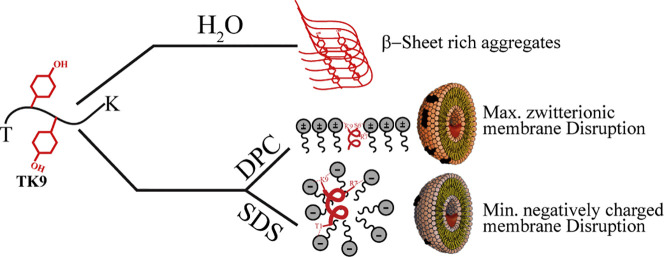
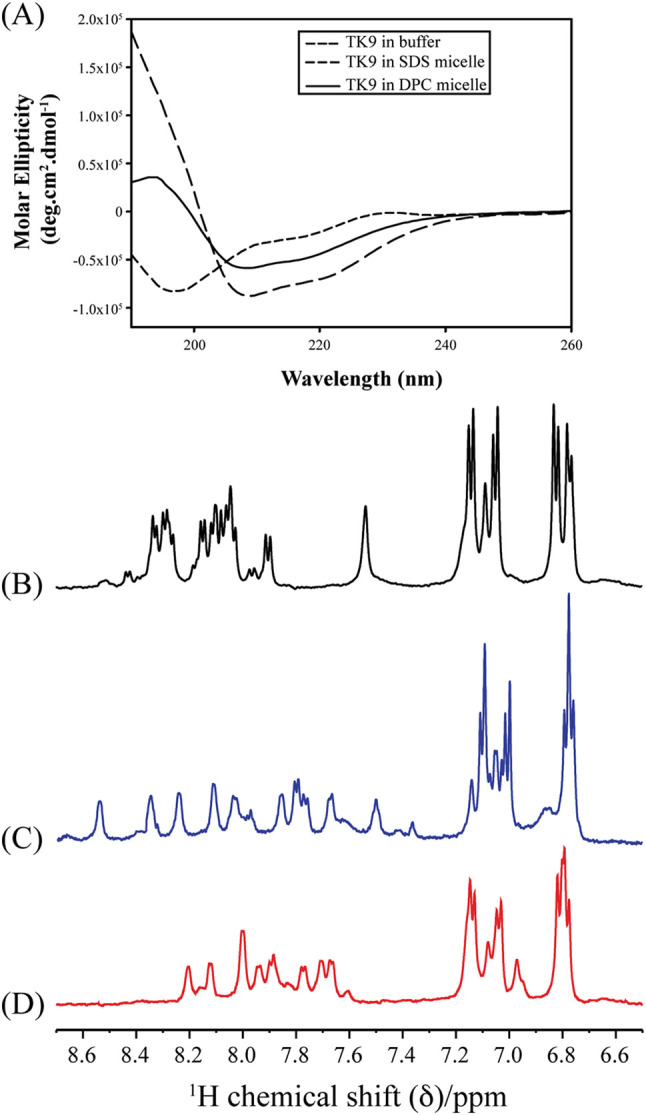
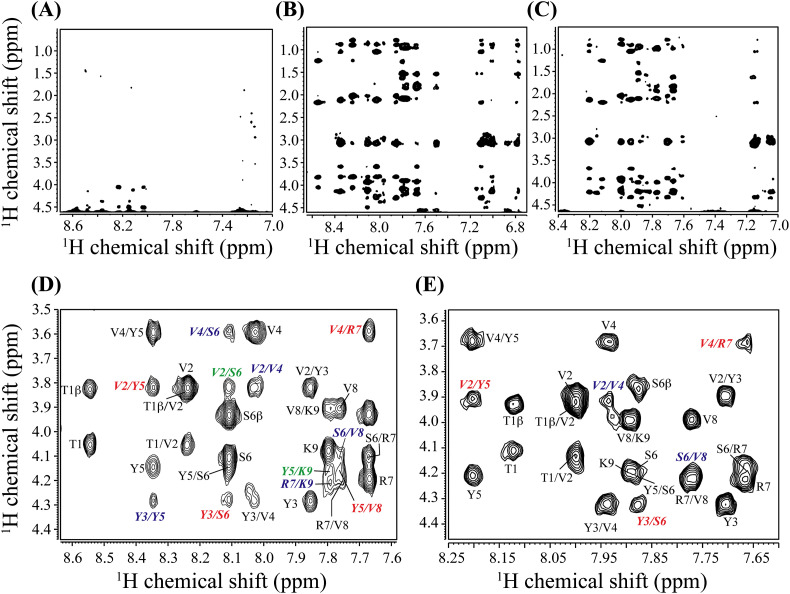
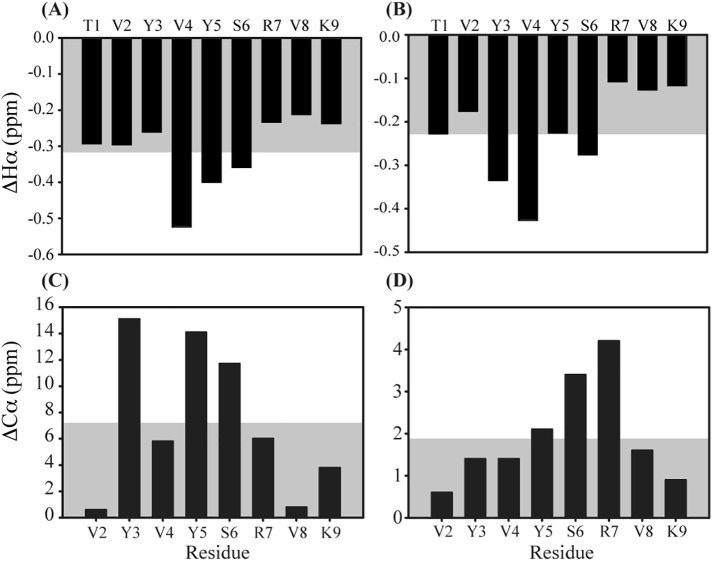
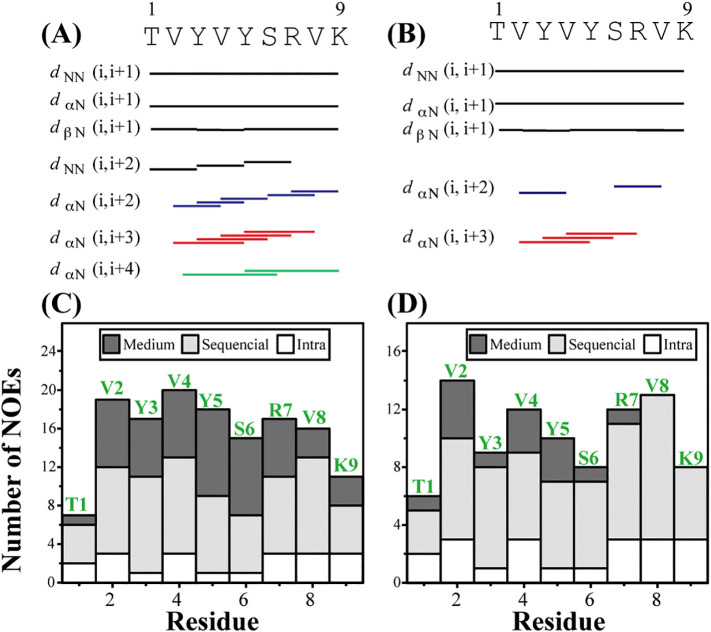
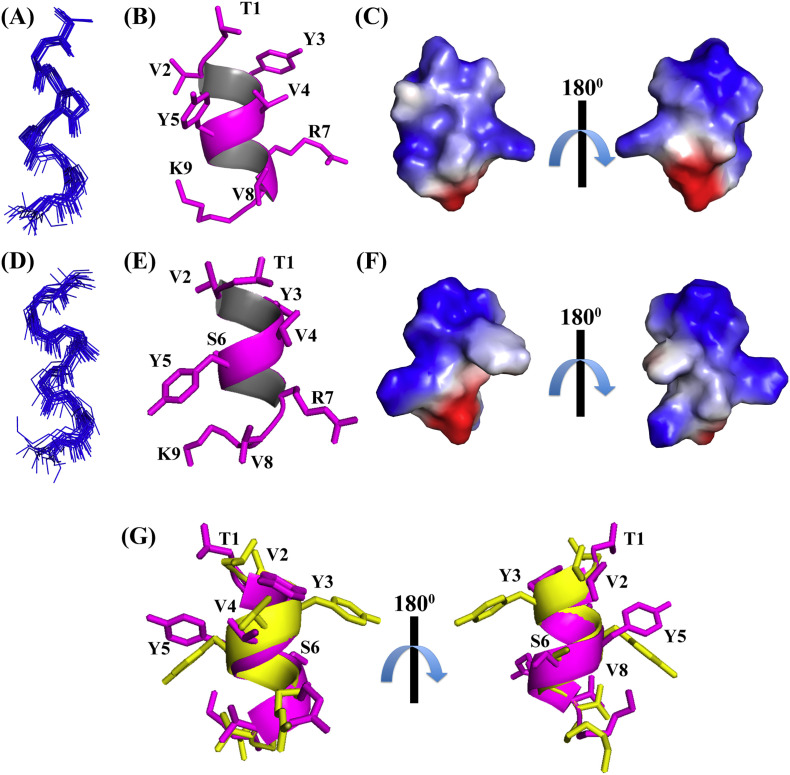
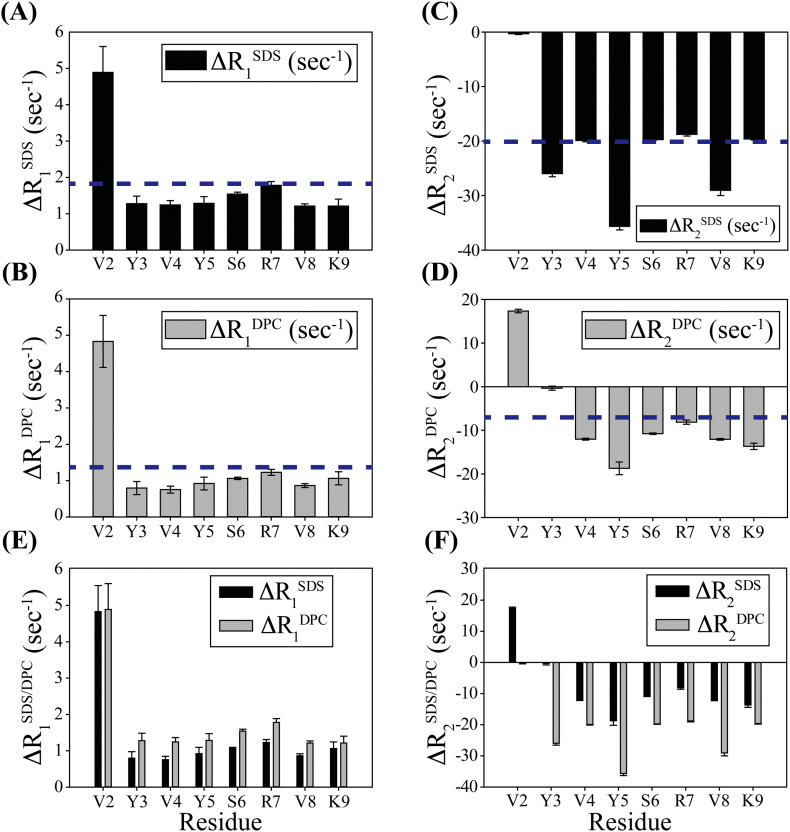
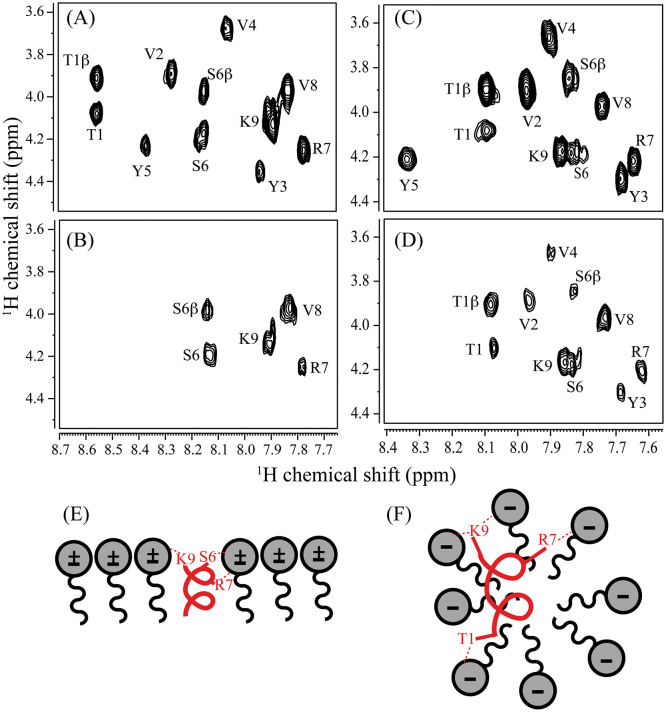
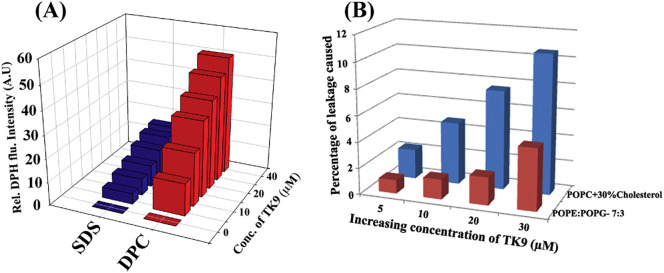
In recent years, several studies based on the interaction of self-assembling short peptides derived from viroporins with model membranes, have improved our understanding of the molecular mechanism of corona virus (CoV) infection under physiological conditions. In this study, we have characterized the mechanism of membrane interaction of a short, 9-residue peptide TK9 (TVYVYSRVK) that had been derived from the carboxyl terminal of the Severe Acute Respiratory Syndrome (SARS) corona virus (SARS CoV) envelope (E) protein. The peptide has been studied for its physical changes in the presence of both zwitterionic DPC and negatively charged SDS model membrane micelles, respectively, with the help of a battery of biophysical techniques including two-dimensional solution state NMR spectroscopy. Interestingly, in both micellar environments, TK9 adopted an alpha helical conformation; however, the helical propensities were much higher in the case of DPC compared to those of SDS micelle, suggesting that TK9 has more specificity towards eukaryotic cell membrane than the bacterial cell membrane. The orientation of the peptide TK9 also varies in the different micellar environments. The peptide's affinity was further manifested by its pronounced membrane disruption ability towards the mammalian compared to the bacterial membrane mimic. Collectively, the in-depth structural information on the interaction of TK9 with different membrane environments explains the host specificity and membrane orientation owing to subsequent membrane disruption implicated in the viral pathogenesis.
近年来,一些基于源自病毒蛋白的自组装短肽与模型膜相互作用的研究,增进了我们对生理条件下冠状病毒(CoV)感染的分子机制的理解。在这项研究中,我们描述了一种短 9 个残基肽 TK9(TVYVYSRVK)与细胞膜相互作用的机制,该肽源自严重急性呼吸综合征(SARS)冠状病毒(SARS-CoV)包膜(E)蛋白的羧基末端。该肽已在两性离子 DPC 和带负电荷的 SDS 模型膜胶束存在的情况下进行了研究,分别使用了一系列生物物理技术,包括二维溶液态 NMR 光谱。有趣的是,在这两种胶束环境中,TK9 都采用了α螺旋构象;然而,与 SDS 胶束相比,DPC 中的螺旋倾向更高,这表明 TK9 对真核细胞膜比细菌细胞膜具有更高的特异性。在不同的胶束环境中,肽 TK9 的取向也有所不同。该肽对哺乳动物膜的亲和力明显高于对细菌膜模拟物的亲和力,进一步证明了其膜破坏能力。总的来说,对 TK9 与不同膜环境相互作用的深入结构信息解释了其在病毒发病机制中涉及的宿主特异性和膜取向归因于随后的膜破坏。