Wang Jianrong, He Nanhai, Zhang Na, Quan Dexian, Zhang Shuo, Zhang Caroline, Yu Ruth T, Atkins Annette R, Zhu Ruihong, Yang Chunhui, Cui Ying, Liddle Christopher, Downes Michael, Xiao Hui, Zheng Ye, Auwerx Johan, Evans Ronald M, Leng Qibin
CAS Key Laboratory of Molecular Virology & Immunology, Unit of Immune Regulation, Institut Pasteur of Shanghai, Chinese Academy of Sciences; University of Chinese Academy of Sciences, Shanghai, 200031, China.
Gene Expression Laboratory, Salk Institute for Biological Studies, La Jolla, CA, 92037, USA.
Nat Commun. 2017 Oct 16;8(1):959. doi: 10.1038/s41467-017-00931-8.
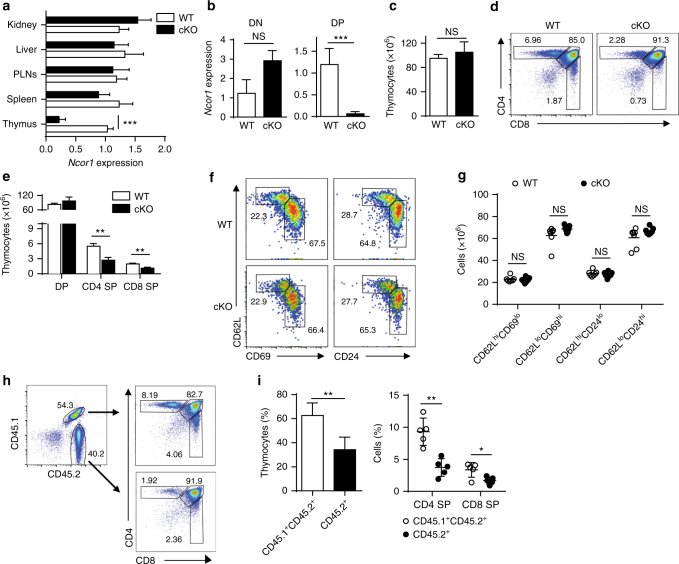
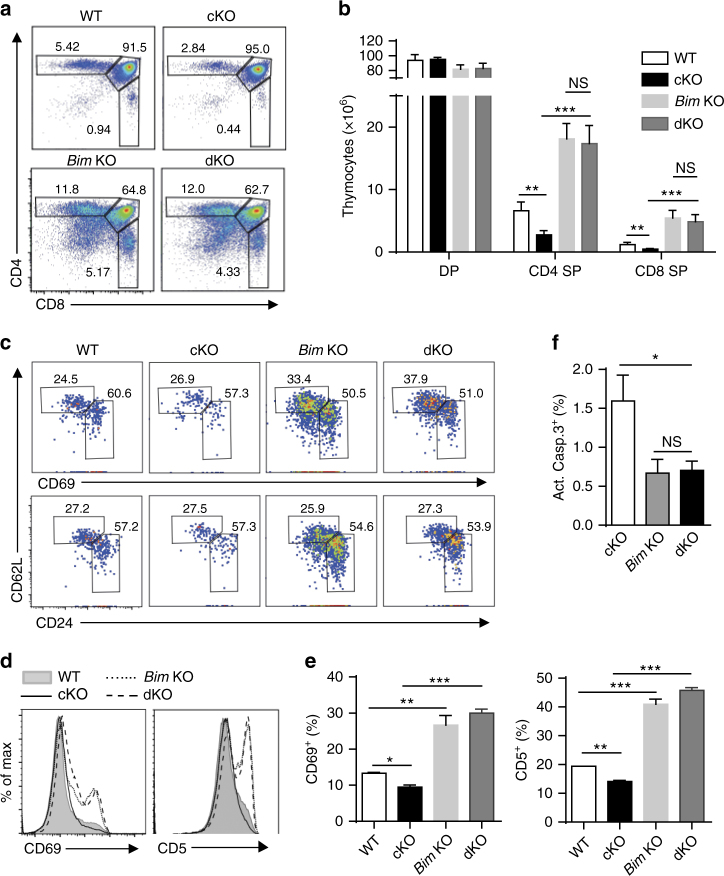
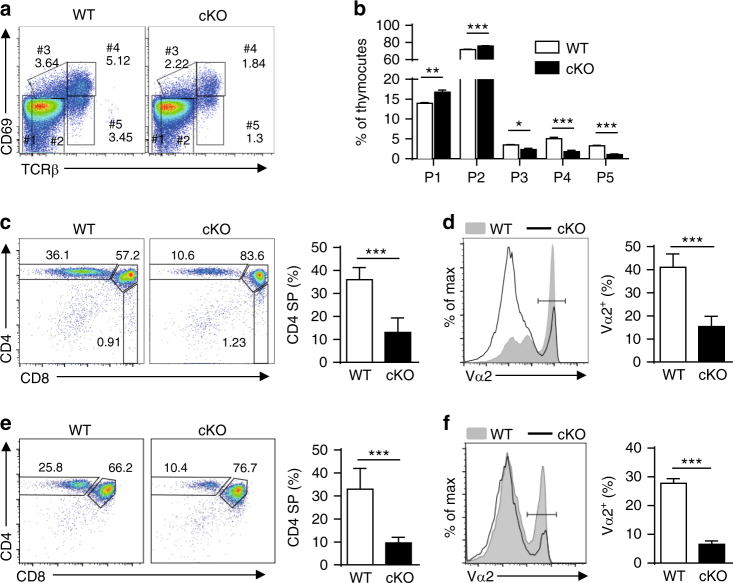
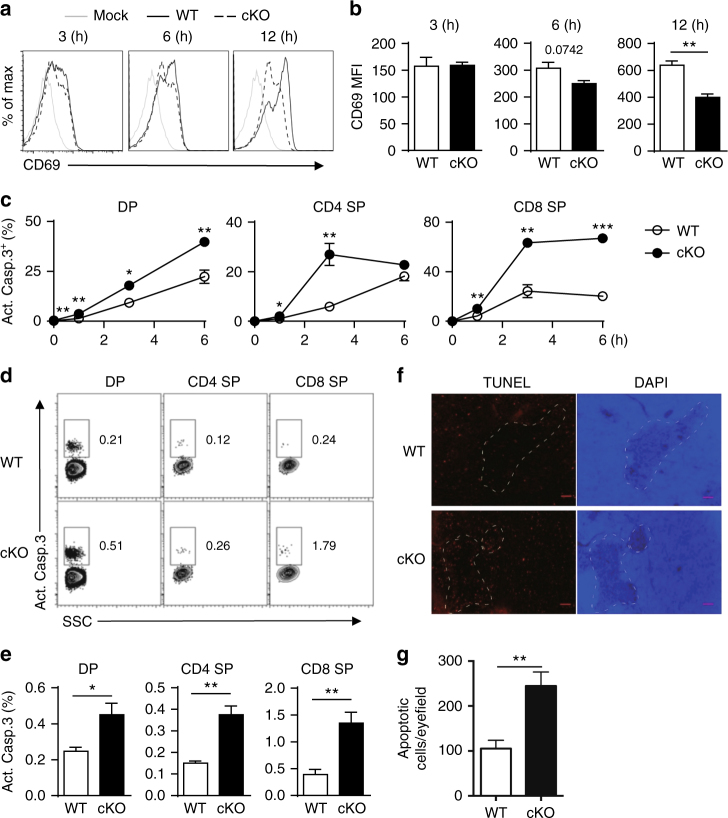
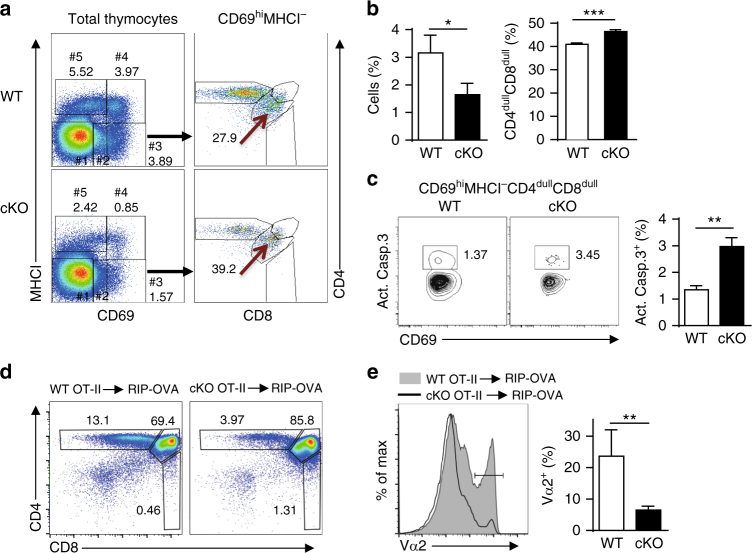
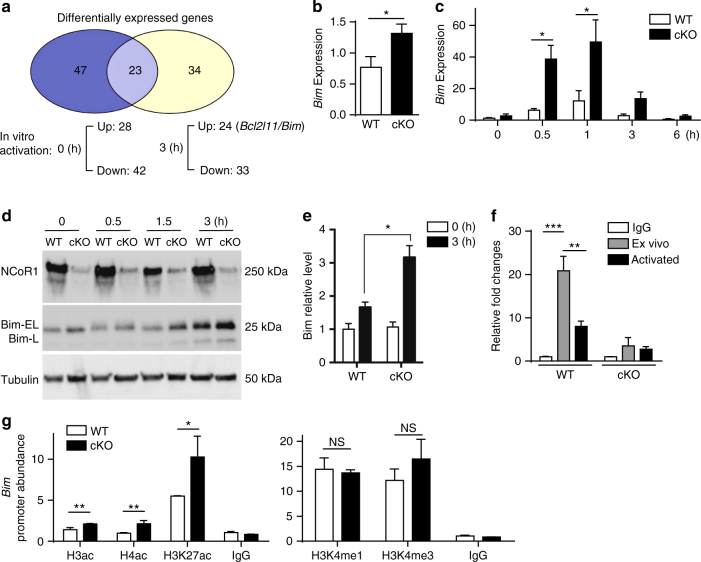
Thymocytes must pass both positive and negative selections to become mature T cells. Negative selection purges thymocytes whose T-cell receptors (TCR) exhibit high affinity to self-peptide MHC complexes (self pMHC) to avoid autoimmune diseases, while positive selection ensures the survival and maturation of thymocytes whose TCRs display intermediate affinity to self pMHCs for effective immunity, but whether transcriptional regulation helps conserve positively selected thymocytes from being purged by negative selection remains unclear. Here we show that the specific deletion of nuclear receptor co-repressor 1 (NCoR1) in T cells causes excessive negative selection to reduce mature thymocyte numbers. Mechanistically, NCoR1 protects positively selected thymocytes from negative selection by suppressing Bim expression. Our study demonstrates a critical function of NCoR1 in coordinated positive and negative selections in the thymus.Thymocytes are screened by two processes, termed positive and negative selections, which are permissive only for immature thymocytes with intermediate avidity to the selecting ligands. Here the authors show that the nuclear receptor NCoR1 suppresses Bim1 to inhibit negative selection and promote thymocyte survival.
胸腺细胞必须通过阳性选择和阴性选择才能成为成熟的T细胞。阴性选择清除那些T细胞受体(TCR)对自身肽-MHC复合物(自身pMHC)表现出高亲和力的胸腺细胞,以避免自身免疫性疾病,而阳性选择则确保那些TCR对自身pMHC表现出中等亲和力的胸腺细胞存活并成熟,从而实现有效的免疫,但转录调控是否有助于保护阳性选择的胸腺细胞不被阴性选择清除仍不清楚。在这里,我们表明T细胞中核受体共抑制因子1(NCoR1)的特异性缺失会导致过度的阴性选择,从而减少成熟胸腺细胞的数量。从机制上讲,NCoR1通过抑制Bim的表达来保护阳性选择的胸腺细胞不被阴性选择清除。我们的研究证明了NCoR1在胸腺中协调阳性和阴性选择的关键功能。胸腺细胞通过两个过程进行筛选,即阳性选择和阴性选择,这两个过程只允许对选择配体具有中等亲和力的未成熟胸腺细胞通过。在这里,作者表明核受体NCoR1抑制Bim1以抑制阴性选择并促进胸腺细胞存活。