Institute of Molecular and Cellular Biology, National Taiwan University, Taipei, 10617, Taiwan.
Department of Life Science, National Taiwan University, Taipei, 10617, Taiwan.
Sci Rep. 2017 Oct 16;7(1):13302. doi: 10.1038/s41598-017-13440-x.
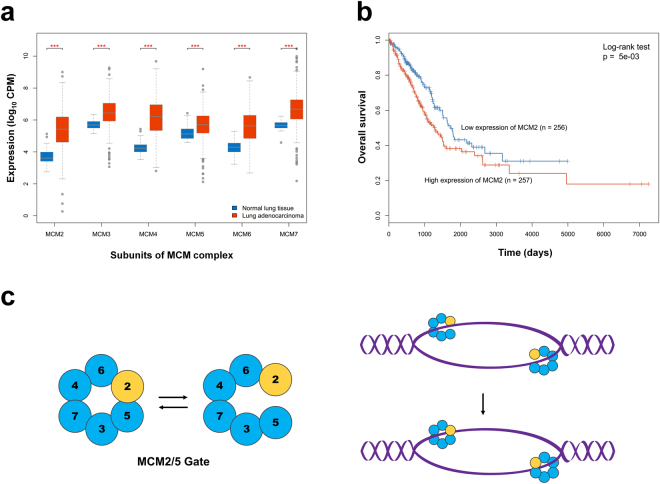
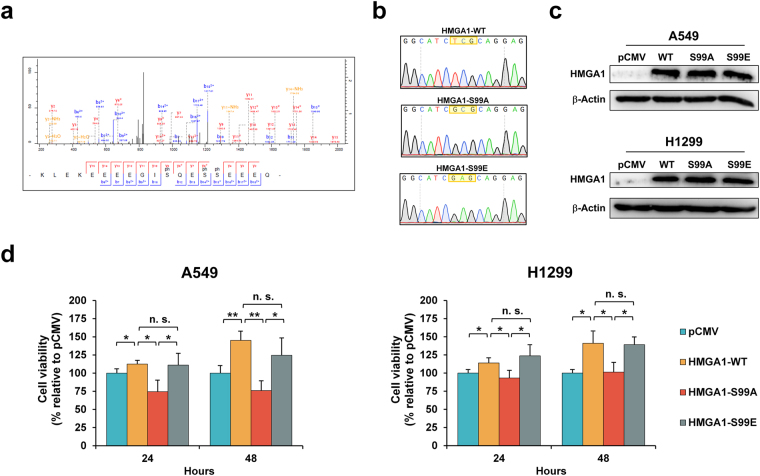
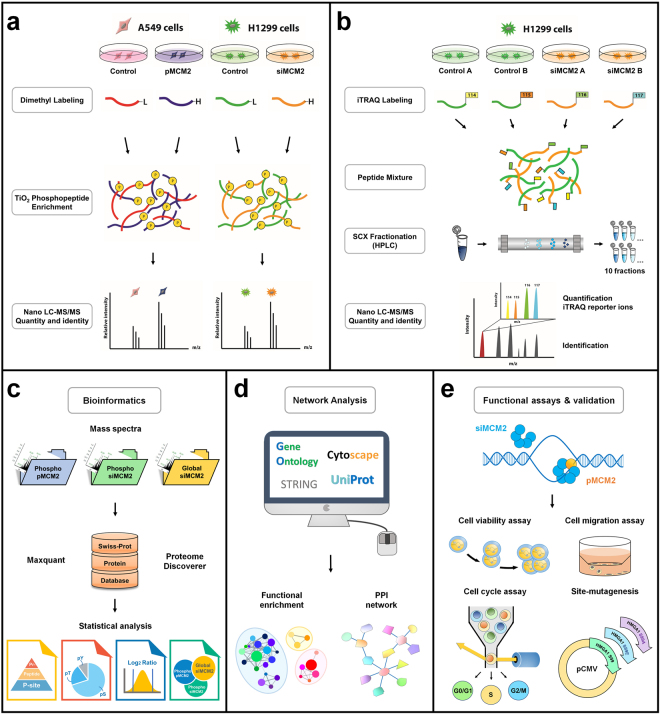
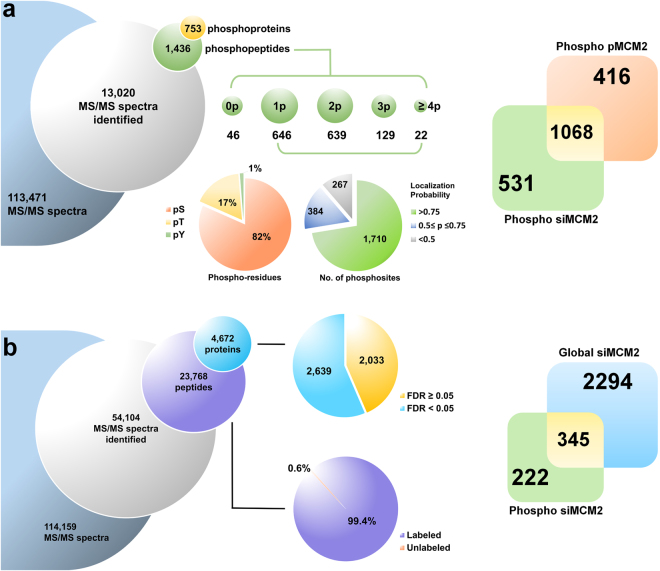
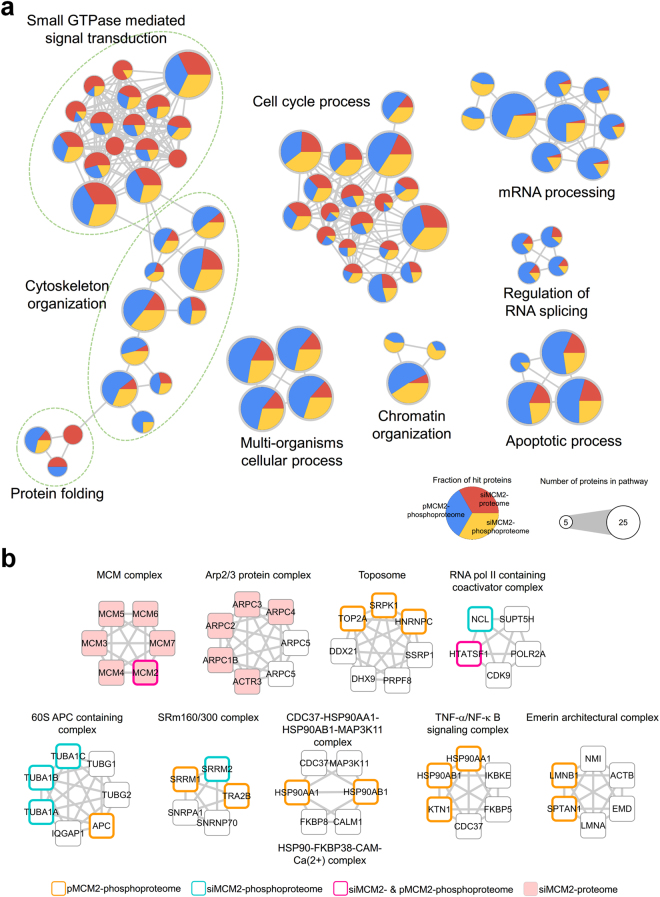
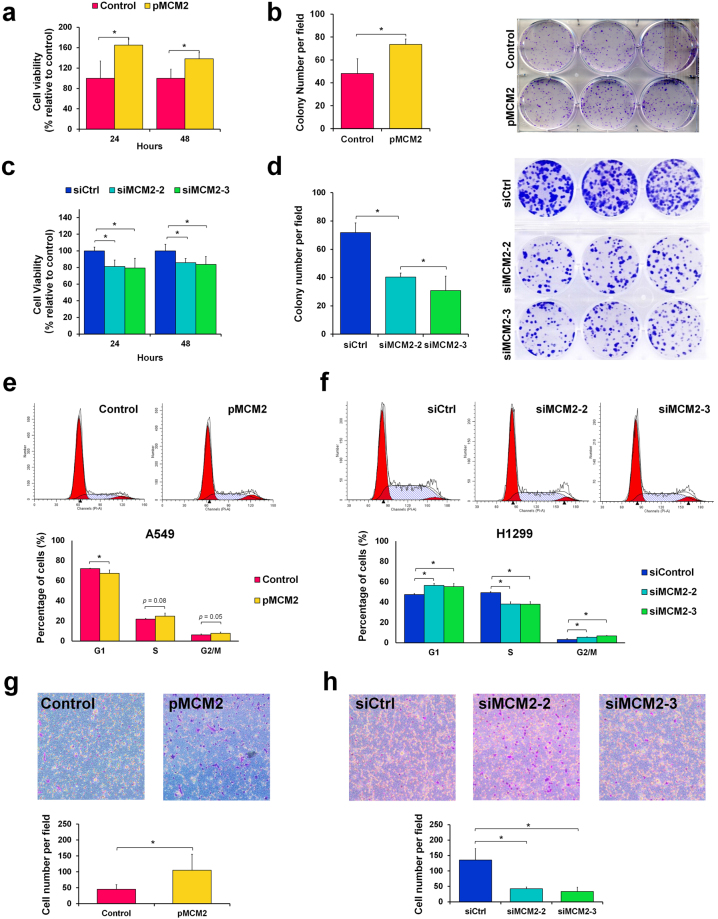
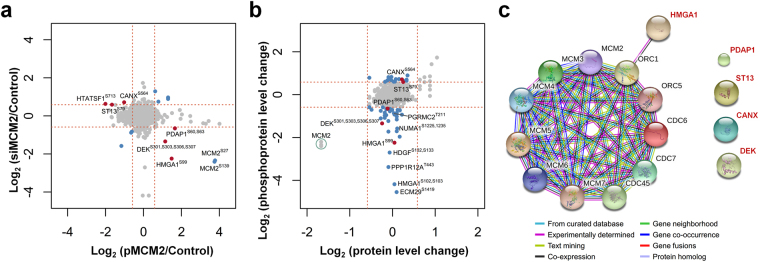
DNA replication control is vital for maintaining genome stability and the cell cycle, perhaps most notably during cell division. Malignancies often exhibit defective minichromosome maintenance protein 2 (MCM2), a cancer proliferation biomarker that serves as a licensing factor in the initiation of DNA replication. MCM2 is also known to be one of the ATPase active sites that facilitates conformational changes and drives DNA unwinding at the origin of DNA replication. However, the biological networks of MCM2 in lung cancer cells via protein phosphorylation remain unmapped. The RNA-seq datasets from The Cancer Genome Atlas (TCGA) revealed that MCM2 overexpression is correlated with poor survival rate in lung cancer patients. To uncover MCM2-regulated functional networks in lung cancer, we performed multi-dimensional proteomic approach by integrating analysis of the phosphoproteome and proteome, and identified a total of 2361 phosphorylation sites on 753 phosphoproteins, and 4672 proteins. We found that the deregulation of MCM2 is involved in lung cancer cell proliferation, the cell cycle, and migration. Furthermore, HMGA1 phosphorylation was found to be differentially expressed under MCM2 perturbation in opposite directions, and plays an important role in regulating lung cancer cell proliferation. This study therefore enhances our capacity to therapeutically target cancer-specific phosphoproteins.
DNA 复制控制对于维持基因组稳定性和细胞周期至关重要,尤其是在细胞分裂期间。恶性肿瘤通常表现出缺陷的微小染色体维持蛋白 2(MCM2),这是一种癌症增殖生物标志物,作为 DNA 复制起始的许可因子。MCM2 也是已知的 ATP 酶活性位点之一,它促进构象变化并在 DNA 复制起点驱动 DNA 解旋。然而,通过蛋白质磷酸化的 MCM2 在肺癌细胞中的生物学网络仍然未知。来自癌症基因组图谱(TCGA)的 RNA-seq 数据集表明,MCM2 的过表达与肺癌患者的生存率差相关。为了揭示 MCM2 在肺癌中的调控功能网络,我们通过整合磷酸化组和蛋白质组的分析进行多维蛋白质组学方法,共鉴定到 753 个磷酸化蛋白上的 2361 个磷酸化位点和 4672 个蛋白。我们发现,MCM2 的失调参与了肺癌细胞的增殖、细胞周期和迁移。此外,发现 HMGA1 磷酸化在 MCM2 扰动下呈相反方向的差异表达,并且在调节肺癌细胞增殖方面发挥着重要作用。因此,这项研究增强了我们治疗性靶向癌症特异性磷酸化蛋白的能力。