State Key Laboratory of Animal Nutrition, Institute of Animal Science (IAS), Chinese Academy of Agricultural Sciences (CAAS), Beijing, 100193, China.
Department of Animal Genetics and Breeding, China Agricultural University, Beijing, 100094, China.
Sci Rep. 2017 Oct 18;7(1):13502. doi: 10.1038/s41598-017-13986-w.
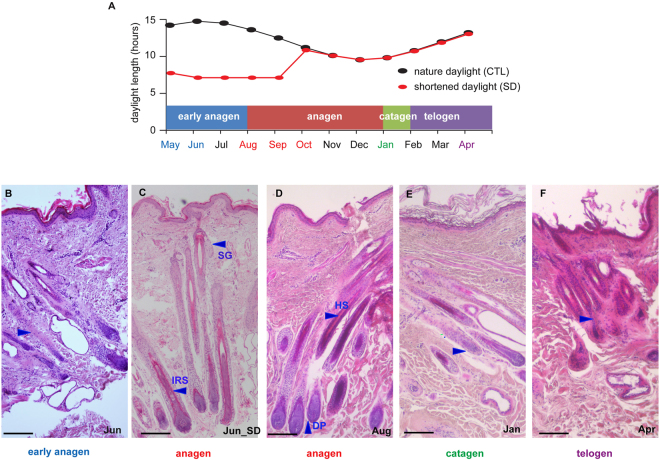
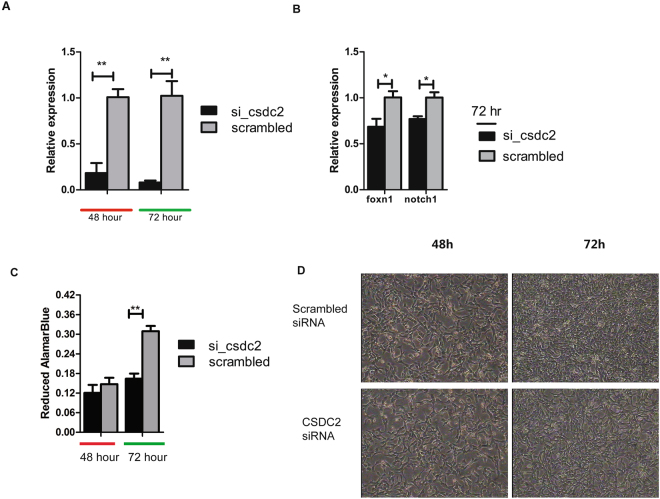
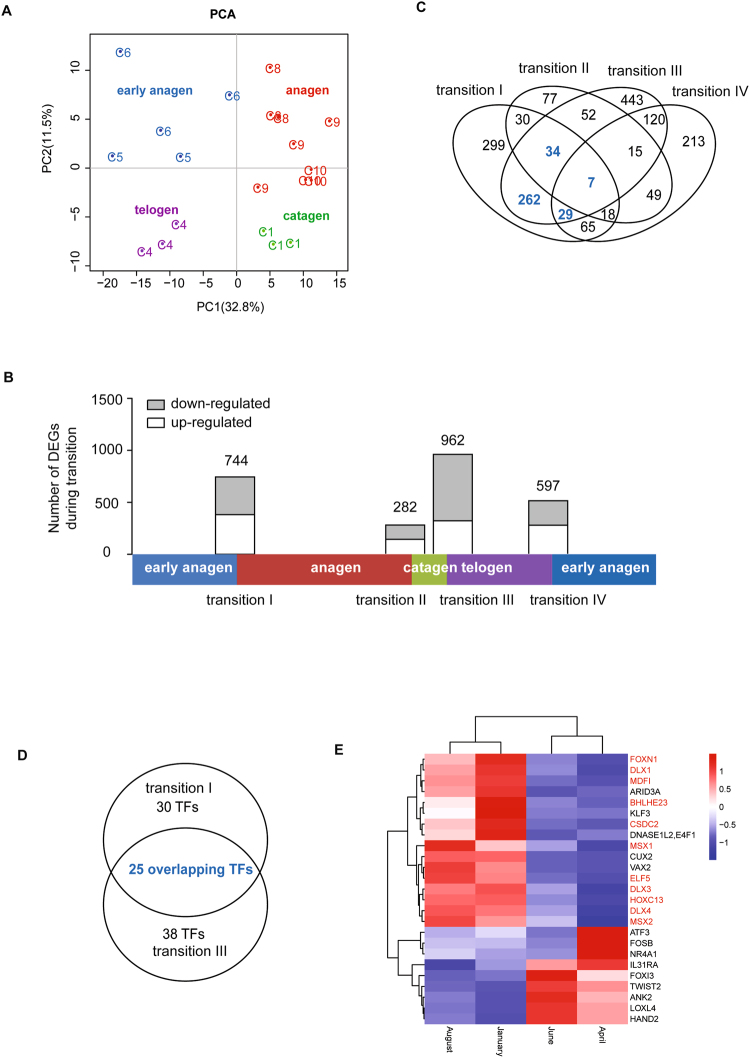
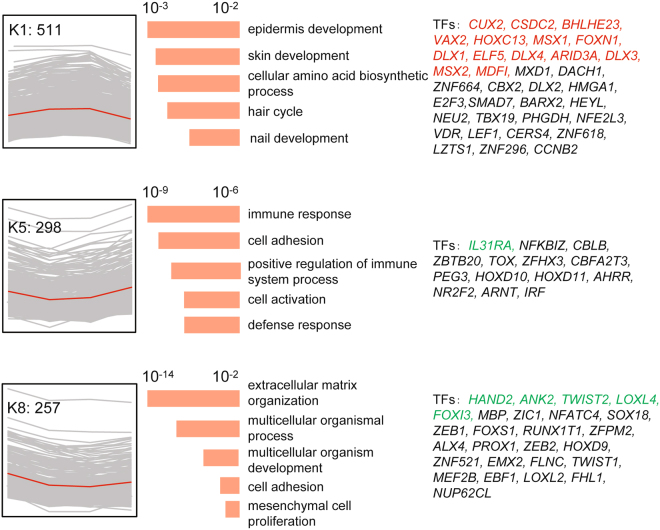
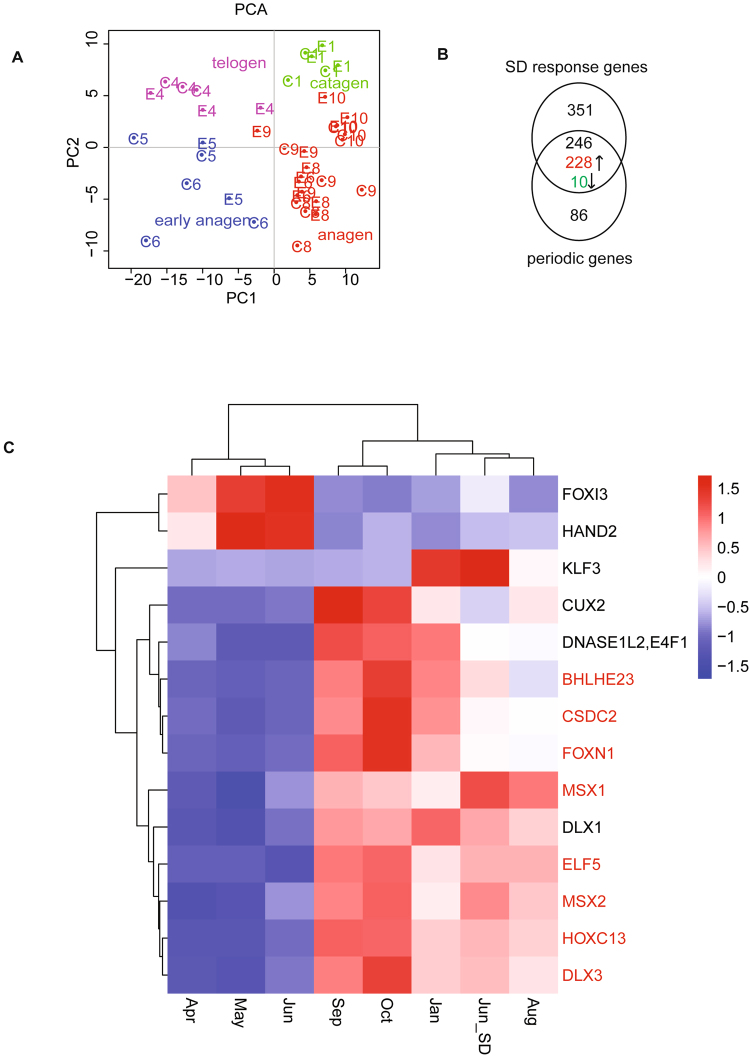
The growth of cashmere exhibits a seasonal pattern arising from photoperiod change. However, the underlying molecular mechanism remains unclear. We profiled the skin transcriptome of six goats at seven time points during hair follicle cycling via RNA-seq. The six goats comprised three goats exposed to a natural photoperiod and three exposed to a shortened photoperiod. During hair cycle transition, 1713 genes showed differential expression, and 332 genes showed a pattern of periodic expression. Moreover, a short photoperiod induced the hair follicle to enter anagen early, and 246 genes overlapped with the periodic genes. Among these key genes, cold-shock domain containing C2 (CSDC2) was highly expressed in the epidermis and dermis of Cashmere goat skin, although its function in hair-follicle development remains unknown. CSDC2 silencing in mouse fibroblasts resulted in the decreased mRNA expression of two key hair-follicle factors, leading to reduced cell numbers and a lower cell density. Cashmere growth or molting might be controlled by a set of periodic regulatory genes. The appropriate management of short light exposure can induce hair follicles to enter full anagen early through the activation of these regulators. The CSDC2 gene is a potentially important transcription factor in the hair growth cycle.
羊绒的生长表现出季节性模式,这是由光周期变化引起的。然而,其潜在的分子机制尚不清楚。我们通过 RNA-seq 技术在毛囊周期的七个时间点对六只山羊的皮肤转录组进行了分析。这六只山羊包括三只暴露在自然光照下的山羊和三只暴露在缩短光照下的山羊。在毛发生长周期的转换过程中,有 1713 个基因表现出差异表达,有 332 个基因表现出周期性表达模式。此外,短光照会促使毛囊提前进入生长期,有 246 个基因与周期性基因重叠。在这些关键基因中,冷休克结构域蛋白 2(CSDC2)在绒山羊皮肤的表皮和真皮中高度表达,尽管其在毛囊发育中的功能尚不清楚。CSDC2 在小鼠成纤维细胞中的沉默导致两个关键毛囊因子的 mRNA 表达减少,导致细胞数量减少和细胞密度降低。羊绒生长或换毛可能受一组周期性调节基因的控制。适当的短光照管理可以通过激活这些调节剂,促使毛囊提前进入完全生长期。CSDC2 基因是毛发生长周期中的一个潜在重要转录因子。