Plet Chloé, Grice Kliti, Pagès Anais, Verrall Michael, Coolen Marco J L, Ruebsam Wolfgang, Rickard William D A, Schwark Lorenz
WA-Organic and Isotope Geochemistry, Department of Chemistry, The Institute for Geoscience Research, Curtin University, Curtin, WA, 6845, Australia.
CSIRO CESRE, Mineral resources, Kensington, WA, 6151, Australia.
Sci Rep. 2017 Oct 23;7(1):13776. doi: 10.1038/s41598-017-13873-4.
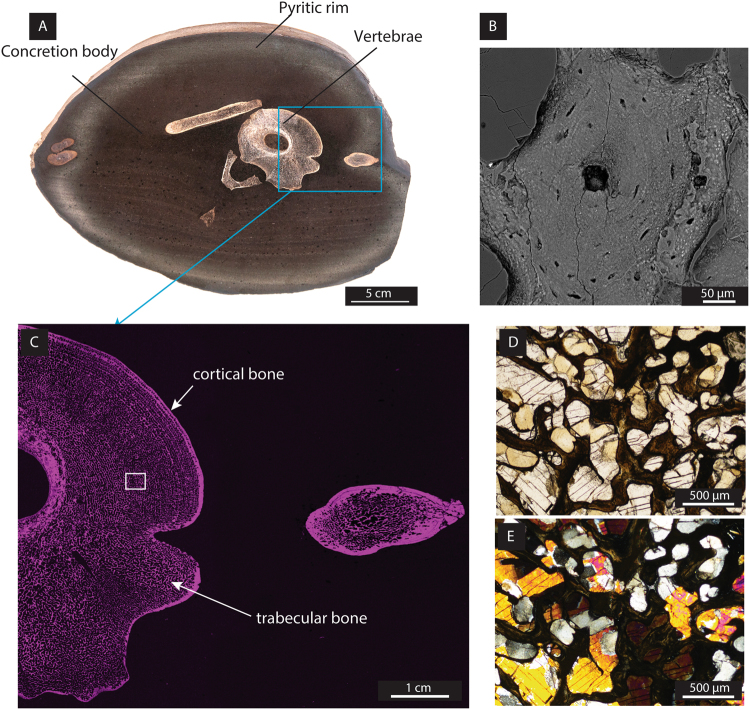
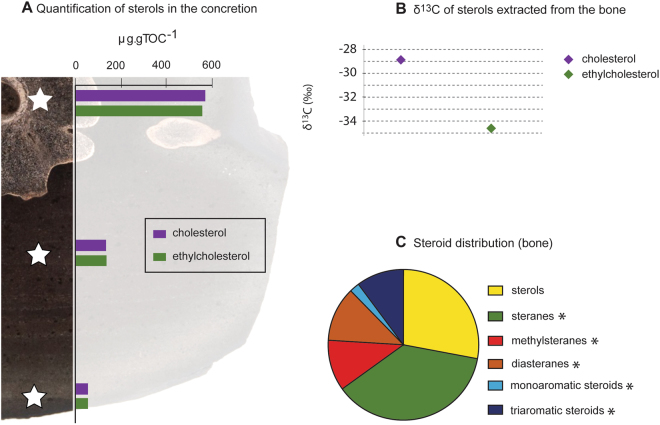
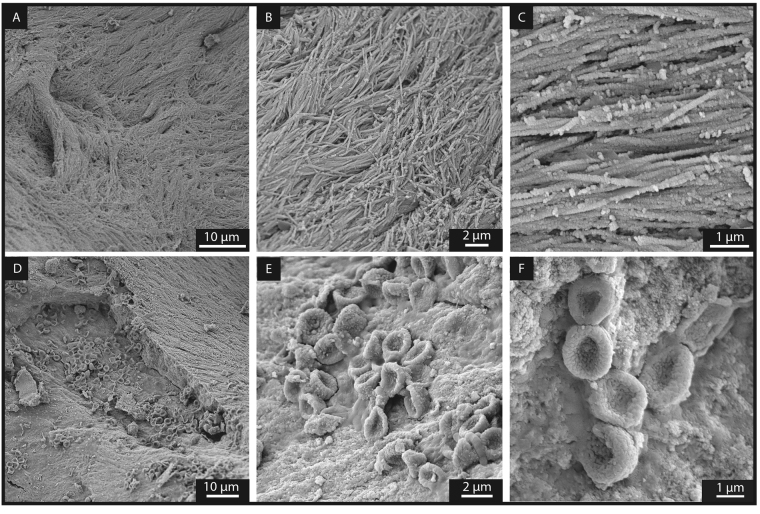
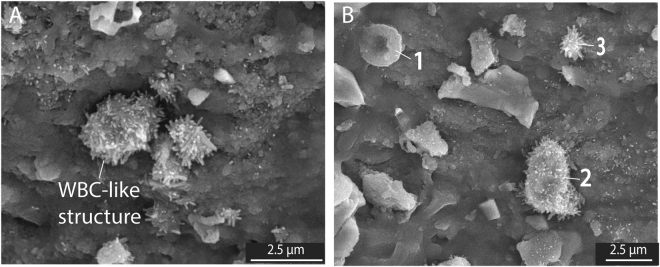
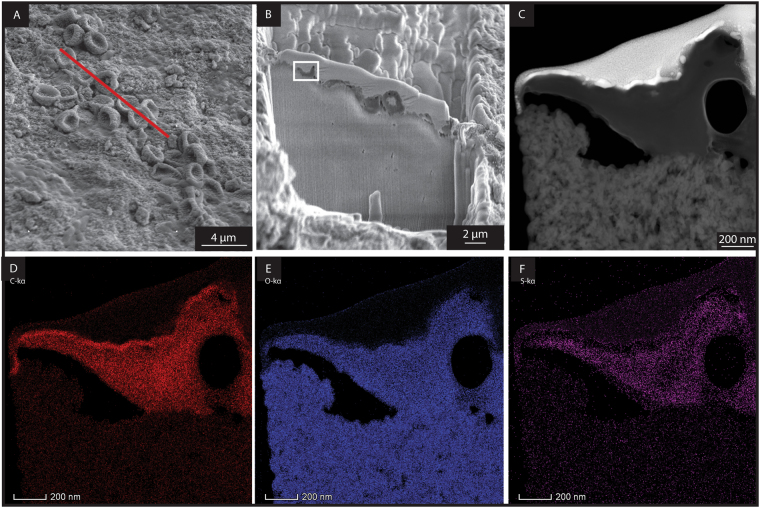
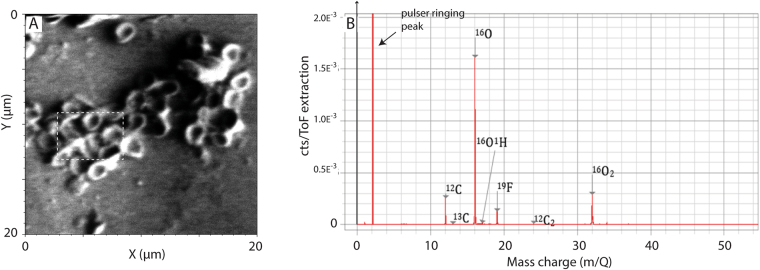
Carbonate concretions are known to contain well-preserved fossils and soft tissues. Recently, biomolecules (e.g. cholesterol) and molecular fossils (biomarkers) were also discovered in a 380 million-year-old concretion, revealing their importance in exceptional preservation of biosignatures. Here, we used a range of microanalytical techniques, biomarkers and compound specific isotope analyses to report the presence of red and white blood cell-like structures as well as platelet-like structures, collagen and cholesterol in an ichthyosaur bone encapsulated in a carbonate concretion from the Early Jurassic (~182.7 Ma). The red blood cell-like structures are four to five times smaller than those identified in modern organisms. Transmission electron microscopy (TEM) analysis revealed that the red blood cell-like structures are organic in composition. We propose that the small size of the blood cell-like structures results from an evolutionary adaptation to the prolonged low oxygen atmospheric levels prevailing during the 70 Ma when ichthyosaurs thrived. The δC of the ichthyosaur bone cholesterol indicates that it largely derives from a higher level in the food chain and is consistent with a fish and cephalopod diet. The combined findings above demonstrate that carbonate concretions create isolated environments that promote exceptional preservation of fragile tissues and biomolecules.
已知碳酸盐结核中含有保存完好的化石和软组织。最近,在一个有3.8亿年历史的结核中还发现了生物分子(如胆固醇)和分子化石(生物标志物),揭示了它们在生物特征特殊保存中的重要性。在此,我们使用了一系列微观分析技术、生物标志物和化合物特定同位素分析,来报告在一个来自早侏罗世(约1.827亿年前)、被碳酸盐结核包裹的鱼龙骨骼中存在红细胞样和白细胞样结构以及血小板样结构、胶原蛋白和胆固醇。这些红细胞样结构比现代生物中发现的红细胞样结构小四到五倍。透射电子显微镜(TEM)分析表明,这些红细胞样结构在成分上是有机的。我们认为,血细胞样结构的小尺寸是对鱼龙繁盛的7000万年期间普遍存在的长期低氧大气水平的一种进化适应。鱼龙骨骼胆固醇的δC表明,它主要来自食物链中较高的层次,这与以鱼类和头足类为食的饮食习惯一致。上述综合研究结果表明,碳酸盐结核创造了隔离的环境,促进了脆弱组织和生物分子的特殊保存。