Institute of Chemistry, University of the Philippines Diliman, Quezon City 1101, Philippines.
Molecules. 2017 Oct 24;22(10):1677. doi: 10.3390/molecules22101677.
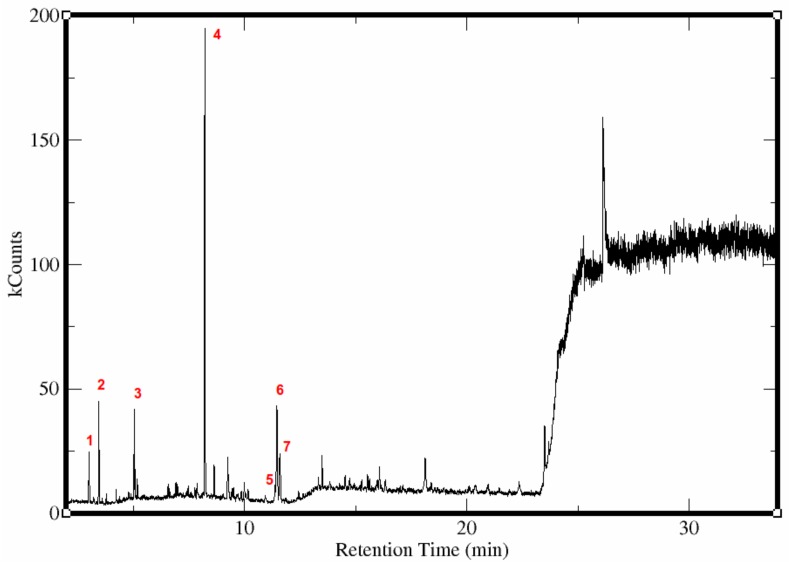
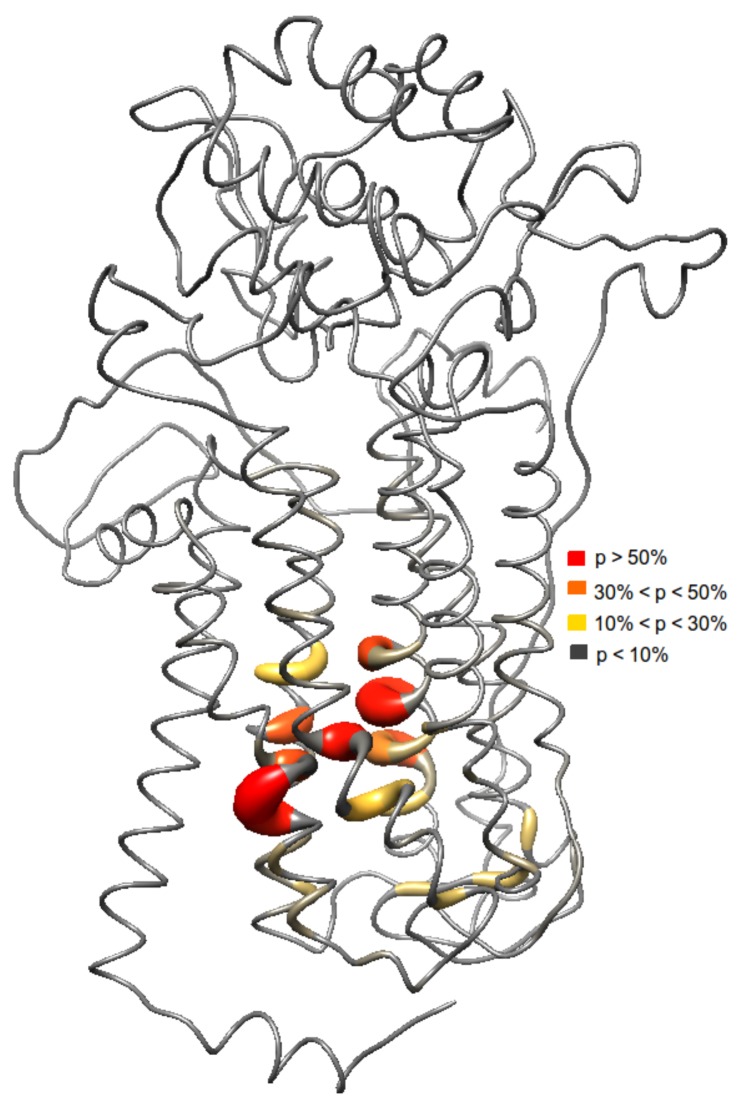
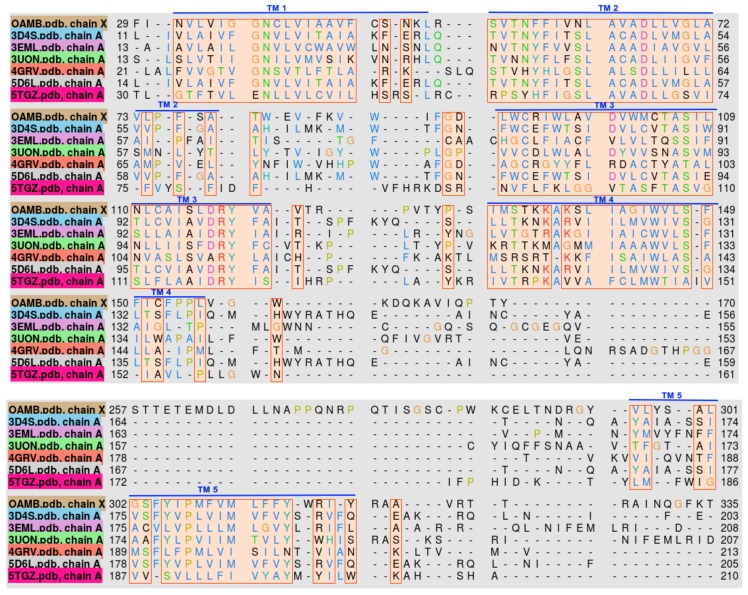
Essential oils extracted from plants are composed of volatile organic compounds that can affect insect behavior. Identifying the active components of the essential oils to their biochemical target is necessary to design novel biopesticides. In this study, essential oils extracted from (Willd.) were analyzed using gas chromatography mass spectroscopy (GC-MS) to create an untargeted metabolite profile. Subsequently, a conformational ensemble of the octopamine receptor in mushroom bodies (OAMB) was created from a molecular dynamics simulation to resemble a flexible receptor for docking studies. GC-MS analysis revealed the presence of several metabolites, i.e. mostly aromatic esters. Interestingly, these aromatic esters were found to exhibit relatively higher binding affinities to OAMB than the receptor's natural agonist, octopamine. The molecular origin of this observed enhanced affinity is the π -stacking interaction between the aromatic moieties of the residues and ligands. This strategy, computational inspection in tandem with untargeted metabolomics, may provide insights in screening the essential oils as potential OAMB inhibitors.
从植物中提取的精油由挥发性有机化合物组成,这些化合物可以影响昆虫的行为。确定精油的活性成分与其生化靶标相对应对于设计新型生物农药是必要的。在这项研究中,使用气相色谱-质谱联用技术(GC-MS)对从 (Willd.)中提取的精油进行了分析,以创建非靶向代谢物图谱。随后,从分子动力学模拟中创建了蘑菇体(OAMB)中 章鱼胺受体的构象集合体,以模拟用于对接研究的柔性受体。GC-MS 分析显示存在几种代谢物,即主要是芳香酯。有趣的是,与受体的天然激动剂章鱼胺相比,这些芳香酯对 OAMB 的结合亲和力相对较高。观察到这种增强亲和力的分子起源是残基和配体的芳香部分之间的π-堆积相互作用。这种策略,与非靶向代谢组学相结合的计算检查,可能为筛选作为潜在 OAMB 抑制剂的精油提供见解。