Department of Radiology, Institute of Surgery Research, Daping Hospital, Third Military Medical University, Chongqing, 400042, China.
Chongqing Clinical Research Center for Imaging and Nuclear Medicine, Chongqing, 400042, China.
Sci Rep. 2017 Oct 24;7(1):13894. doi: 10.1038/s41598-017-14341-9.
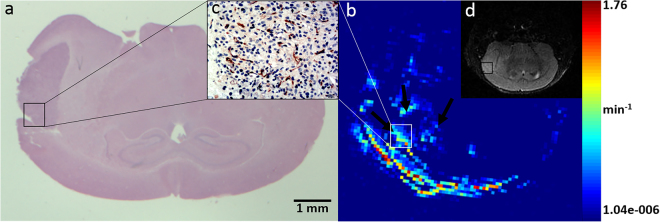
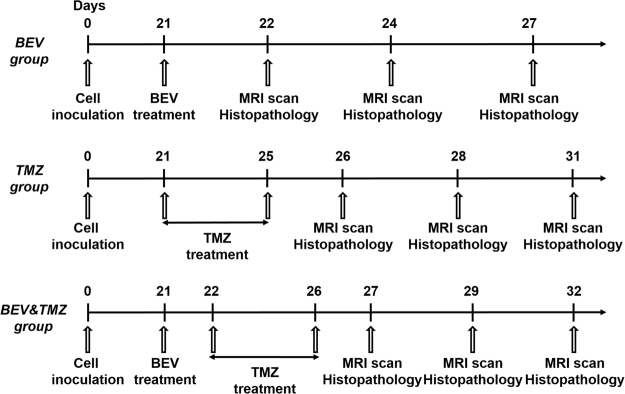
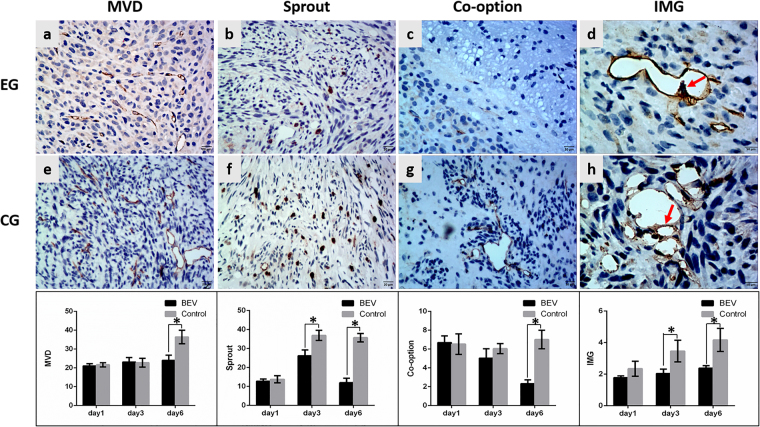
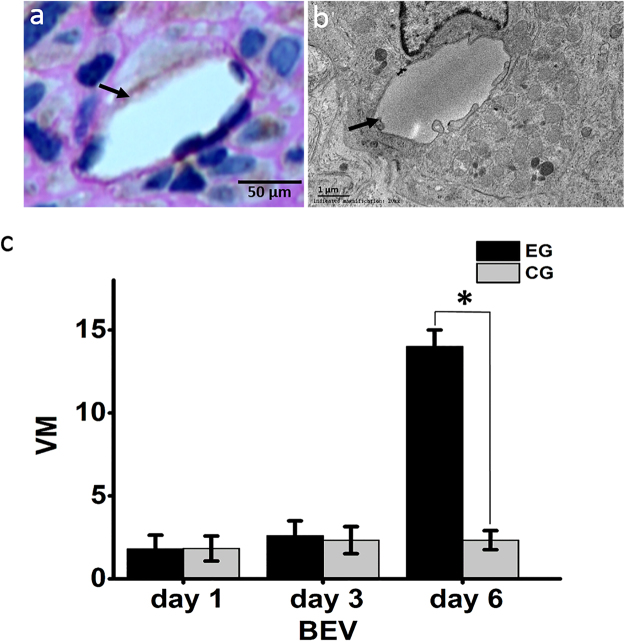
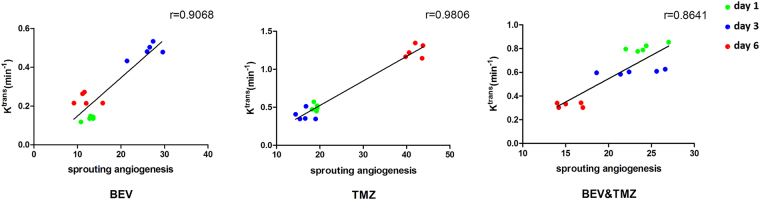
Glioblastoma (GBM) is a highly angiogenic malignancy, and its abundant, aberrant neovascularization is closely related to the proliferation and invasion of tumor cells. However, anti-angiogenesis combined with standard radio-/chemo-therapy produces little improvement in treatment outcomes. Determining the reason for treatment failure is pivotal for GBM treatment. Here, histopathological analysis and dynamic contrast-enhanced MRI (DCE-MRI) were used to explore the effects of temozolomide (TMZ) and bevacizumab (BEV) on GBM neovascularization patterns in an orthotopic U87MG mouse model at 1, 3 and 6 days after treatment. We found that the amount of vascular mimicry (VM) significantly increased 6 days after BEV treatment. TMZ inhibited neovascularization at an early stage, but the microvessel density (MVD) and transfer coefficient (K) derived from DCE-MRI increased 6 days after treatment. TMZ and BEV combination therapy slightly prolonged the inhibitory effect on tumor microvessels. Sprouting angiogenesis was positively correlated with K in all treatment groups. The increase in VM after BEV administration and the increase in MVD and Ktrans after TMZ administration may be responsible for treatment resistance. K holds great potential as an imaging biomarker for indicating the variation in sprouting angiogenesis during drug treatment for GBM.
胶质母细胞瘤(GBM)是一种高度血管生成的恶性肿瘤,其丰富的、异常的新生血管化与肿瘤细胞的增殖和浸润密切相关。然而,抗血管生成联合标准的放化疗并没有明显改善治疗效果。确定治疗失败的原因对于 GBM 的治疗至关重要。在这里,我们使用组织病理学分析和动态对比增强 MRI(DCE-MRI),在治疗后 1、3 和 6 天,在原位 U87MG 小鼠模型中,探索替莫唑胺(TMZ)和贝伐单抗(BEV)对 GBM 新生血管模式的影响。我们发现,BEV 治疗 6 天后血管模拟(VM)的数量显著增加。TMZ 在早期抑制新生血管形成,但 DCE-MRI 得出的微血管密度(MVD)和转移系数(K)在治疗后 6 天增加。TMZ 和 BEV 联合治疗略微延长了对肿瘤微血管的抑制作用。所有治疗组中,发芽型血管生成与 K 呈正相关。BEV 给药后 VM 的增加以及 TMZ 给药后 MVD 和 Ktrans 的增加,可能是导致治疗耐药的原因。K 作为一种成像生物标志物,具有很大的潜力,可以指示 GBM 药物治疗期间发芽型血管生成的变化。