Quarta Serena, Camprubí-Robles Maria, Schweigreiter Rüdiger, Matusica Dusan, Haberberger Rainer V, Proia Richard L, Bandtlow Christine E, Ferrer-Montiel Antonio, Kress Michaela
Division of Physiology, DPMP, Innsbruck Medical University, Innsbruck, Austria.
Division of Neurobiochemistry, Biocenter, Innsbruck Medical University, Innsbruck, Austria.
Front Mol Neurosci. 2017 Oct 10;10:317. doi: 10.3389/fnmol.2017.00317. eCollection 2017.
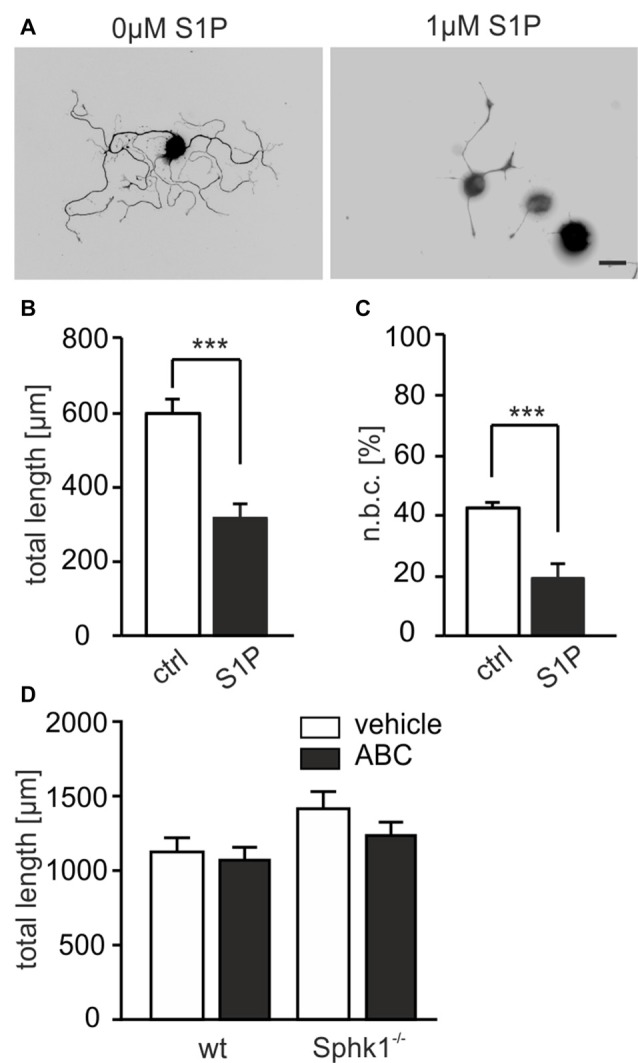
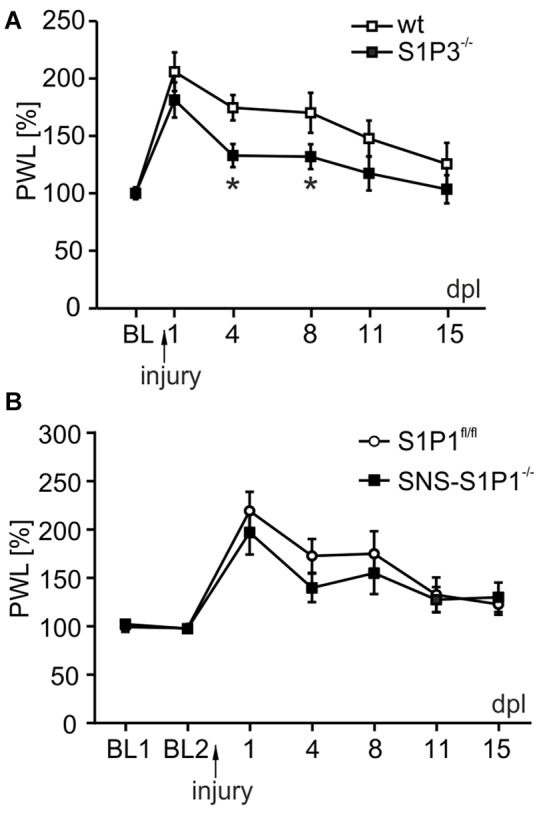
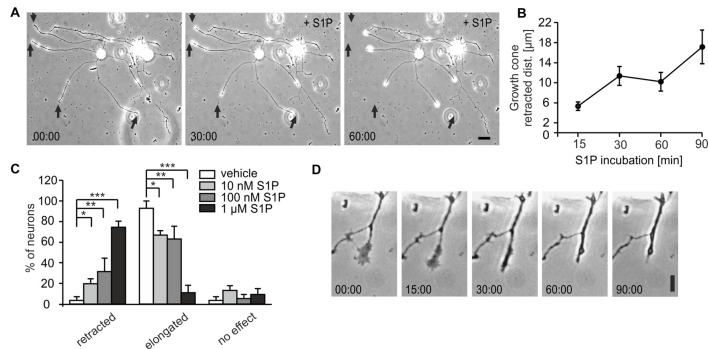
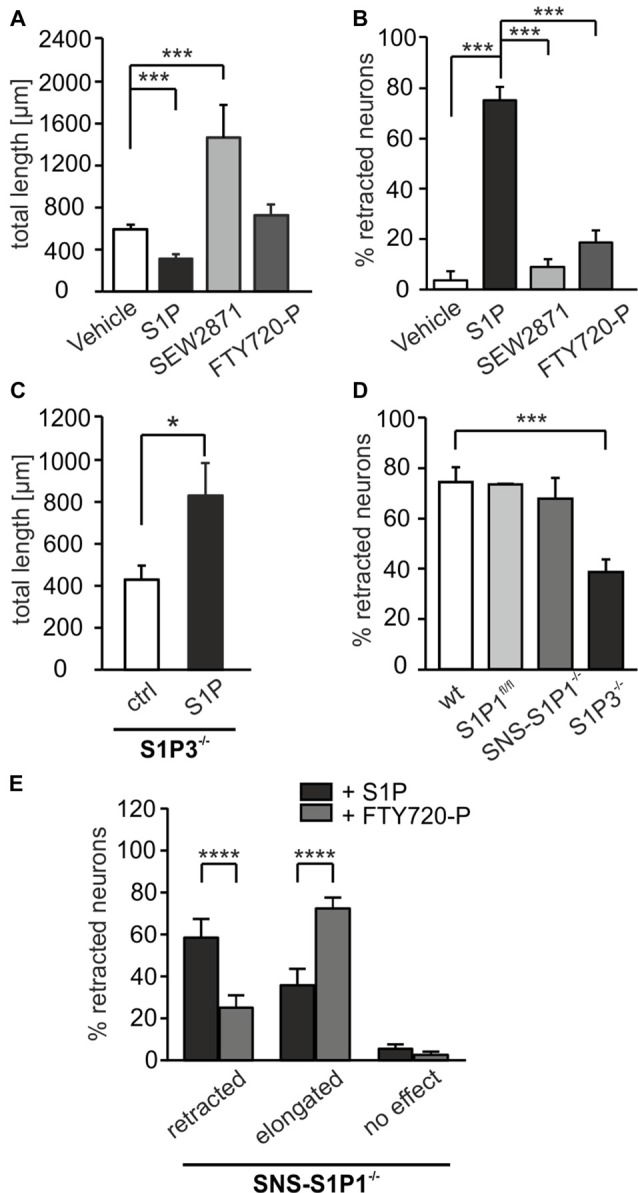
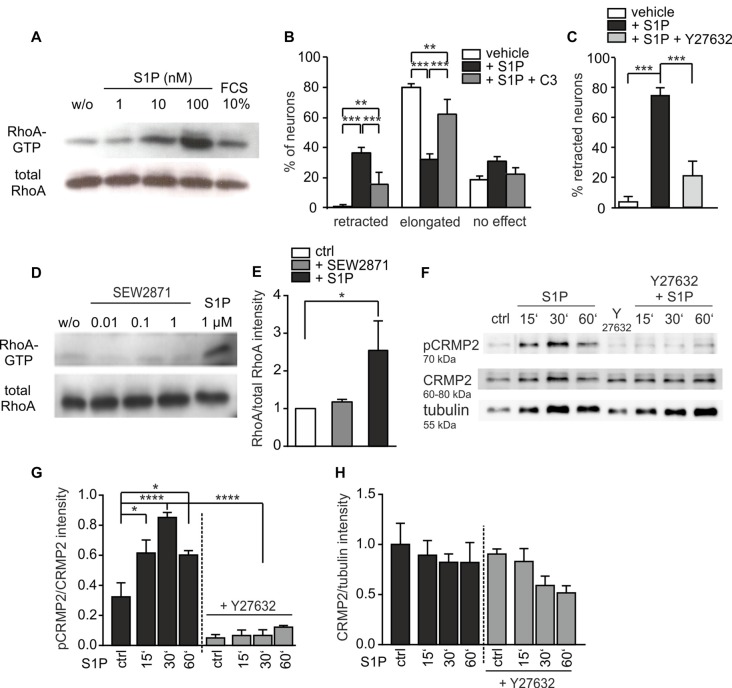
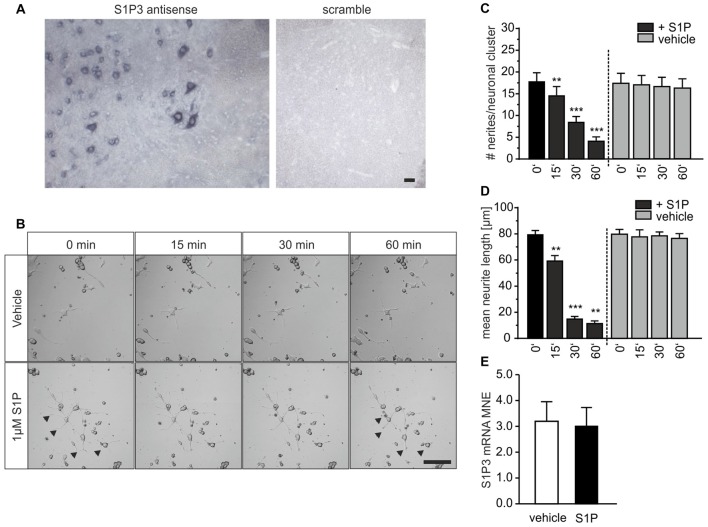
The bioactive lipid sphingosine-1-phosphate (S1P) is an important regulator in the nervous system. Here, we explored the role of S1P and its receptors and in preclinical models of peripheral nerve regeneration. Adult sensory neurons and motor neuron-like cells were exposed to S1P in an assay, and virtually all neurons responded with a rapid retraction of neurites and growth cone collapse which were associated with RhoA and ROCK activation. The S1P receptor agonist SEW2871 neither activated RhoA or neurite retraction, nor was S1P-induced neurite retraction mitigated in S1P-deficient neurons. Depletion of S1P receptors however resulted in a dramatic inhibition of S1P-induced neurite retraction and was on the contrary associated with a significant elongation of neuronal processes in response to S1P. Opposing responses to S1P could be observed in the same neuron population, where S1P could activate S1P receptors to stimulate elongation or S1P receptors and retraction. S1P was, for the first time in sensory neurons, linked to the phosphorylation of collapsin response-mediated protein-2 (CRMP2), which was inhibited by ROCK inhibition. The improved sensory recovery after crush injury further supported the relevance of a critical role for S1P and receptors in fine-tuning axonal outgrowth in peripheral neurons.
生物活性脂质鞘氨醇-1-磷酸(S1P)是神经系统中的一种重要调节因子。在此,我们在外周神经再生的临床前模型中探究了S1P及其受体的作用。在一项实验中,将成年感觉神经元和运动神经元样细胞暴露于S1P中,几乎所有神经元都表现出神经突迅速回缩和生长锥塌陷,这与RhoA和ROCK激活有关。S1P受体激动剂SEW2871既不激活RhoA也不引起神经突回缩,在缺乏S1P的神经元中,S1P诱导的神经突回缩也未得到缓解。然而,S1P受体的耗竭导致S1P诱导的神经突回缩受到显著抑制,相反,这与神经元对S1P反应时神经突的显著伸长有关。在同一神经元群体中可以观察到对S1P的相反反应,其中S1P可以激活S1P受体以刺激伸长或激活S1P受体并导致回缩。在感觉神经元中,S1P首次与塌陷反应介导蛋白2(CRMP2)的磷酸化相关,而这种磷酸化可被ROCK抑制所抑制。挤压伤后感觉功能的改善进一步支持了S1P及其受体在微调外周神经元轴突生长中起关键作用的相关性。