Ishaq Suzanne L, AlZahal Ousama, Walker Nicola, McBride Brian
Ishaq Informatics, LLC, Bozeman, MT, United States.
AB Vista, Marlborough, Wiltshire, United Kingdom.
Front Microbiol. 2017 Oct 10;8:1943. doi: 10.3389/fmicb.2017.01943. eCollection 2017.
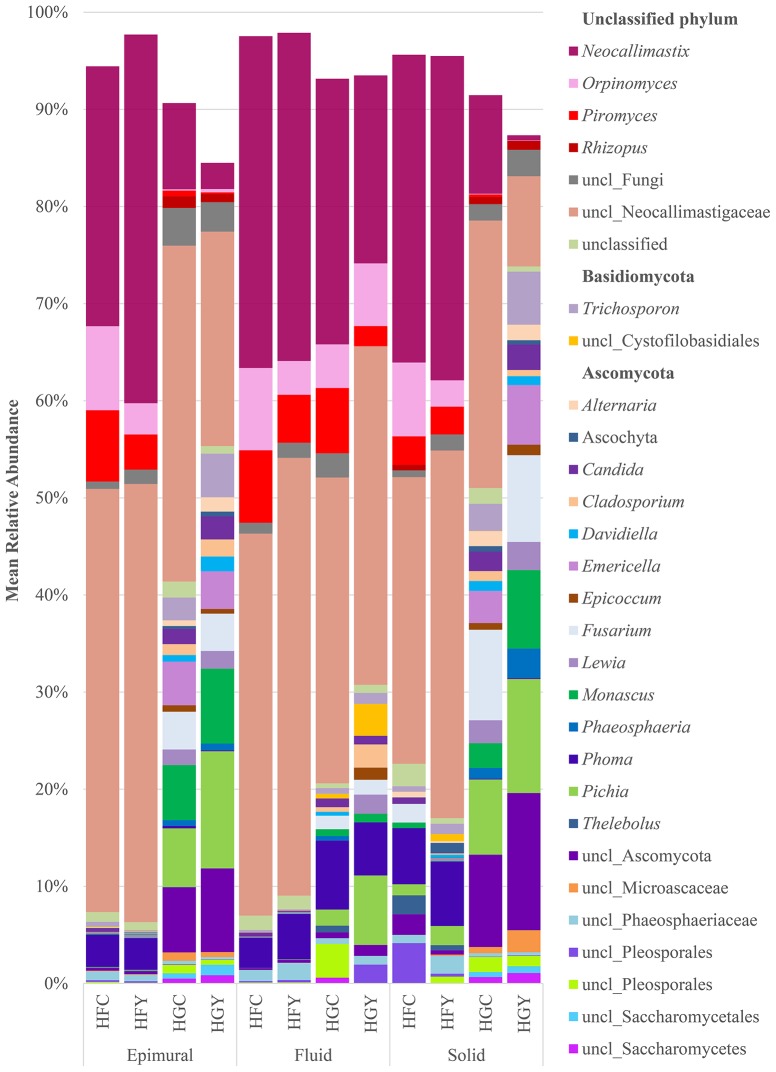
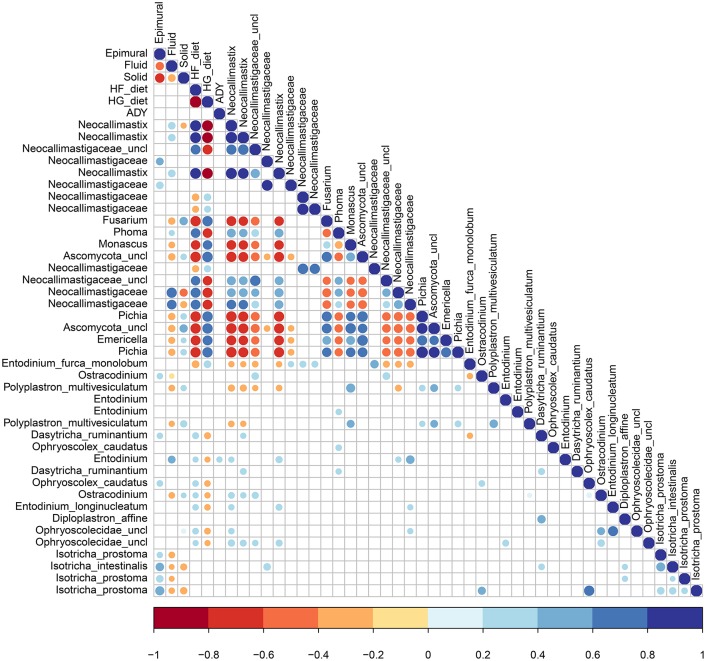
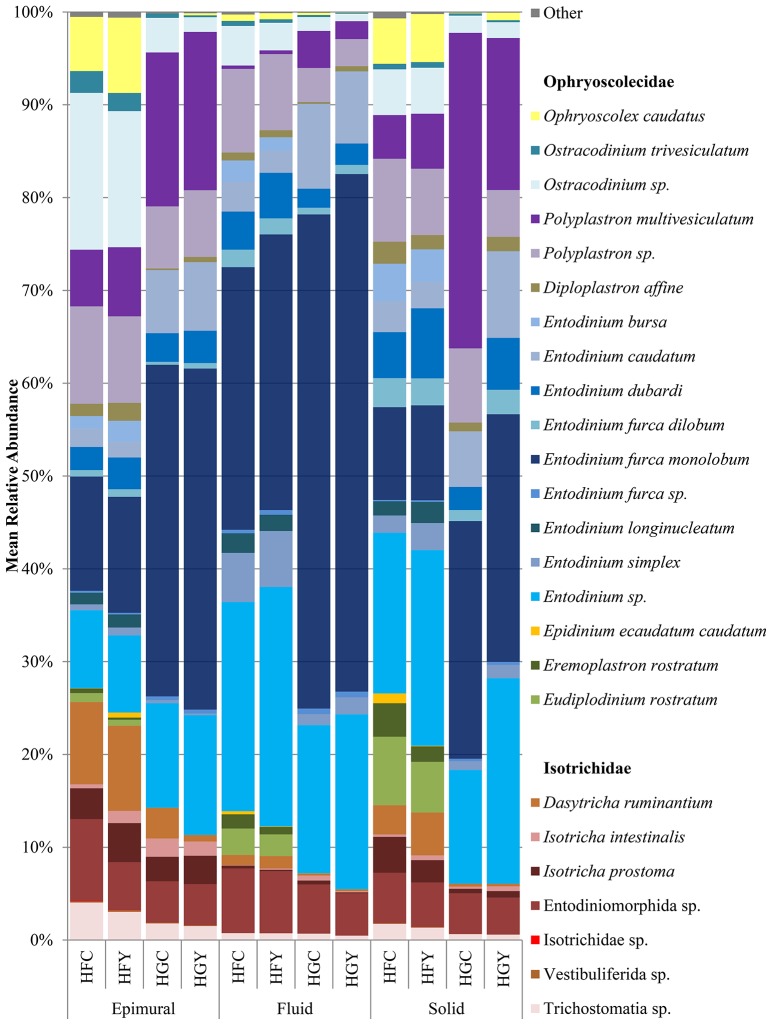
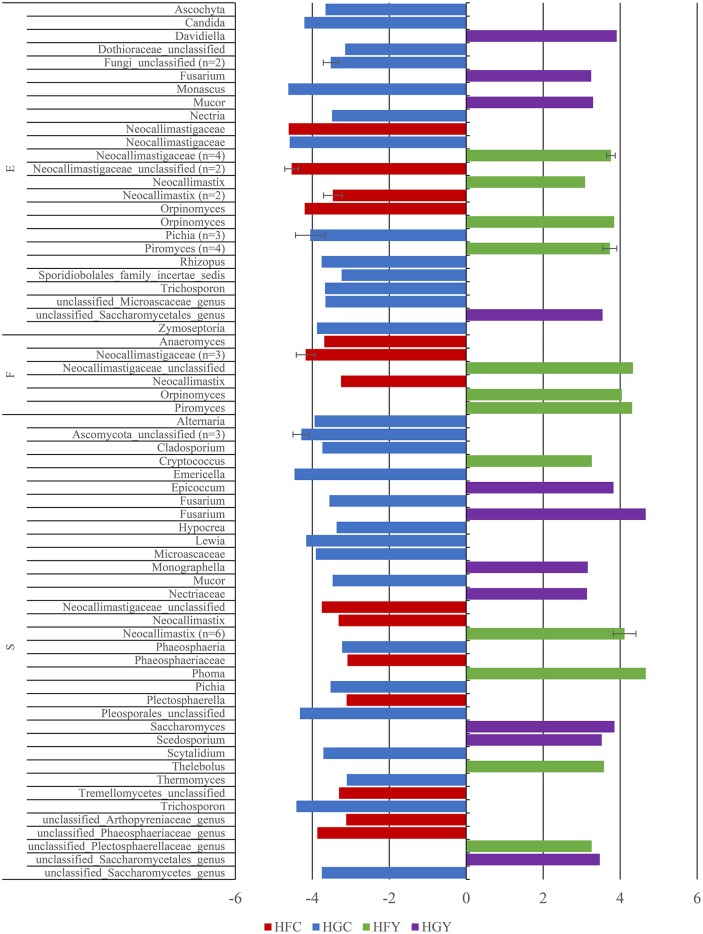
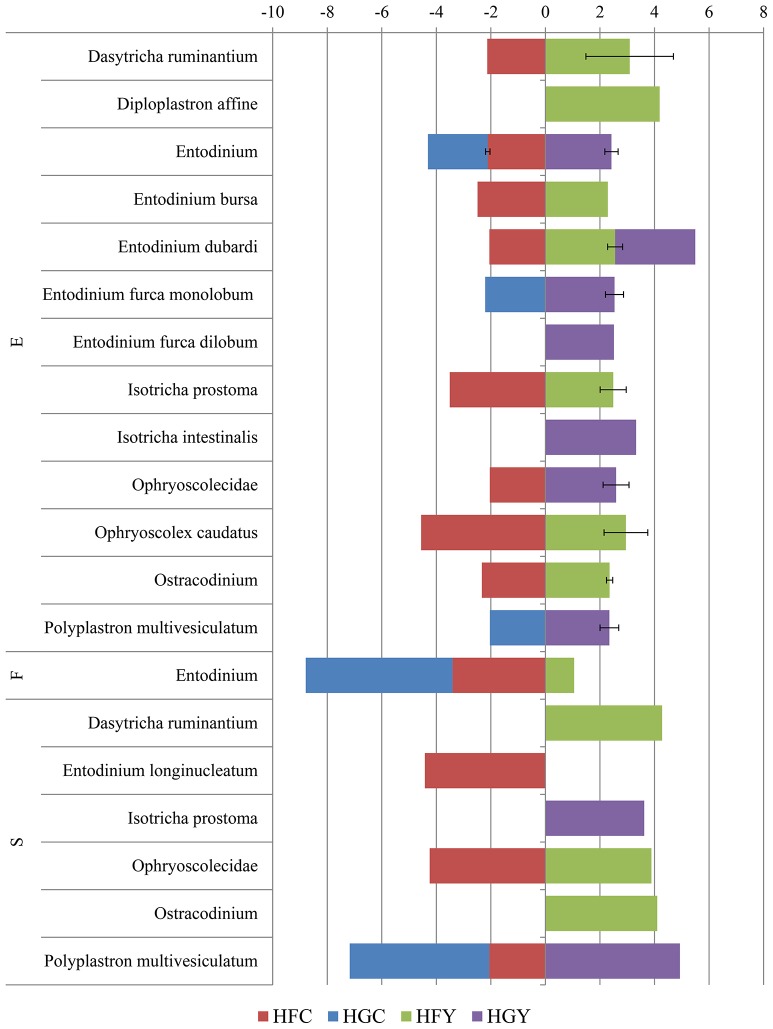
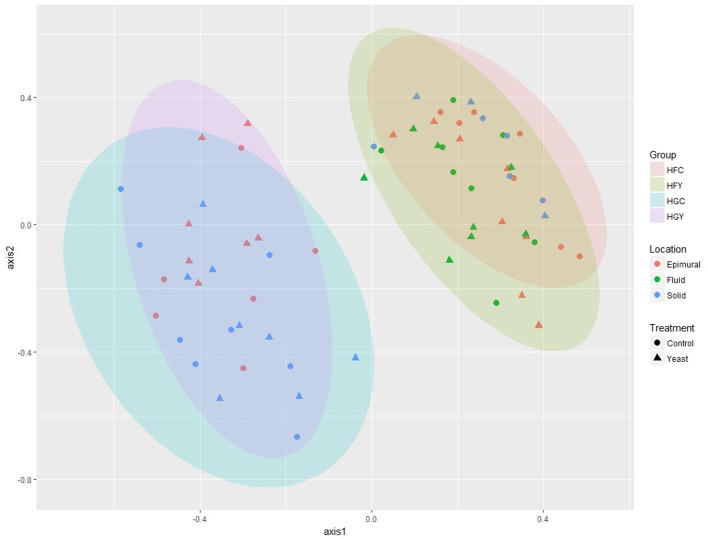
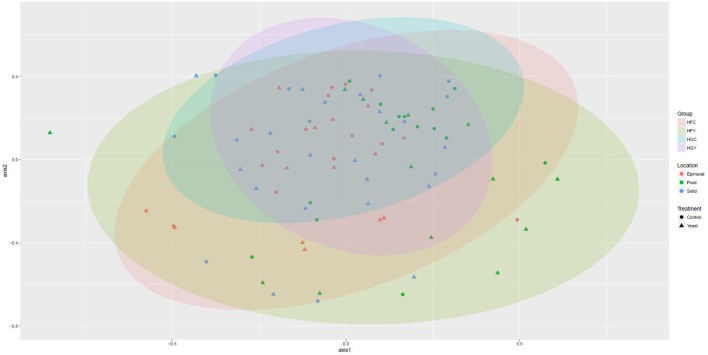
Sub-acute ruminal acidosis (SARA) is a gastrointestinal functional disorder in livestock characterized by low rumen pH, which reduces rumen function, microbial diversity, host performance, and host immune function. Dietary management is used to prevent SARA, often with yeast supplementation as a pH buffer. Almost nothing is known about the effect of SARA or yeast supplementation on ruminal protozoal and fungal diversity, despite their roles in fiber degradation. Dairy cows were switched from a high-fiber to high-grain diet abruptly to induce SARA, with and without active dry yeast (ADY, ) supplementation, and sampled from the rumen fluid, solids, and epimural fractions to determine microbial diversity using the protozoal 18S rRNA and the fungal ITS1 genes via Illumina MiSeq sequencing. Diet-induced SARA dramatically increased the number and abundance of rare fungal taxa, even in fluid fractions where total reads were very low, and reduced protozoal diversity. SARA selected for more lactic-acid utilizing taxa, and fewer fiber-degrading taxa. ADY treatment increased fungal richness (OTUs) but not diversity (Inverse Simpson, Shannon), but increased protozoal richness and diversity in some fractions. ADY treatment itself significantly ( < 0.05) affected the abundance of numerous fungal genera as seen in the high-fiber diet: , and were increased, while , and spp. were decreased. Likewise, for protozoa, ADY itself increased but decreased spp. Multivariate analyses showed diet type was most significant in driving diversity, followed by yeast treatment, for AMOVA, ANOSIM, and weighted UniFrac. Diet, ADY, and location were all significant factors for fungi (PERMANOVA, = 0.0001, = 0.0452, = 0.0068, Monte Carlo correction, respectively, and location was a significant factor ( = 0.001, Monte Carlo correction) for protozoa. Diet-induced SARA shifts diversity of rumen fungi and protozoa and selects against fiber-degrading species. Supplementation with ADY mitigated this reduction in protozoa, presumptively by triggering microbial diversity shifts (as seen even in the high-fiber diet) that resulted in pH stabilization. ADY did not recover the initial community structure that was seen in pre-SARA conditions.
亚急性瘤胃酸中毒(SARA)是家畜的一种胃肠功能紊乱疾病,其特征为瘤胃pH值较低,这会降低瘤胃功能、微生物多样性、宿主生产性能和宿主免疫功能。日粮管理用于预防SARA,通常添加酵母作为pH缓冲剂。尽管瘤胃原生动物和真菌在纤维降解中发挥作用,但关于SARA或酵母添加对其多样性的影响几乎一无所知。将奶牛从高纤维日粮突然转换为高谷物日粮以诱导SARA,分别添加和不添加活性干酵母(ADY),并从瘤胃液、固体和瘤胃壁外部分取样,通过Illumina MiSeq测序利用原生动物18S rRNA和真菌ITS1基因来确定微生物多样性。日粮诱导的SARA显著增加了稀有真菌类群的数量和丰度,即使在总读数非常低的液体部分也是如此,并降低了原生动物多样性。SARA选择了更多利用乳酸的类群,而纤维降解类群减少。ADY处理增加了真菌丰富度(OTU)但未增加多样性(逆辛普森指数、香农指数),但在某些部分增加了原生动物丰富度和多样性。ADY处理本身显著(P<0.05)影响了高纤维日粮中许多真菌属的丰度:增加,而、和 spp. 减少。同样,对于原生动物,ADY本身增加了但减少了 spp.。多变量分析表明,对于AMOVA、ANOSIM和加权UniFrac,日粮类型在驱动多样性方面最为显著,其次是酵母处理。日粮、ADY和位置对于真菌都是显著因素(PERMANOVA,分别为P = 0.0001、P = 0.0452、P = 0.0068,蒙特卡罗校正),而位置对于原生动物是一个显著因素(P = 0.001,蒙特卡罗校正)。日粮诱导的SARA改变了瘤胃真菌和原生动物的多样性,并选择淘汰纤维降解物种。添加ADY减轻了原生动物的这种减少,推测是通过引发微生物多样性变化(即使在高纤维日粮中也可见)从而导致pH值稳定。ADY并未恢复SARA发生前状态下的初始群落结构。