Zamanian-Daryoush Maryam, Lindner Daniel J, DiDonato Joseph A, Wagner Matthew, Buffa Jennifer, Rayman Patricia, Parks John S, Westerterp Marit, Tall Alan R, Hazen Stanley L
Department of Cellular & Molecular Medicine, Cleveland Clinic, Cleveland, OH 44195, USA.
Taussig Cancer Institute, Cleveland Clinic, Cleveland, OH 44195, USA.
Oncotarget. 2017 Jun 27;8(42):71965-71980. doi: 10.18632/oncotarget.18666. eCollection 2017 Sep 22.
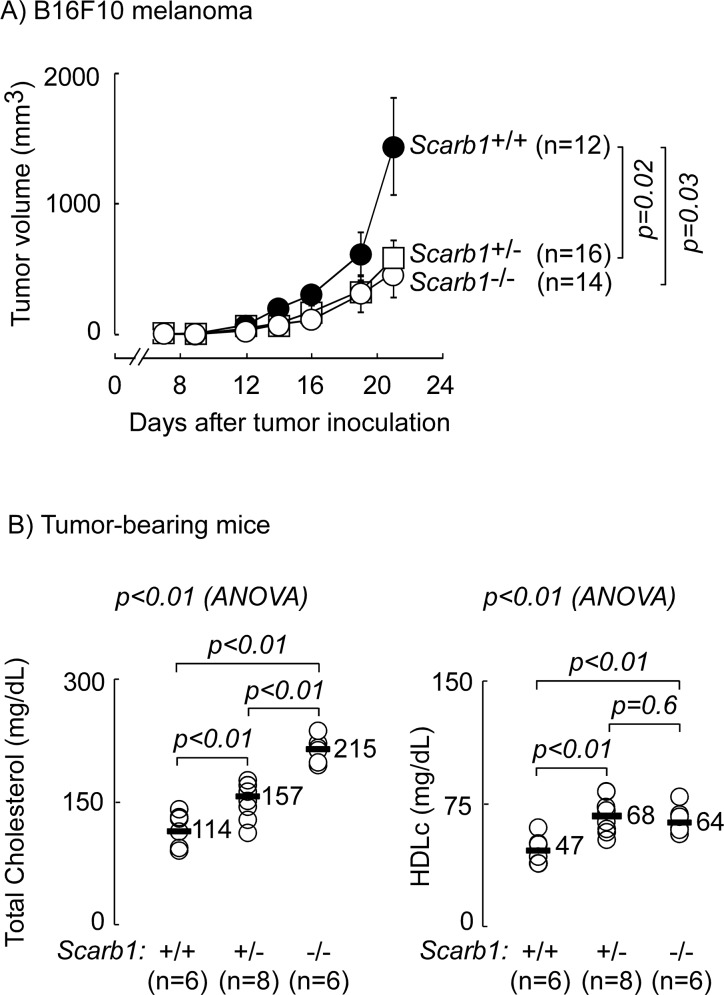
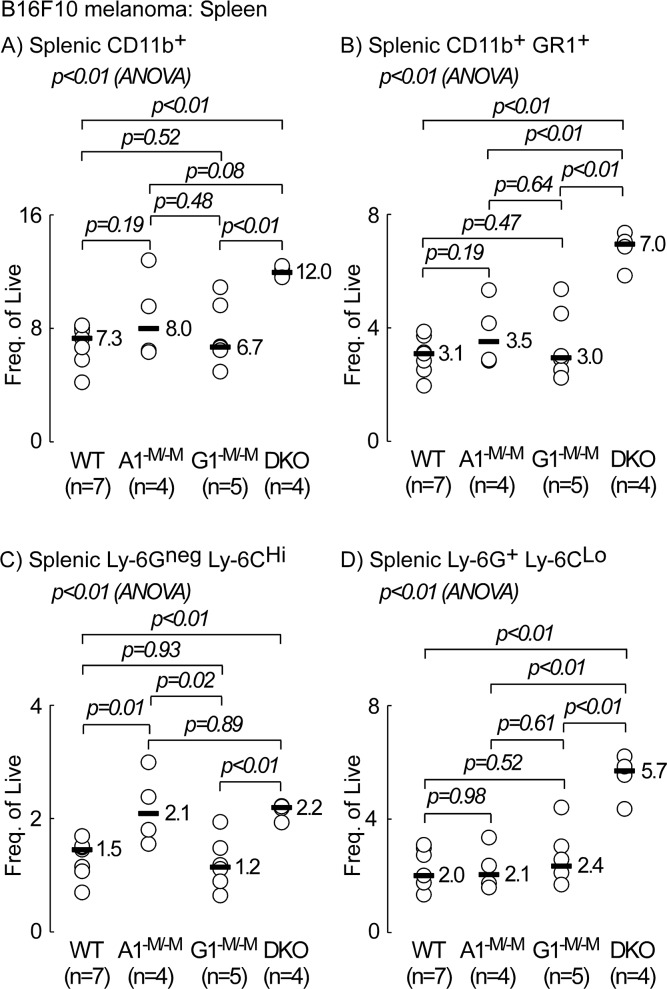
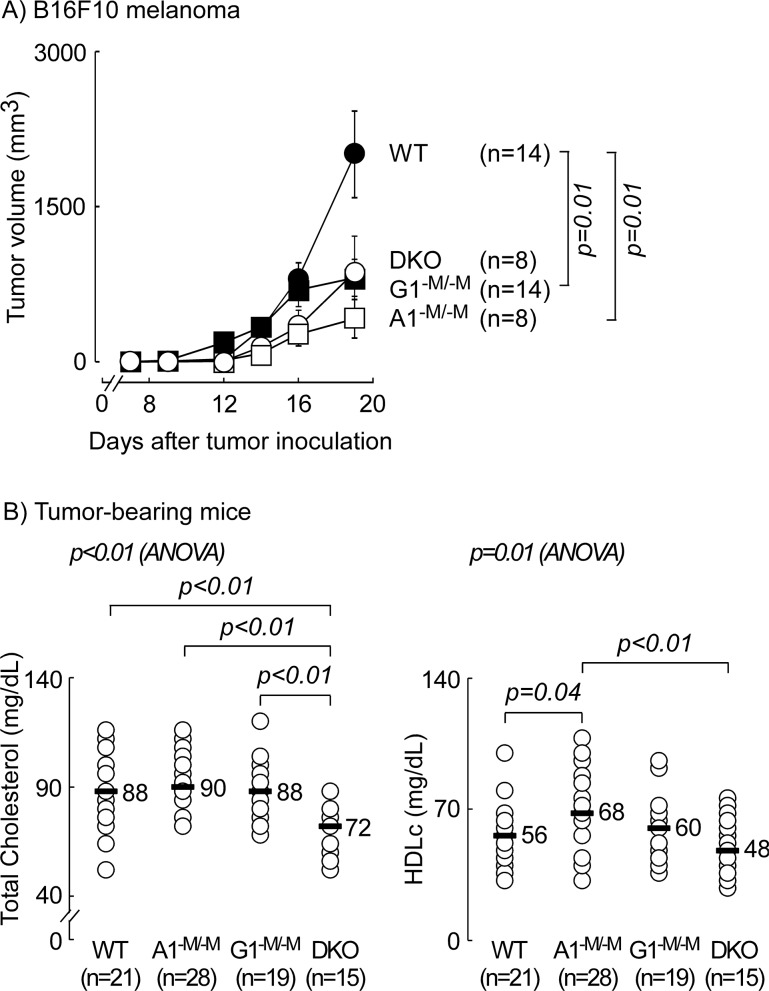
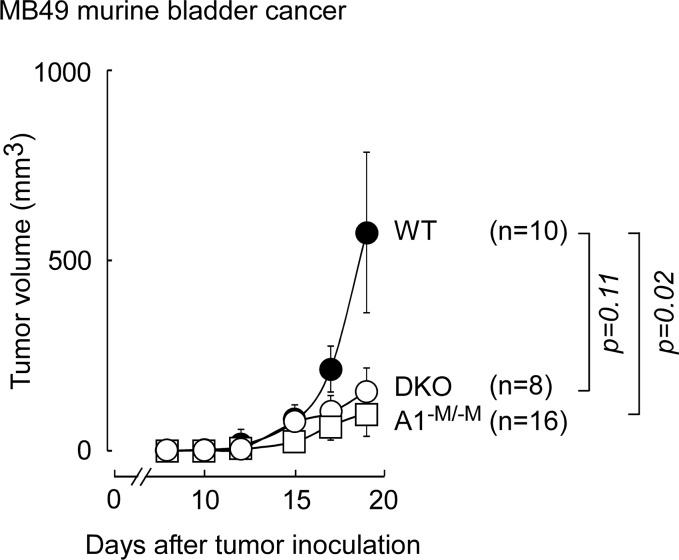
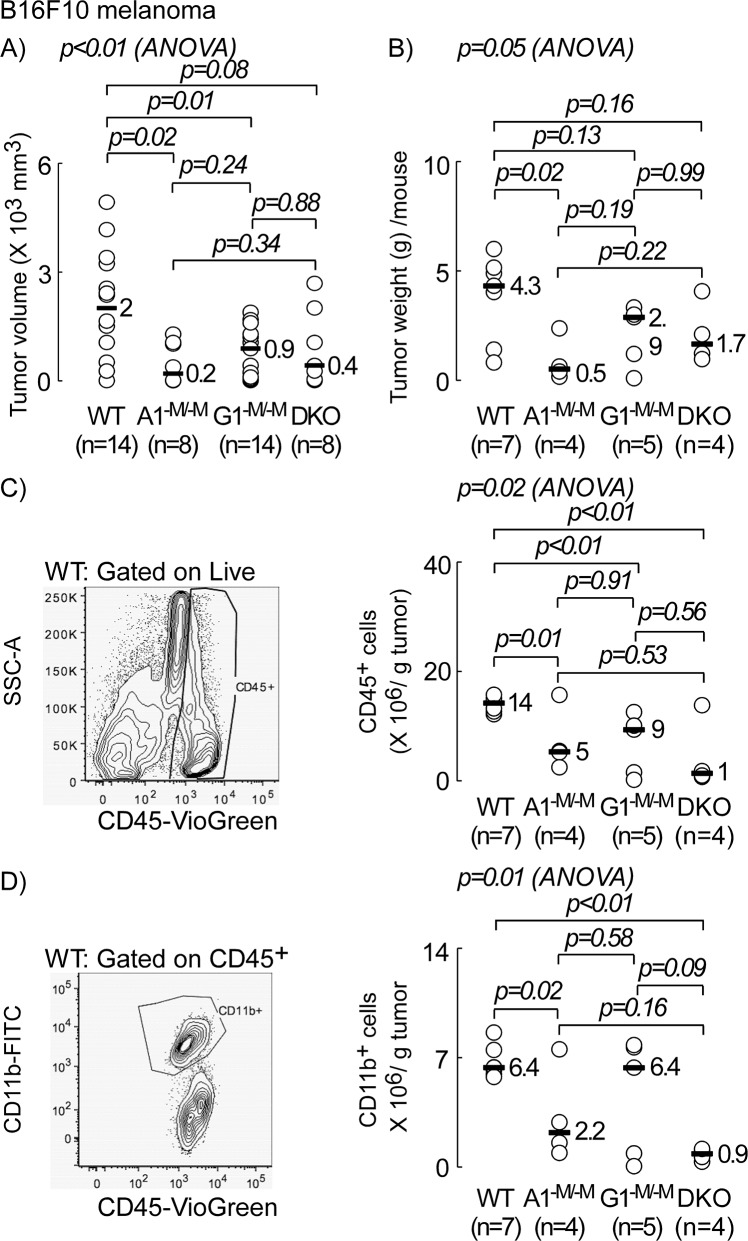
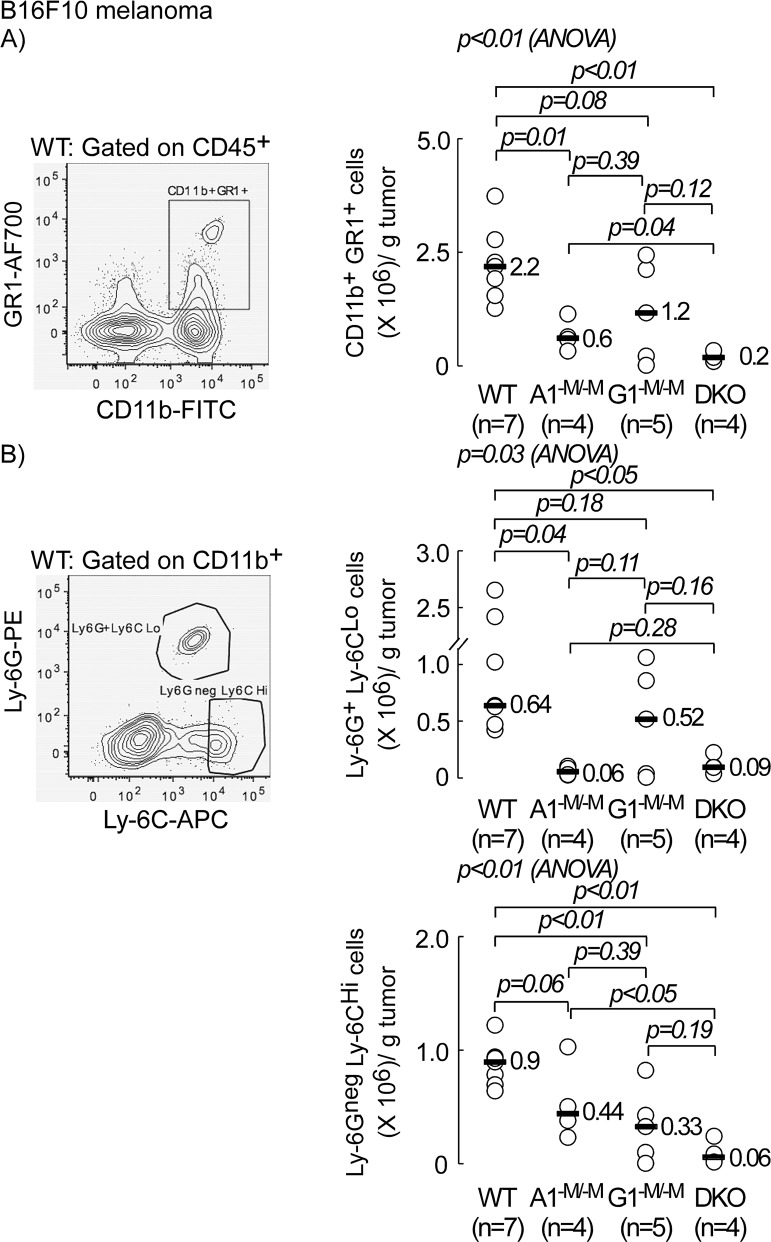
Increased circulating levels of apolipoprotein A-I (apoA-I), the major protein of high-density lipoprotein (HDL), by genetic manipulation or infusion, protects against melanoma growth and metastasis. Herein, we explored potential roles in melanoma tumorigenesis for host scavenger receptor class B, type 1 (SR-B1), and ATP-binding cassette transporters A1 (ABCA1) and G1 (ABCG1), all mediators of apoA-I and HDL sterol and lipid transport function. In a syngeneic murine melanoma tumor model, B16F10, mice with global deletion of SR-B1 expression exhibited increased plasma HDL cholesterol (HDLc) levels and decreased tumor volume, indicating host SR-B1 does not directly contribute to HDL-associated anti-tumor activity. In mice with myeloid-specific loss of ABCA1 ( ; A1), tumor growth was inhibited by ∼4.8-fold relative to wild type (WT) animals. (G1) animals were also protected by 2.5-fold relative to WT, with no further inhibition of tumor growth in / myeloid-specific double knockout animals (DKO). Analyses of tumor-infiltrating immune cells revealed a correlation between tumor protection and decreased presence of the immune suppressive myeloid-derived suppressor cell (MDSC) subsets, Ly-6GLy-6C and Ly-6GLy-6C cells. The growth of the syngeneic MB49 murine bladder cancer cells was also inhibited in A1 mice. Collectively, our studies provide further evidence for an immune modulatory role for cholesterol homeostasis pathways in cancer.
通过基因操作或输注提高载脂蛋白A-I(apoA-I,高密度脂蛋白(HDL)的主要蛋白质)的循环水平,可预防黑色素瘤的生长和转移。在此,我们探讨了宿主B1型清道夫受体(SR-B1)、ATP结合盒转运体A1(ABCA1)和G1(ABCG1)在黑色素瘤肿瘤发生中的潜在作用,这些都是apoA-I和HDL固醇及脂质转运功能的介质。在同基因小鼠黑色素瘤肿瘤模型B16F10中,SR-B1表达整体缺失的小鼠血浆HDL胆固醇(HDLc)水平升高,肿瘤体积减小,这表明宿主SR-B1并不直接参与HDL相关的抗肿瘤活性。在ABCA1髓系特异性缺失(; A1)的小鼠中,肿瘤生长相对于野生型(WT)动物受到约4.8倍的抑制。 (G1)动物相对于WT也有2.5倍的保护作用,在/髓系特异性双敲除动物(DKO)中肿瘤生长没有进一步受到抑制。对肿瘤浸润免疫细胞的分析揭示了肿瘤保护与免疫抑制性髓系来源抑制细胞(MDSC)亚群Ly-6GLy-6C和Ly-6GLy-6C细胞数量减少之间的相关性。同基因MB49小鼠膀胱癌细胞在A1小鼠中的生长也受到抑制。总体而言,我们的研究为胆固醇稳态途径在癌症中的免疫调节作用提供了进一步的证据。