Mast Natalia, Lin Joseph B, Anderson Kyle W, Bjorkhem Ingemar, Pikuleva Irina A
Department of Ophthalmology and Visual Sciences, Case Western Reserve University, Cleveland, Ohio, United States of America.
Biomolecular Measurement Division, National Institute of Standards and Technology, Gaithersburg, Maryland, United States of America.
PLoS One. 2017 Oct 26;12(10):e0187168. doi: 10.1371/journal.pone.0187168. eCollection 2017.
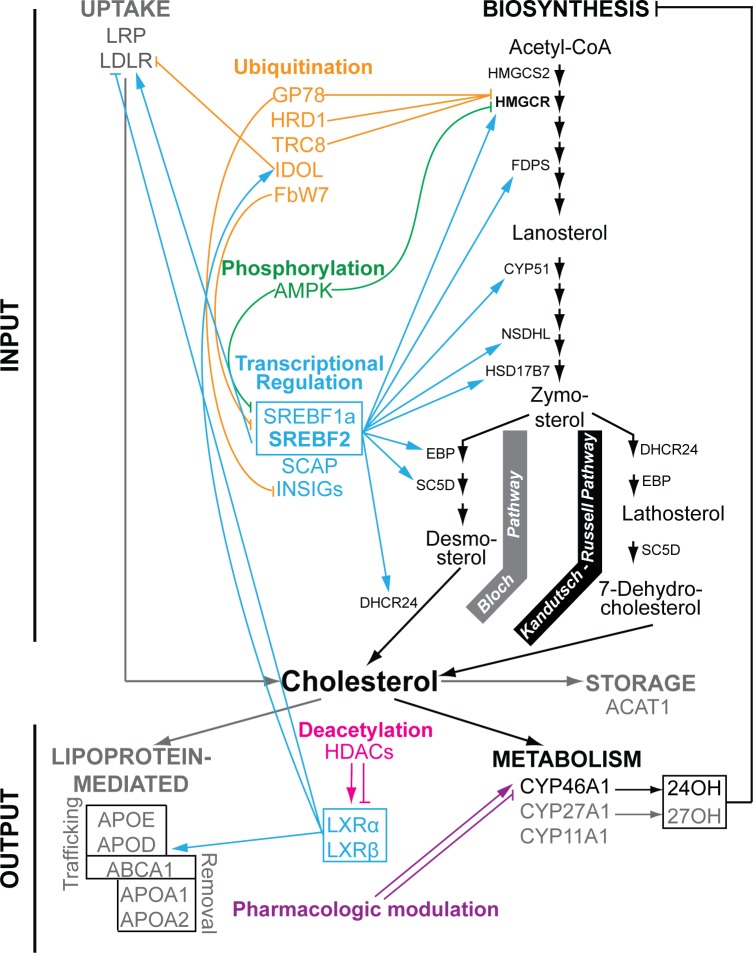
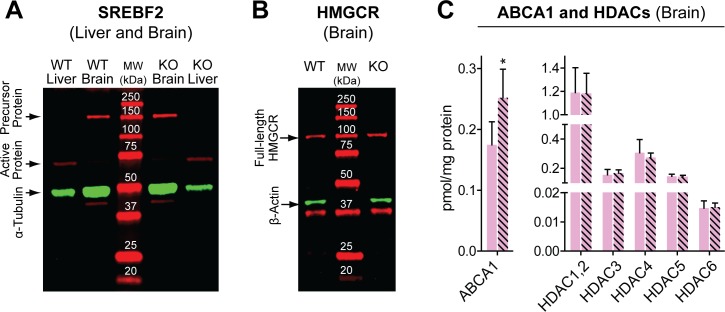
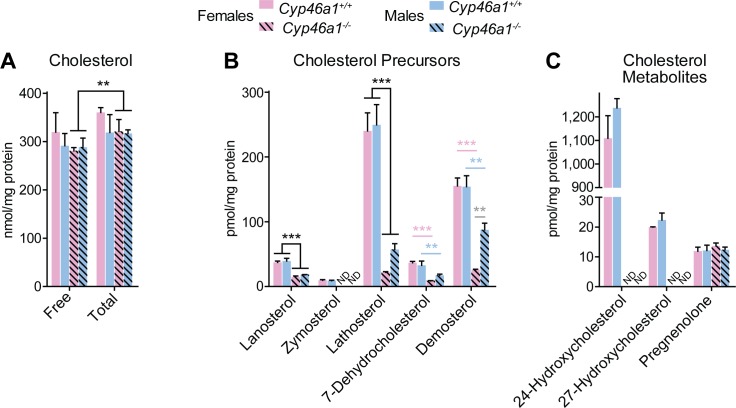
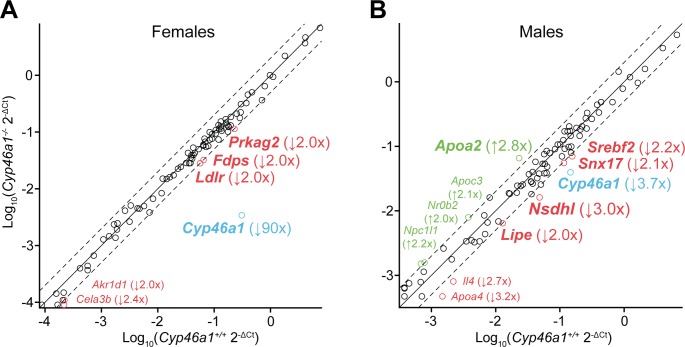
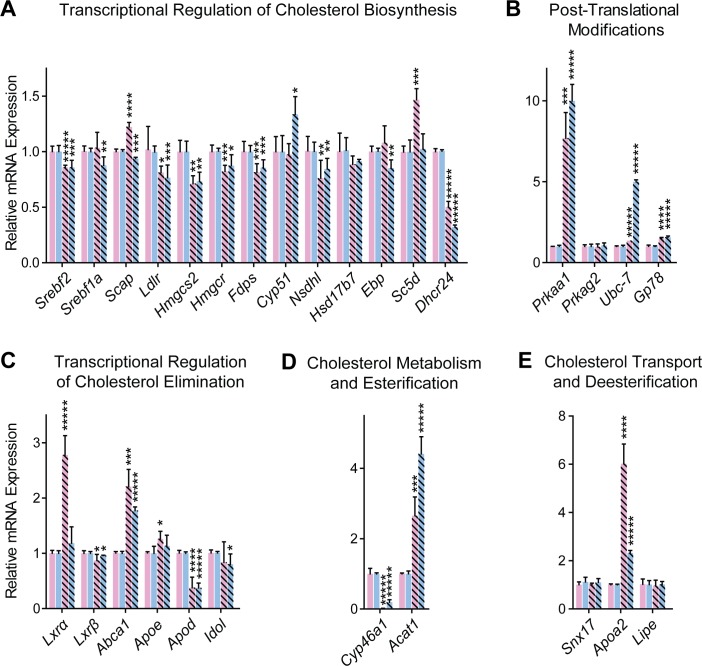
Cytochrome P450 46A1 (CYP46A1) converts cholesterol to 24-hydroxycholesterol and thereby controls the major pathways of cholesterol removal from the brain. Cyp46a1-/- mice have a reduction in the rate of cholesterol biosynthesis in the brain and significant impairments to memory and learning. To gain insights into the mechanisms underlying Cyp46a1-/- phenotype, we used Cyp46a1-/- mice and quantified their brain sterol levels and the expression of the genes pertinent to cholesterol homeostasis. We also compared the Cyp46a1-/- and wild type brains for protein phosphorylation and ubiquitination. The data obtained enable the following inferences. First, there seems to be a compensatory upregulation in the Cyp46a1-/- brain of the pathways of cholesterol storage and CYP46A1-independent removal. Second, transcriptional regulation of the brain cholesterol biosynthesis via sterol regulatory element binding transcription factors is not significantly activated in the Cyp46a1-/- brain to explain a compensatory decrease in cholesterol biosynthesis. Third, some of the liver X receptor target genes (Abca1) are paradoxically upregulated in the Cyp46a1-/- brain, possibly due to a reduced activation of the small GTPases RAB8, CDC42, and RAC as a result of a reduced phosphorylation of RAB3IP and PAK1. Fourth, the phosphorylation of many other proteins (a total of 146) is altered in the Cyp46a1-/- brain, including microtubule associated and neurofilament proteins (the MAP and NEF families) along with proteins related to synaptic vesicles and synaptic neurotransmission (e.g., SLCs, SHANKs, and BSN). Fifth, the extent of protein ubiquitination is increased in the Cyp46a1-/- brain, and the affected proteins pertain to ubiquitination (UBE2N), cognition (STX1B and ATP1A2), cytoskeleton function (TUBA1A and YWHAZ), and energy production (ATP1A2 and ALDOA). The present study demonstrates the diverse potential effects of CYP46A1 deficiency on brain functions and identifies important proteins that could be affected by this deficiency.
细胞色素P450 46A1(CYP46A1)将胆固醇转化为24-羟基胆固醇,从而控制胆固醇从大脑清除的主要途径。Cyp46a1基因敲除小鼠大脑中的胆固醇生物合成速率降低,且记忆和学习能力有显著损伤。为深入了解Cyp46a1基因敲除小鼠表型背后的机制,我们使用了Cyp46a1基因敲除小鼠,对其大脑中的甾醇水平以及与胆固醇稳态相关的基因表达进行了定量分析。我们还比较了Cyp46a1基因敲除小鼠和野生型小鼠大脑中的蛋白质磷酸化和泛素化情况。所获得的数据得出了以下推论。首先,在Cyp46a1基因敲除小鼠的大脑中,胆固醇储存途径和不依赖CYP46A1的清除途径似乎存在代偿性上调。其次,在Cyp46a1基因敲除小鼠的大脑中,通过甾醇调节元件结合转录因子对大脑胆固醇生物合成的转录调控并未被显著激活,无法解释胆固醇生物合成的代偿性降低。第三,一些肝脏X受体靶基因(Abca1)在Cyp46a1基因敲除小鼠的大脑中反而上调,这可能是由于RAB3IP和PAK1磷酸化减少导致小GTP酶RAB8、CDC42和RAC的激活降低所致。第四,在Cyp46a1基因敲除小鼠的大脑中,许多其他蛋白质(总共146种)的磷酸化发生了改变,包括微管相关蛋白和神经丝蛋白(MAP和NEF家族)以及与突触小泡和突触神经传递相关的蛋白质(如SLCs、SHANKs和BSN)。第五,在Cyp46a1基因敲除小鼠的大脑中,蛋白质泛素化程度增加,受影响的蛋白质涉及泛素化(UBE2N)、认知(STX1B和ATP1A2)、细胞骨架功能(TUBA1A和YWHAZ)以及能量产生(ATP1A2和ALDOA)。本研究证明了CYP46A1缺乏对大脑功能的多种潜在影响,并确定了可能受这种缺乏影响的重要蛋白质。