Zhang Ying-Ying, Wang Hong-Bao, Wang Ya-Ning, Wang Hong-Cheng, Zhang Song, Hong Jie-Yun, Guo Hong-Fang, Chen Dai, Yang Yang, Zan Lin-Sen
College of Animal Science and Technology, Northwest A&F University, Yangling, Shaanxi, China.
National Beef Cattle Improvement Center of Northwest A&F University, Yangling, Shaanxi, China.
PLoS One. 2017 Oct 26;12(10):e0185961. doi: 10.1371/journal.pone.0185961. eCollection 2017.
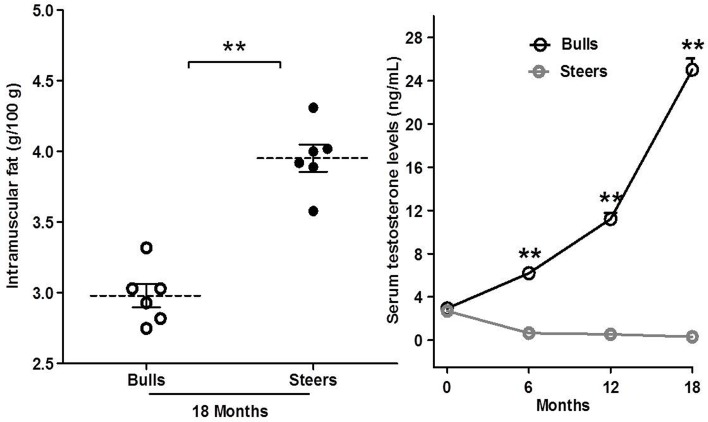
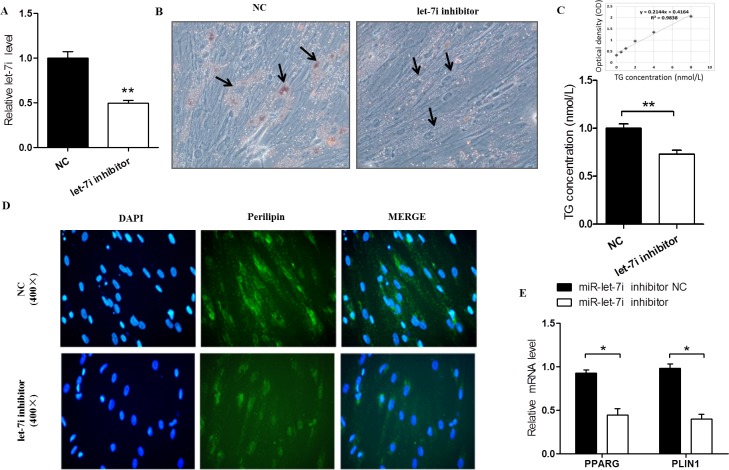
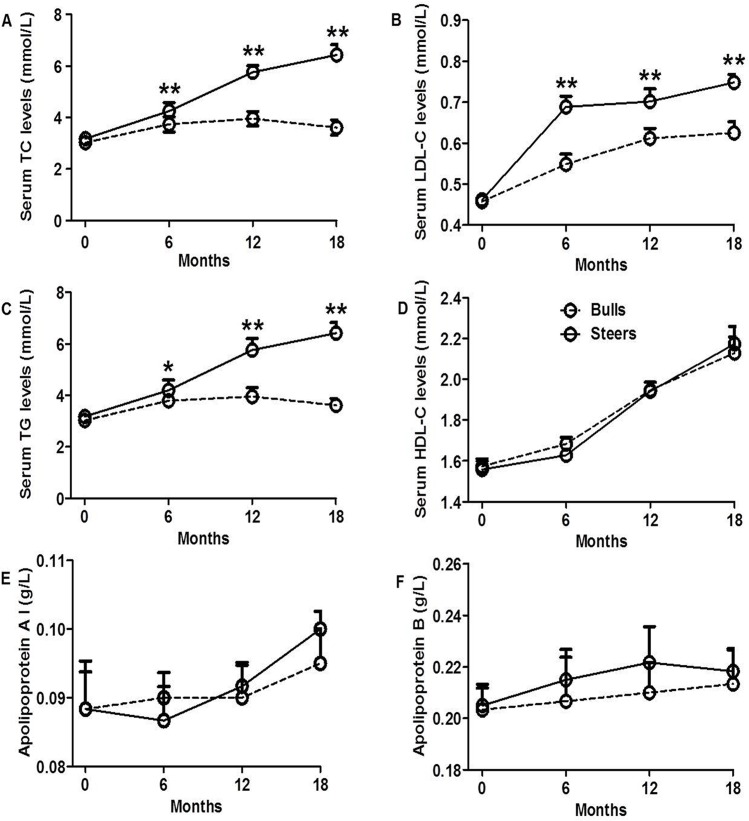
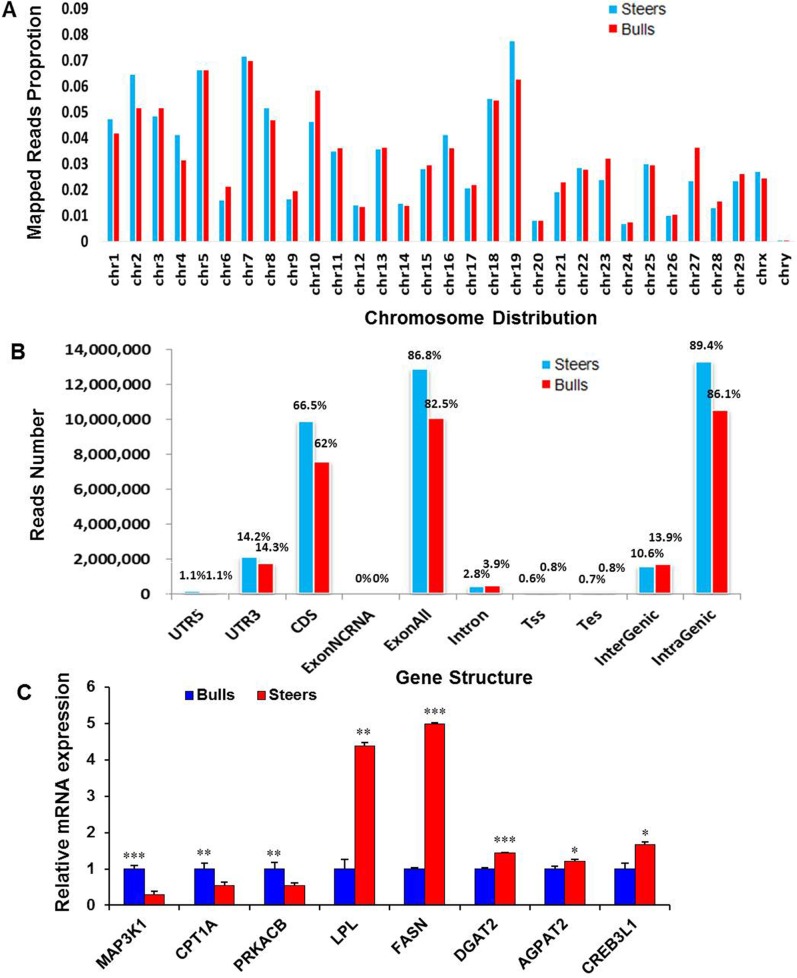
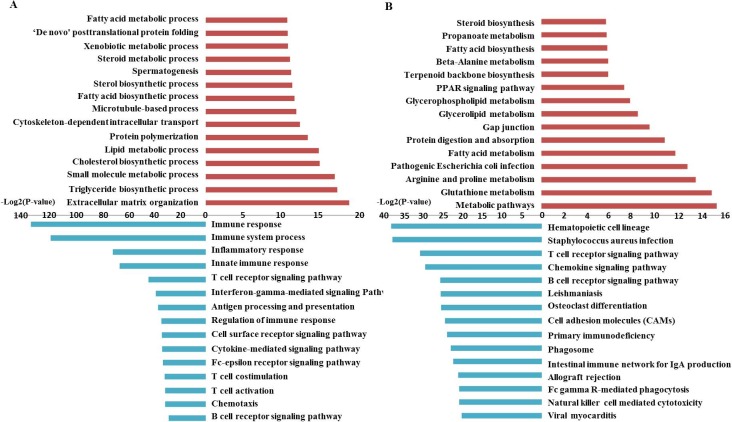
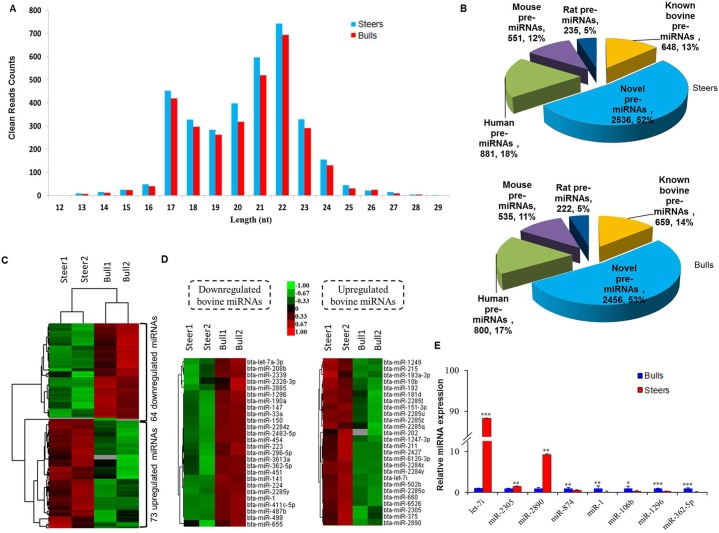
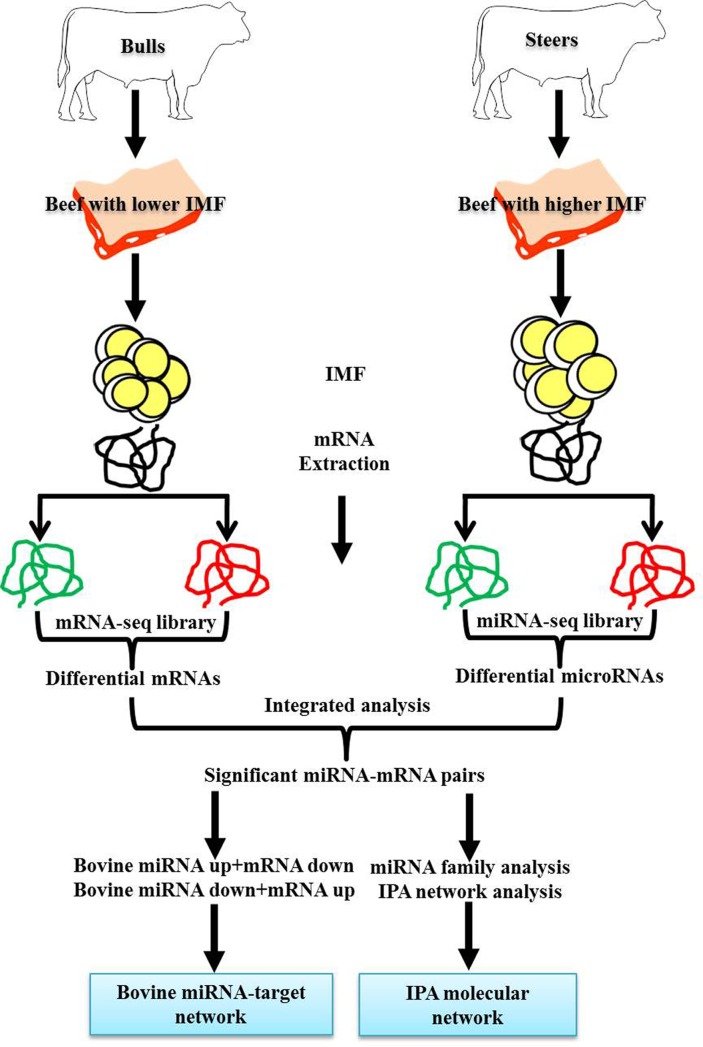
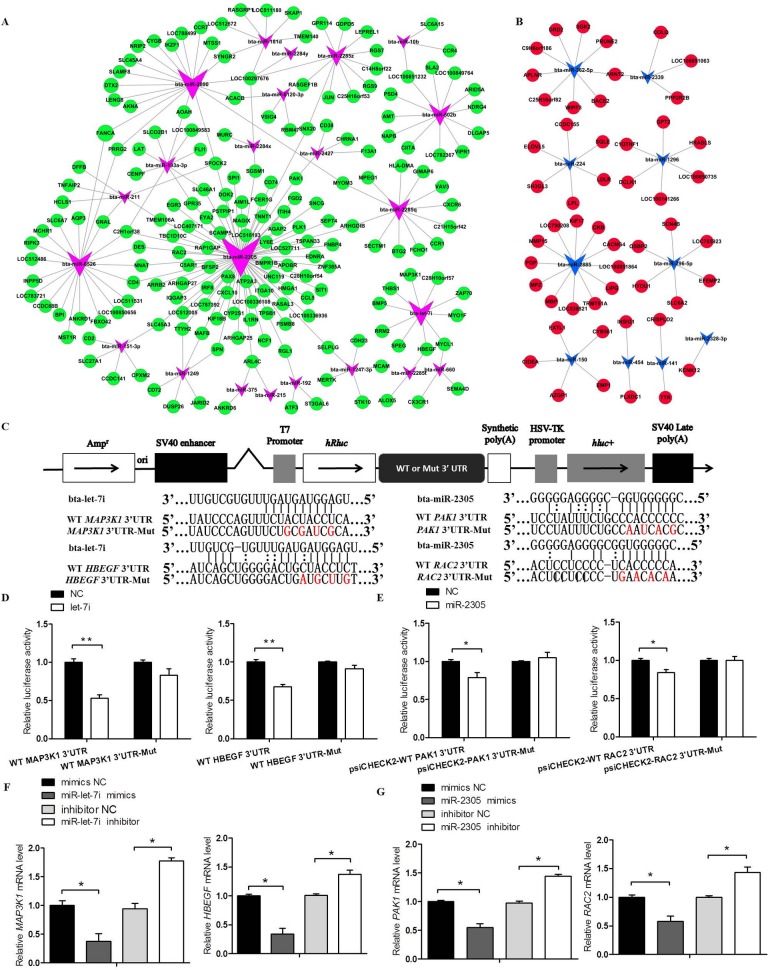
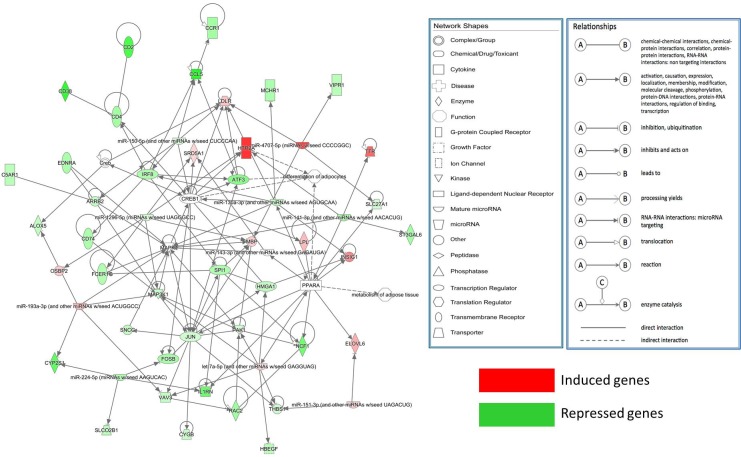
Intramuscular fat (IMF) is known to enhance beef palatability and can be markedly increased by castration. However, there is little understanding of the molecular mechanism underlying the IMF deposition after castration of beef cattle. We hypothesize that genetic regulators function differently in IMF from bulls and steers. Therefore, after detecting serum testosterone and lipid parameter, as well as the contents of IMF at 6, 12, 18 and 24 months, we have investigated differentially expressed (DE) microRNAs (miRNAs) and mRNAs in IMF of bulls and steers at 24 months of age in Qinchuan cattle using next-generation sequencing, and then explored the possible biopathways regulating IMF deposition. Serum testosterone levels were significantly decreased in steers, whereas IMF content, serum total cholesterol (TC), low-density lipoprotein cholesterol (LDL-C) and triglycerides (TGs) were markedly increased in steers. Comparing the results of steers and bulls, 580 upregulated genes and 1,120 downregulated genes in IMF tissues were identified as DE genes correlated with IMF deposition. The upregulated genes were mainly associated with lipid metabolism, lipogenesis and fatty acid transportation signalling pathways, and the downregulated genes were correlated with immune response and intracellular signal transduction. Concurrently, the DE miRNAs-important players in adipose tissue accumulation induced by castration-were also examined in IMF tissues; 52 DE miRNAs were identified. The expression profiles of selected genes and miRNAs were also confirmed by quantitative real-time PCR (qRT-PCR) assays. Using integrated analysis, we constructed the microRNA-target regulatory network which was supported by target validation using the dual luciferase reporter system. Moreover, Ingenuity Pathway Analysis (IPA) software was used to construct a molecular interaction network that could be involved in regulating IMF after castration. The detected molecular network is closely associated with lipid metabolism and adipocyte differentiation, which is supported by functional identification results of bta-let-7i on bovine preadipocytes. These results provided valuable insights into the molecular mechanisms of the IMF phenotype differences between steers and bulls.
肌内脂肪(IMF)已知可提高牛肉的适口性,且去势可使其显著增加。然而,对于肉牛去势后IMF沉积的分子机制了解甚少。我们推测基因调控因子在公牛和阉牛的IMF中发挥不同作用。因此,在检测血清睾酮和脂质参数以及6、12、18和24月龄时的IMF含量后,我们利用新一代测序技术研究了24月龄秦川牛公牛和阉牛IMF中差异表达(DE)的微小RNA(miRNA)和信使核糖核酸(mRNA),然后探索了调控IMF沉积的可能生物途径。阉牛血清睾酮水平显著降低,而阉牛的IMF含量、血清总胆固醇(TC)、低密度脂蛋白胆固醇(LDL-C)和甘油三酯(TGs)显著增加。比较阉牛和公牛的结果,IMF组织中580个上调基因和1120个下调基因被鉴定为与IMF沉积相关的DE基因。上调基因主要与脂质代谢、脂肪生成和脂肪酸运输信号通路相关,下调基因与免疫反应和细胞内信号转导相关。同时,还在IMF组织中检测了去势诱导脂肪组织积累中的重要参与者——DE miRNA;鉴定出52个DE miRNA。所选基因和miRNA的表达谱也通过定量实时聚合酶链反应(qRT-PCR)分析得到证实。通过综合分析,我们构建了微小RNA-靶标调控网络,并使用双荧光素酶报告系统进行靶标验证。此外,利用 Ingenuity Pathway Analysis(IPA)软件构建了一个可能参与去势后调控IMF的分子相互作用网络。检测到的分子网络与脂质代谢和脂肪细胞分化密切相关,bta-let-7i对牛前脂肪细胞的功能鉴定结果支持了这一点。这些结果为阉牛和公牛之间IMF表型差异的分子机制提供了有价值的见解。