Neuropharmacology, Institute of Neuroscience, Université Catholique de Louvain, Avenue Hippocrate B1.54.10, 1200, Brussels, Belgium.
Institute for Neuropathology, University Hospital, RWTH Aachen University, Aachen, Germany.
J Neuroinflammation. 2017 Oct 27;14(1):209. doi: 10.1186/s12974-017-0971-x.
Regulators of G-protein signaling (RGS) are major physiological modulators of G-protein-coupled receptors (GPCR) signaling. Several GPCRs expressed in both neurons and astrocytes participate in the central control of pain processing, and the reduced efficacy of analgesics in neuropathic pain conditions may rely on alterations in RGS function. The expression and the regulation of RGS in astrocytes is poorly documented, and we herein hypothesized that neuroinflammation which is commonly observed in neuropathic pain could influence RGS expression in astrocytes.
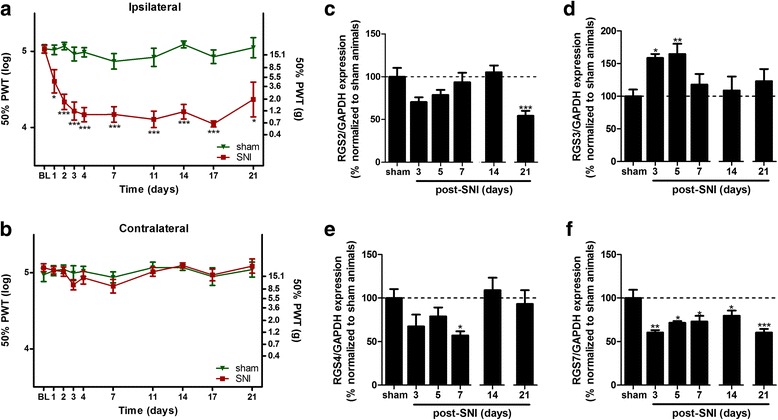
In a validated model of neuropathic pain, the spared nerve injury (SNI), the regulation of RGS2, RGS3, RGS4, and RGS7 messenger RNA (mRNA) was examined up to 3 weeks after the lesion. Changes in the expression of the same RGS were also studied in cultured astrocytes exposed to defined activation protocols or to inflammatory cytokines.
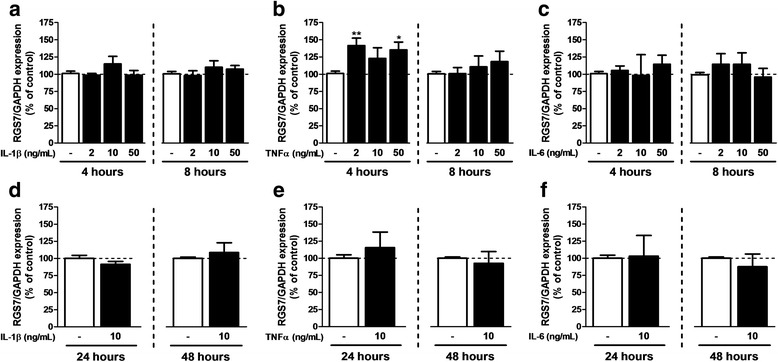
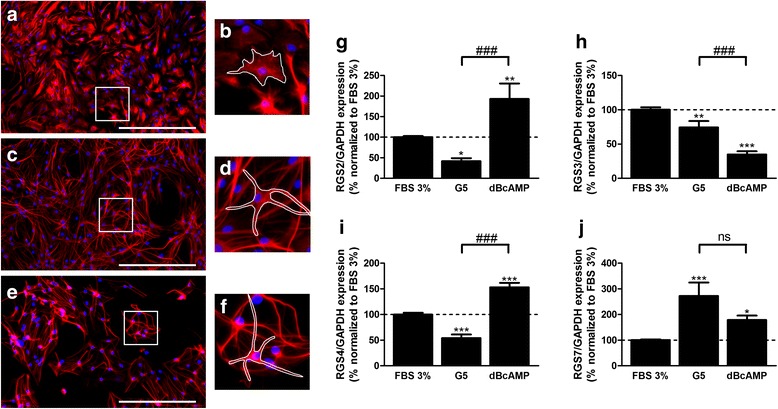
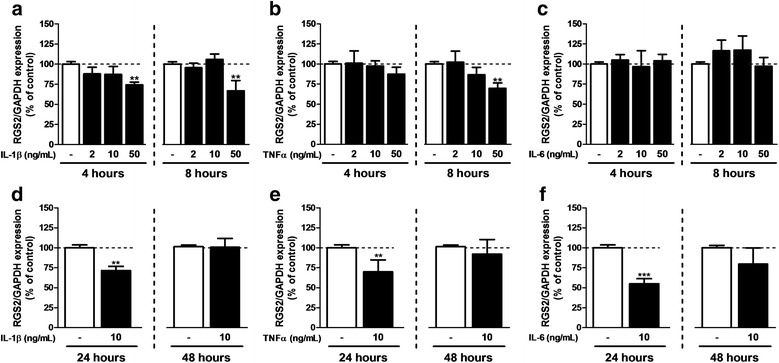
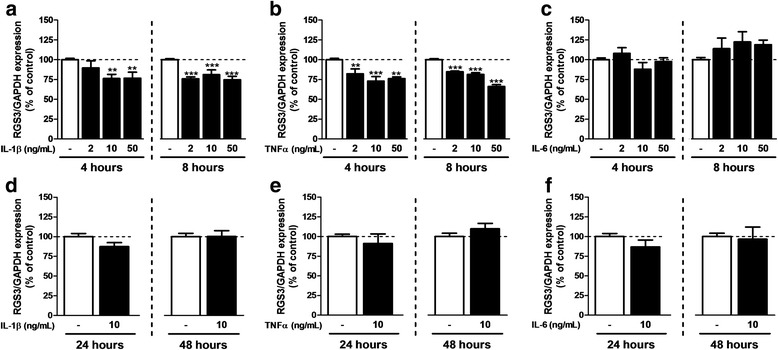
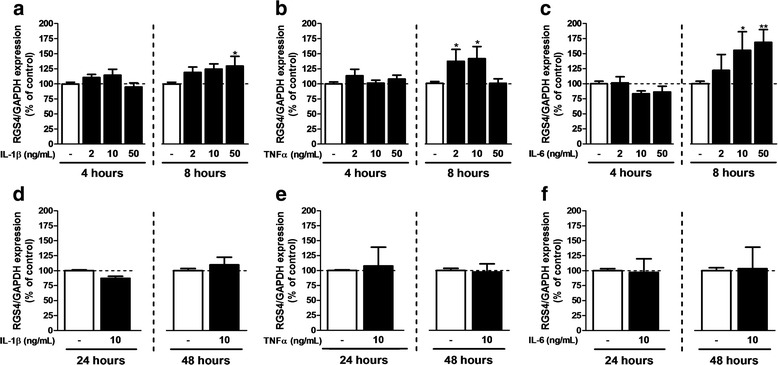
We evidenced a differential regulation of these RGS in the lumbar spinal cord of animals undergoing SNI. In particular, RGS3 appeared upregulated at early stages after the lesion whereas expression of RGS2 and RGS4 was decreased at later stages. Decrease in RGS7 expression was already observed after 3 days and outlasted until 21 days after the lesion. In cultured astrocytes, we observed that changes in the culture conditions distinctly influenced the constitutive expression of these RGS. Also, brief exposures (4 to 8 h) to either interleukin-1β, interleukin-6, or tumor necrosis factor α caused rapid changes in the mRNA levels of the RGS, which however did not strictly recapitulate the regulations observed in the spinal cord of lesioned animals. Longer exposure (48 h) to inflammatory cytokines barely influenced RGS expression, confirming the rapid but transient regulation of these cell signaling modulators.
Changes in the environment of astrocytes mimicking the inflammation observed in the model of neuropathic pain can affect RGS expression. Considering the role of astrocytes in the onset and progression of neuropathic pain, we propose that the inflammation-mediated modulation of RGS in astrocytes constitutes an adaptive mechanism in a context of neuroinflammation and may participate in the regulation of nociception.
G 蛋白信号调节因子(RGS)是 G 蛋白偶联受体(GPCR)信号的主要生理调节剂。在神经元和星形胶质细胞中表达的几种 GPCR 参与中枢疼痛处理的控制,而在神经病理性疼痛情况下镇痛剂的疗效降低可能依赖于 RGS 功能的改变。星形胶质细胞中 RGS 的表达和调节尚未得到充分记录,我们假设神经炎症是神经病理性疼痛中常见的现象,可能会影响星形胶质细胞中 RGS 的表达。
在已验证的神经病理性疼痛模型中, spared nerve injury(SNI)中,RGS2、RGS3、RGS4 和 RGS7 信使 RNA(mRNA)的调节在损伤后长达 3 周进行检查。还研究了暴露于特定激活方案或炎性细胞因子的培养星形胶质细胞中相同 RGS 的表达变化。
我们在经历 SNI 的动物的腰椎脊髓中证明了这些 RGS 的差异调节。特别是,RGS3 在损伤后早期上调,而 RGS2 和 RGS4 的表达在后期下降。RGS7 的表达减少在损伤后 3 天已经观察到,并持续到损伤后 21 天。在培养的星形胶质细胞中,我们观察到培养条件的变化明显影响这些 RGS 的组成型表达。此外,短暂暴露(4 至 8 小时)于白细胞介素-1β、白细胞介素-6 或肿瘤坏死因子-α会导致 RGS 的 mRNA 水平迅速变化,但这并没有严格再现脊髓中观察到的调节。更长时间(48 小时)暴露于炎性细胞因子几乎不影响 RGS 表达,证实这些细胞信号调节剂的快速但短暂的调节。
模拟神经病理性疼痛模型中观察到的炎症的星形胶质细胞环境变化会影响 RGS 的表达。考虑到星形胶质细胞在神经病理性疼痛的发生和进展中的作用,我们提出炎症介导的星形胶质细胞中 RGS 的调节是神经炎症背景下的一种适应性机制,并可能参与疼痛的调节。