Rodríguez Del Río Elena, Perdigones Javier, Fuentes Ferrer Manuel, González Del Castillo Juan, González Armengol Juan, Borrego Hernando M Isabel, Arias Fernández M Lourdes, Martín-Sánchez Francisco Javier
Servicio de Farmacia, Hospital Clínico San Carlos, Instituto de Investigación Sanitaria del Hospital Clínico San Carlos (IdISSC), Madrid, España.
Servicio de Urgencias, Hospital Clínico San Carlos, Instituto de Investigación Sanitaria del Hospital Clínico San Carlos (IdISSC), Madrid, España.
Aten Primaria. 2018 Oct;50(8):467-476. doi: 10.1016/j.aprim.2017.03.018. Epub 2017 Oct 25.
To study the association between the potential inappropriate prescriptions (PIP) and the 30 and 180-day adverse event rate after discharge from a Short Stay Unit (SSU).
A retrospective cohort observational study was conducted on patients aged ≥75years discharged from an SSU from February to April, 2014. STOPP-START criteria version2 was used. The main outcome was 30 and 180-day adverse event rate after being discharged.
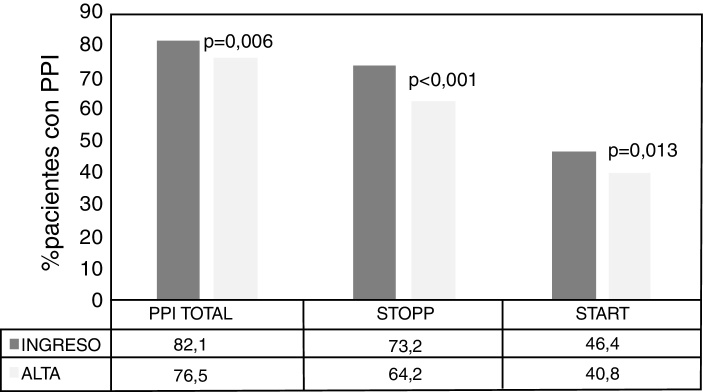
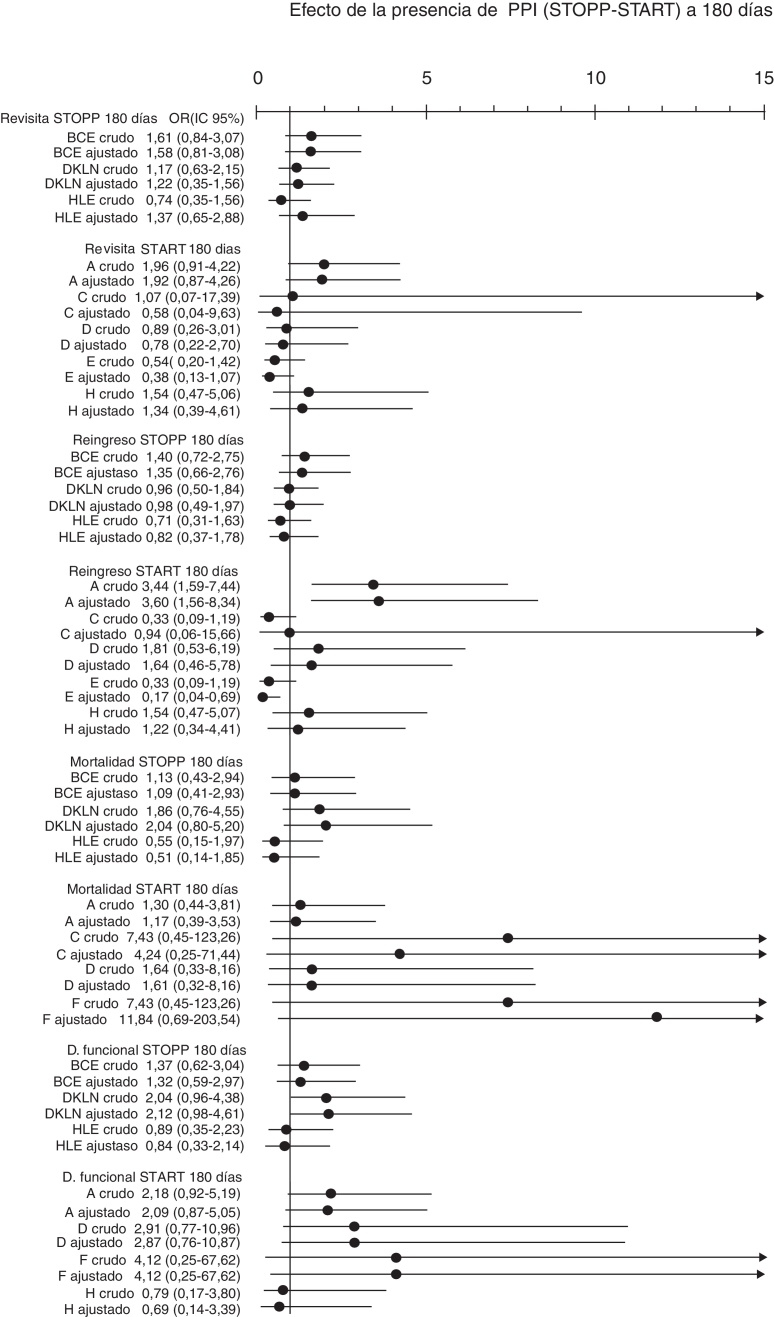
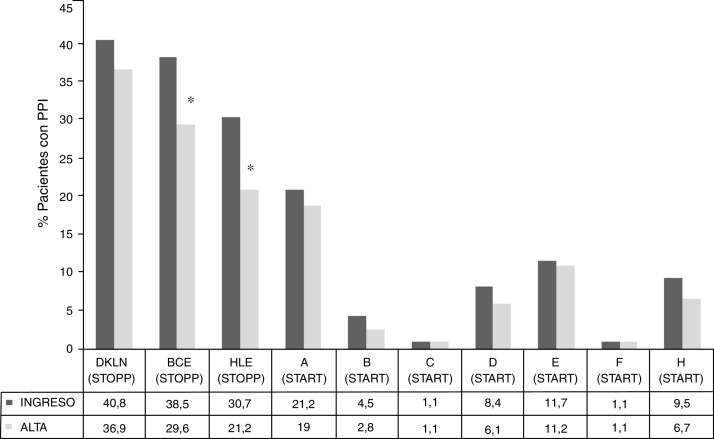
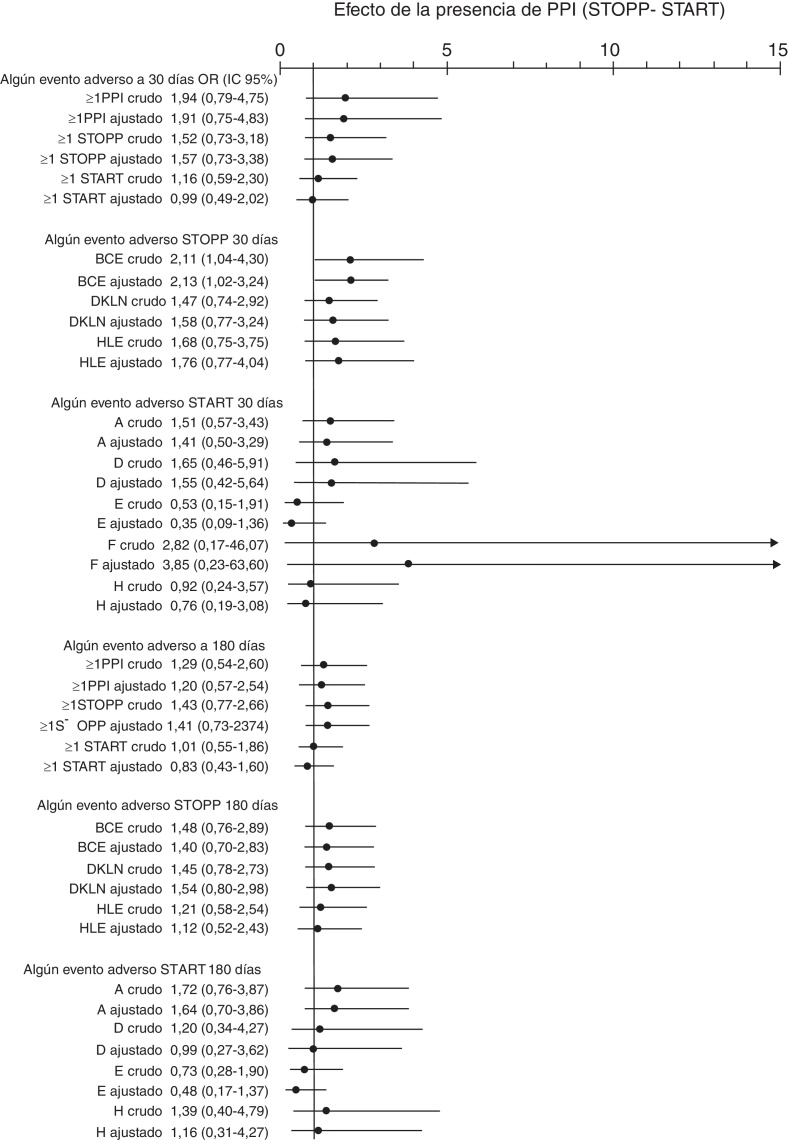
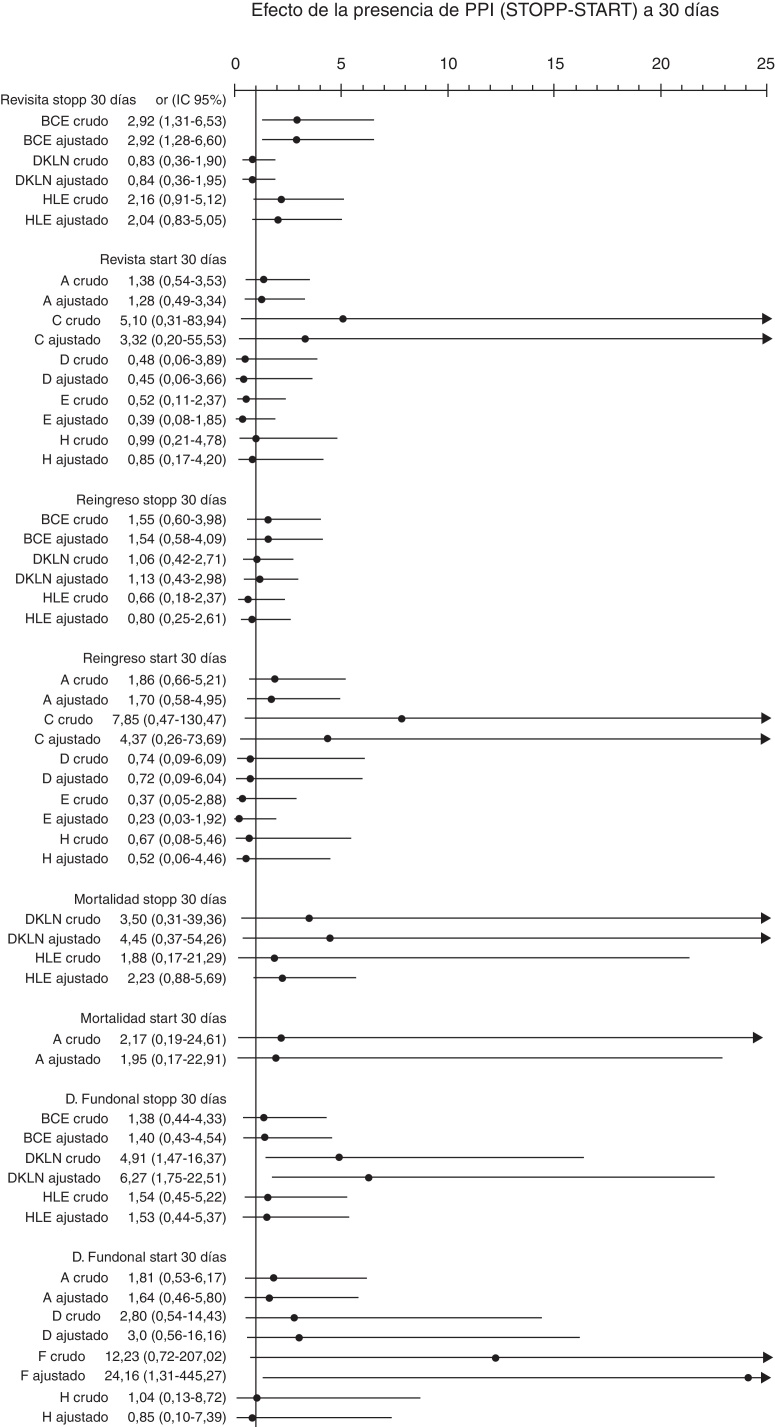
A total of 179 patients, with a mean age of 84 (SD5) years were included. The presence of ≥1PIP after being discharged was not associated with a 30 and 180-day composite adverse event. Patients with ≥1PIP related to a cerebro-cardiovascular process were at higher risk of an adverse event at 30 days after discharge (adjusted OR, 2.1; 95%CI: 1.0-3.2; P=.045), those with ≥1PIP related to neuropsychiatric process and risk of fall were at higher risk of increased 30-day functional impairment (adjusted OR, 6.3; 95%CI: 1.7-22.5; P=.005), and those with ≥1PIP related to omission of cardiovascular system were at higher risk of 180-day hospital readmission (adjusted OR, 3.6; 95%CI: 1.5-8.3; P=.003).
The presence of adverse events in older patients discharged from SSU may be associated with PIP, identified by STOPP-START criteria, and more specifically with drugs related to cardiovascular, neuropsychiatric disorders, and falls.
研究短期住院病房(SSU)出院后潜在不适当处方(PIP)与30天和180天不良事件发生率之间的关联。
对2014年2月至4月从SSU出院的年龄≥75岁的患者进行了一项回顾性队列观察研究。使用STOPP-START标准第2版。主要结局是出院后30天和180天的不良事件发生率。
共纳入179例患者,平均年龄84(标准差5)岁。出院后存在≥1项PIP与30天和180天的综合不良事件无关。与心脑血管疾病相关的≥1项PIP患者在出院后30天发生不良事件的风险较高(校正比值比,2.1;95%置信区间:1.0-3.2;P=0.045),与神经精神疾病和跌倒风险相关的≥1项PIP患者在30天功能损害增加的风险较高(校正比值比,6.3;95%置信区间:1.7-22.5;P=0.005),与心血管系统遗漏相关的≥1项PIP患者在180天再次入院的风险较高(校正比值比,3.6;95%置信区间:1.5-8.3;P=0.003)。
SSU出院的老年患者不良事件的发生可能与通过STOPP-START标准确定的PIP有关,更具体地说,与心血管、神经精神疾病和跌倒相关的药物有关。