Immunology and Virology Program, Centre for Ophthalmology and Visual Science, The University of Western Australia, Crawley, Western Australia, Australia.
Centre for Experimental Immunology, Lions Eye Institute, Nedlands, Western Australia, Australia.
Sci Rep. 2017 Oct 27;7(1):14226. doi: 10.1038/s41598-017-14618-z.
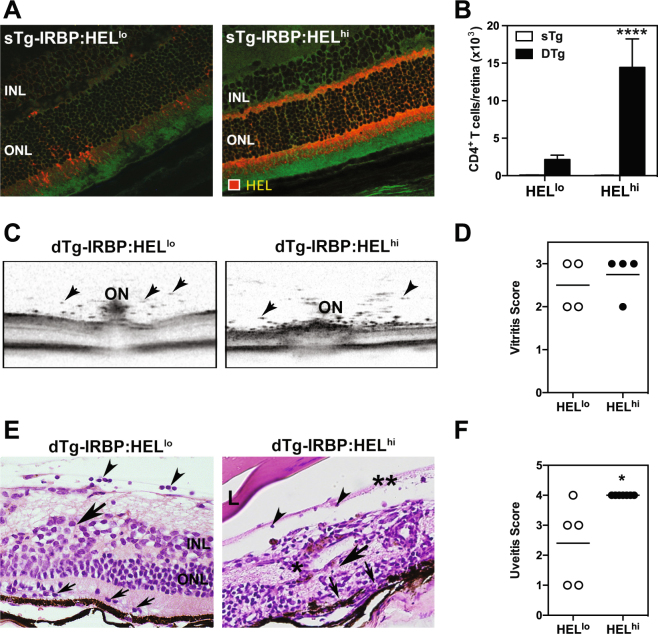
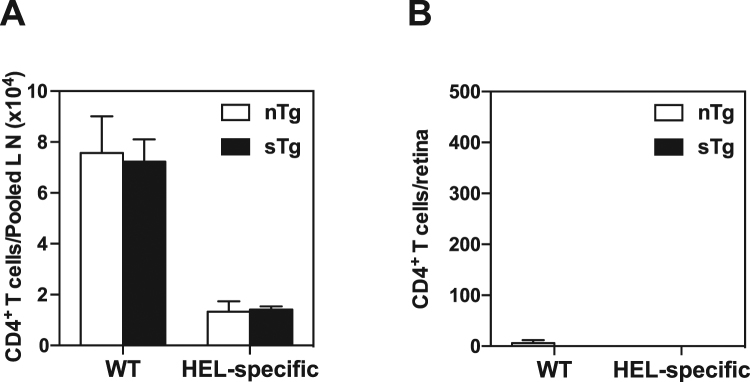
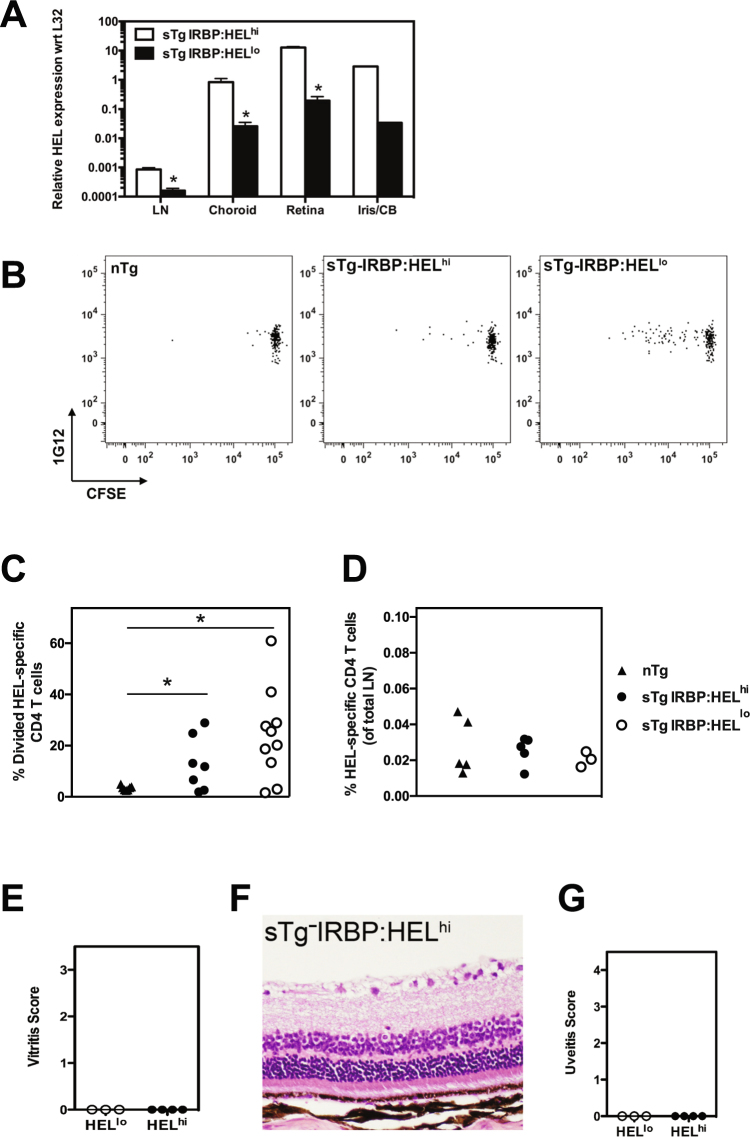
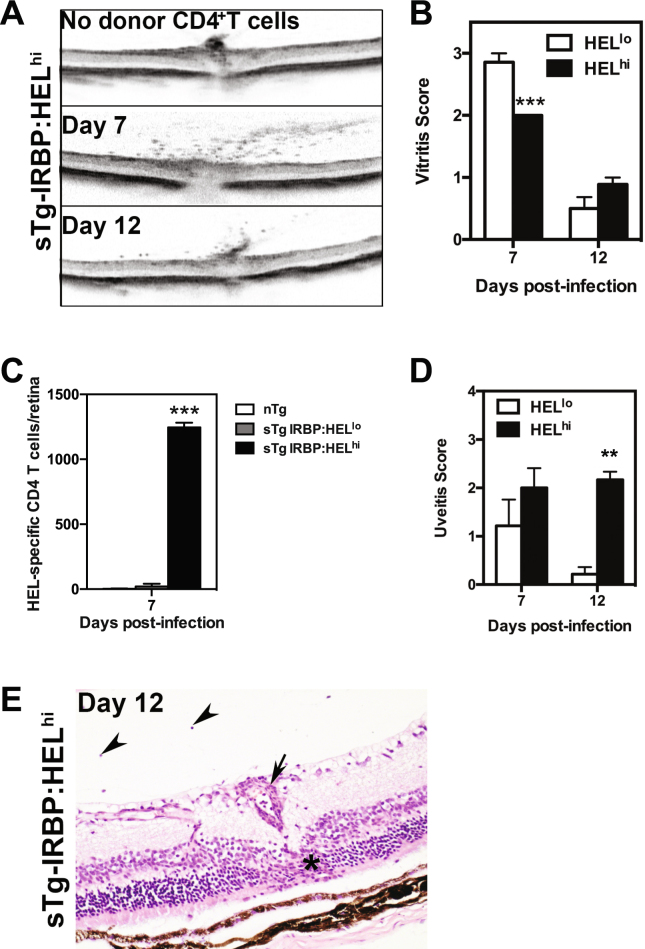
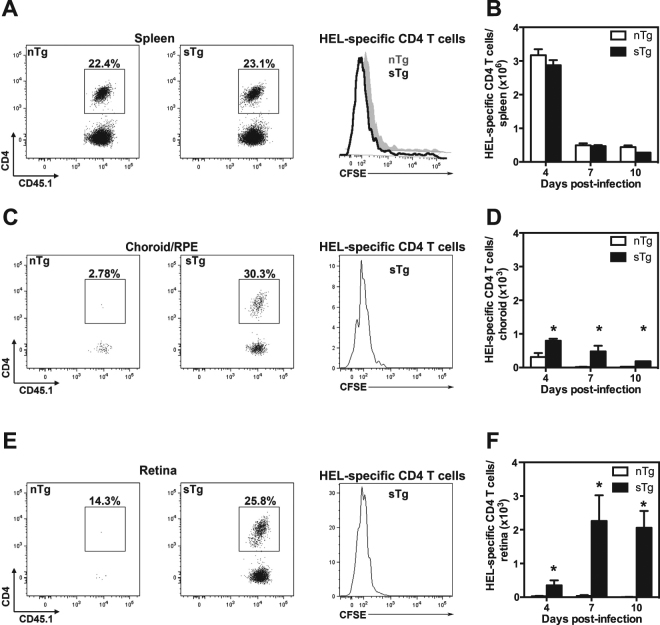
Ocular antigens are sequestered behind the blood-retina barrier and the ocular environment protects ocular tissues from autoimmune attack. The signals required to activate autoreactive T cells and allow them to cause disease in the eye remain in part unclear. In particular, the consequences of peripheral presentation of ocular antigens are not fully understood. We examined peripheral expression and presentation of ocular neo-self-antigen in transgenic mice expressing hen egg lysozyme (HEL) under a retina-specific promoter. High levels of HEL were expressed in the eye compared to low expression throughout the lymphoid system. Adoptively transferred naïve HEL-specific CD4 T cells proliferated in the eye draining lymph nodes, but did not induce uveitis. By contrast, systemic infection with a murine cytomegalovirus (MCMV) engineered to express HEL induced extensive proliferation of transferred naïve CD4 T cells, and significant uveoretinitis. In this model, wild-type MCMV, lacking HEL, did not induce overt uveitis, suggesting that disease is mediated by antigen-specific peripherally activated CD4 T cells that infiltrate the retina. Our results demonstrate that retinal antigen is presented to T cells in the periphery under physiological conditions. However, when the same antigen is presented during viral infection, antigen-specific T cells access the retina and autoimmune uveitis ensues.
眼部抗原被隔离在血视网膜屏障后面,眼部环境保护眼部组织免受自身免疫攻击。激活自身反应性 T 细胞并使它们在眼部引起疾病所需的信号在部分上仍不清楚。特别是,外周呈现眼部抗原的后果尚未完全理解。我们检查了在视网膜特异性启动子下表达鸡卵溶菌酶 (HEL) 的转基因小鼠中眼部新自身抗原的外周表达和呈递。与淋巴系统中的低表达相比,HEL 在眼睛中的表达水平较高。过继转移的幼稚 HEL 特异性 CD4 T 细胞在眼部引流淋巴结中增殖,但不会引起葡萄膜炎。相比之下,用表达 HEL 的鼠巨细胞病毒 (MCMV) 进行全身感染诱导了转移的幼稚 CD4 T 细胞的广泛增殖,并导致严重的葡萄膜炎。在该模型中,缺乏 HEL 的野生型 MCMV 不会引起明显的葡萄膜炎,表明疾病是由浸润视网膜的抗原特异性外周激活的 CD4 T 细胞介导的。我们的结果表明,在生理条件下,视网膜抗原在周围组织中被呈递给 T 细胞。然而,当相同的抗原在病毒感染期间呈现时,抗原特异性 T 细胞进入视网膜,随后发生自身免疫性葡萄膜炎。