Centro de Investigaciones Biologicas, Consejo Superior de Investigaciones Científicas (CSIC), Ramiro de Maeztu, 9, 28040, Madrid, Spain.
Centro de Investigación Biomédica en Red de Enfermedades Raras (CIBERER), 28040, Madrid, Spain.
Cell Mol Life Sci. 2018 Apr;75(7):1269-1284. doi: 10.1007/s00018-017-2694-7. Epub 2017 Oct 28.
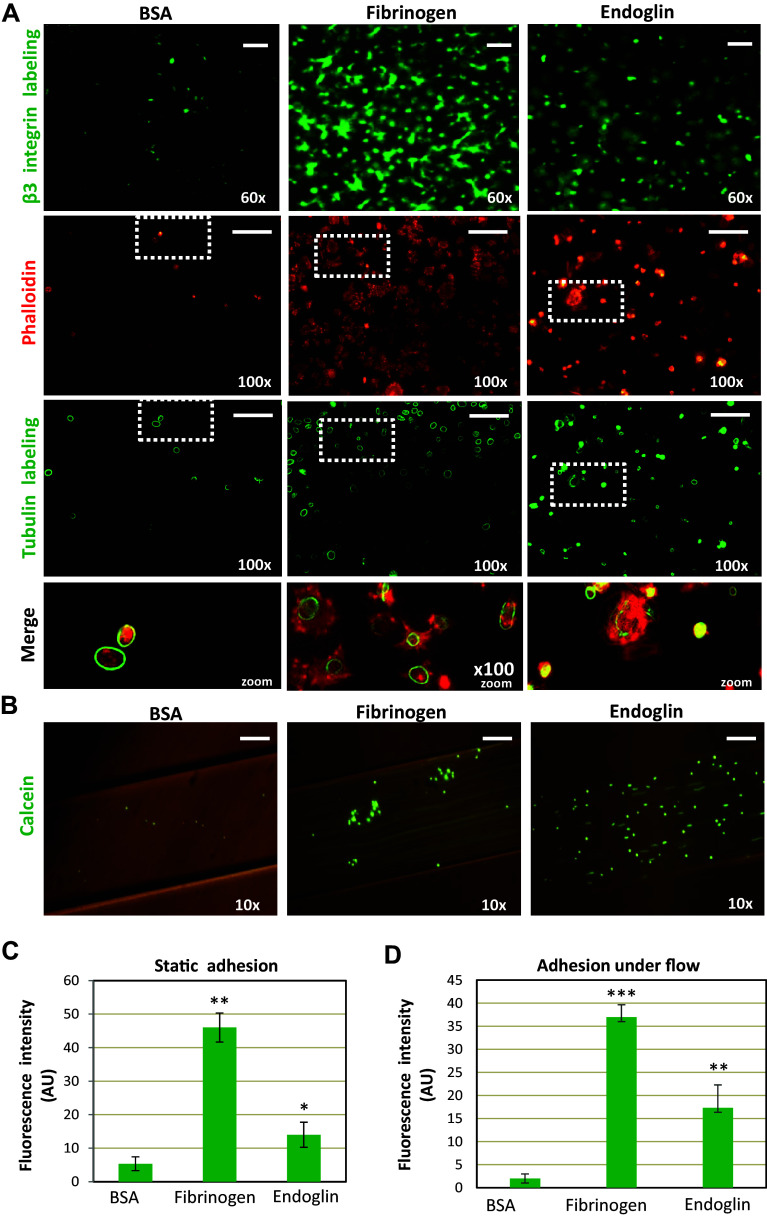
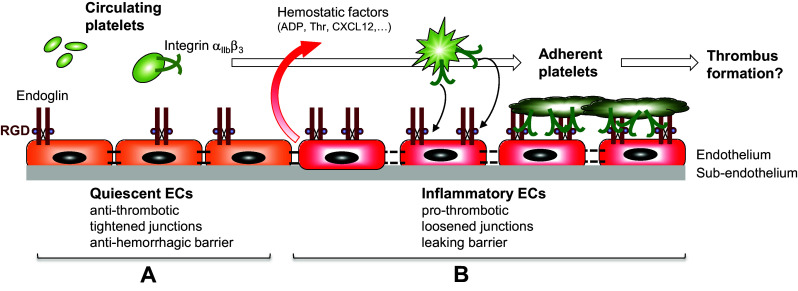
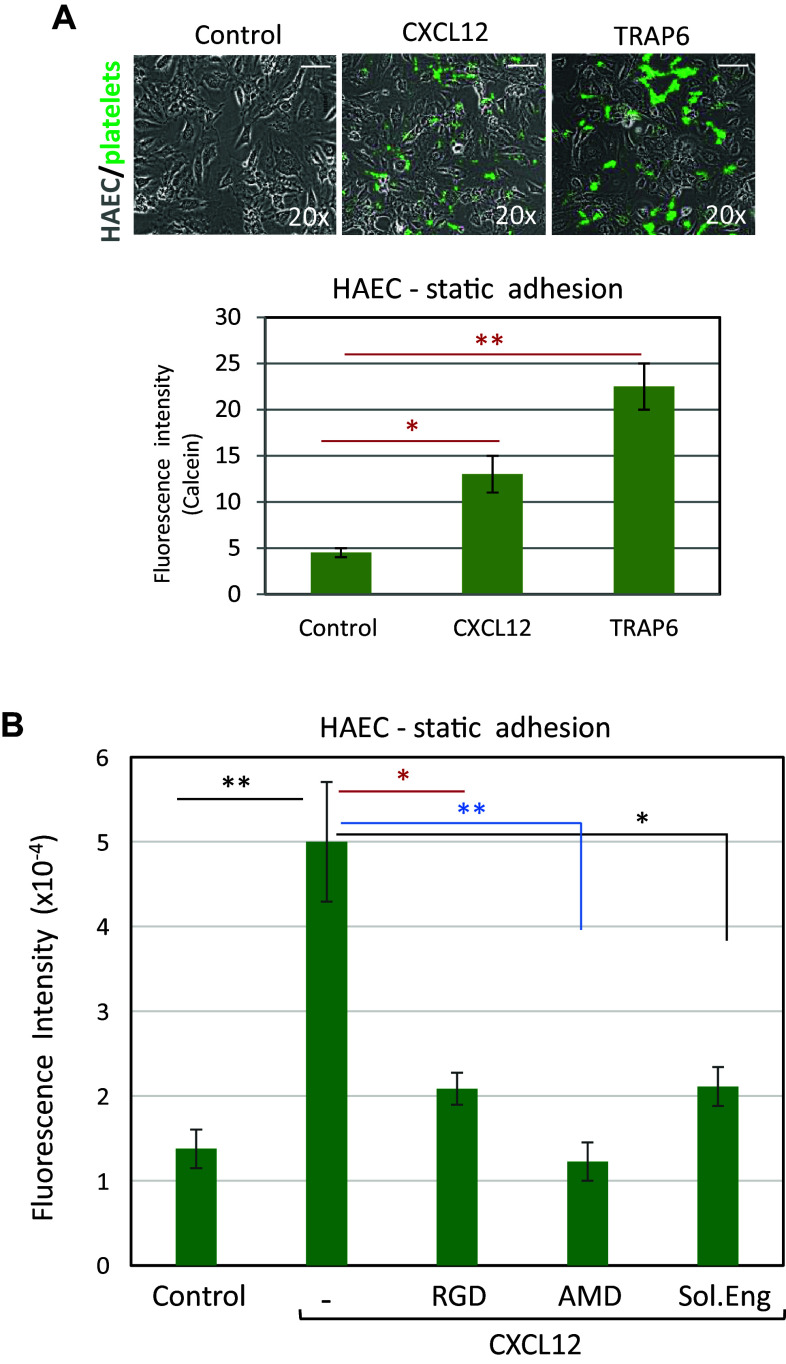
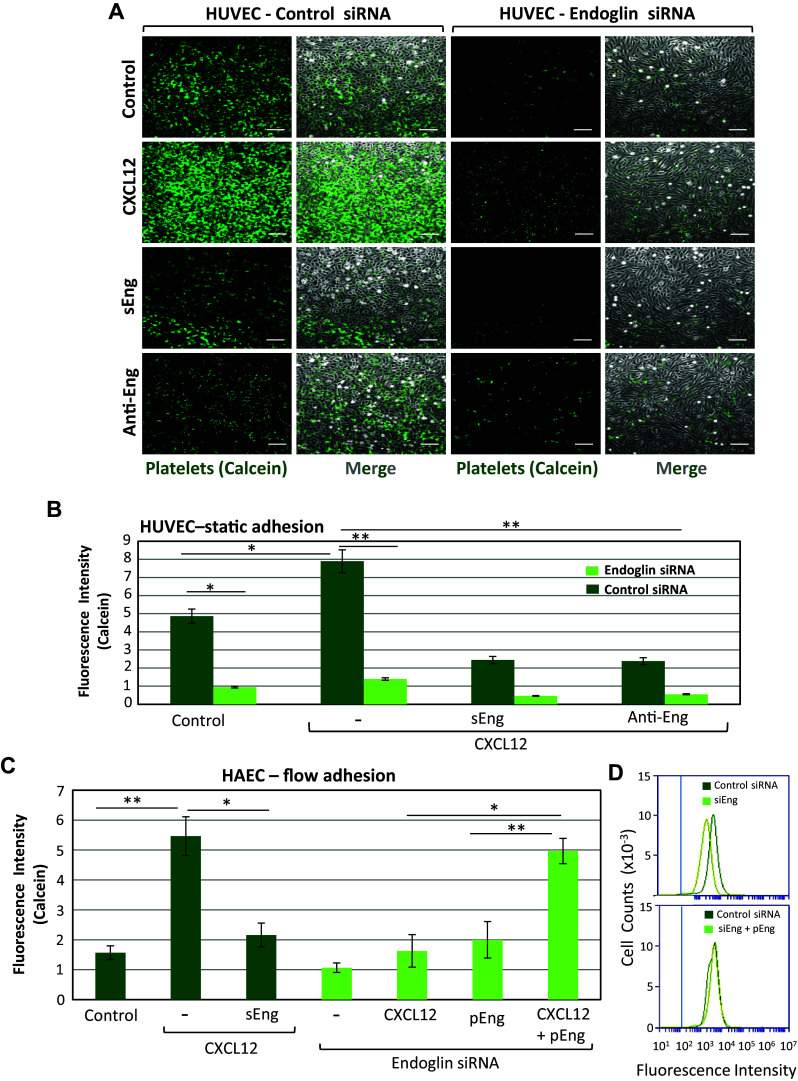
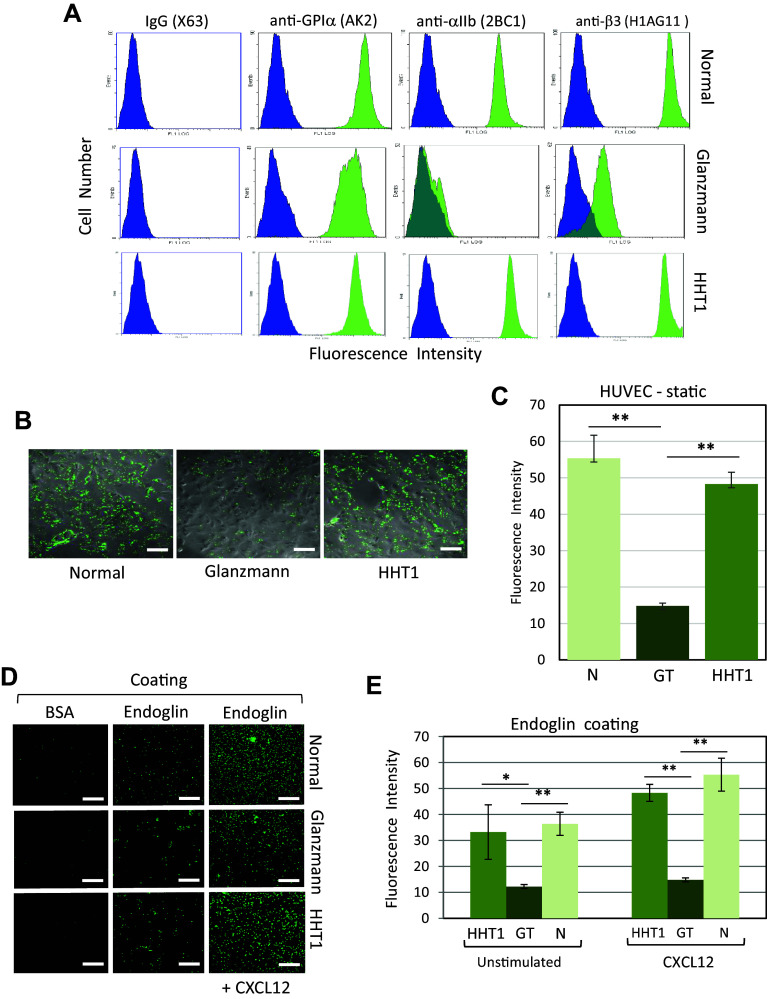
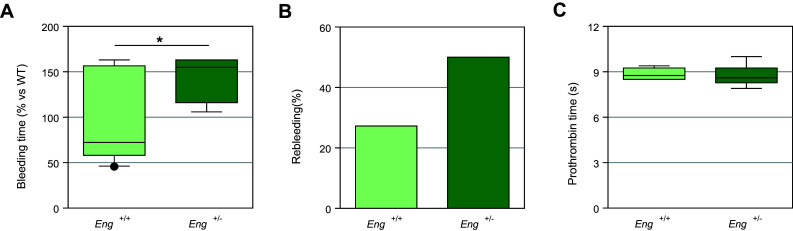
Complex interactions between platelets and activated endothelium occur during the thrombo-inflammatory reaction at sites of vascular injuries and during vascular hemostasis. The endothelial receptor endoglin is involved in inflammation through integrin-mediated leukocyte adhesion and transmigration; and heterozygous mutations in the endoglin gene cause hereditary hemorrhagic telangiectasia type 1. This vascular disease is characterized by a bleeding tendency that is postulated to be a consequence of telangiectasia fragility rather than a platelet defect, since platelets display normal functions in vitro in this condition. Here, we hypothesize that endoglin may act as an adhesion molecule involved in the interaction between endothelial cells and platelets through integrin recognition. We find that the extracellular domain of human endoglin promotes specific platelet adhesion under static conditions and confers resistance of adherent platelets to detachment upon exposure to flow. Also, platelets adhere to confluent endothelial cells in an endoglin-mediated process. Remarkably, Chinese hamster ovary cells ectopically expressing the human αIIbβ3 integrin acquire the capacity to adhere to myoblast transfectants expressing human endoglin, whereas platelets from Glanzmann's thrombasthenia patients lacking the αIIbβ3 integrin are defective for endoglin-dependent adhesion to endothelial cells. Furthermore, the bleeding time, but not the prothrombin time, is significantly prolonged in endoglin-haplodeficient (Eng ) mice compared to Eng animals. These results suggest a new role for endoglin in αIIbβ3 integrin-mediated adhesion of platelets to the endothelium, and may provide a better understanding on the basic cellular mechanisms involved in hemostasis and thrombo-inflammatory events.
在血管损伤部位的血栓炎症反应和血管止血过程中,血小板和活化的内皮细胞之间发生复杂的相互作用。内皮细胞受体 endoglin 通过整合素介导的白细胞黏附和迁移参与炎症反应;endoglin 基因突变导致遗传性出血性毛细血管扩张症 1 型。这种血管疾病的特征是出血倾向,据推测这是毛细血管脆弱性的结果,而不是血小板缺陷,因为在这种情况下,血小板在体外显示正常功能。在这里,我们假设 endoglin 可能作为一种黏附分子,通过整合素识别参与内皮细胞和血小板之间的相互作用。我们发现人 endoglin 的细胞外结构域在静态条件下促进血小板的特异性黏附,并赋予黏附血小板抵抗暴露于流动时的脱落。此外,血小板以 endoglin 介导的方式黏附于汇合的内皮细胞。值得注意的是,表达人αIIbβ3 整合素的中国仓鼠卵巢细胞获得了黏附于表达人 endoglin 的成肌细胞转染子的能力,而缺乏αIIbβ3 整合素的 Glanzmann 血小板无力症患者的血小板则不能依赖于 endoglin 黏附于内皮细胞。此外,与 Eng 动物相比,endoglin 单倍体缺陷(Eng )小鼠的出血时间显著延长,而凝血酶原时间没有延长。这些结果表明 endoglin 在αIIbβ3 整合素介导的血小板与内皮细胞黏附中发挥新的作用,并且可能为止血和血栓炎症事件中涉及的基本细胞机制提供更好的理解。