Department of Physiology, Anatomy and Neuroscience, Faculty of Science and Informatics, University of Szeged, Közép fasor 52, Szeged H-6726, Hungary.
Oxid Med Cell Longev. 2017;2017:1890512. doi: 10.1155/2017/1890512. Epub 2017 Sep 10.
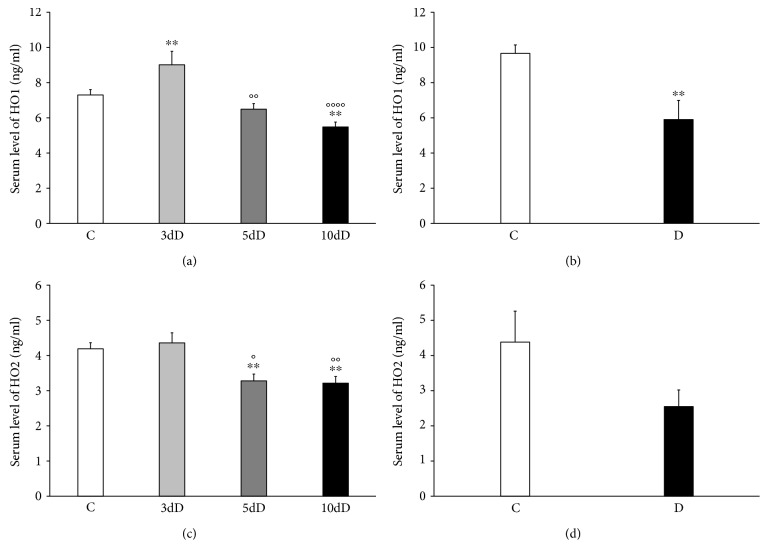
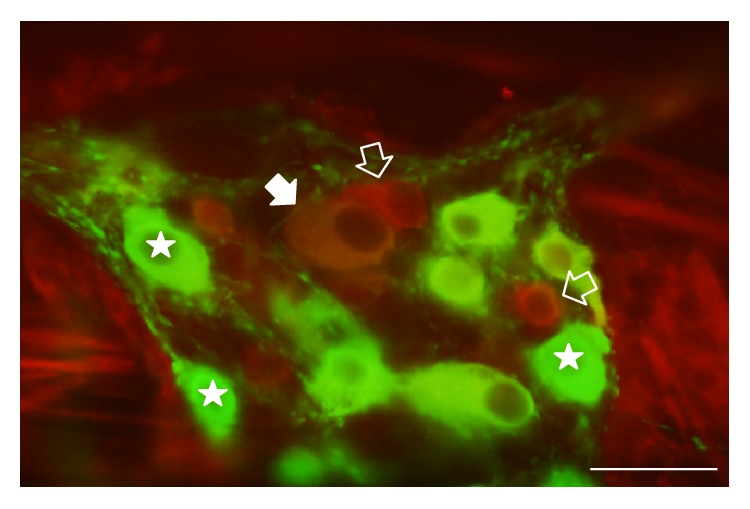
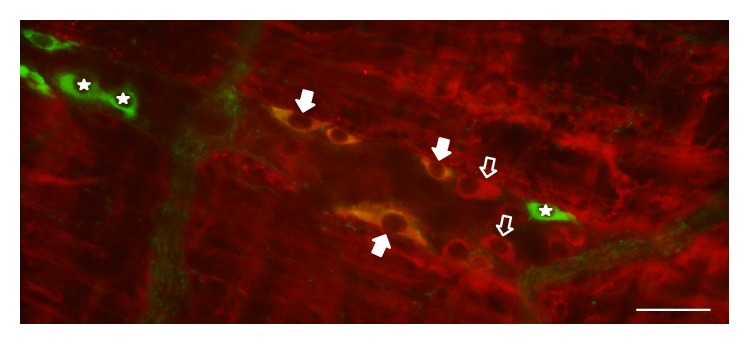
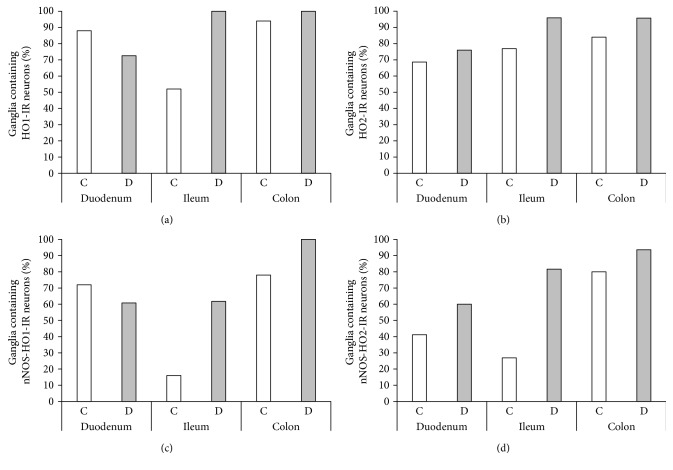
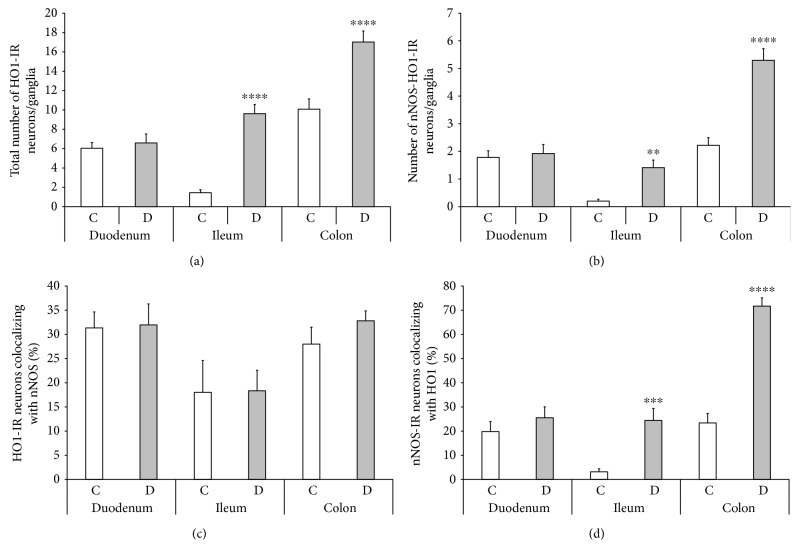
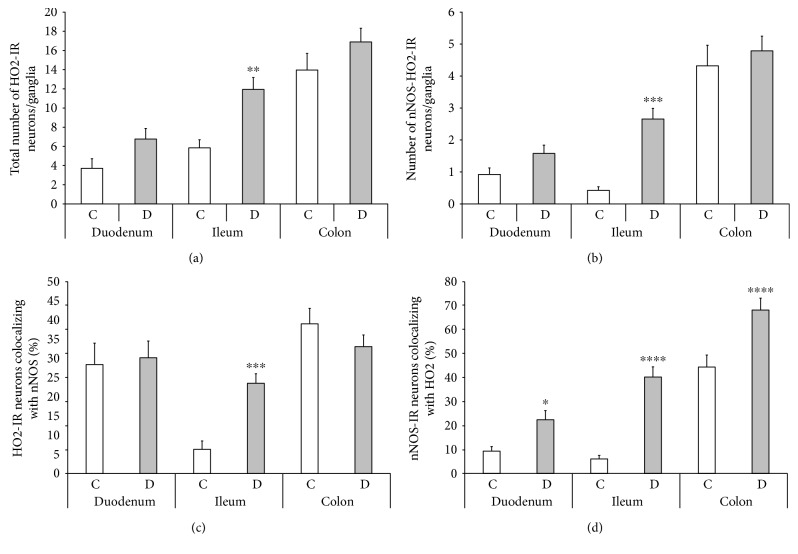
Increase in hyperglycaemia-induced oxidative stress and decreased effectiveness of endogenous defense mechanisms plays an essential role in the initiation of diabetes-related neuropathy. We demonstrated that nitrergic myenteric neurons display different susceptibilities to diabetic damage in different gut segments. Therefore, we aim to reveal the gut segment-specific differences in the expression of heme oxygenase (HO) isoforms and the colocalization of these antioxidants with neuronal nitric oxide synthase (nNOS) in myenteric neurons. After ten weeks, samples from the duodenum, ileum, and colon of control and streptozotocin-induced diabetic rats were processed for double-labelling fluorescent immunohistochemistry and ELISA. The number of both HO-immunoreactive and nNOS/HO-immunoreactive myenteric neurons was the lowest in the ileal and the highest in the colonic ganglia of controls; it increased the most extensively in the ileum and was also elevated in the colon of diabetics. Although the total number of nitrergic neurons decreased in all segments, the proportion of nNOS-immunoreactive neurons colocalizing with HOs was enhanced robustly in the ileum and colon of diabetics. We presume that those nitrergic neurons which do not colocalize with HOs are the most seriously affected by diabetic damage. Therefore, the regional induction of the HO system is strongly correlated with diabetes-related region-specific nitrergic neuropathy.
高血糖引起的氧化应激增加和内源性防御机制的有效性降低,在糖尿病相关神经病变的发生中起着至关重要的作用。我们证明,氮能性肌间神经元在不同的肠道段对糖尿病损伤表现出不同的易感性。因此,我们旨在揭示肠道段特异性差异在血红素加氧酶(HO)同工型的表达和这些抗氧化剂与肌间神经元中的神经元型一氧化氮合酶(nNOS)的共定位。在十周后,从对照组和链脲佐菌素诱导的糖尿病大鼠的十二指肠、空肠和结肠中取样,进行双标记荧光免疫组织化学和 ELISA 检测。在对照组中,HO 免疫反应性和 nNOS/HO 免疫反应性肌间神经元的数量在空肠中最低,在结肠中最高;在空肠中增加最多,在糖尿病大鼠的结肠中也升高。尽管所有节段的氮能神经元总数都减少了,但在糖尿病大鼠的空肠和结肠中,nNOS 免疫反应性神经元与 HOs 共定位的比例显著增强。我们推测,那些不与 HOs 共定位的氮能神经元受到糖尿病损伤的影响最严重。因此,HO 系统的区域性诱导与糖尿病相关的特定部位的氮能性神经病变密切相关。