Xu Shanshan, Fan Yanjie, Sun Yu, Wang Lili, Gu Xuefan, Yu Yongguo
Department of Pediatric Endocrinology/Genetics, Xin Hua Hospital affiliated to Shanghai Jiao Tong University School of Medicine, Shanghai Institute for Pediatric Research, 1665 Kongjiang Road, Shanghai, 200092, China.
Department of Pediatric, The First Affiliated Hospital of Xiamen University, Xiamen, Fujian, 361003, China.
BMC Med Genomics. 2017 Oct 30;10(1):62. doi: 10.1186/s12920-017-0298-6.
Noonan syndrome (NS) and Noonan syndrome with multiple lentigines (NSML) are autosomal dominant developmental disorders. NS and NSML are caused by abnormalities in genes that encode proteins related to the RAS-MAPK pathway, including PTPN11, RAF1, BRAF, and MAP2K. In this study, we diagnosed ten NS or NSML patients via targeted sequencing or whole exome sequencing (TS/WES).
TS/WES was performed to identify mutations in ten Chinese patients who exhibited the following manifestations: potential facial dysmorphisms, short stature, congenital heart defects, and developmental delay. Sanger sequencing was used to confirm the suspected pathological variants in the patients and their family members.
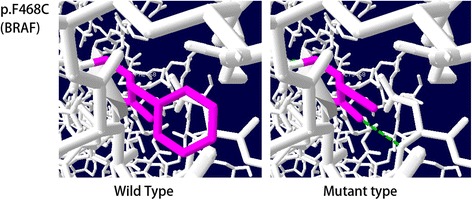
TS/WES revealed three mutations in the PTPN11 gene, three mutations in RAF1 gene, and four mutations in BRAF gene in the NS and NSML patients who were previously diagnosed based on the abovementioned clinical features. All the identified mutations were determined to be de novo mutations. However, two patients who carried the same mutation in the RAF1 gene presented different clinical features. One patient with multiple lentigines was diagnosed with NSML, while the other patient without lentigines was diagnosed with NS. In addition, a patient who carried a hotspot mutation in the BRAF gene was diagnosed with NS instead of cardiofaciocutaneous syndrome (CFCS).
TS/WES has emerged as a useful tool for definitive diagnosis and accurate genetic counseling of atypical cases. In this study, we analyzed ten Chinese patients diagnosed with NS and related disorders and identified their correspondingPTPN11, RAF1, and BRAF mutations. Among the target genes, BRAF showed the same degree of correlation with NS incidence as that of PTPN11 or RAF1.
努南综合征(NS)和伴有多发雀斑的努南综合征(NSML)是常染色体显性发育障碍。NS和NSML是由编码与RAS-MAPK信号通路相关蛋白质的基因突变引起的,这些基因包括PTPN11、RAF1、BRAF和MAP2K。在本研究中,我们通过靶向测序或全外显子组测序(TS/WES)诊断了10例NS或NSML患者。
对10例有以下表现的中国患者进行TS/WES以鉴定突变:潜在的面部畸形、身材矮小、先天性心脏缺陷和发育迟缓。采用桑格测序法确认患者及其家庭成员中疑似的病理性变异。
TS/WES显示,在先前根据上述临床特征诊断的NS和NSML患者中,PTPN11基因有3个突变,RAF1基因有3个突变,BRAF基因有4个突变。所有鉴定出的突变均被确定为新发突变。然而,两名在RAF1基因中携带相同突变的患者表现出不同的临床特征。一名有多发雀斑的患者被诊断为NSML,而另一名没有雀斑的患者被诊断为NS。此外,一名在BRAF基因中携带热点突变的患者被诊断为NS而非心脏颜面皮肤综合征(CFCS)。
TS/WES已成为非典型病例明确诊断和准确遗传咨询的有用工具。在本研究中,我们分析了10例被诊断为NS及相关疾病的中国患者,并鉴定了他们相应的PTPN11、RAF1和BRAF突变。在目标基因中,BRAF与NS发病率的相关性与PTPN11或RAF1相同。