Department of Pharmacy, University of Salerno, Fisciano, Italy.
PhD Program in Drug Discovery and Development, University of Salerno, Fisciano, Italy.
Front Cell Infect Microbiol. 2017 Oct 9;7:434. doi: 10.3389/fcimb.2017.00434. eCollection 2017.
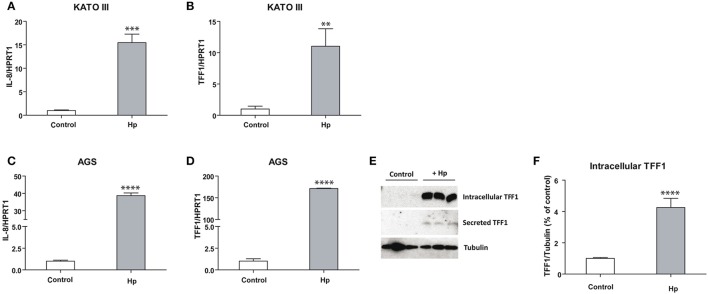
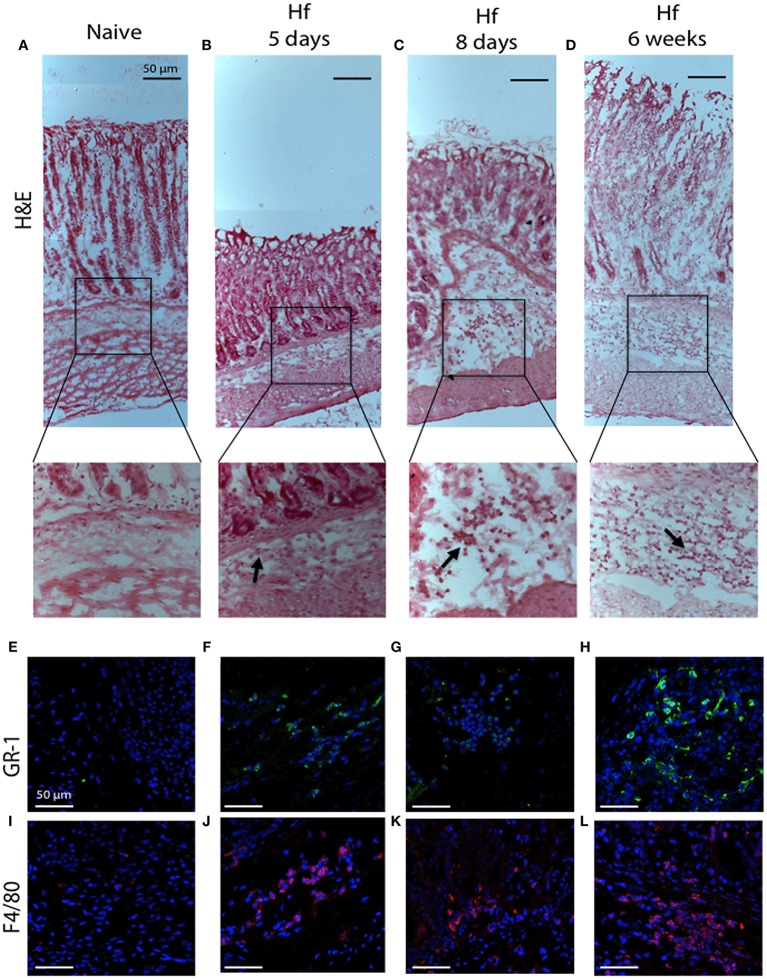
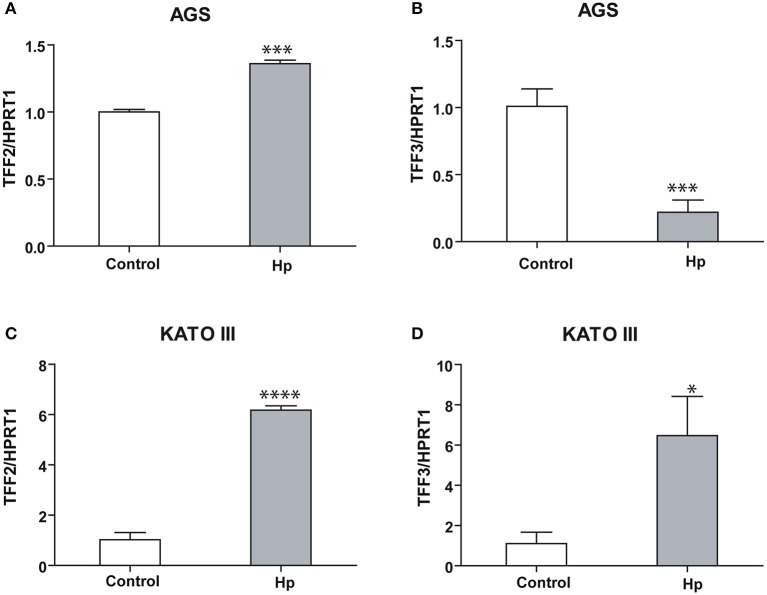
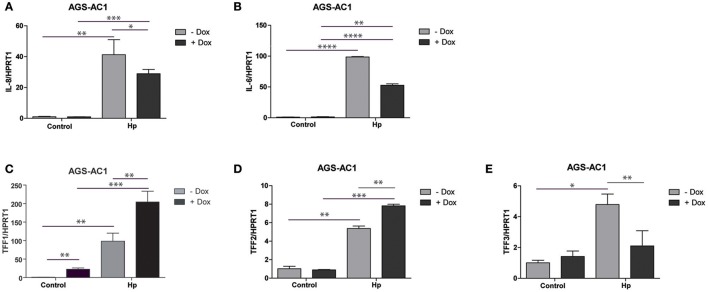
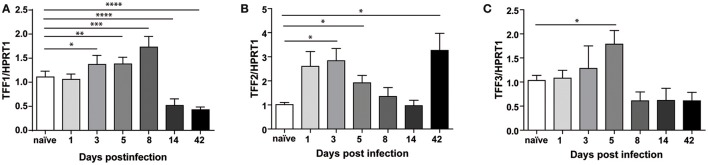
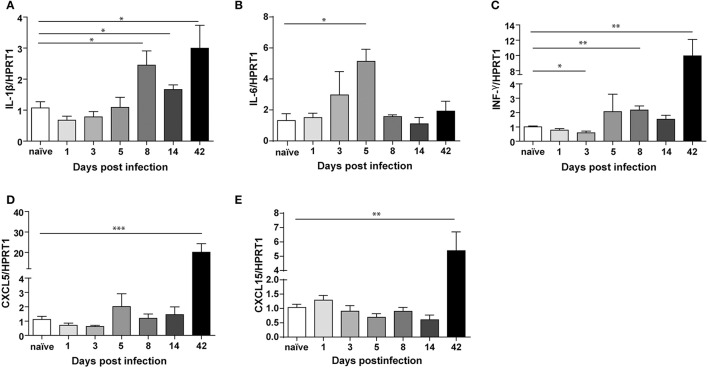
TFF1, a mucin-associated secreted peptide of gastric mucous cells, is known as a protective agent for stomach epithelium under different stimuli, but its role upon infection is still not clear. In this paper we characterized TFFs expression, with particular attention to TFF1, under infection in gastric cell lines. A mouse model was used to distinguish TFF1 mRNA expression between acute and chronic stages of infection. Our results show that TFF1 expression is induced in infected cells; in addition, the inflammatory response upon infection is inversely associated to pre-existing TFF1 protein levels. In infected mice, TFF1 is initially upregulated in gastric antrum in the acute phase of infection, along with IL-1β and IL-6. Then, expression of TFF1 is gradually silenced when the infection becomes chronic and IFN-γ, CXCL5, and CXCL15 reach higher levels. Our data suggest that TFF1 might help cells to counteract bacteria colonization and the development of a chronic inflammation.
TFF1 是胃黏膜细胞分泌的黏蛋白相关肽,已知在不同刺激下对胃上皮具有保护作用,但它在感染时的作用尚不清楚。在本文中,我们研究了 TFFs 的表达,特别关注感染下胃细胞系中 TFF1 的表达。我们使用小鼠模型来区分感染急性和慢性阶段 TFF1mRNA 的表达。我们的结果表明,感染细胞中 TFF1 的表达被诱导;此外,感染时的炎症反应与预先存在的 TFF1 蛋白水平呈负相关。在感染的小鼠中,TFF1 在感染的急性期胃窦中最初被上调,同时伴随着 IL-1β 和 IL-6 的表达。然后,当感染变为慢性时,TFF1 的表达逐渐沉默,而 IFN-γ、CXCL5 和 CXCL15 的水平则升高。我们的数据表明,TFF1 可能有助于细胞对抗细菌定植和慢性炎症的发展。