The Brain and Mind Institute, the University of Western Ontario, London, Ontario Canada.
Department of Clinical Neurological Sciences, London Health Sciences Centre, University Hospital, 339 Windermere Road, London, Ontario N6A 5A5, Canada.
eNeuro. 2017 Oct 16;4(5). doi: 10.1523/ENEURO.0215-17.2017. eCollection 2017 Sep-Oct.
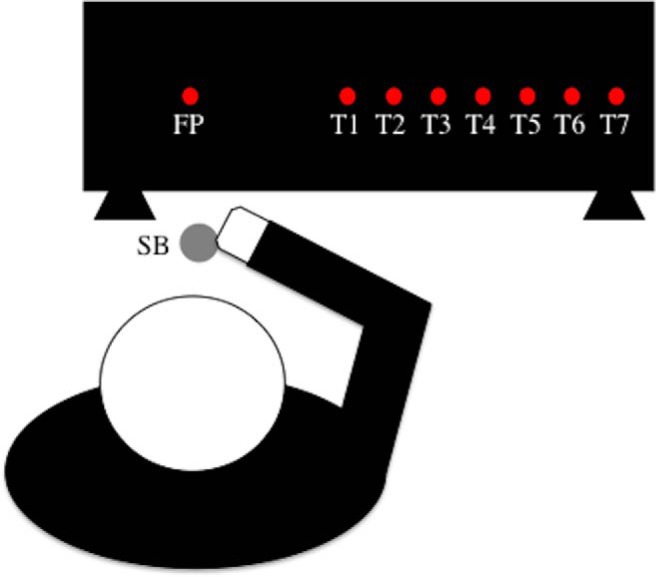
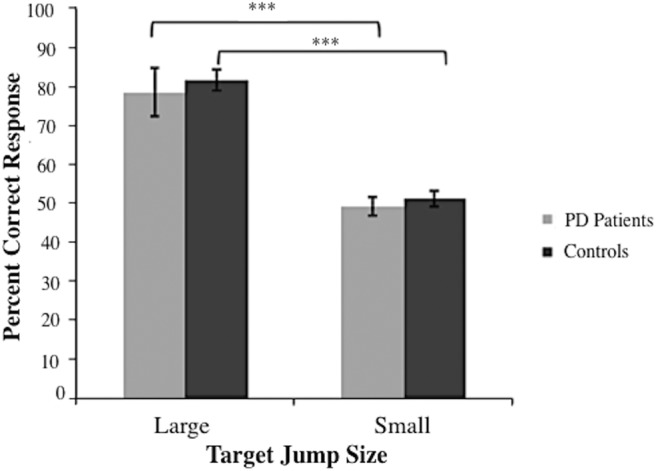
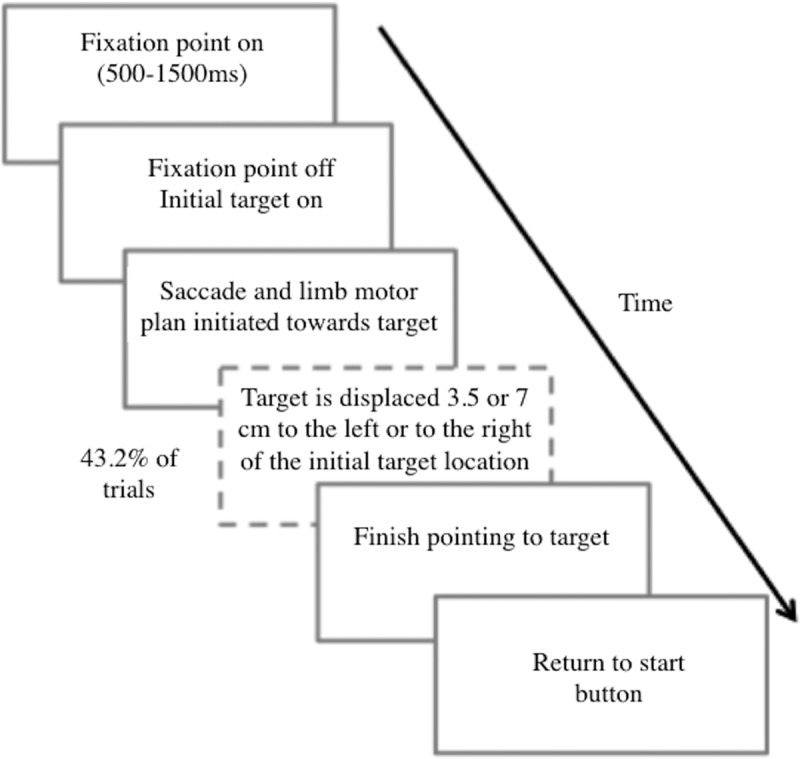
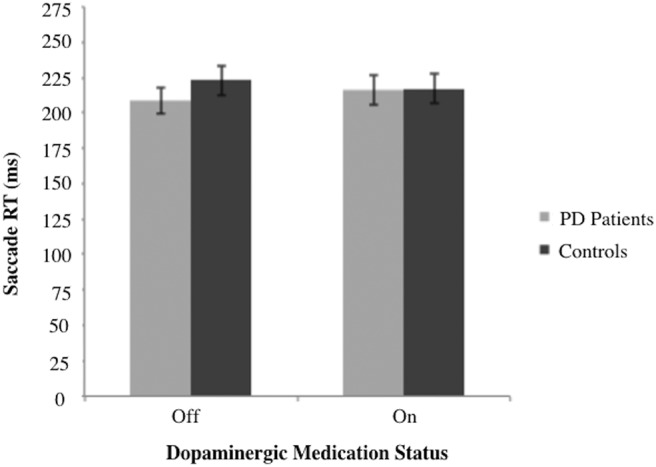
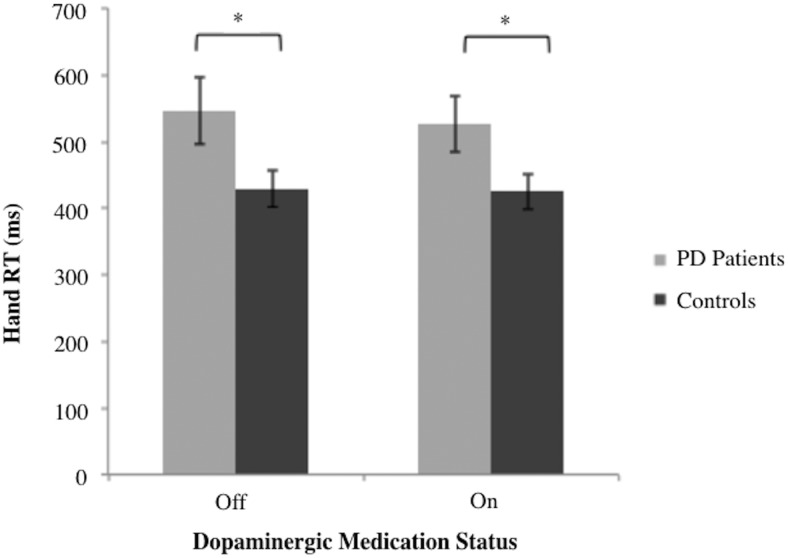
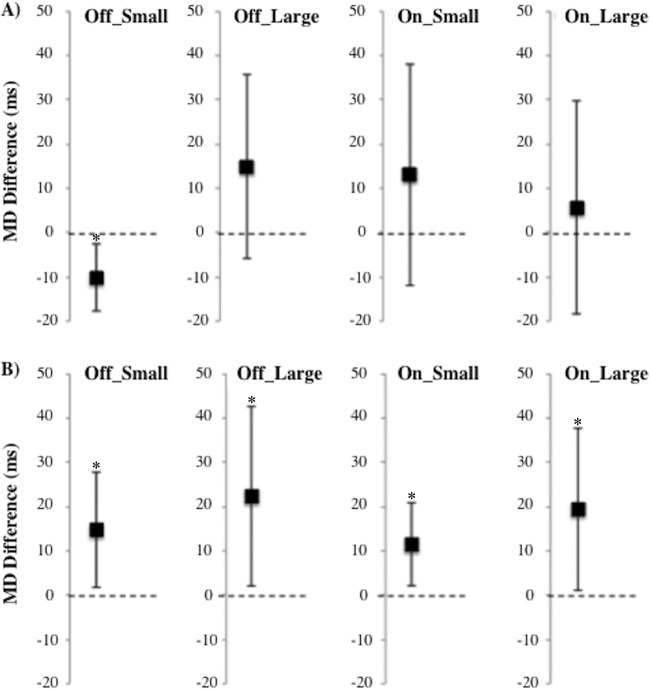
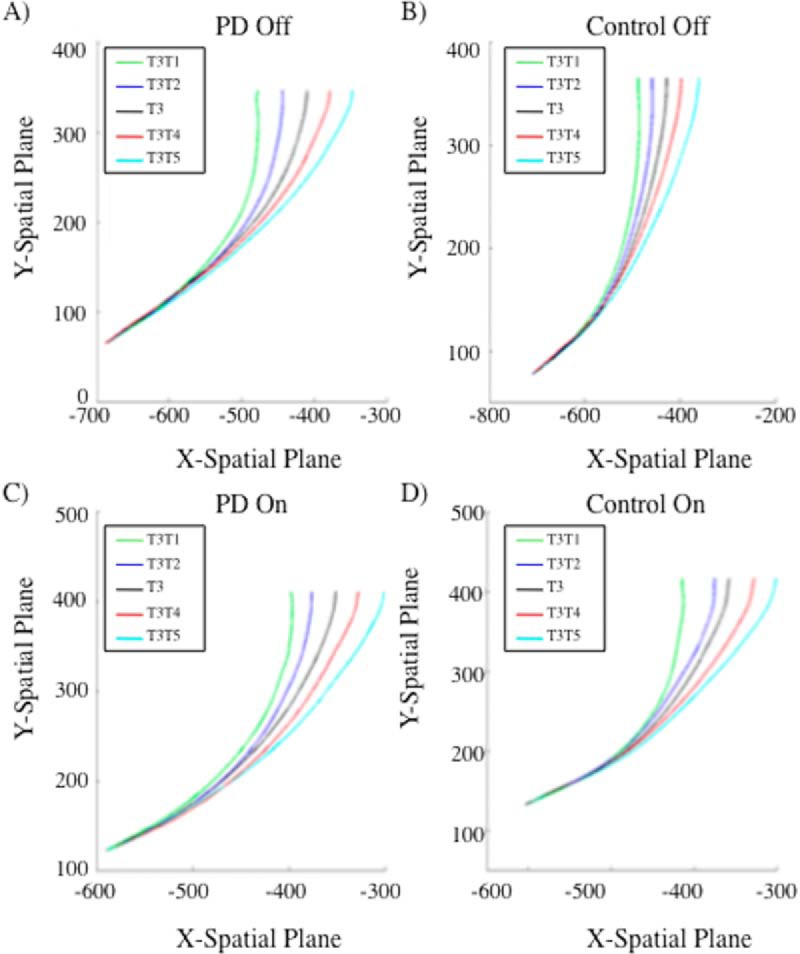
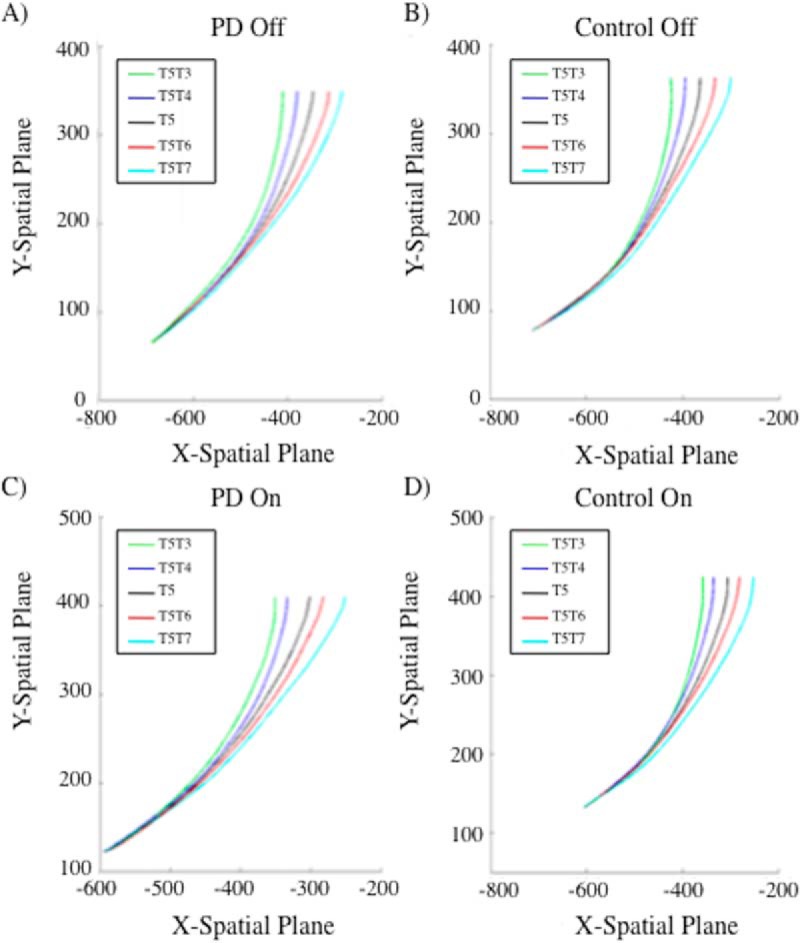
In the double-step paradigm, healthy human participants automatically correct reaching movements when targets are displaced. Motor deficits are prominent in Parkinson's disease (PD) patients. In the lone investigation of online motor correction in PD using the double-step task, a recent study found that PD patients performed unconscious adjustments appropriately but seemed impaired for consciously-perceived modifications. Conscious perception of target movement was achieved by linking displacement to movement onset. PD-related bradykinesia disproportionately prolonged preparatory phases for movements to original target locations for patients, potentially accounting for deficits. Eliminating this confound in a double-step task, we evaluated the effect of conscious awareness of trajectory change on online motor corrections in PD. On and off dopaminergic therapy, PD patients ( = 14) and healthy controls ( = 14) reached to peripheral visual targets that remained stationary or unexpectedly moved during an initial saccade. Saccade latencies in PD are comparable to controls'. Hence, target displacements occurred at equal times across groups. Target jump size affected conscious awareness, confirmed in an independent target displacement judgment task. Small jumps were subliminal, but large target displacements were consciously perceived. Contrary to the previous result, PD patients performed online motor corrections normally and automatically, irrespective of conscious perception. Patients evidenced equivalent movement durations for jump and stay trials, and trajectories for patients and controls were identical, irrespective of conscious perception. Dopaminergic therapy had no effect on performance. In summary, online motor control is intact in PD, unaffected by conscious perceptual awareness. The basal ganglia are not implicated in online corrective responses.
在双步范式中,健康的人类参与者会自动纠正目标位移时的伸展运动。帕金森病(PD)患者的运动缺陷明显。在使用双步任务对 PD 患者在线运动矫正的唯一研究中,最近的一项研究发现,PD 患者进行了适当的无意识调整,但对于有意识感知的修正似乎存在障碍。通过将位移与运动起始相联系,实现了对目标运动的有意识感知。PD 相关的运动迟缓不成比例地延长了患者到达原始目标位置的预备阶段,这可能是造成这种缺陷的原因。在双步任务中消除这种混杂因素,我们评估了对轨迹变化的有意识感知对 PD 患者在线运动矫正的影响。在有或没有多巴胺能治疗的情况下,PD 患者(=14)和健康对照组(=14)伸展至外周视觉目标,这些目标在初始扫视期间保持静止或意外移动。PD 患者的扫视潜伏期与对照组相当。因此,目标位移在各组中发生的时间相等。目标跳跃大小影响有意识的感知,在一个独立的目标位移判断任务中得到证实。小跳跃是潜意识的,但大目标位移是有意识感知的。与之前的结果相反,PD 患者正常且自动地进行在线运动矫正,而与有意识的感知无关。患者的跳跃和停留试验的运动持续时间相等,患者和对照组的轨迹相同,而与有意识的感知无关。多巴胺能治疗对表现没有影响。总之,PD 患者的在线运动控制是完整的,不受有意识的感知意识的影响。基底神经节在在线矫正反应中没有作用。