Završnik Janja, Butinar Miha, Prebanda Mojca Trstenjak, Krajnc Aleksander, Vidmar Robert, Fonović Marko, Grubb Anders, Turk Vito, Turk Boris, Vasiljeva Olga
Department of Biochemistry and Molecular and Structural Biology, Jozef Stefan Institute, SI-1000 Ljubljana, Slovenia.
Jozef Stefan International Postgraduate School, Sl-1000 Ljubljana, Slovenia.
Oncotarget. 2017 Apr 24;8(43):73793-73809. doi: 10.18632/oncotarget.17379. eCollection 2017 Sep 26.
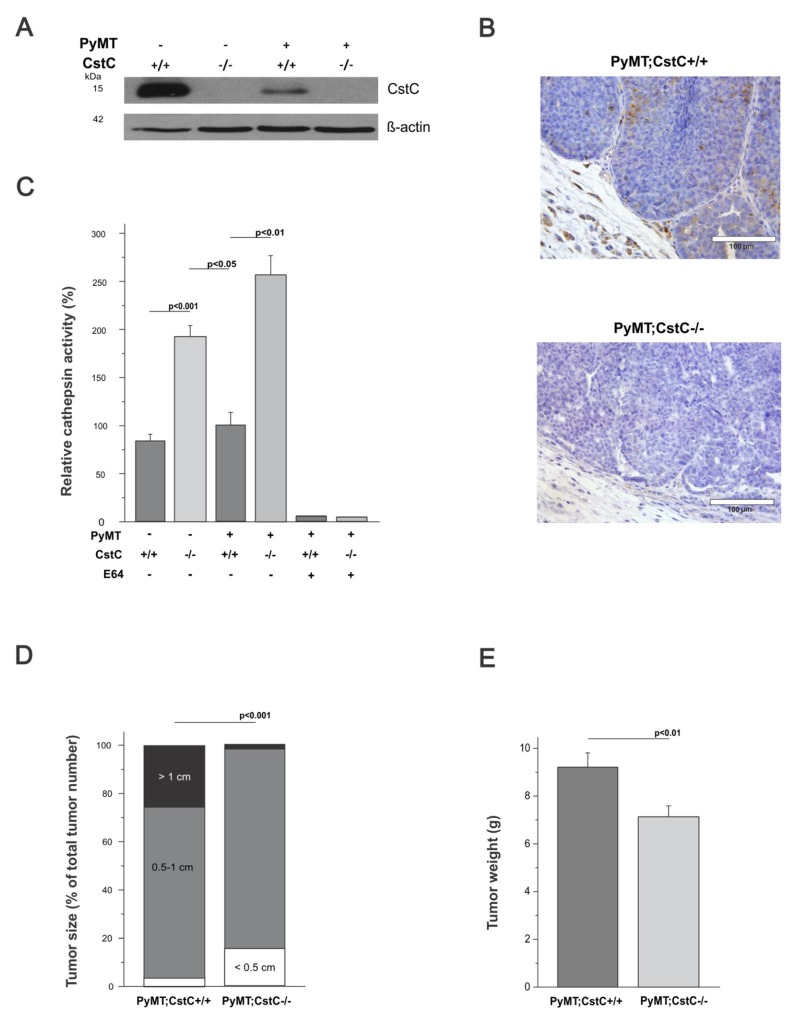
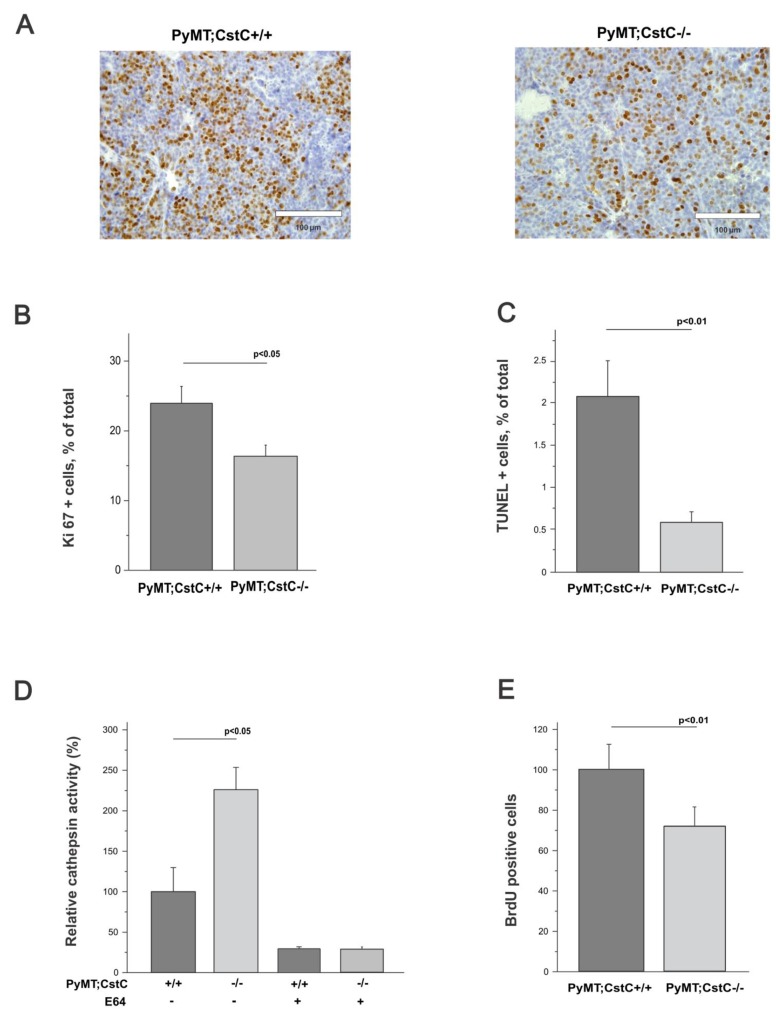
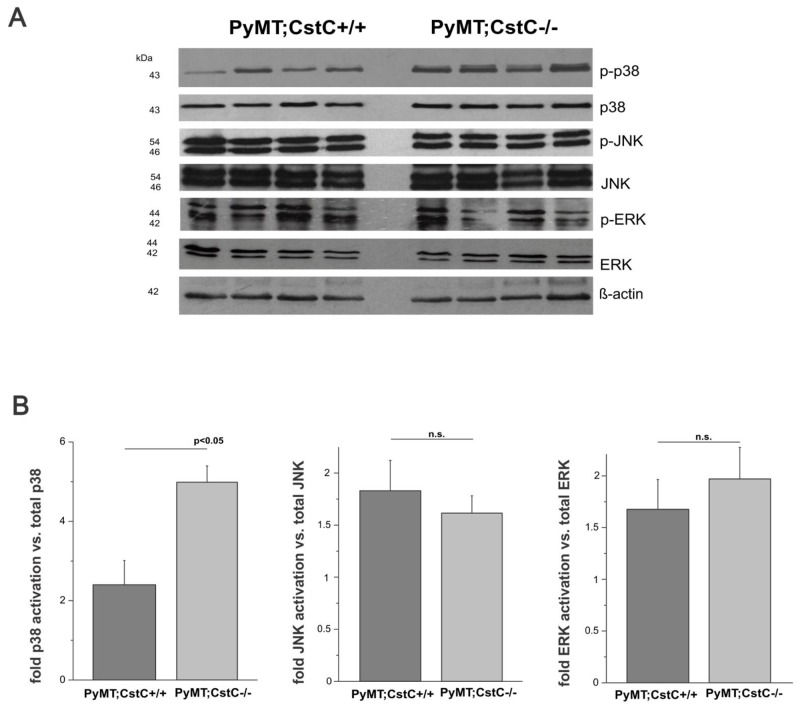
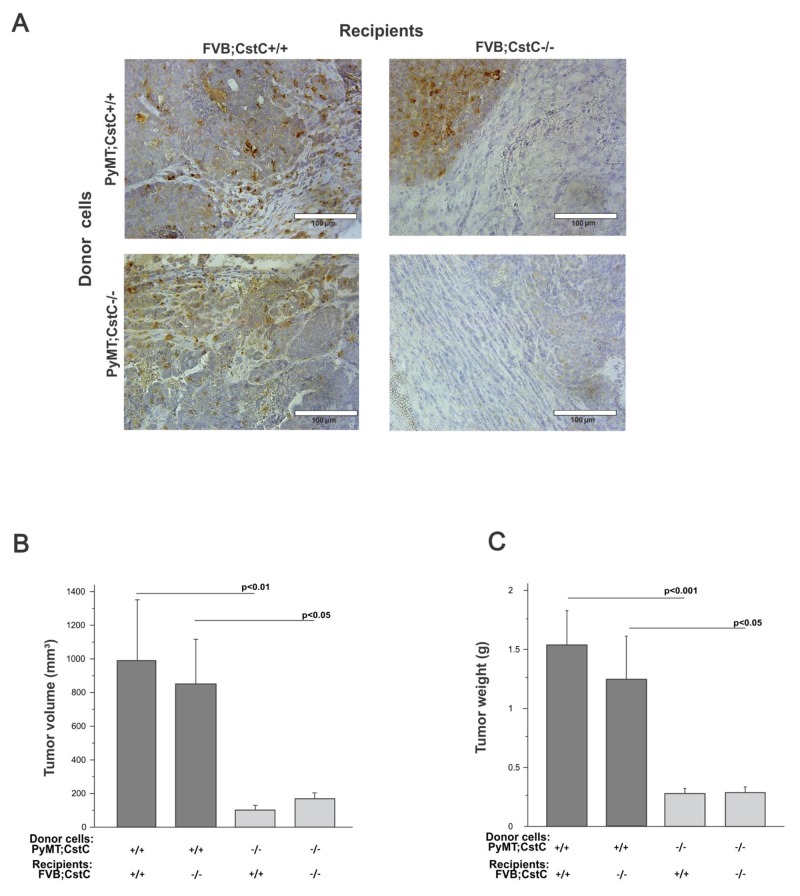
Cysteine cathepsins are proteases that, in addition to their important physiological functions, have been associated with multiple pathologies, including cancer. Cystatin C (CstC) is a major endogenous inhibitor that regulates the extracellular activity of cysteine cathepsins. We investigated the role of cystatin C in mammary cancer using CstC knockout mice and a mouse model of breast cancer induced by expression of the polyoma middle T oncoprotein (PyMT) in the mammary epithelium. We showed that the ablation of CstC reduced the rate of mammary tumor growth. Notably, a decrease in the proliferation of CstC knockout PyMT tumor cells was demonstrated and , indicating a role for this protease inhibitor in signaling pathways that control cell proliferation. An increase in phosphorylated p-38 was observed in CstC knockout tumors, suggesting a novel function for cystatin C in cancer development, independent of the TGF-β pathway. Moreover, proteomic analysis of the CstC wild-type and knockout PyMT primary cell secretomes revealed a decrease in the levels of 14-3-3 proteins in the secretome of knock-out cells, suggesting a novel link between cysteine cathepsins, cystatin C and 14-3-3 proteins in tumorigenesis, calling for further investigations.
半胱氨酸组织蛋白酶是一类蛋白酶,除了具有重要的生理功能外,还与多种病理状况相关,包括癌症。胱抑素C(CstC)是一种主要的内源性抑制剂,可调节半胱氨酸组织蛋白酶的细胞外活性。我们使用CstC基因敲除小鼠和通过在乳腺上皮中表达多瘤病毒中间T癌蛋白(PyMT)诱导的乳腺癌小鼠模型,研究了胱抑素C在乳腺癌中的作用。我们发现,CstC的缺失降低了乳腺肿瘤的生长速度。值得注意的是,已证实CstC基因敲除的PyMT肿瘤细胞增殖减少,这表明这种蛋白酶抑制剂在控制细胞增殖的信号通路中发挥作用。在CstC基因敲除的肿瘤中观察到磷酸化p-38增加,这表明胱抑素C在癌症发展中具有一种新功能,独立于TGF-β途径。此外,对CstC野生型和基因敲除的PyMT原代细胞分泌组的蛋白质组分析显示,基因敲除细胞分泌组中14-3-3蛋白水平降低,这表明半胱氨酸组织蛋白酶、胱抑素C和14-3-3蛋白在肿瘤发生过程中存在新的联系,需要进一步研究。