Li Dongbao, Wang Jun, Zhou Jian, Zhan Shenghua, Huang Yang, Wang Fei, Zhang Zixiang, Zhu Dongming, Zhao Hua, Li Dechun, Chen Gang, Zhu Xinguo, Zhao Xin
Department of General Surgery, The First Affiliated Hospital of Soochow University, Suzhou, China.
Pancreatic Disease Research Center, The First Affiliated Hospital of Soochow University, Suzhou, China.
Oncotarget. 2017 Aug 24;8(43):74856-74868. doi: 10.18632/oncotarget.20421. eCollection 2017 Sep 26.
This study aimed to investigate the role of B7-H3 in chemotherapy resistance of pancreatic cancer cells and discover the potential signal transduction pathway and molecular targets involved.
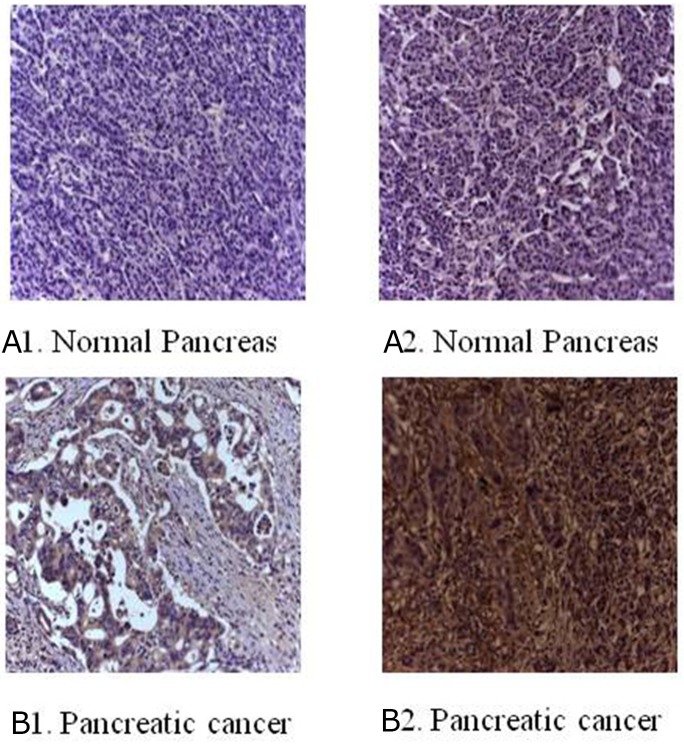
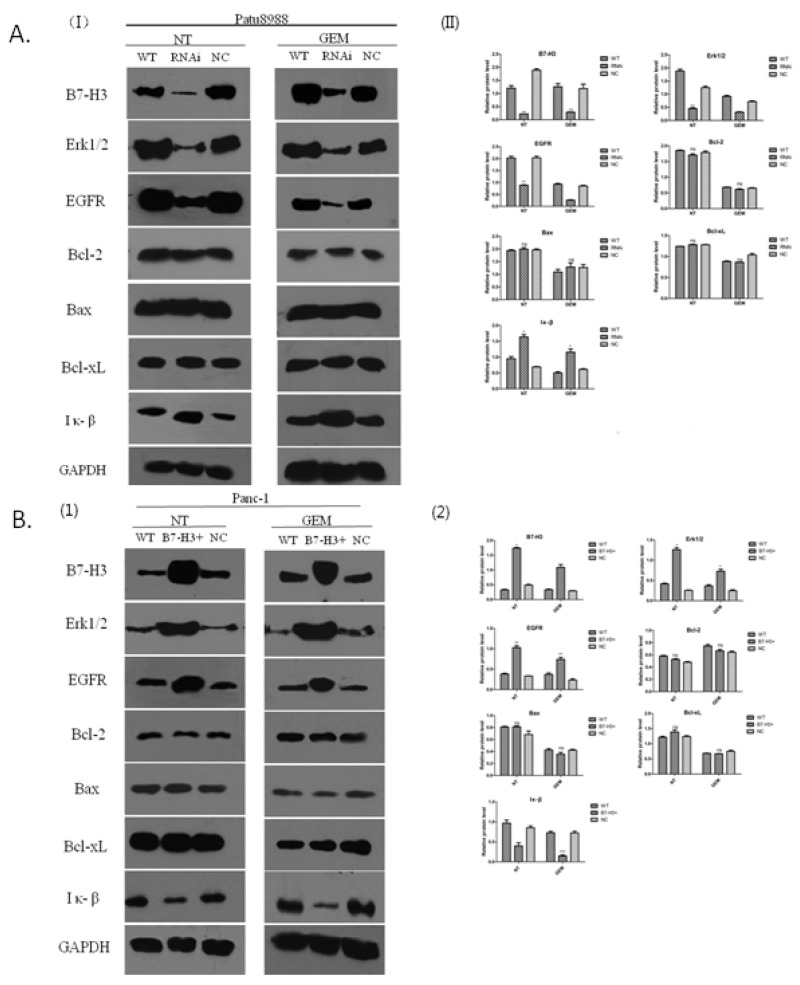
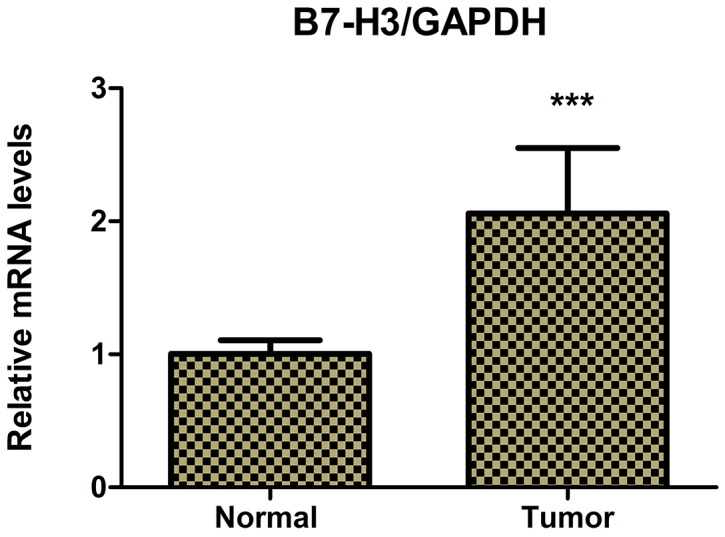
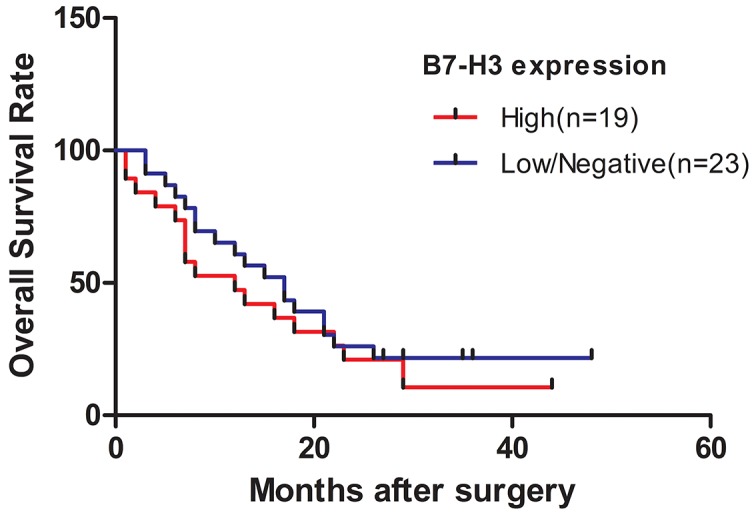
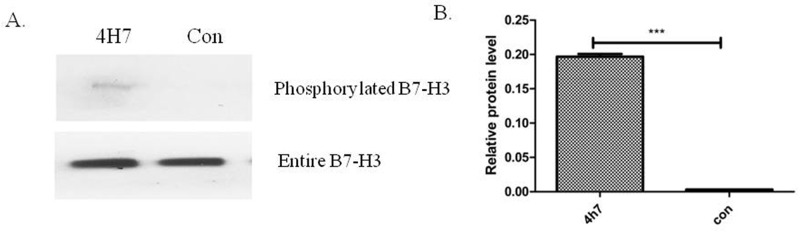
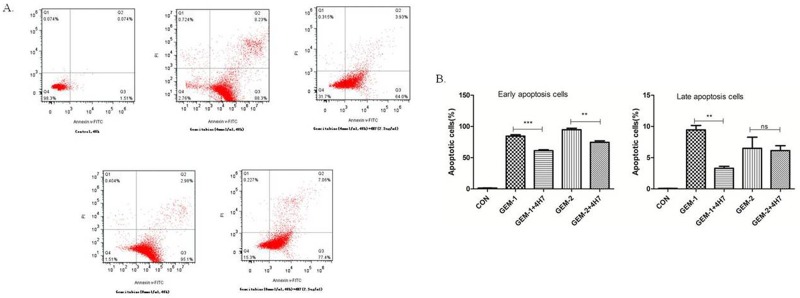
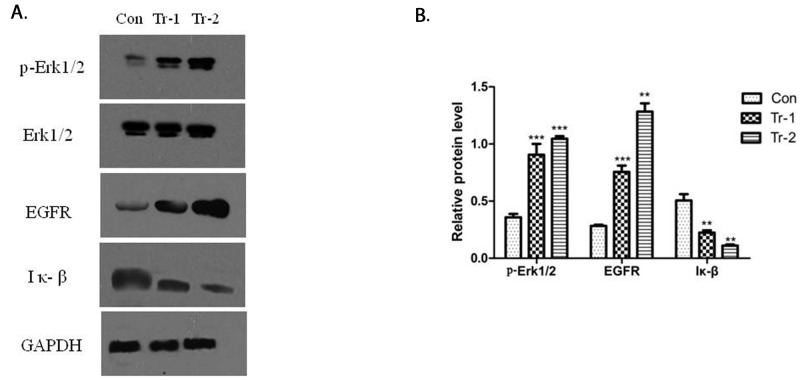
Immunohistochemical staining and real-time polymerase chain reaction (PCR) were used to determine the expression of B7-H3 in clinical specimens. Clinical data were applied to survival analysis. Phosphoprotein was purified from cultured Patu8988 cells using the Phosphoprotein Purification Kit. Cell apoptosis was detected using propidium iodide-Annexin V staining to investigate the relation between the expression of B7-H3 and Patu8988 cells treated with gemcitabine. Western blot was used to determine the effect of B7-H3 on the expression of proteins including extracellular signal-regulated kinase (ERK)1/2, epidermal growth factor receptor (EGFR), and Inhibitor of NF-κB(IκB) in Patu8988 cells; B7-H3 was activated by 4H7, which as an agonist monoclonal antibody to B7-H3.
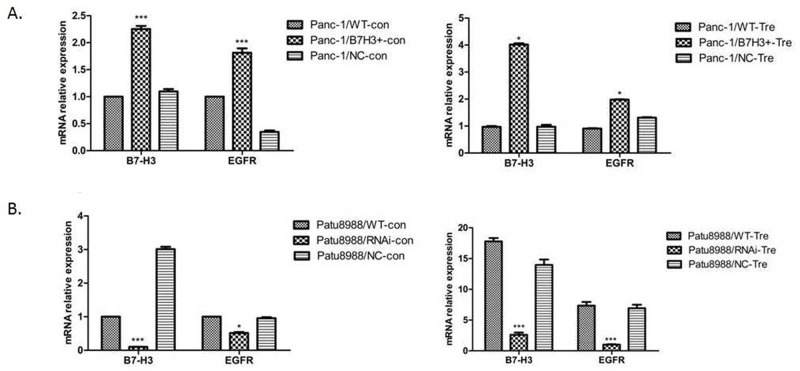
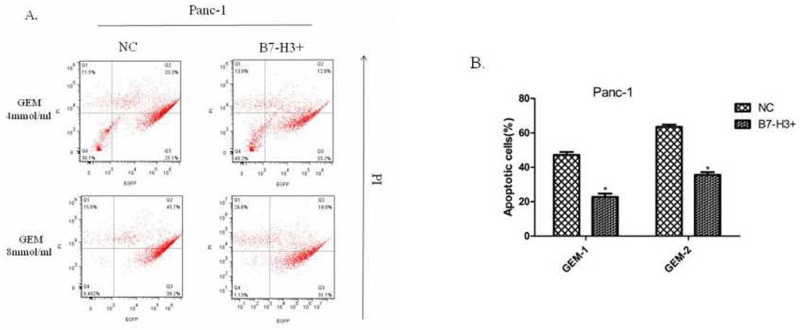
The expression of B7-H3 was found to be higher in tumor tissues than in normal tissues of pancreatic carcinoma. Survival analysis revealed that patients in the low-B7-H3 expression group were likely to have a longer overall survival compared with those in the high-expression group ( < 0.05). B7-H3 activated by 4H7 could reduce gemcitabine-induced apoptosis in Patu8988 cells. Activation of B7-H3 by 4H7 induced variations in p-ERK1/2, EGFR, and IκB protein levels. When B7-H3 was upregulated, the expression levels of EGFR and p-ERK1/2 proteins significantly increased ( < 0.05), but the expression level of IκB significantly decreased ( < 0.05), especially in the gemcitabine-treated group.
This study demonstrated that B7-H3 could deliver signals to pancreatic cancer cells to combat apoptosis induced by gemcitabine.
本研究旨在探讨B7-H3在胰腺癌细胞化疗耐药中的作用,并发现潜在的信号转导途径及相关分子靶点。
采用免疫组织化学染色和实时聚合酶链反应(PCR)检测临床标本中B7-H3的表达。应用临床数据进行生存分析。使用磷蛋白纯化试剂盒从培养的Patu8988细胞中纯化磷蛋白。采用碘化丙啶-膜联蛋白V染色检测细胞凋亡,以研究B7-H3表达与吉西他滨处理的Patu8988细胞之间的关系。使用蛋白质免疫印迹法确定B7-H3对Patu8988细胞中包括细胞外信号调节激酶(ERK)1/2、表皮生长因子受体(EGFR)和核因子κB抑制蛋白(IκB)等蛋白质表达的影响;4H7作为B7-H3的激动剂单克隆抗体,用于激活B7-H3。
发现胰腺癌肿瘤组织中B7-H3的表达高于正常组织。生存分析显示,低B7-H3表达组患者的总生存期可能比高表达组患者更长(P<0.05)。4H7激活的B7-H3可减少吉西他滨诱导的Patu8988细胞凋亡。4H7激活B7-H3可诱导p-ERK1/2、EGFR和IκB蛋白水平发生变化。当B7-H3上调时,EGFR和p-ERK1/2蛋白的表达水平显著升高(P<0.05),但IκB的表达水平显著降低(P<0.05),尤其是在吉西他滨处理组中。
本研究表明,B7-H3可向胰腺癌细胞传递信号,以对抗吉西他滨诱导的细胞凋亡。