Aliberti A, Ricciardi A, Giaquinto M, Micco A, Bobeico E, La Ferrara V, Ruvo M, Cutolo A, Cusano A
Optoelectronics Group, Department of Engineering, University of Sannio, I-82100, Benevento, Italy.
ENEA, Portici Research Center, P.le E. Fermi 1, I-80055 Portici, Napoli, Italy.
Sci Rep. 2017 Oct 31;7(1):14459. doi: 10.1038/s41598-017-14852-5.
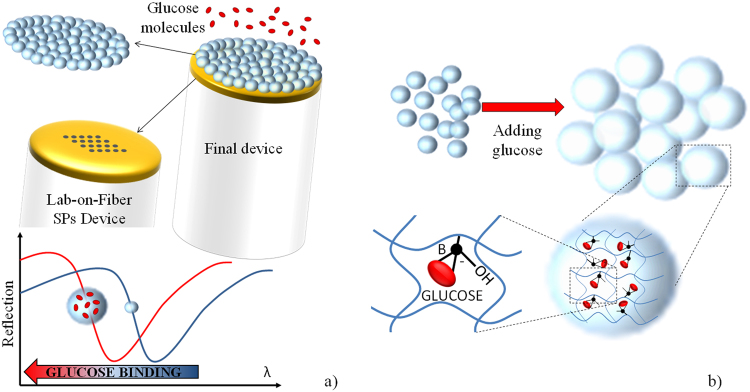
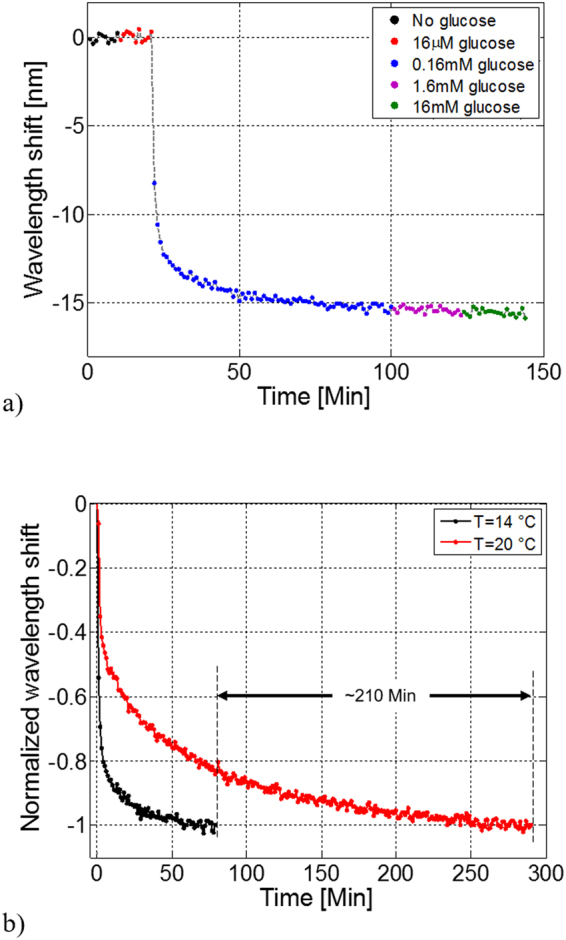
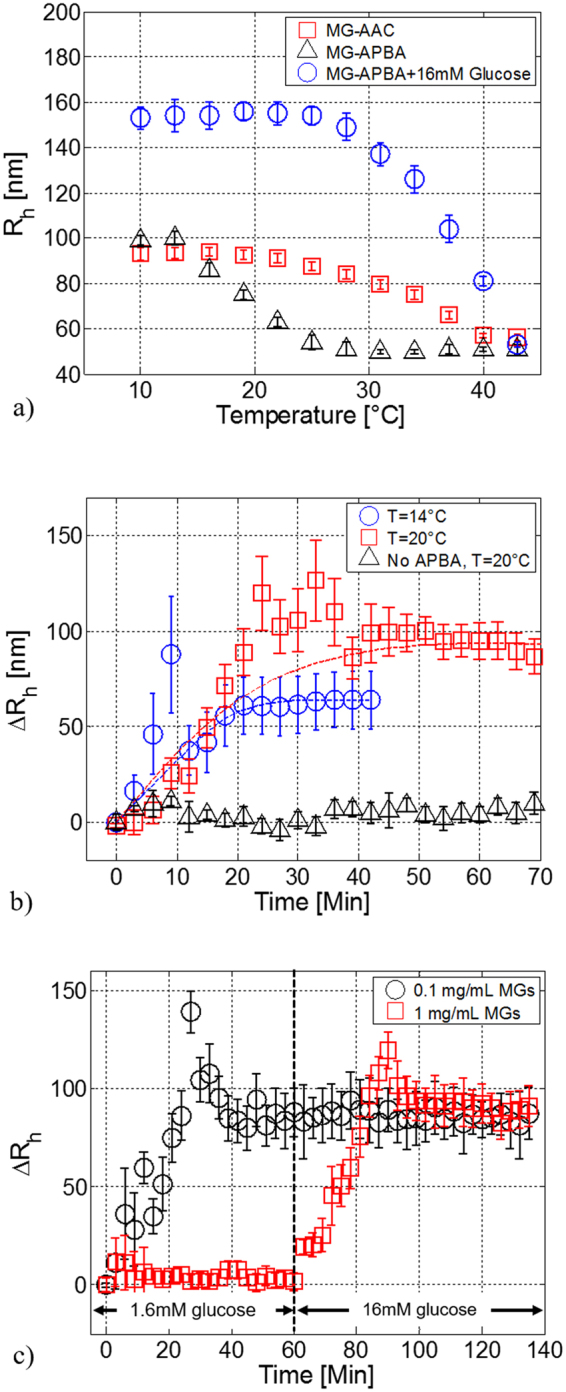
Precision medicine is continuously demanding for novel point of care systems, potentially exploitable also for in-vivo analysis. Biosensing probes based on Lab-On-Fiber Technology have been recently developed to meet these challenges. However, devices exploiting standard label-free approaches (based on ligand/target molecule interaction) suffer from low sensitivity in all cases where the detection of small molecules at low concentrations is needed. Here we report on a platform developed through the combination of Lab-On-Fiber probes with microgels, which are directly integrated onto the resonant plasmonic nanostructure realized on the fiber tip. In response to binding events, the microgel network concentrates the target molecule and amplifies the optical response, leading to remarkable sensitivity enhancement. Moreover, by acting on the microgel degrees of freedom such as concentration and operating temperature, it is possible to control the limit of detection, tune the working range as well as the response time of the probe. These unique characteristics pave the way for advanced label-free biosensing platforms, suitably reconfigurable depending on the specific application.
精准医学对新型即时检测系统的需求不断增加,这些系统也可能用于体内分析。基于光纤上实验室技术的生物传感探针最近已被开发出来以应对这些挑战。然而,利用标准无标记方法(基于配体/靶分子相互作用)的设备在所有需要检测低浓度小分子的情况下都存在灵敏度低的问题。在此,我们报告一种通过将光纤上实验室探针与微凝胶相结合而开发的平台,微凝胶直接集成到在光纤尖端实现的共振等离子体纳米结构上。响应于结合事件,微凝胶网络浓缩靶分子并放大光学响应,从而显著提高灵敏度。此外,通过控制微凝胶的自由度,如浓度和工作温度,可以控制检测限,调整工作范围以及探针的响应时间。这些独特的特性为先进的无标记生物传感平台铺平了道路,该平台可根据具体应用进行适当的重新配置。