Ota Kazuhiro, Takeuchi Toshihisa, Kodama Kouki, Ozaki Haruhiko, Harada Satoshi, Kojima Yuichi, Nouda Sadaharu, Goto Masahiro, Higuchi Kazuhide
Second Department of Internal Medicine, Osaka Medical College, Japan.
Department of Gastroenterology, Midorigaoka Hospital, Japan.
Intern Med. 2018 Feb 1;57(3):343-344. doi: 10.2169/internalmedicine.9519-17. Epub 2017 Nov 1.
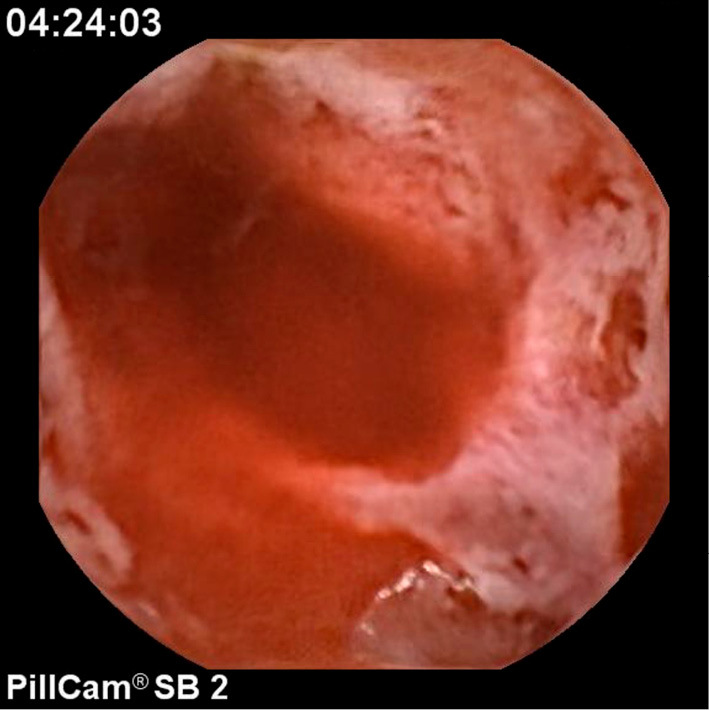
Although S-1 chemotherapy is used widely as postoperative adjuvant chemotherapy for gastric cancer, some patients experience diarrhea during treatment. The patient was a 39-year-old woman who underwent distal gastrectomy for gastric cancer and who had started S-1 chemotherapy as postoperative adjuvant chemotherapy 1 week before her presentation. She experienced severe diarrhea immediately after starting the course of S-1 tablets. Capsule endoscopy revealed severe S-1-induced enteritis with extensive mucosal injury in the ileum and red intestinal fluid due to the oozing of blood in the ileum. After reducing the dosage of S-1, her diarrhea became milder, and she was able to continue S-1 chemotherapy.
尽管S-1化疗作为胃癌术后辅助化疗被广泛应用,但一些患者在治疗期间会出现腹泻。该患者为一名39岁女性,因胃癌接受了远端胃切除术,并在就诊前1周开始接受S-1化疗作为术后辅助化疗。她在开始服用S-1片剂疗程后立即出现严重腹泻。胶囊内镜检查显示严重的S-1诱导性肠炎,回肠黏膜广泛损伤,且因回肠出血渗出导致肠液呈红色。减少S-1剂量后,她的腹泻症状有所减轻,并能够继续接受S-1化疗。