Kirker Grant T, Bishell Amy B, Jusino Michelle A, Palmer Jonathan M, Hickey William J, Lindner Daniel L
FPL, United States Department of Agriculture-Forest Service (USDA-FS), Durability and Wood Protection, Madison, WI, United States.
NRS, United States Department of Agriculture-Forest Service (USDA-FS), Center for Forest Mycology Research, Madison, WI, United States.
Front Microbiol. 2017 Oct 18;8:1997. doi: 10.3389/fmicb.2017.01997. eCollection 2017.
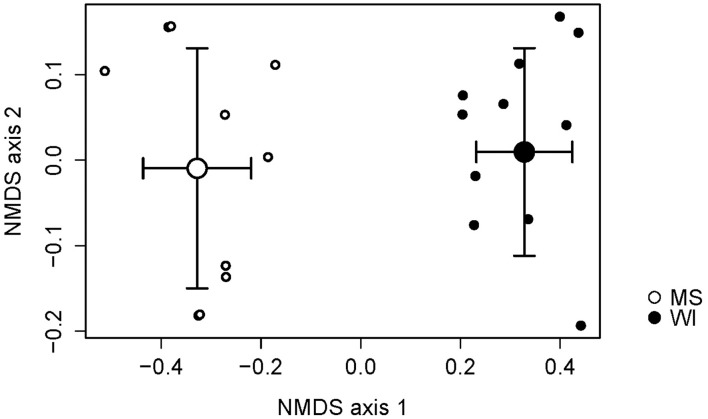
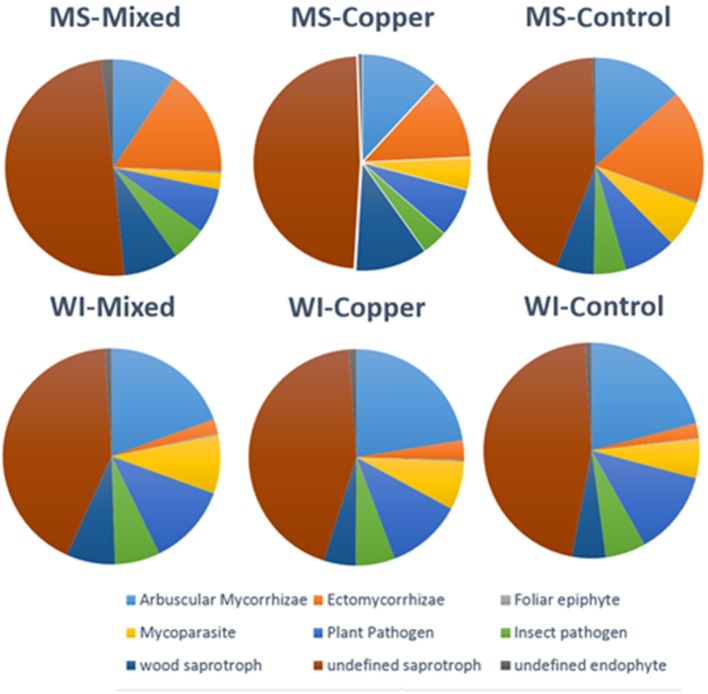
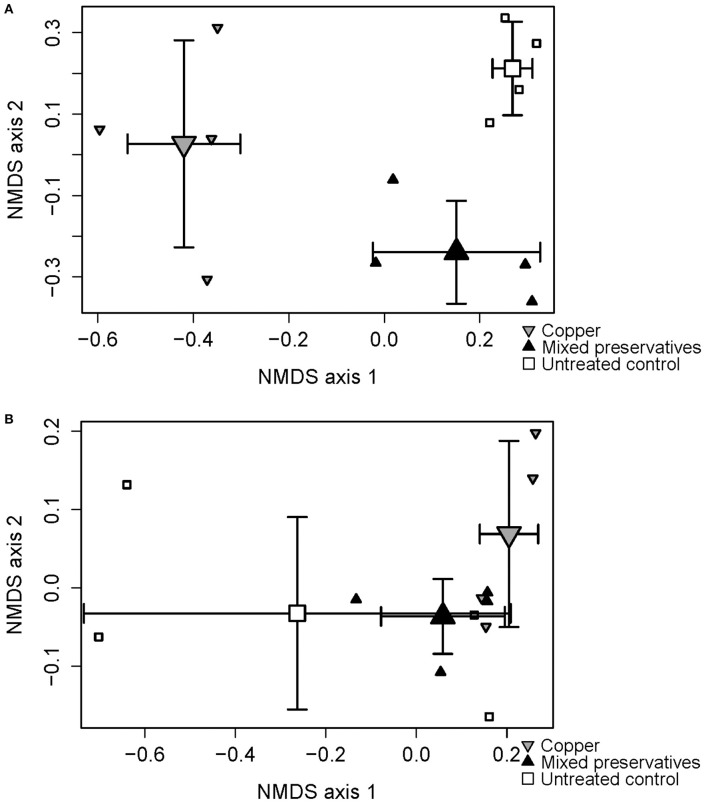
Soil samples were collected from field sites in two AWPA (American Wood Protection Association) wood decay hazard zones in North America. Two field plots at each site were exposed to differing preservative chemistries via in-ground installations of treated wood stakes for approximately 50 years. The purpose of this study is to characterize soil fungal species and to determine if long term exposure to various wood preservatives impacts soil fungal community composition. Soil fungal communities were compared using amplicon-based DNA sequencing of the internal transcribed spacer 1 (ITS1) region of the rDNA array. Data show that soil fungal community composition differs significantly between the two sites and that long-term exposure to different preservative chemistries is correlated with different species composition of soil fungi. However, chemical analyses using ICP-OES found levels of select residual preservative actives (copper, chromium and arsenic) to be similar to naturally occurring levels in unexposed areas. A list of indicator species was compiled for each treatment-site combination; functional guild analyses indicate that long-term exposure to wood preservatives may have both detrimental and stimulatory effects on soil fungal species composition. Fungi with demonstrated capacity to degrade industrial pollutants were found to be highly correlated with areas that experienced long-term exposure to preservative testing.
土壤样本采自北美两个美国木材保护协会(AWPA)木材腐朽危险区域的田间地点。每个地点的两个田间地块通过在地下埋设经处理的木桩,使其暴露于不同的防腐剂化学物质中约50年。本研究的目的是鉴定土壤真菌物种,并确定长期接触各种木材防腐剂是否会影响土壤真菌群落组成。使用基于扩增子的核糖体DNA阵列内部转录间隔区1(ITS1)区域的DNA测序对土壤真菌群落进行比较。数据表明,两个地点的土壤真菌群落组成存在显著差异,长期接触不同的防腐剂化学物质与土壤真菌的不同物种组成相关。然而,使用电感耦合等离子体发射光谱法(ICP-OES)进行的化学分析发现,选定的残留防腐剂活性成分(铜、铬和砷)的含量与未暴露区域的天然含量相似。为每个处理地点组合编制了一份指示物种清单;功能类群分析表明,长期接触木材防腐剂可能对土壤真菌物种组成产生有害和刺激作用。已发现具有降解工业污染物能力的真菌与长期进行防腐剂测试的区域高度相关。