Diallo Alpha Oumar, Soeters Heidi M, Yameogo Issaka, Sawadogo Guetawendé, Aké Flavien, Lingani Clément, Wang Xin, Bita Andre, Fall Amadou, Sangaré Lassana, Ouédraogo-Traoré Rasmata, Medah Isaïe, Bicaba Brice, Novak Ryan T
National Center for Immunization and Respiratory Diseases, Centers for Disease Control and Prevention, Atlanta, Georgia, United States of America.
Epidemic Intelligence Service, Centers for Disease Control and Prevention, Atlanta, Georgia, United States of America.
PLoS One. 2017 Nov 2;12(11):e0187466. doi: 10.1371/journal.pone.0187466. eCollection 2017.
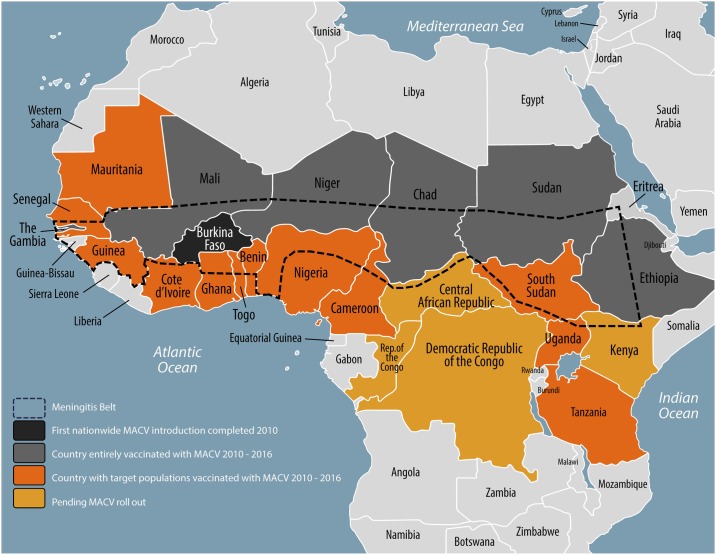
Historically, Neisseria meningitidis serogroup A (NmA) caused large meningitis epidemics in sub-Saharan Africa. In 2010, Burkina Faso became the first country to implement a national meningococcal serogroup A conjugate vaccine (MACV) campaign. We analyzed nationwide meningitis surveillance data from Burkina Faso for the 5 years following MACV introduction.
We examined Burkina Faso's aggregate reporting and national laboratory-confirmed case-based meningitis surveillance data from 2011-2015. We calculated incidence (cases per 100,000 persons), and described reported NmA cases.
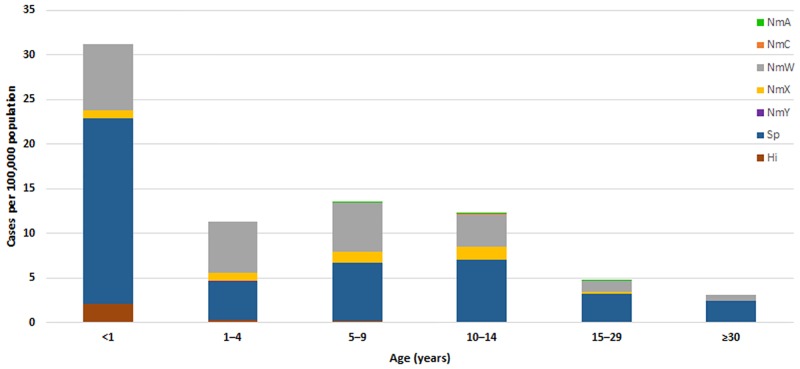
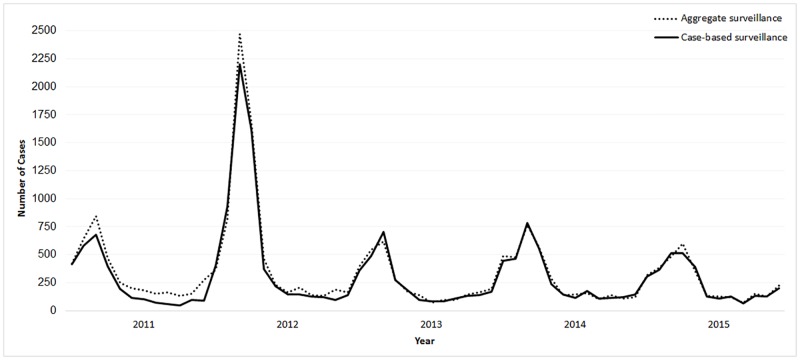
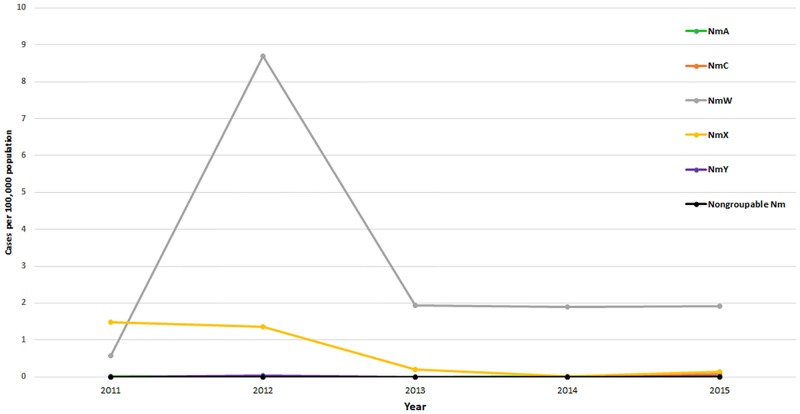
In 2011-2015, Burkina Faso reported 20,389 cases of suspected meningitis. A quarter (4,503) of suspected meningitis cases with cerebrospinal fluid specimens were laboratory-confirmed as either S. pneumoniae (57%), N. meningitidis (40%), or H. influenzae (2%). Average adjusted annual national incidence of meningococcal meningitis was 3.8 (range: 2.0-10.2 annually) and was highest among infants aged <1 year (8.4). N. meningitidis serogroup W caused the majority (64%) of meningococcal meningitis among all age groups. Only six confirmed NmA cases were reported in 2011-2015. Five cases were in children who were too young (n = 2) or otherwise not vaccinated (n = 3) during the 2010 MACV mass vaccination campaign; one case had documented MACV receipt, representing the first documented MACV failure.
Meningococcal meningitis incidence in Burkina Faso remains relatively low following MACV introduction. However, a substantial burden remains and NmA transmission has persisted. MACV integration into routine childhood immunization programs is essential to ensure continued protection.
历史上,A群脑膜炎奈瑟菌(NmA)在撒哈拉以南非洲引发了大规模脑膜炎流行。2010年,布基纳法索成为首个开展国家A群脑膜炎球菌结合疫苗(MACV)接种运动的国家。我们分析了布基纳法索在引入MACV后的5年全国脑膜炎监测数据。
我们研究了布基纳法索2011 - 2015年的汇总报告以及基于全国实验室确诊病例的脑膜炎监测数据。我们计算了发病率(每10万人中的病例数),并描述了报告的NmA病例。
2011 - 2015年,布基纳法索报告了20389例疑似脑膜炎病例。四分之一(4503例)有脑脊液标本的疑似脑膜炎病例经实验室确认为肺炎链球菌(57%)、脑膜炎奈瑟菌(40%)或流感嗜血杆菌(2%)。脑膜炎球菌性脑膜炎的平均调整后年发病率为3.8(范围:每年2.0 - 10.2),在1岁以下婴儿中最高(8.4)。W群脑膜炎奈瑟菌在所有年龄组的脑膜炎球菌性脑膜炎病例中占多数(64%)。2011 - 2015年仅报告了6例确诊的NmA病例。5例是在2010年MACV大规模接种运动期间年龄太小(2例)或未接种疫苗(3例)的儿童;1例有接种MACV的记录,这是首次记录的MACV接种失败病例。
引入MACV后,布基纳法索的脑膜炎球菌性脑膜炎发病率仍然相对较低。然而,负担仍然很大,NmA传播持续存在。将MACV纳入常规儿童免疫规划对于确保持续保护至关重要。