Alvarez-Zúñiga María Teresa, Santiago-Hernández Alejandro, Rodríguez-Mendoza Johan, Campos Jorge E, Pavón-Orozco Patricia, Trejo-Estrada Sergio, Hidalgo-Lara María Eugenia
Departamento de Biotecnología y Bioingeniería, CINVESTAV-IPN, Av. Instituto Politécnico Nacional No. 2508, 07360, Mexico City, Mexico.
Laboratorio de Bioquímica Molecular UBIPRO., FES Iztacala, UNAMAv., de los Barrios No. 1, Los Reyes Iztacala, 54090, Tlanepantla, Estado de Mexico, Mexico.
AMB Express. 2017 Nov 2;7(1):194. doi: 10.1186/s13568-017-0494-y.
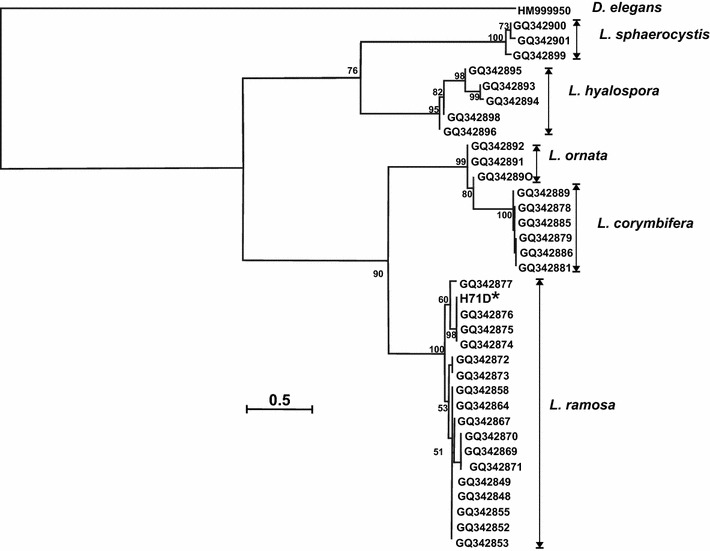
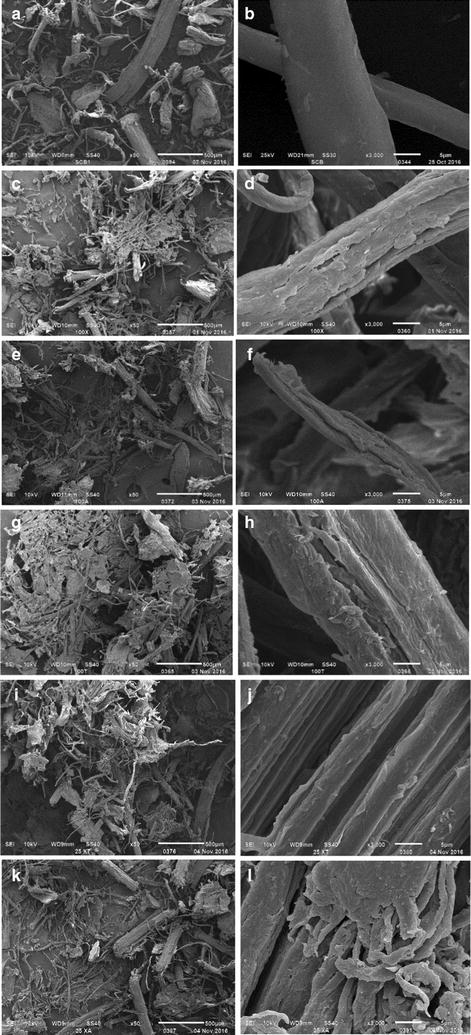
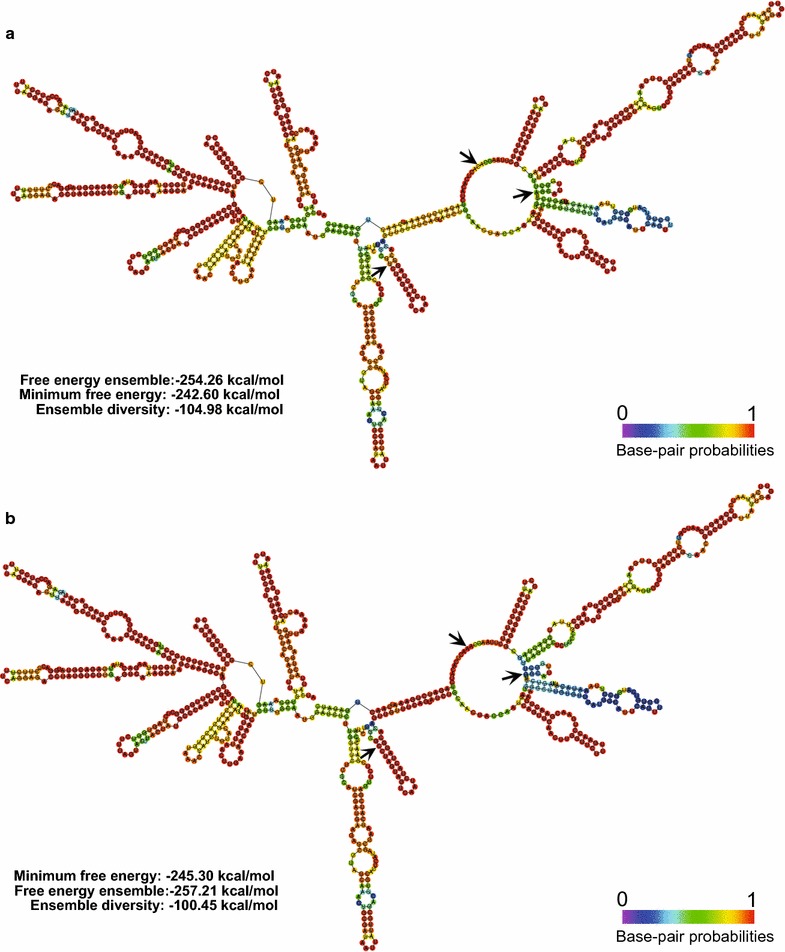
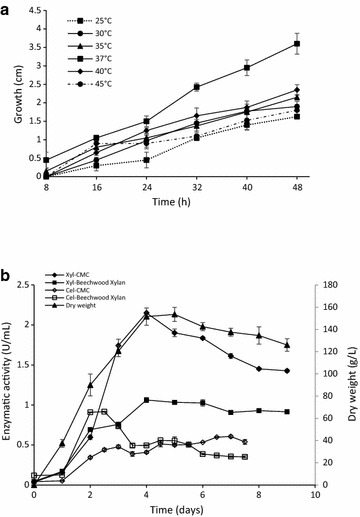
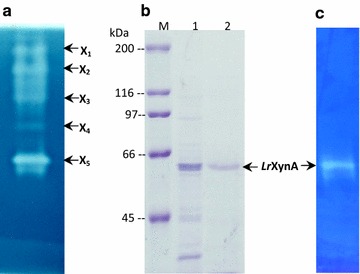
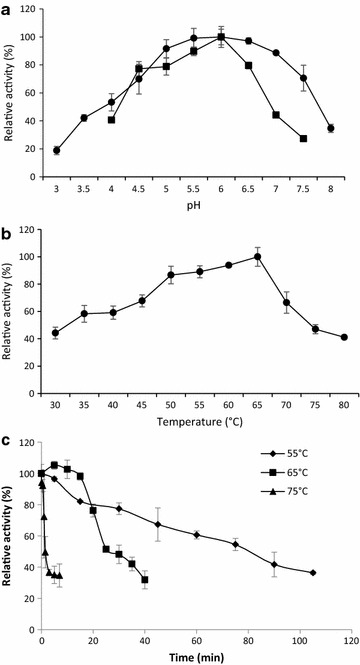
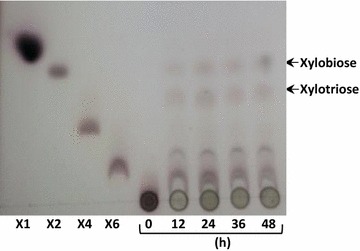
The zygomycete fungus Lichtheimia ramosa H71D, isolated from sugarcane bagasse compost, was identified by applying phylogenetic analysis based on the DNA sequence of the Internal Transcribed Spacer (ITS), and subsequent secondary structure analysis of ITS2. L. ramosa H71D was able to grow over a wide range of temperatures (25-45 °C), manifesting optimal growth at 37 °C. A 64 kDa xylanase (named LrXynA) was purified from the culture supernatant of L. ramosa H71D grown on 2% carboxymethylcellulose (CMC), as the only carbon source. LrXynA displayed optimal activity at pH 6 and temperature of 65 °C. The enzyme retained more than 50% of its maximal activity over a broad range of pH values (4.5-7.5). Enzyme half-life (t) times at 55, 65 and 75 °C were 80, 25, and 8 min, respectively. LrXynA showed higher affinity (k of 2.87 mg/mL) and catalytic efficiency (k /k of 0.651 mg s/mL) towards Beechwood xylan in comparison to other substrates such as Birchwood xylan, Oat-spelt xylan, CMC, Avicel and Solka floc. The predominant final products from LrXynA-mediated hydrolysis of Beechwood xylan were xylobiose and xylotriose, suggesting that the enzyme is an endo-β-1,4 xylanase. Scanning electron microscopy (SEM) imaging of sugar cane bagasse (SCB) treated with LrXynA, alone or in combination with commercial cellulases, showed a positive effect on the hydrolysis of SCB. To our knowledge, this is the first report focusing on the biochemical and functional characterization of an endo-β-1,4 xylanase from the thermotolerant and fast-growing fungus Lichtheimia ramosa.
从甘蔗渣堆肥中分离出的接合菌纲真菌分枝状 Lichtheimia ramosa H71D,通过基于内部转录间隔区(ITS)DNA 序列的系统发育分析以及随后的 ITS2 二级结构分析进行鉴定。分枝状 Lichtheimia ramosa H71D 能够在较宽的温度范围内(25 - 45°C)生长,在 37°C 时表现出最佳生长状态。从以 2%羧甲基纤维素(CMC)作为唯一碳源培养的分枝状 Lichtheimia ramosa H71D 的培养上清液中纯化出一种 64 kDa 的木聚糖酶(命名为 LrXynA)。LrXynA 在 pH 6 和 65°C 的温度下表现出最佳活性。该酶在较宽的 pH 值范围(4.5 - 7.5)内保留了超过 50%的最大活性。在 55、65 和 75°C 时,酶的半衰期(t)分别为 80、25 和 8 分钟。与其他底物如桦木木聚糖、燕麦 - 斯佩尔特木聚糖、CMC、微晶纤维素和脱脂棉相比,LrXynA 对山毛榉木木聚糖表现出更高的亲和力(k 为 2.87 mg/mL)和催化效率(k /k 为 0.651 mg·s/mL)。LrXynA 介导的山毛榉木木聚糖水解的主要终产物是木二糖和木三糖,表明该酶是一种内切 -β-1,4 木聚糖酶。单独或与商业纤维素酶联合使用 LrXynA 处理甘蔗渣(SCB)的扫描电子显微镜(SEM)成像显示,其对 SCB 的水解有积极作用。据我们所知,这是第一份聚焦于耐热且生长迅速的真菌分枝状 Lichtheimia ramosa 内切 -β-1,4 木聚糖酶的生化和功能特性的报告。