Tarbet Heather J, Toleman Clifford A, Boyce Michael
Department of Biochemistry, Duke University School of Medicine , Durham, North Carolina 27710, United States.
Biochemistry. 2018 Jan 9;57(1):13-21. doi: 10.1021/acs.biochem.7b00871. Epub 2017 Nov 20.
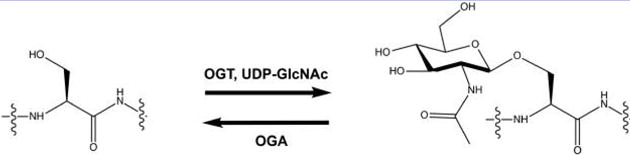
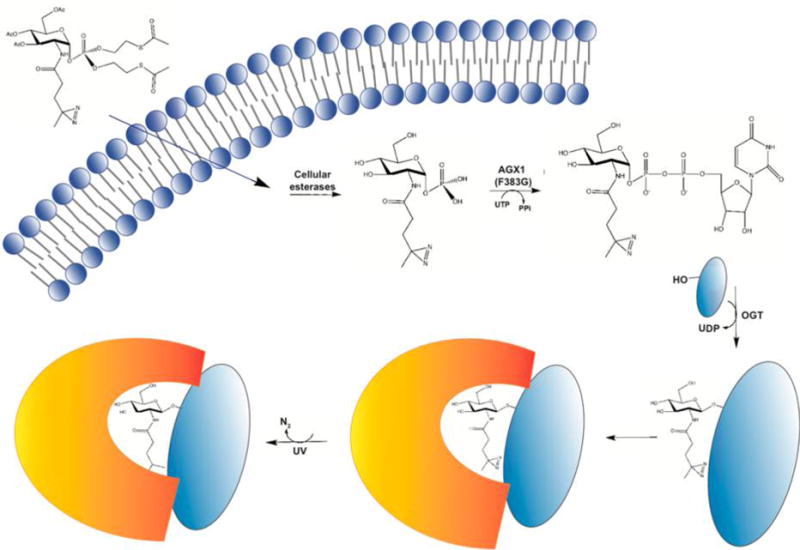
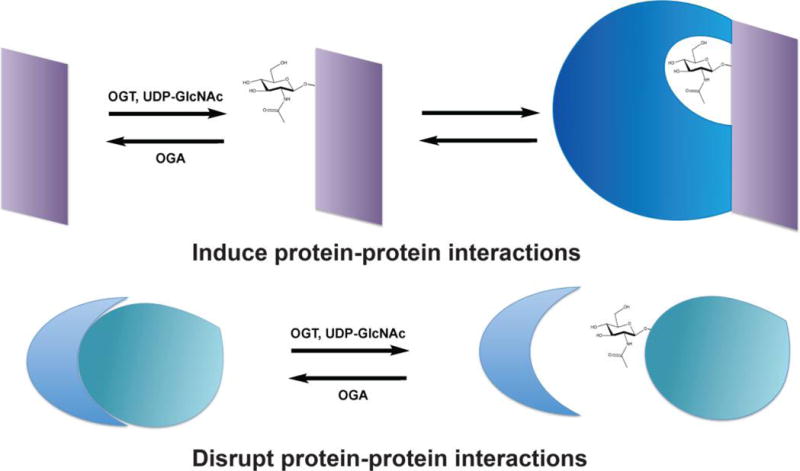
O-Linked β-N-acetylglucosamine (O-GlcNAc) is a critical post-translational modification (PTM) of thousands of intracellular proteins. Reversible O-GlcNAcylation governs many aspects of cell physiology and is dysregulated in numerous human diseases. Despite this broad pathophysiological significance, major aspects of O-GlcNAc signaling remain poorly understood, including the biochemical mechanisms through which O-GlcNAc transduces information. Recent work from many laboratories, including our own, has revealed that O-GlcNAc, like other intracellular PTMs, can control its substrates' functions by inhibiting or inducing protein-protein interactions. This dynamic regulation of multiprotein complexes exerts diverse downstream signaling effects in a range of processes, cell types, and organisms. Here, we review the literature about O-GlcNAc-regulated protein-protein interactions and suggest important questions for future studies in the field.
O-连接的β-N-乙酰葡糖胺(O-GlcNAc)是数千种细胞内蛋白质的关键翻译后修饰(PTM)。可逆的O-GlcNAc糖基化作用调控着细胞生理学的许多方面,并且在众多人类疾病中失调。尽管具有广泛的病理生理意义,但O-GlcNAc信号传导的主要方面仍知之甚少,包括O-GlcNAc转导信息的生化机制。包括我们自己实验室在内的许多实验室最近的研究表明,O-GlcNAc与其他细胞内PTM一样,可以通过抑制或诱导蛋白质-蛋白质相互作用来控制其底物的功能。这种对多蛋白复合物的动态调节在一系列过程、细胞类型和生物体中发挥着多种下游信号作用。在这里,我们综述了有关O-GlcNAc调节的蛋白质-蛋白质相互作用的文献,并提出了该领域未来研究的重要问题。