Kim Yun Hak, Jeong Dae Cheon, Pak Kyoungjune, Goh Tae Sik, Lee Chi-Seung, Han Myoung-Eun, Kim Ji-Young, Liangwen Liu, Kim Chi Dae, Jang Jeon Yeob, Cha Wonjae, Oh Sae-Ock
Department of Anatomy, School of medicine, Pusan National University, Yangsan, 50612, Republic of Korea.
BEER, Busan society of Evidence-based mEdicine and Research, Busan 49241, Republic of Korea.
Oncotarget. 2017 Aug 24;8(44):77515-77526. doi: 10.18632/oncotarget.20548. eCollection 2017 Sep 29.
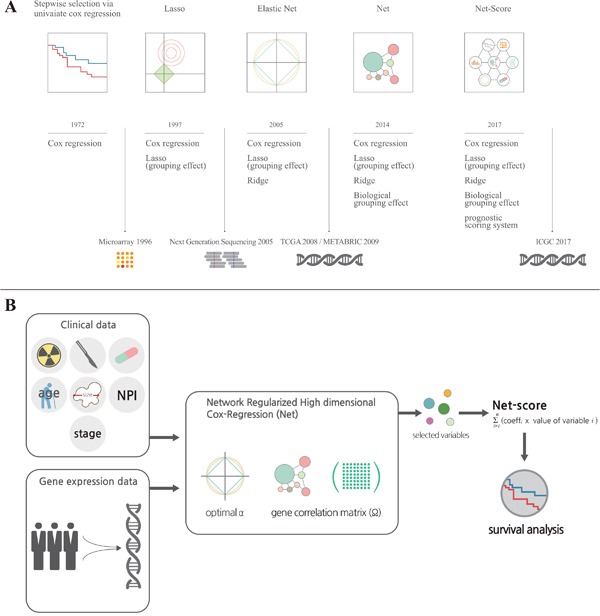
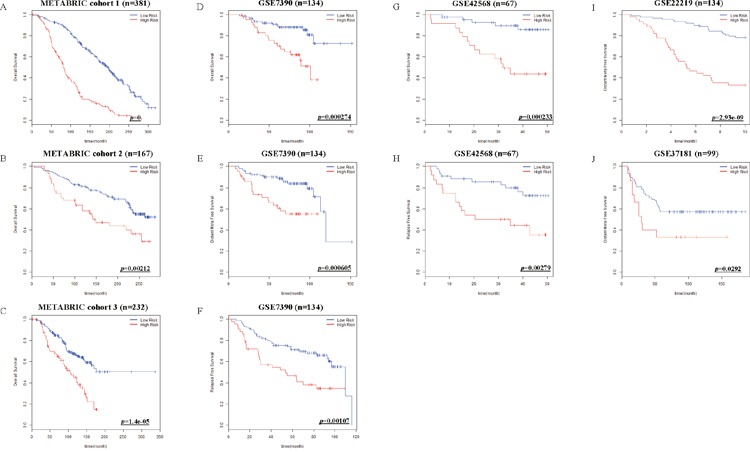
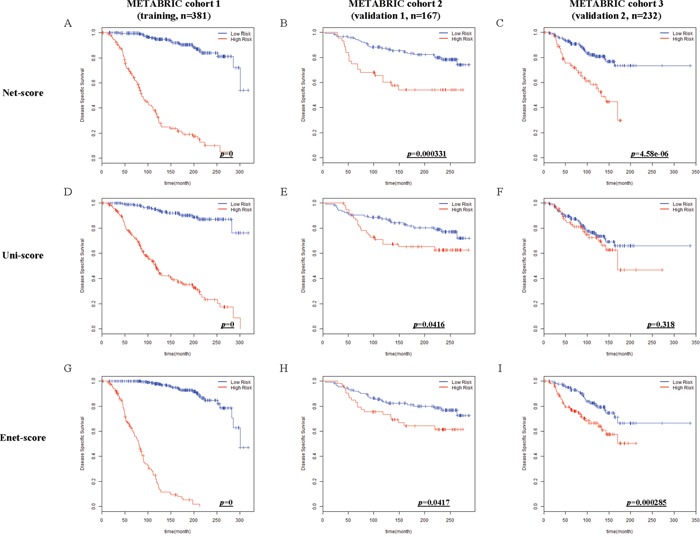
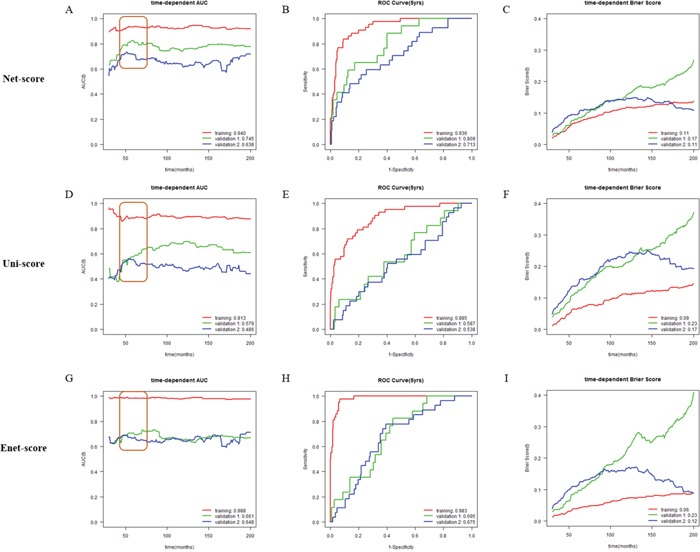
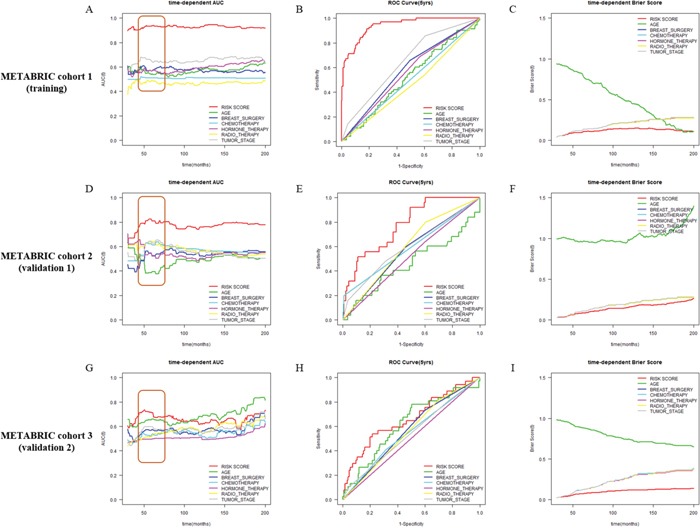
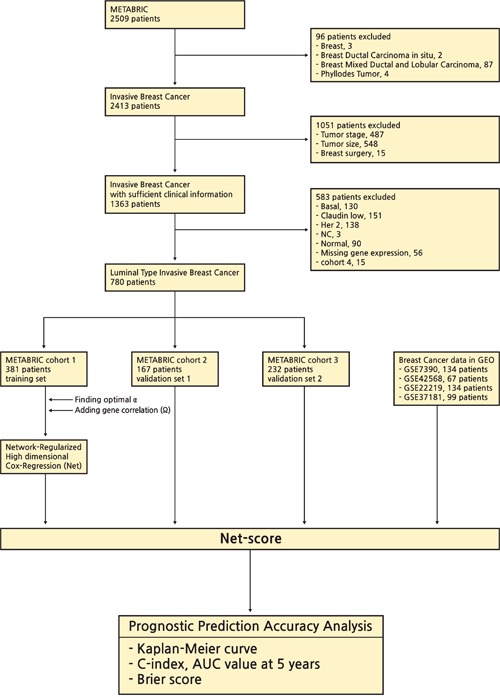
Accurate prediction of prognosis is critical for therapeutic decisions regarding cancer patients. Many previously developed prognostic scoring systems have limitations in reflecting recent progress in the field of cancer biology such as microarray, next-generation sequencing, and signaling pathways. To develop a new prognostic scoring system for cancer patients, we used mRNA expression and clinical data in various independent breast cancer cohorts (n=1214) from the Molecular Taxonomy of Breast Cancer International Consortium (METABRIC) and Gene Expression Omnibus (GEO). A new prognostic score that reflects gene network inherent in genomic big data was calculated using Network-Regularized high-dimensional Cox-regression (Net-score). We compared its discriminatory power with those of two previously used statistical methods: stepwise variable selection via univariate Cox regression (Uni-score) and Cox regression via Elastic net (Enet-score). The Net scoring system showed better discriminatory power in prediction of disease-specific survival (DSS) than other statistical methods (p=0 in METABRIC training cohort, p=0.000331, 4.58e-06 in two METABRIC validation cohorts) when accuracy was examined by log-rank test. Notably, comparison of C-index and AUC values in receiver operating characteristic analysis at 5 years showed fewer differences between training and validation cohorts with the Net scoring system than other statistical methods, suggesting minimal overfitting. The Net-based scoring system also successfully predicted prognosis in various independent GEO cohorts with high discriminatory power. In conclusion, the Net-based scoring system showed better discriminative power than previous statistical methods in prognostic prediction for breast cancer patients. This new system will mark a new era in prognosis prediction for cancer patients.
准确预测预后对于癌症患者的治疗决策至关重要。许多先前开发的预后评分系统在反映癌症生物学领域的最新进展方面存在局限性,如微阵列、下一代测序和信号通路。为了开发一种新的癌症患者预后评分系统,我们使用了来自国际乳腺癌分子分类联盟(METABRIC)和基因表达综合数据库(GEO)的各种独立乳腺癌队列(n = 1214)中的mRNA表达和临床数据。使用网络正则化高维Cox回归(Net评分)计算了一个反映基因组大数据中固有基因网络的新预后评分。我们将其判别能力与之前使用的两种统计方法进行了比较:通过单变量Cox回归的逐步变量选择(Uni评分)和通过弹性网络的Cox回归(Enet评分)。当通过对数秩检验检查准确性时,Net评分系统在预测疾病特异性生存(DSS)方面比其他统计方法具有更好的判别能力(在METABRIC训练队列中p = 0,在两个METABRIC验证队列中p = 0.000331,4.58e - 06)。值得注意的是,在5年的受试者工作特征分析中,Net评分系统的C指数和AUC值在训练队列和验证队列之间的差异比其他统计方法少,表明过拟合最小。基于Net的评分系统还成功地在各种具有高判别能力的独立GEO队列中预测了预后。总之,基于Net的评分系统在乳腺癌患者的预后预测中比以前的统计方法具有更好的判别能力。这个新系统将开创癌症患者预后预测的新纪元。