Klausz Katja, Cieker Michael, Kellner Christian, Oberg Hans-Heinrich, Kabelitz Dieter, Valerius Thomas, Burger Renate, Gramatzki Martin, Peipp Matthias
Division of Stem Cell Transplantation and Immunotherapy, Department of Medicine II, University Hospital Schleswig-Holstein and Christian-Albrechts-University Kiel, Kiel, Germany.
Institute of Immunology, University Hospital Schleswig-Holstein and Christian-Albrechts-University Kiel, Kiel, Germany.
Oncotarget. 2017 Sep 5;8(44):77552-77566. doi: 10.18632/oncotarget.20641. eCollection 2017 Sep 29.
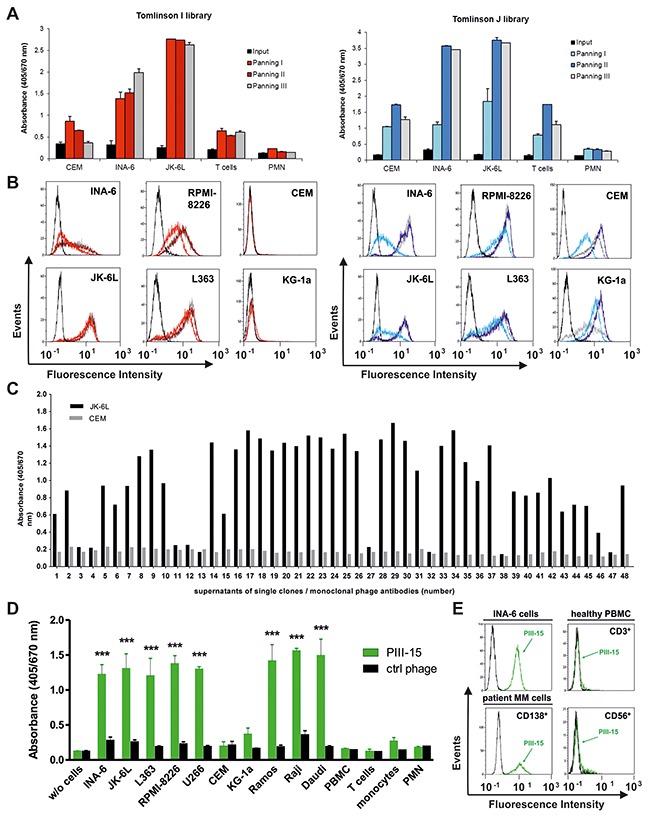
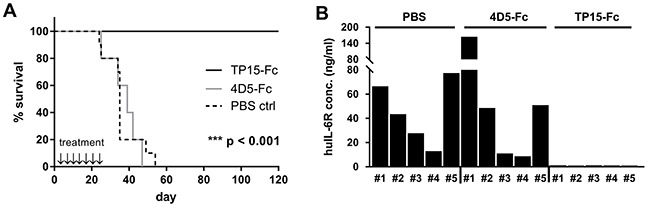
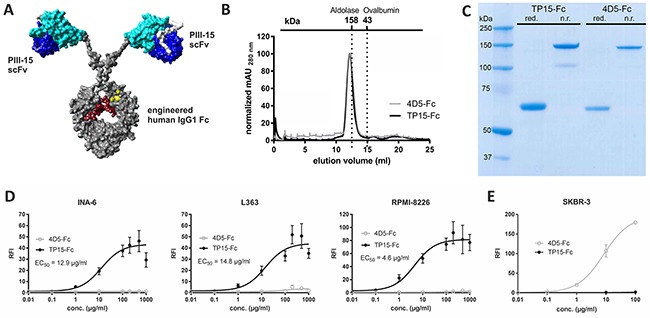
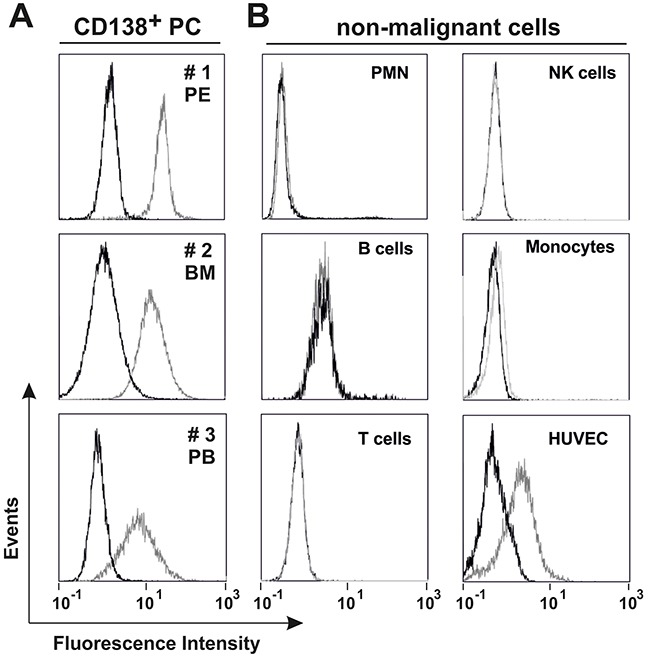
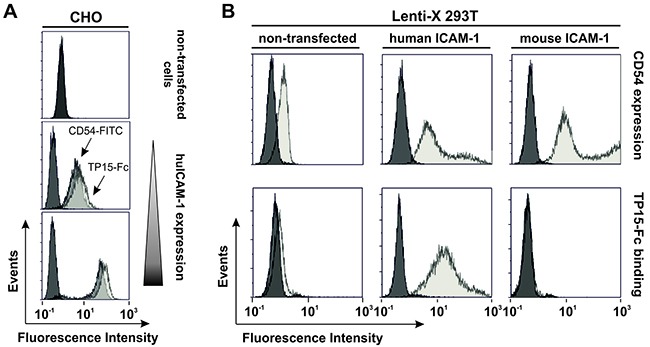
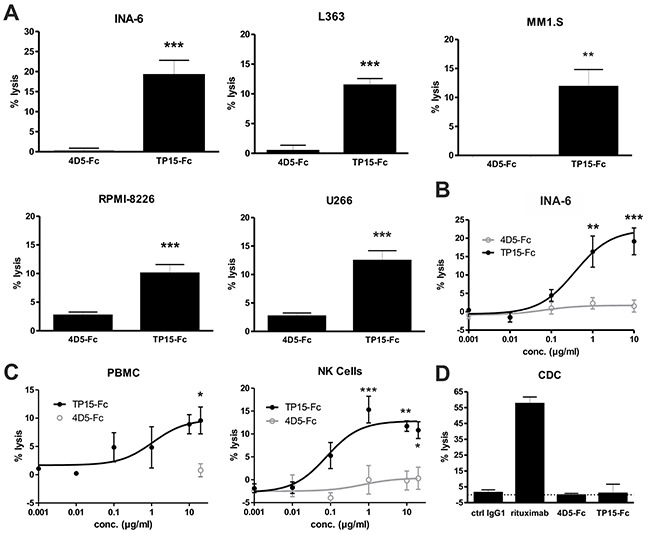
To identify antibodies suitable for multiple myeloma (MM) immunotherapy, a cellular screening approach was developed using plasma cell lines JK-6L and INA-6 and human synthetic single-chain fragment variable (scFv) phage libraries. Isolated phage antibodies were screened for myeloma cell surface reactivity. Due to its binding characteristics, phage PIII-15 was selected to generate the scFv-Fc fusion protein TP15-Fc with an Fc domain optimized for FcγRIIIa binding. Various MM cell lines and patient-derived CD138-positive malignant plasma cells, but not granulocytes, B or T lymphocytes from healthy donors were recognized by TP15-Fc. Human intercellular adhesion molecule-1 (ICAM-1/CD54) was identified as target antigen by using transfected Chinese hamster ovary (CHO) cells. Of note, no cross-reactivity of TP15-Fc with mouse ICAM-1 transfected cells was detected. TP15-Fc was capable to induce antibody-dependent cell-mediated cytotoxicity (ADCC) against different human plasma cell lines and patients' myeloma cells with peripheral blood mononuclear cells (PBMC) and purified NK cells. Importantly, TP15-Fc showed potent efficacy and completely prevented growth of human INA-6.Tu1 plasma cells in a xenograft SCID/beige mouse model. Thus, the novel ADCC-optimized TP15-Fc exerts potent anti-myeloma activity and has promising characteristics to be further evaluated for MM immunotherapy.
为了鉴定适用于多发性骨髓瘤(MM)免疫治疗的抗体,利用浆细胞系JK-6L和INA-6以及人合成单链可变片段(scFv)噬菌体文库开发了一种细胞筛选方法。筛选分离出的噬菌体抗体的骨髓瘤细胞表面反应性。由于其结合特性,选择噬菌体PIII-15来生成scFv-Fc融合蛋白TP15-Fc,其Fc结构域针对FcγRIIIa结合进行了优化。TP15-Fc可识别多种MM细胞系以及患者来源的CD138阳性恶性浆细胞,但不能识别健康供体的粒细胞、B或T淋巴细胞。通过使用转染的中国仓鼠卵巢(CHO)细胞,将人细胞间粘附分子-1(ICAM-1/CD54)鉴定为靶抗原。值得注意的是,未检测到TP15-Fc与小鼠ICAM-1转染细胞的交叉反应。TP15-Fc能够通过外周血单核细胞(PBMC)和纯化的NK细胞诱导针对不同人浆细胞系和患者骨髓瘤细胞的抗体依赖性细胞介导的细胞毒性(ADCC)。重要的是,TP15-Fc在异种移植SCID/米色小鼠模型中显示出强大的疗效,并完全阻止了人INA-6.Tu1浆细胞的生长。因此,新型ADCC优化的TP15-Fc具有强大的抗骨髓瘤活性,具有很有前景的特性,有待进一步评估用于MM免疫治疗。