Liu Jie, Chen Zhiyuan, Guo Jia, Wang Lei, Liu Xiuheng
Department of Urology, Renmin Hospital of Wuhan University, Wuhan 430060, Hubei Province, China.
Department of Urology, Inner Mongolia People's Hospital, Hohhot 010017, China.
Biosci Rep. 2019 Aug 23;39(8). doi: 10.1042/BSR20170770. Print 2019 Aug 30.
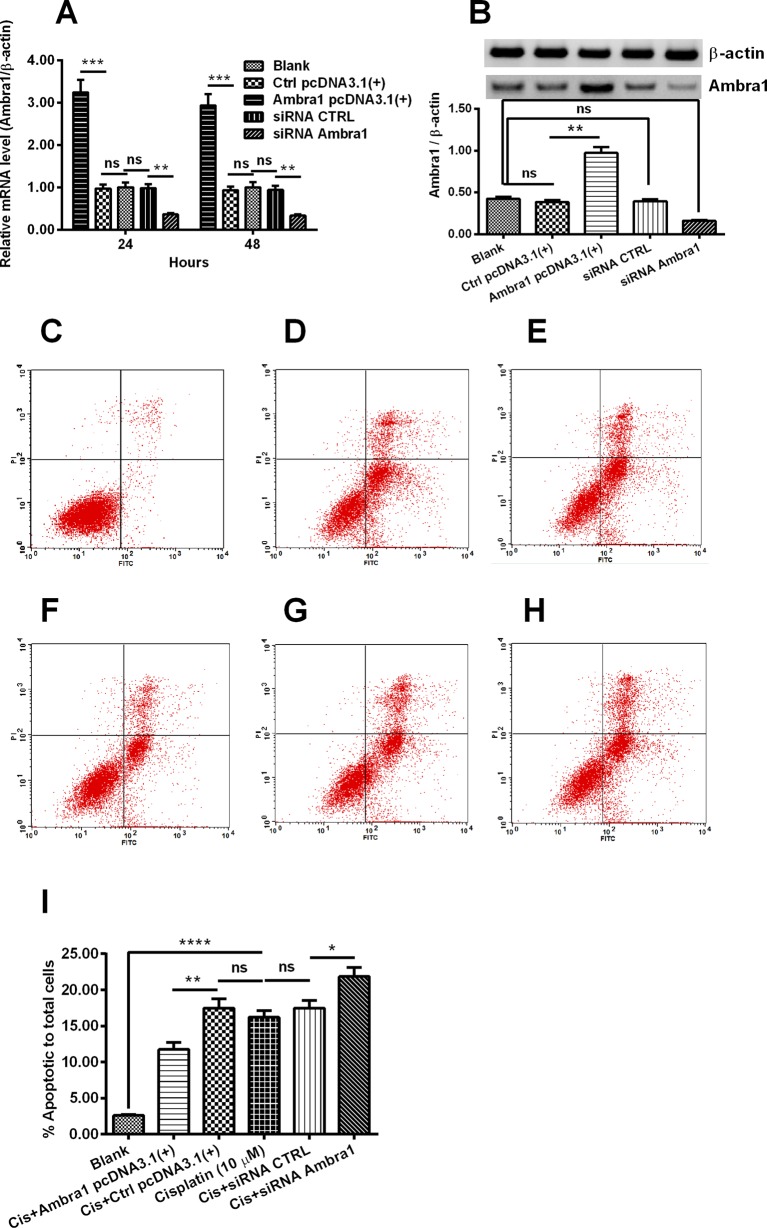
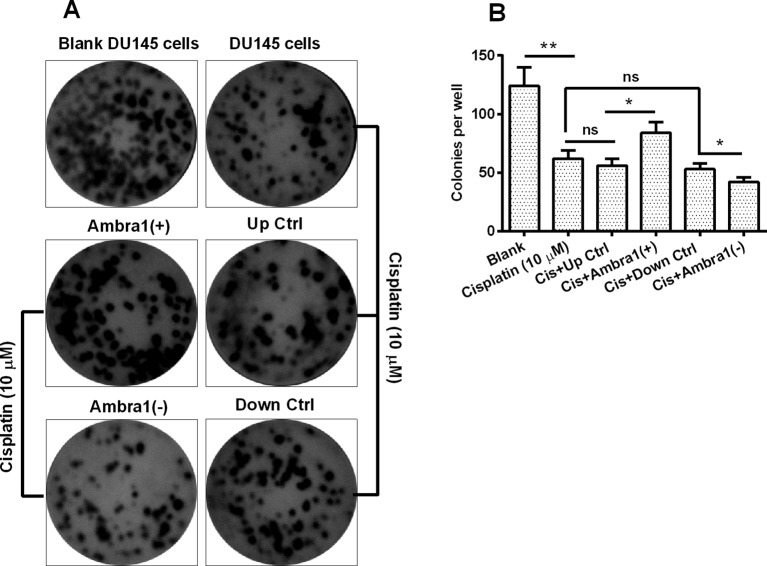
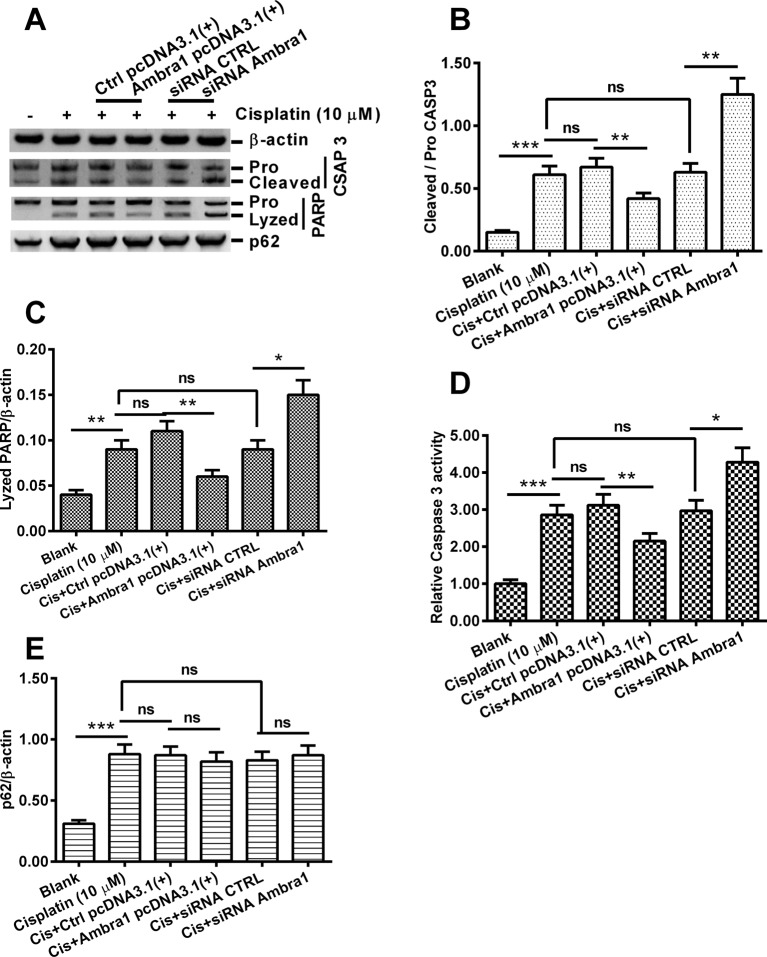
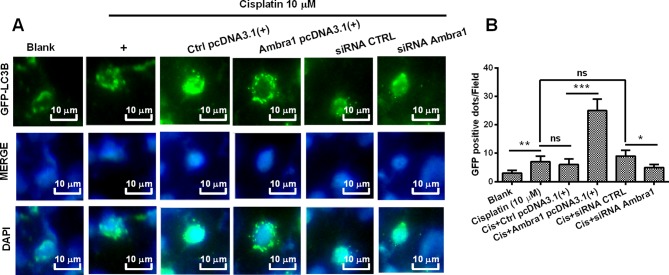
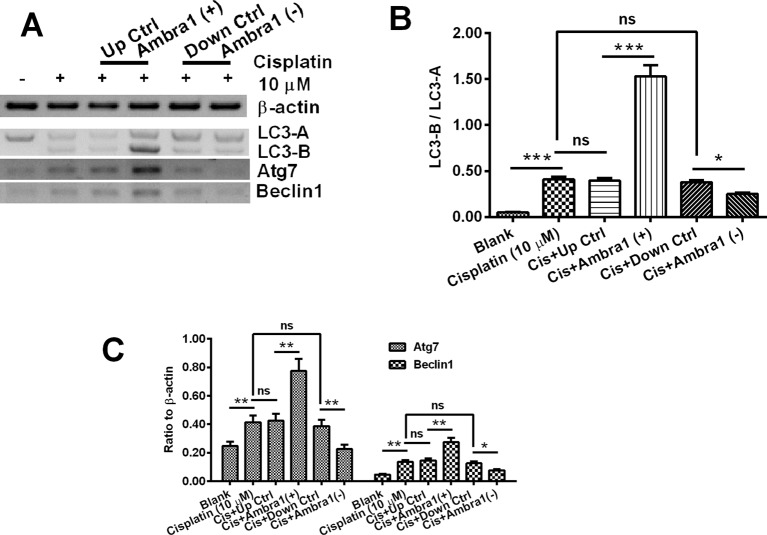
Prostate cancer (PCa), the second most mortal cancer from developed countries, presents a high level of chemoresistance. There is emerging evidence underscores the critical role of autophagy in the onset, progression, and chemoresistance of PCa. In the present study, we investigated the possible role of a novel autophagy regulator, activating molecule in beclin1-regulated autophagy1 (Ambra1), a novel ATG gene in the sensitivity or PCa cells to cisplatin. We explored the regulation by the Ambra1 manipulation on the induction of apoptosis and autophagy in human PCa DU145 cells in the presence of cisplatin, via up- or down-regulating Ambra1 expression. In addition, we examined the colony forming of DU145 cells post cisplatin treatment and Ambra1 manipulation. Our results demonstrated that the Ambra1 up-regulation reduced, whereas Ambra1 knockdown increased the cisplatin-induced apoptosis, caspase 3 cleavage, and poly ADP-ribose polymerase (PARP) cleavage. Interestingly, we also found significant autophagy induction in the cisplatin-treated DU145 cells, with increased autophagic vesicles, up-regulated autophagy-related markers. However, the cisplatin-induced autophagy was up-regulated by the Ambra1 overexpression or was down-regulated by the Ambra1 knockdown. In addition, the colony forming was also positively regulated by Ambra1 in DU145 cells post cisplatin treatment. In conclusion, Ambra1 negatively regulates the cisplatin-induced apoptosis and the cisplatin-mediated growth reduction in DU145 cells, in association with the Ambra1-mediated autophagy promotion. It implies that Ambra1-mediated autophagy might be an important mechanism underlining the sensitivity reduction of PCa cells.
前列腺癌(PCa)是发达国家中死亡率第二高的癌症,具有高度的化疗耐药性。越来越多的证据表明自噬在PCa的发生、发展和化疗耐药中起关键作用。在本研究中,我们调查了一种新型自噬调节因子——贝克林1调节自噬激活分子1(Ambra1),这是一种新型自噬相关基因(ATG),在PCa细胞对顺铂的敏感性中可能发挥的作用。我们通过上调或下调Ambra1的表达,探讨了在顺铂存在的情况下,Ambra1调控对人PCa DU145细胞凋亡和自噬诱导的影响。此外,我们检测了顺铂处理及Ambra1调控后DU145细胞的集落形成情况。我们的结果表明,上调Ambra1可降低顺铂诱导的凋亡、半胱天冬酶3的切割及聚ADP核糖聚合酶(PARP)的切割,而敲低Ambra1则会增加这些作用。有趣的是,我们还发现顺铂处理的DU145细胞中有明显的自噬诱导现象,自噬小泡增多,自噬相关标志物上调。然而,顺铂诱导的自噬在过表达Ambra1时上调,在敲低Ambra1时下调。此外,在顺铂处理后的DU145细胞中,集落形成也受到Ambra1的正向调控。总之,Ambra1负向调节顺铂诱导的凋亡和顺铂介导的DU145细胞生长抑制,这与Ambra1介导的自噬促进作用有关。这意味着Ambra1介导的自噬可能是PCa细胞敏感性降低的重要机制。