Bottje Walter G, Khatri Bhuwan, Shouse Stephanie A, Seo Dongwon, Mallmann Barbara, Orlowski Sara K, Pan Jeonghoon, Kong Seongbae, Owens Casey M, Anthony Nicholas B, Kim Jae K, Kong Byungwhi C
Department of Poultry Science, Center of Excellence for Poultry Science, University of Arkansas, Fayetteville, AR, United States.
School of Human Environmental Sciences, University of Arkansas, Fayetteville, AR, United States.
Front Physiol. 2017 Oct 20;8:816. doi: 10.3389/fphys.2017.00816. eCollection 2017.
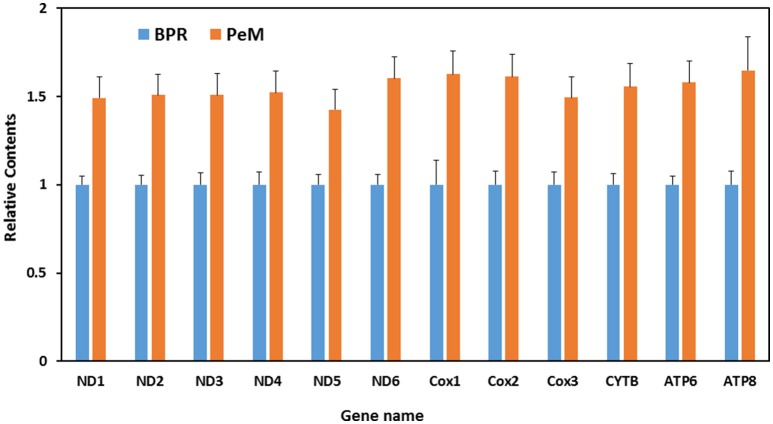
Although small non-coding RNAs are mostly encoded by the nuclear genome, thousands of small non-coding RNAs encoded by the mitochondrial genome, termed as mitosRNAs were recently reported in human, mouse and trout. In this study, we first identified chicken mitosRNAs in breast muscle using small RNA sequencing method and the differential abundance was analyzed between modern pedigree male (PeM) broilers (characterized by rapid growth and large muscle mass) and the foundational Barred Plymouth Rock (BPR) chickens (characterized by slow growth and small muscle mass). Small RNA sequencing was performed with total RNAs extracted from breast muscles of PeM and BPR ( = 6 per group) using the 1 × 50 bp single end read method of Illumina sequencing. Raw reads were processed by quality assessment, adapter trimming, and alignment to the chicken mitochondrial genome (GenBank Accession: X52392.1) using the NGen program. Further statistical analyses were performed using the JMP Genomics 8. Differentially expressed (DE) mitosRNAs between PeM and BPR were confirmed by quantitative PCR. Totals of 183,416 unique small RNA sequences were identified as potential chicken mitosRNAs. After stringent filtering processes, 117 mitosRNAs showing >100 raw read counts were abundantly produced from all 37 mitochondrial genes (except D-loop region) and the length of mitosRNAs ranged from 22 to 46 nucleotides. Of those, abundance of 44 mitosRNAs were significantly altered in breast muscles of PeM compared to those of BPR: all mitosRNAs were higher in PeM breast except those produced from 16S-rRNA gene. Possibly, the higher mitosRNAs abundance in PeM breast may be due to a higher mitochondrial content compared to BPR. Our data demonstrate that in addition to 37 known mitochondrial genes, the mitochondrial genome also encodes abundant mitosRNAs, that may play an important regulatory role in muscle growth via mitochondrial gene expression control.
尽管小非编码RNA大多由核基因组编码,但最近在人类、小鼠和鳟鱼中报道了数千种由线粒体基因组编码的小非编码RNA,称为线粒体小RNA(mitosRNAs)。在本研究中,我们首先使用小RNA测序方法在鸡胸肌中鉴定了鸡的mitosRNAs,并分析了现代系谱雄性(PeM)肉鸡(以快速生长和大肌肉量为特征)和基础 barred Plymouth Rock(BPR)鸡(以生长缓慢和小肌肉量为特征)之间的差异丰度。使用Illumina测序的1×50 bp单端读取方法,对从PeM和BPR鸡胸肌中提取的总RNA(每组n = 6)进行小RNA测序。原始读数通过质量评估、接头修剪,并使用NGen程序与鸡线粒体基因组(GenBank登录号:X52392.1)进行比对。使用JMP Genomics 8进行进一步的统计分析。通过定量PCR确认了PeM和BPR之间差异表达的(DE)mitosRNAs。总共183,416个独特的小RNA序列被鉴定为潜在的鸡mitosRNAs。经过严格的筛选过程,从所有37个线粒体基因(除D环区域外)大量产生了117个mitosRNAs,其原始读数计数>100,mitosRNAs的长度范围为22至46个核苷酸。其中,与BPR相比,PeM鸡胸肌中44个mitosRNAs的丰度显著改变:除了从16S-rRNA基因产生的那些mitosRNAs外,PeM鸡胸肌中的所有mitosRNAs都更高。可能,PeM鸡胸肌中mitosRNAs丰度较高可能是由于与BPR相比线粒体含量更高。我们的数据表明,除了37个已知的线粒体基因外,线粒体基因组还编码丰富的mitosRNAs,它们可能通过线粒体基因表达控制在肌肉生长中发挥重要的调节作用。