Department of Physiology, Monash University, Clayton, Victoria, Australia.
Diabetes and Endocrinology Research Center, Department of Medicine, Baylor College of Medicine, Houston, TX, USA.
Mol Metab. 2017 Nov;6(11):1381-1394. doi: 10.1016/j.molmet.2017.07.006. Epub 2017 Jul 18.
Carbohydrate response element binding protein (ChREBP) is a transcription factor that responds to glucose and activates genes involved in the glycolytic and lipogenic pathways. Recent studies have linked adipose ChREBP to insulin sensitivity in mice. However, while ChREBP is most highly expressed in the liver, the effect of hepatic ChREBP on insulin sensitivity remains unknown. To clarify the importance of hepatic ChREBP on glucose homeostasis, we have generated a knockout mouse model that lacks this protein specifically in the liver (Liver-ChREBP KO).
Using Liver-ChREBP KO mice, we investigated whether hepatic ChREBP deletion influences insulin sensitivity, glucose homeostasis and the development of hepatic steatosis utilizing various dietary stressors. Furthermore, we determined gene expression changes in response to fasted and fed states in liver, white, and brown adipose tissues.
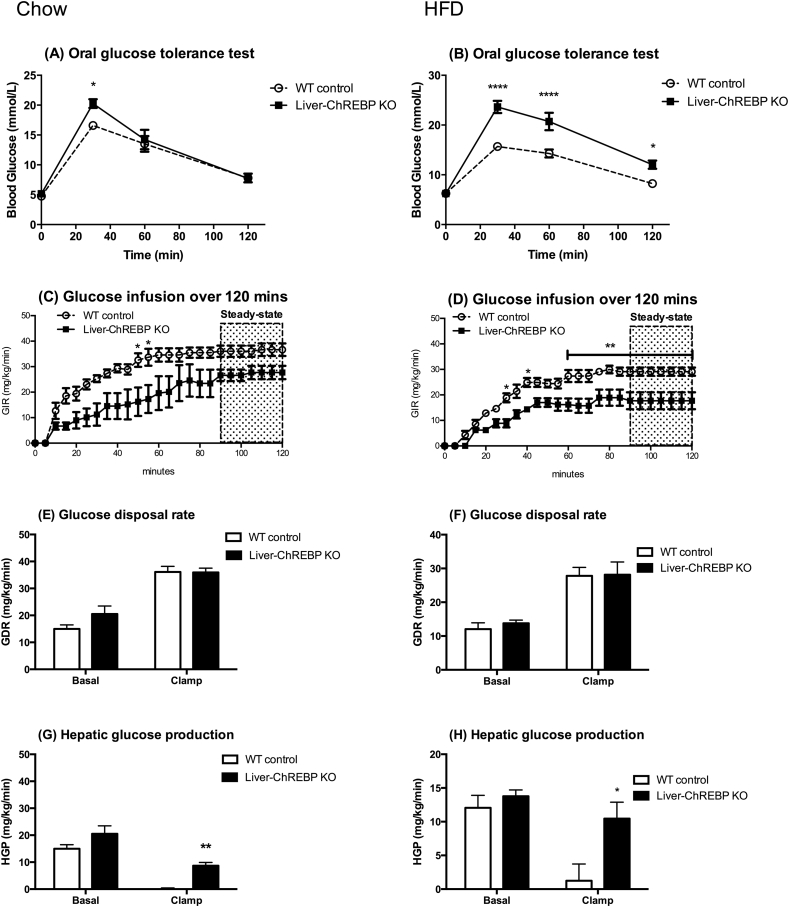
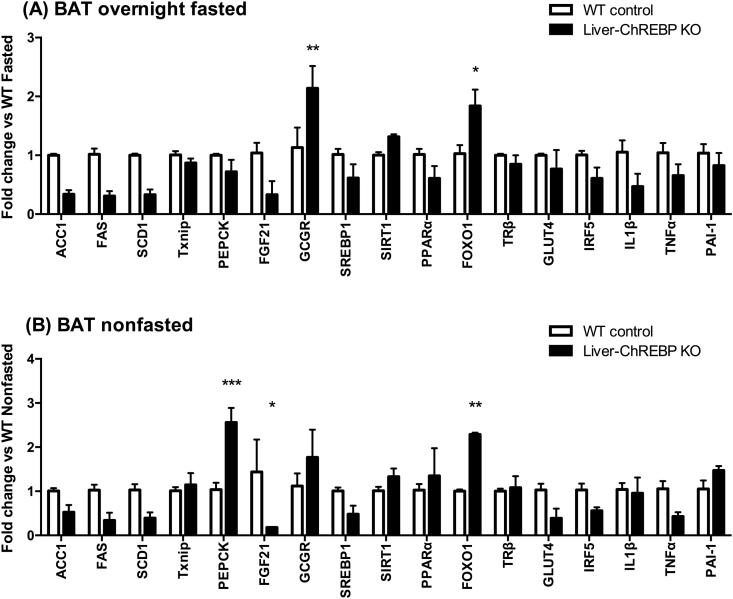
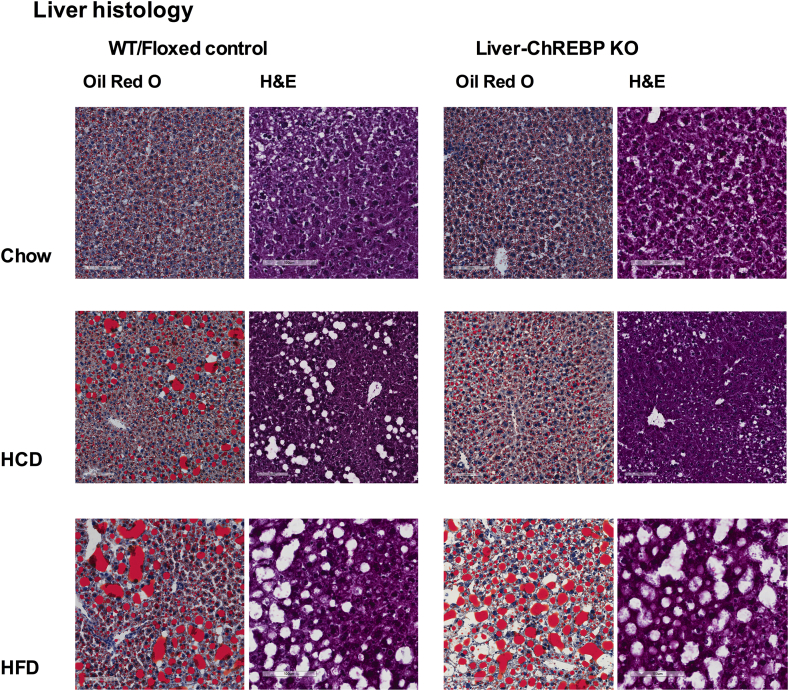
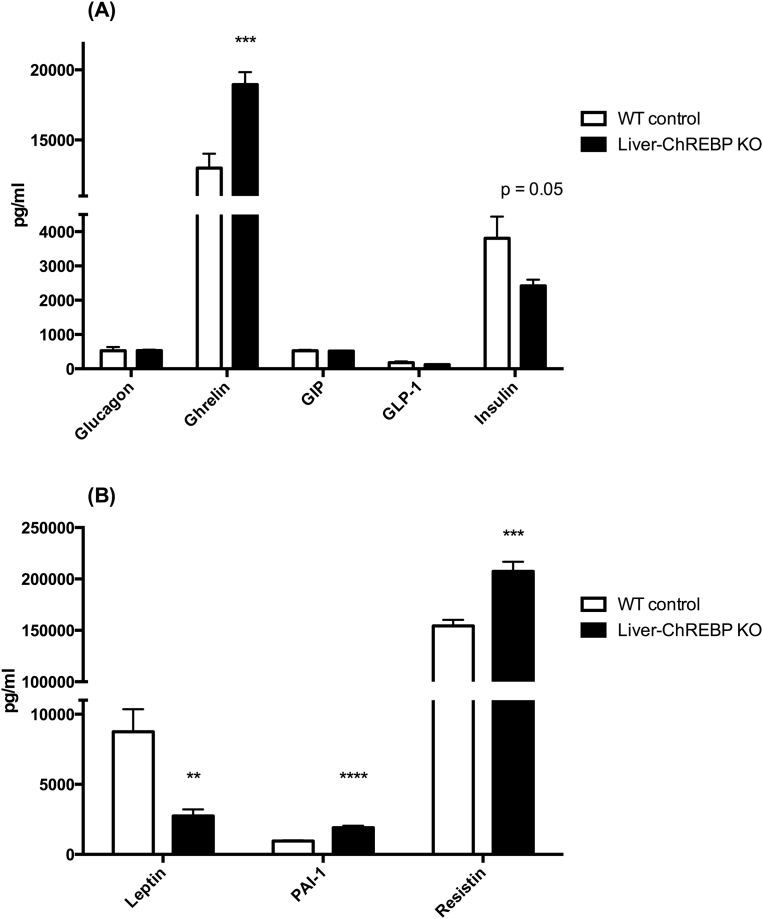
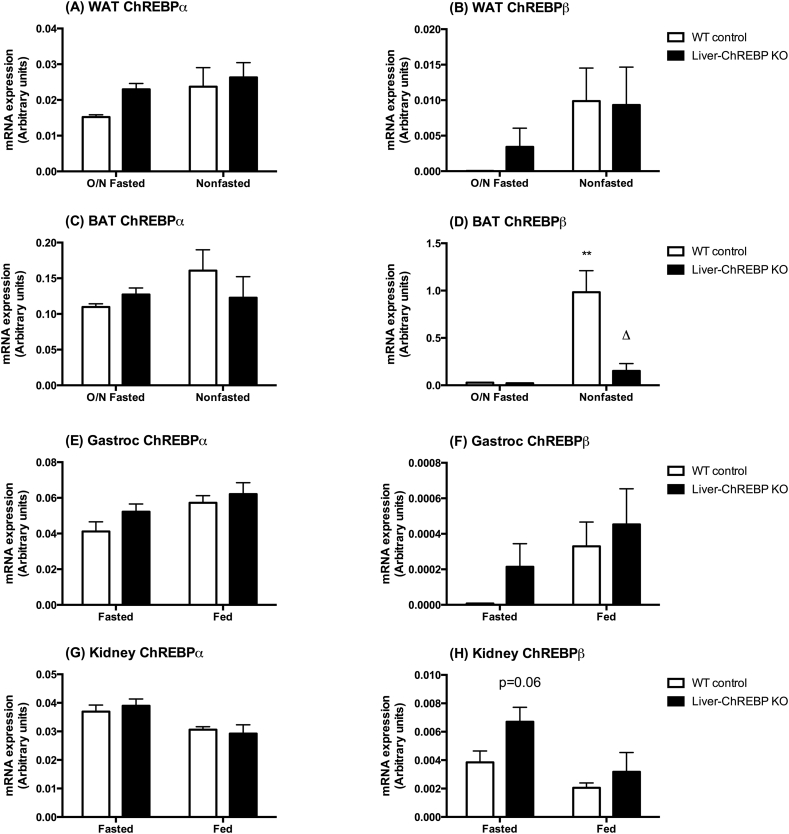
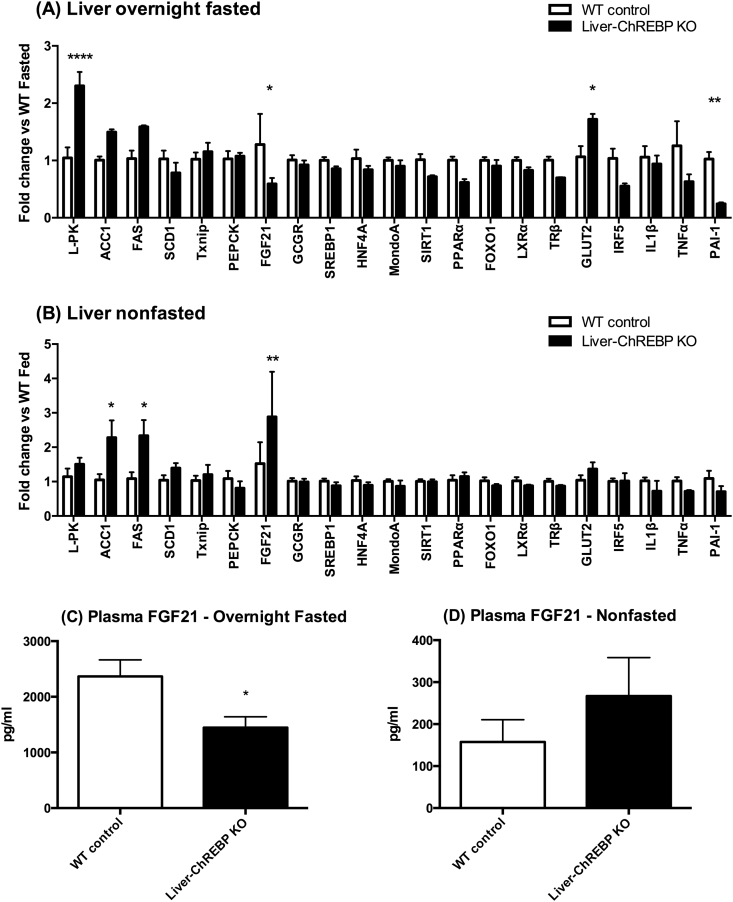
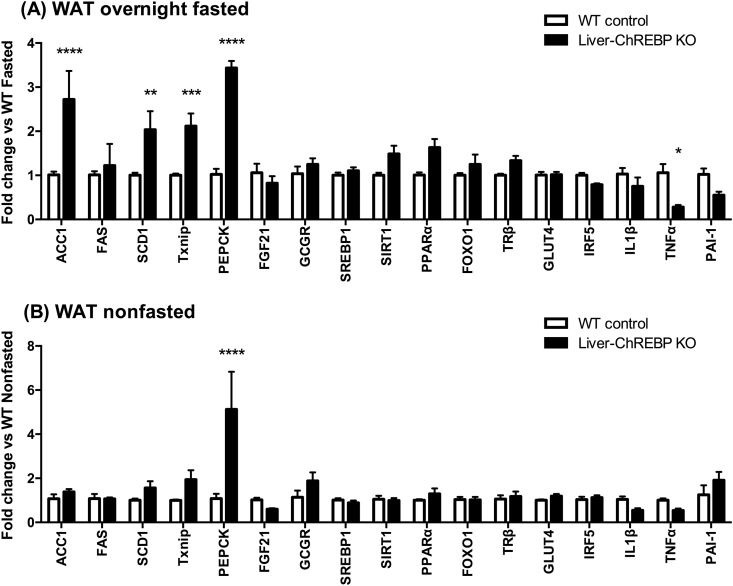
Liver-ChREBP KO mice had impaired insulin sensitivity as indicated by reduced glucose infusion to maintain euglycemia during hyperinsulinemic-euglycemic clamps on both chow (25% lower) and high-fat diet (33% lower) (p < 0.05). This corresponded with attenuated suppression of hepatic glucose production. Although Liver-ChREBP KO mice were protected against carbohydrate-induced hepatic steatosis, they displayed worsened glucose tolerance. Liver-ChREBP KO mice did not show the expected gene expression changes in liver in response to fasted and fed states. Interestingly, hepatic ChREBP deletion also resulted in gene expression changes in white and brown adipose tissues, suggesting inter-tissue communication. This included an almost complete abolition of BAT ChREBPβ induction in the fed state (0.15-fold) (p = 0.015) along with reduced lipogenic genes. In contrast, WAT showed inappropriate increases in lipogenic genes in the fasted state along with increased PEPCK1 in both fasted (3.4-fold) and fed (5.1-fold) states (p < 0.0001).
Overall, hepatic ChREBP is protective in regards to hepatic insulin sensitivity and whole body glucose homeostasis. Hepatic ChREBP action can influence other peripheral tissues and is likely essential in coordinating the body's response to different feeding states.
碳水化合物反应元件结合蛋白(ChREBP)是一种对葡萄糖有反应的转录因子,可激活糖酵解和生脂途径中的基因。最近的研究将脂肪组织中的 ChREBP 与小鼠的胰岛素敏感性联系起来。然而,尽管 ChREBP 在肝脏中表达最高,但肝 ChREBP 对胰岛素敏感性的影响尚不清楚。为了阐明肝 ChREBP 对葡萄糖稳态的重要性,我们构建了一种特异性在肝脏中缺乏该蛋白的敲除小鼠模型(Liver-ChREBP KO)。
利用 Liver-ChREBP KO 小鼠,我们利用各种饮食应激源研究了肝 ChREBP 缺失是否会影响胰岛素敏感性、葡萄糖稳态和肝脂肪变性的发生。此外,我们还测定了禁食和进食状态下肝、白色和棕色脂肪组织中基因表达的变化。
Liver-ChREBP KO 小鼠在两种饮食(标准饮食降低 25%,高脂饮食降低 33%)的高胰岛素-正常血糖钳夹实验中,维持血糖正常所需的葡萄糖输注量减少,表明胰岛素敏感性受损(p<0.05)。这与肝葡萄糖生成的抑制作用减弱相对应。尽管 Liver-ChREBP KO 小鼠对碳水化合物诱导的肝脂肪变性有保护作用,但它们的葡萄糖耐量却恶化了。Liver-ChREBP KO 小鼠在禁食和进食状态下,肝内没有出现预期的基因表达变化。有趣的是,肝 ChREBP 缺失还导致白色和棕色脂肪组织中基因表达的变化,提示组织间通讯。这包括在进食状态下 BAT ChREBPβ的诱导几乎完全消失(0.15 倍)(p=0.015),同时脂生成基因减少。相反,在禁食状态下 WAT 中脂生成基因异常增加,在禁食(3.4 倍)和进食(5.1 倍)状态下 PEPCK1 增加(p<0.0001)。
总的来说,肝 ChREBP 对肝胰岛素敏感性和全身葡萄糖稳态具有保护作用。肝 ChREBP 的作用可以影响其他外周组织,并且可能对于协调身体对不同进食状态的反应至关重要。