Barrios Deisy, Morillo Raquel, Guerassimova Ina, Barbero Esther, Escobar-Morreale Héctor, Cohen Alexander T, Becattini Cecilia, Tapson Victor, Yusen Roger, Jimenez David
Respiratory Department, Hospital Ramón y Cajal and Medicine Department, Universidad de Alcalá (IRYCIS), Madrid, Spain.
Endocrinology Department, Hospital Ramón y Cajal and Medicine Department, Universidad de Alcalá (IRYCIS), Madrid, Spain.
PLoS One. 2017 Nov 6;12(11):e0187648. doi: 10.1371/journal.pone.0187648. eCollection 2017.
We sought to examine sex-related differences in the characteristics and outcome in patients presenting with acute symptomatic pulmonary embolism (PE).
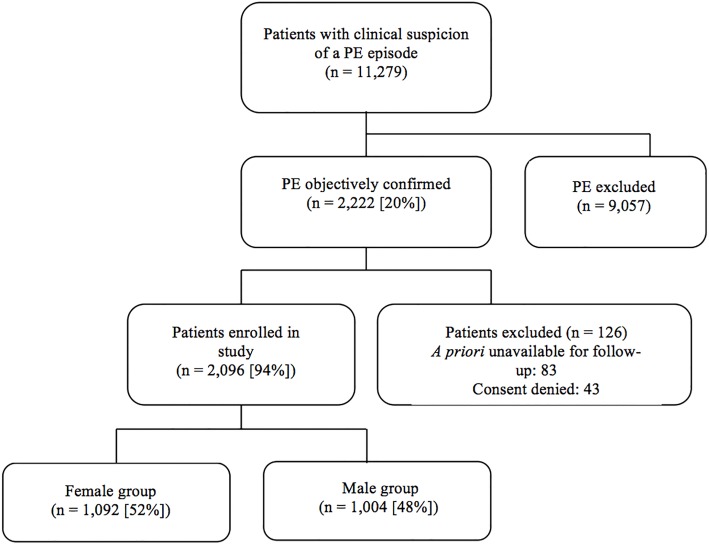
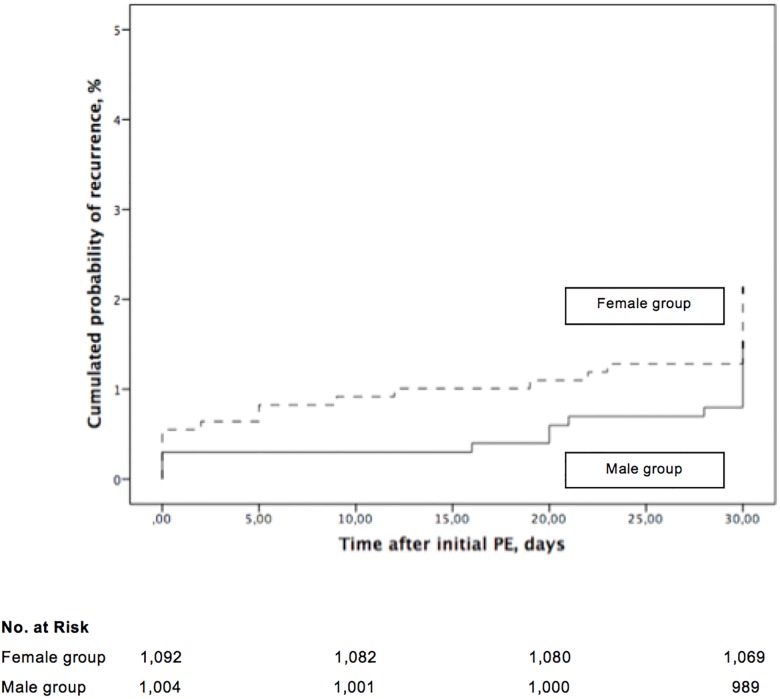
We conducted a retrospective cohort study of 2,096 patients diagnosed with acute PE. The characteristics were recorded at presentation. Treatment was at the discretion of patients' physicians. The primary study outcome, all-cause mortality, and the secondary outcomes of PE-specific mortality, recurrent venous thromboembolism, and major bleeding were assessed during the first month of follow-up after PE diagnosis.
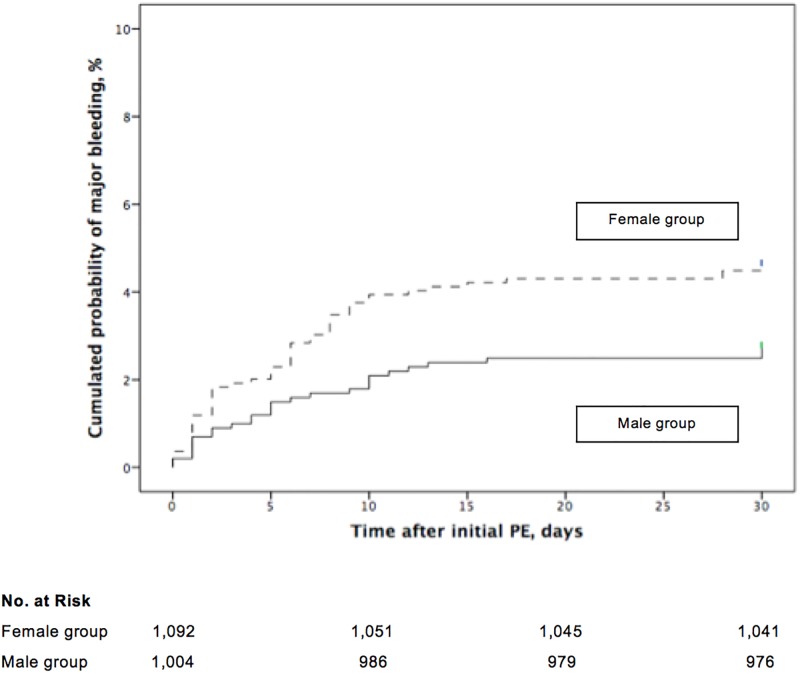
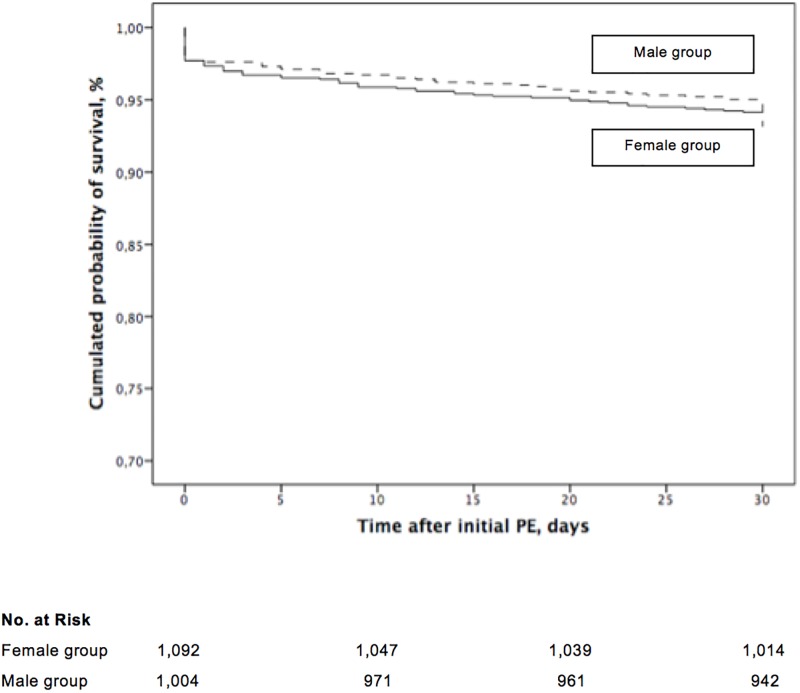
Overall, the women were older than the men and had significantly higher rates of immobilization. They had significantly lower rates of chronic obstructive pulmonary disease and cancer. Women had a higher prevalence of syncope and elevated brain natriuretic peptide levels. Thirty-day all-cause mortality was similar between women and men (7.1% versus 6.2%; P = 0.38). Male gender was not independently significantly associated with PE-related death (adjusted odds ratio [OR] 1.02; 95% CI, 0.50 to 2.07; P = 0.96). Restricting the analyses to haemodynamically stable patients (n = 2,021), female gender was an independent predictor of all-cause (adjusted OR 1.56; 95% CI, 1.07 to 2.28; P = 0.02) and PE-specific mortality (adjusted OR 1.85; 95% CI, 1.02 to 3.33; P = 0.04). Compared with men, women were 2.05 times more likely to experience a major bleed.
Women and men with PE had different clinical characteristics, presentation, and outcomes. Women receiving anticoagulation have a significantly higher risk of major bleeding, suggesting the need for careful monitoring of anticoagulant intensity in women.
我们试图研究急性症状性肺栓塞(PE)患者的特征及预后的性别差异。
我们对2096例诊断为急性PE的患者进行了一项回顾性队列研究。记录患者就诊时的特征。治疗由患者的医生自行决定。在PE诊断后的第一个月随访期间评估主要研究结局全因死亡率,以及PE特异性死亡率、复发性静脉血栓栓塞和大出血等次要结局。
总体而言,女性比男性年龄更大,制动率显著更高。她们患慢性阻塞性肺疾病和癌症的比率显著更低。女性晕厥患病率和脑钠肽水平升高的情况更为常见。女性和男性的30天全因死亡率相似(7.1%对6.2%;P = 0.38)。男性性别与PE相关死亡无独立显著关联(校正比值比[OR]为1.02;95%CI,0.50至2.07;P = 0.96)。将分析局限于血流动力学稳定的患者(n = 2021),女性性别是全因死亡率(校正OR 1.56;95%CI,1.07至2.28;P = 0.02)和PE特异性死亡率(校正OR 1.85;95%CI,1.02至3.33;P = 0.04)的独立预测因素。与男性相比,女性发生大出血的可能性高2.05倍。
患有PE的女性和男性具有不同的临床特征、表现和结局。接受抗凝治疗的女性发生大出血的风险显著更高,这表明需要仔细监测女性的抗凝强度。